Love this? Save it for later!
Share the inspiration with your friends
This was supposed to be a slow-simmered, all-afternoon affair. I had the whole plan laid out—the star anise I’d ordered special, the fresh vanilla bean I’d been saving, the whole afternoon stretching ahead of me like a promise of something cozy and perfect. But then the phone rang, the dog needed walking, and I realized I’d forgotten to pick up the kids from school pickup. I grabbed the wrong bottle of wine from the rack—something cheap I’d bought for cooking—and tossed it in a pot with whatever I could find in the spice drawer. I was already late, already flustered, already convinced this was going to be a disaster.
The cinnamon stick was half-broken. The orange was a little past its prime. And I only had about fifteen minutes before people started showing up. I mean, honestly, I almost just served store-bought cider and called it a day. But I’d promised mulled wine, and I’m stubborn like that.
What came out of that pot was nothing like the plan. It was better. The cheap wine, the broken cinnamon, the hurried pour—it all came together in a way that made me stop and stare at the stove. It was rich without being heavy, warm without being syrupy. The orange had softened into something almost jammy, and the cinnamon had infused so deeply you’d think I’d let it steep for hours.
Maybe you’ve been there—that moment when you’re sure you’ve ruined something, and instead it turns into your new go-to. That’s this recipe. It’s the quick mulled wine you make when you don’t have time to make mulled wine. And honestly? It might be better than the slow version.
Why You’ll Love This Recipe
Let me tell you why this quick mulled wine with orange and cinnamon has become my secret weapon for every cold-weather gathering. I’ve tested this recipe at least a dozen times now, tweaking the spice ratios and timing until it was just right. And every single time, someone asks for the recipe before they’ve even finished their first cup.
- Ready in 15 Minutes: No, really. From pantry to mug in the time it takes to find your favorite sweater. Perfect for those last-minute “come over” texts or when you just need something warm after a long day.
- Uses Pantry Staples: You probably already have everything you need. A bottle of red wine, an orange, a cinnamon stick, some honey or sugar. No fancy trips to the specialty store required.
- Perfect for Weeknight Coziness: This isn’t just for holiday parties. I make this on regular Tuesday nights when I want to feel like I’m at a ski lodge without leaving my couch.
- Always a Crowd-Pleaser: I’ve served this to wine snobs and casual drinkers alike, and everyone goes back for seconds. It’s approachable but impressive.
- Unbelievably Delicious: The way the orange zest mingles with the warm spice—it’s the kind of thing that makes you close your eyes after the first sip. Seriously.
What makes this version different from all the others? It’s the technique. Most recipes tell you to simmer everything for 30 minutes or more, but that can make the wine taste flat and jammy. I’ve found that a quick, gentle heat—barely a simmer—lets the spices infuse without cooking off the wine’s character. You get all the cozy flavor with none of the boiled-wine sadness.
This is the kind of drink that makes you feel like you’ve got your life together, even if you’re wearing sweatpants and the dishes are piled up. It’s comfort in a mug—faster, easier, but with all the soul-soothing satisfaction you’re craving.
What Ingredients You Will Need
This quick mulled wine uses simple, wholesome ingredients to deliver bold, warming flavor without any fuss. Most of these are probably already sitting in your kitchen, waiting for their moment to shine.
For the Base:
- 1 bottle (750 ml) dry red wine (I prefer a medium-bodied wine like Merlot or Zinfandel—nothing too fancy, but something you’d actually enjoy drinking. A cheap cooking wine will taste like a cheap cooking wine)
- 1 large orange (look for one that feels heavy for its size—more juice. You’ll use both the zest and the juice)
- 2 cinnamon sticks (the real ones, not the powdered stuff. I like the ones from Penzeys—they’re fragrant without being dusty)
- 3 tablespoons honey or maple syrup (adjust to your sweetness preference. I use local honey when I can find it)
For the Spice Blend:
- 4 whole cloves (these are potent—don’t go overboard or your wine will taste like a dentist’s office)
- 2 star anise pods (optional, but they add that beautiful licorice note that makes mulled wine taste “special”)
- 1/4 teaspoon freshly grated nutmeg (please don’t use the pre-ground stuff—it makes a real difference)
For Garnish (Optional but Lovely):
- Fresh orange slices (thin rounds, about 1/4 inch thick)
- Extra cinnamon sticks (for stirring)
- A few star anise (for visual drama)
Ingredient Selection Tips: If you can, use organic oranges—you’re using the zest, and you don’t want any wax or pesticides in your wine. And about the wine: I’ve made this with everything from a $6 bottle of Cabernet to a $20 bottle of Malbec, and honestly, the sweet spot is around $10-12. You want something with enough body to stand up to the spices, but not so complex that you’re masking something special.
Substitution Guidance: No honey? Use maple syrup or brown sugar. No whole cloves? Use 1/8 teaspoon of ground cloves, but add it at the very end. No star anise? Skip it—the recipe still works beautifully. For a non-alcoholic version, use a full-bodied grape juice or pomegranate juice and follow the same method.
Equipment Needed
You don’t need much for this quick mulled wine, which is part of the beauty. Here’s what you’ll want to have handy:
- A medium saucepan or Dutch oven (I use my trusty 3-quart Le Creuset—it distributes heat beautifully and looks pretty on the table. But any pot will work)
- A vegetable peeler or zester (for getting those beautiful strips of orange zest without the bitter white pith)
- A fine-mesh strainer (to catch the whole spices before serving—nobody wants to bite into a clove)
- A wooden spoon (for stirring—metal can sometimes react with the acidity of the wine)
- Mugs or heatproof glasses (I love using clear glass mugs so you can see the beautiful color)
- A ladle (for serving, unless you want to get creative with a measuring cup)
If you don’t have a fine-mesh strainer, you can use a slotted spoon to fish out the spices. It’s a little more work, but it gets the job done. And if you’re serving a crowd, a slow cooker on the “warm” setting is perfect for keeping everything hot without overcooking.
Preparation Method

- Prepare your orange (2 minutes): Wash the orange thoroughly under warm water. Using a vegetable peeler, remove the zest in wide strips—try to get just the orange part, not the white pith underneath, which is bitter. Then juice the orange and set the juice aside. You should have about 1/4 cup of fresh orange juice.
- Combine the base (1 minute): Pour the entire bottle of wine into your saucepan. Add the orange zest strips, orange juice, honey, cinnamon sticks, cloves, star anise (if using), and grated nutmeg. Don’t stir yet—just let everything settle in together.
- Heat gently (10-12 minutes): Place the saucepan over medium heat. Here’s the important part: you want to heat the wine slowly, never letting it boil. Boiling will cook off the alcohol and make the wine taste flat and jammy. Look for tiny bubbles around the edges of the pot—that’s your sign that it’s hot enough. If you see big bubbles, turn the heat down immediately.
- Stir and taste (1 minute): After about 8 minutes, give the mixture a gentle stir with your wooden spoon. The honey should be fully dissolved by now. Taste it—carefully, it’s hot!—and adjust the sweetness. If you want it sweeter, add another tablespoon of honey. If you want more spice, let it steep a few more minutes.
- Strain and serve (1 minute): Once the wine is hot and fragrant (but not boiling), remove it from the heat. Place your fine-mesh strainer over a heatproof pitcher or directly over mugs. Strain the wine to catch all the whole spices and orange zest. The wine should be a deep ruby color, almost garnet, with a beautiful clarity.
- Garnish and enjoy (1 minute): Drop a fresh orange slice into each mug. If you’re feeling fancy, add a fresh cinnamon stick for stirring and a star anise floating on top. Serve immediately while it’s warm and fragrant.
Sensory Cues: At step 3, the kitchen should start smelling like a holiday market—warm, spicy, and sweet. The wine will darken from bright red to a deeper, almost mahogany color. When it’s ready, the aroma will be so strong you’ll be tempted to skip the straining and just drink it straight from the pot.
Personal Tip: I always make a little extra and keep it warm in a thermos for late-night sipping. It’s even better the next day, after the flavors have had time to get to know each other.
Cooking Tips & Techniques
After making this quick mulled wine more times than I can count—including a few spectacular failures—I’ve learned a few things worth sharing.
The Biggest Mistake I Made: The first time I tried this, I let the wine boil. I got distracted by a phone call, and by the time I came back, the kitchen smelled like burnt jam and regret. The wine was thin, acidic, and had lost all its charm. Lesson learned: low and slow is the way to go. If you’re worried about timing, set a timer for 10 minutes and don’t wander off.
The Secret to Maximum Flavor: Here’s a trick I discovered by accident: lightly toast the cinnamon sticks and star anise in the dry pot for about 30 seconds before adding the wine. It wakes up the essential oils and makes the spices smell incredible. Just watch them carefully—they burn fast.
Multitasking Strategy: While the wine is heating, prep your garnishes and set out the mugs. This way, everything’s ready to go the minute the wine is strained. I’ve also started keeping a batch of orange zest strips in the freezer—they thaw in seconds and save me a step on busy nights.
Temperature Control: If you’re serving this at a party, transfer the strained wine to a slow cooker set to “warm.” It’ll stay hot for hours without overcooking. Just don’t leave it on “high”—that’s a one-way ticket to boiled-wine territory.
Consistency Tip: Different wines have different sugar levels, so always taste before serving. A dry Cabernet might need more honey, while a fruitier Zinfandel might be perfect as-is. Trust your palate more than the recipe.
Variations & Adaptations
One of the best things about this quick mulled wine is how adaptable it is. Here are some variations I’ve tried and loved:
Spiced Apple Mulled Wine: Replace the orange juice with 1/2 cup of apple cider. Add a pinch of ground ginger along with the other spices. The apple adds a subtle sweetness that pairs beautifully with the cinnamon. I made this for a fall bonfire and it was gone in twenty minutes.
White Mulled Wine: Use a dry white wine like Sauvignon Blanc or Pinot Grigio. Skip the cloves (they can be overpowering with white wine) and add a few slices of fresh ginger instead. The result is lighter, brighter, and perfect for spring evenings.
Non-Alcoholic Version: Substitute the wine with a good-quality pomegranate juice or a dark grape juice. Add 1/4 cup of apple cider vinegar for a little tang (trust me on this—it mimics the acidity of wine). Follow the same heating method. My pregnant friend swore this was better than the real thing.
Slow Cooker Method: Combine all ingredients in a slow cooker and cook on low for 2-3 hours. This is perfect for parties because it fills your house with that amazing aroma and keeps the wine warm for hours. Just be careful not to leave it too long—after 4 hours, the spices can become bitter.
Dairy-Free Creamy Version: Add 1/2 cup of full-fat coconut milk at the end, after straining. It turns the wine into a creamy, dreamy concoction that tastes like a warm hug. I was skeptical the first time I tried this, but now it’s my go-to for really cold nights.
Serving & Storage Suggestions
This quick mulled wine is best served warm, right after you’ve made it. The steam rising from the mug, the deep ruby color, the orange slice floating on top—it’s a sensory experience that’s hard to beat.
Serving Temperature: Aim for around 160°F (71°C)—hot enough to warm you through, but not so hot that you burn your tongue. If you’ve heated it in a pot, let it sit for a minute after straining before serving.
What to Serve With It: This mulled wine pairs beautifully with cheese boards (especially aged cheddar or brie), roasted nuts, dark chocolate, or simple butter cookies. I also love it alongside a bowl of butternut squash soup for a cozy dinner. For a truly indulgent evening, serve it with a slice of gingerbread or apple cake.
Storage Instructions: If you have leftovers (unlikely, but possible), let the wine cool completely, then transfer it to an airtight container and refrigerate for up to 3 days. The flavors will actually meld and deepen overnight.
Reheating Tips: Reheat gently on the stovetop over low heat, or in the microwave in 30-second bursts. Don’t let it boil again—it will lose that beautiful complexity. If the spices have settled, give it a good stir before serving.
Freezer Note: You can freeze the strained mulled wine in an ice cube tray. Pop a cube into a glass of red wine for a quick mulled wine hack, or use it to chill a glass of regular wine without watering it down. Genius, right?
Nutritional Information & Benefits
While mulled wine is certainly a treat, it does come with some surprising benefits. Here’s a rough breakdown per 5-ounce serving:
- Calories: Approximately 150-180 (depending on the wine and sweetener used)
- Carbohydrates: 15-20 grams (mostly from the natural sugars in the wine and honey)
- Sugar: 12-15 grams (about half of what you’d find in a can of soda)
- Alcohol: About 12% ABV (before heating—some alcohol does evaporate during heating)
Health Benefits: Red wine is rich in antioxidants like resveratrol, which has been linked to heart health. The cinnamon in this recipe has anti-inflammatory properties, and the orange provides a nice dose of vitamin C. Cloves and star anise are both known for their digestive benefits. So while I wouldn’t call this a health drink, it’s certainly not the worst thing you could indulge in.
Dietary Considerations: This recipe is naturally gluten-free, dairy-free, and vegan (if you use maple syrup instead of honey). The main allergen to watch for is sulfites in the wine—if you’re sensitive, look for organic or sulfite-free wines.
My Personal Perspective: I believe in balance. A warm mug of mulled wine on a cold night is one of life’s simple pleasures, and I don’t think we need to justify every indulgence with a health claim. Enjoy it, savor it, and don’t stress about the numbers.
Conclusion
This quick mulled wine with orange and cinnamon has become my cold-weather companion, the thing I turn to when I need a moment of warmth in a busy day. It started as a happy accident, a broken cinnamon stick and a cheap bottle of wine, but it’s earned its place as a staple in my kitchen.
I love how forgiving this recipe is. You can tweak the spices, swap the sweetener, use whatever wine you have on hand—and it still turns out delicious. It’s proof that you don’t need hours or fancy ingredients to create something that feels special.
I’d love to hear how this recipe works for you. Did you try a variation? Add a new spice? Serve it at a party? Drop a comment below and let me know—your experiments might inspire someone else’s next cozy night in. And if you loved it, share it with a friend who needs a little warmth in their life.
Here’s to happy accidents, broken cinnamon sticks, and the simple joy of a warm mug on a cold night. Cheers!
Frequently Asked Questions
Can I make this mulled wine in a slow cooker?
Absolutely! Combine all ingredients in a slow cooker and cook on low for 2-3 hours. This is perfect for parties because it keeps the wine warm without overcooking. Just don’t leave it on “warm” for more than 4 hours, or the spices can become bitter.
What’s the best wine to use for mulled wine?
I recommend a medium-bodied, dry red wine like Merlot, Zinfandel, or Cabernet Sauvignon. Avoid anything too cheap or too expensive—you want something you’d actually enjoy drinking, but nothing so complex that the spices will mask its character. A $10-12 bottle is the sweet spot.
Can I make this non-alcoholic?
Yes! Substitute the wine with a good-quality pomegranate juice or dark grape juice. Add 1/4 cup of apple cider vinegar to mimic the acidity of wine. Follow the same heating method and you’ll have a delicious, family-friendly version that everyone can enjoy.
How do I store leftover mulled wine?
Let the wine cool completely, then transfer it to an airtight container and refrigerate for up to 3 days. The flavors will actually deepen overnight. Reheat gently on the stovetop over low heat—don’t let it boil, or you’ll lose that beautiful complexity.
Can I use ground spices instead of whole spices?
You can, but I don’t recommend it. Ground spices don’t strain out as easily, leaving you with a gritty texture. If you’re in a pinch, use 1/8 teaspoon of ground cloves and 1 teaspoon of ground cinnamon, and add them at the very end of cooking. Just know that the flavor won’t be as clean or bright.
Pin This Recipe!
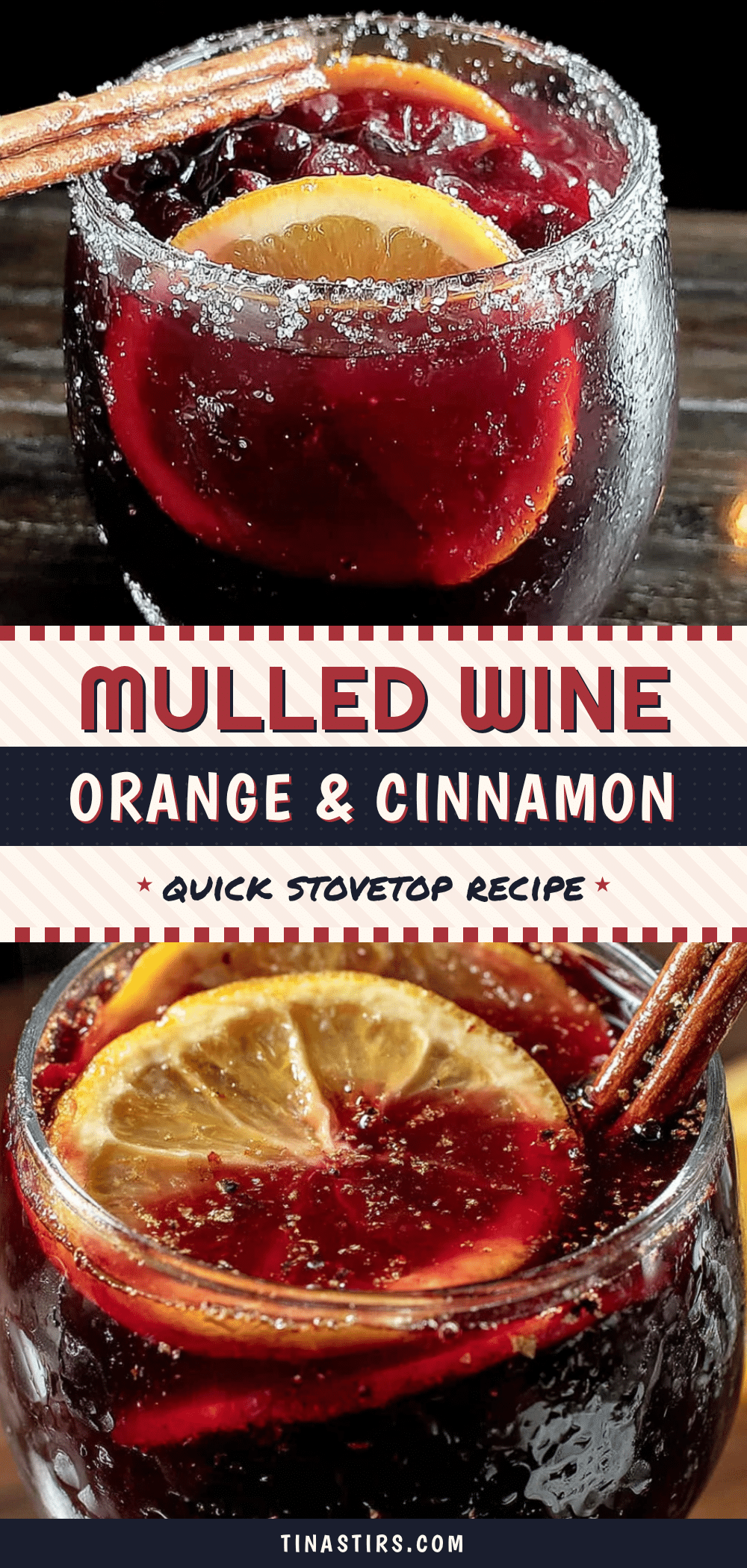
Best Quick Mulled Wine with Orange and Cinnamon

A quick and easy mulled wine recipe that comes together in just 15 minutes using pantry staples. Perfect for last-minute gatherings or cozy nights in, this warm spiced wine is rich, aromatic, and surprisingly delicious.
- Prep Time: 5 minutes
- Cook Time: 12 minutes
- Total Time: 17 minutes
- Yield: 4 servings 1x
- Category: Beverage
- Cuisine: American
Ingredients
- 1 bottle (750 ml) dry red wine (Merlot or Zinfandel recommended)
- 1 large orange (zested and juiced)
- 2 cinnamon sticks
- 3 tablespoons honey or maple syrup
- 4 whole cloves
- 2 star anise pods (optional)
- 1/4 teaspoon freshly grated nutmeg
- Fresh orange slices (for garnish, optional)
- Extra cinnamon sticks (for garnish, optional)
- A few star anise (for garnish, optional)
Instructions
- Prepare your orange: Wash the orange thoroughly. Using a vegetable peeler, remove the zest in wide strips, avoiding the white pith. Juice the orange and set aside about 1/4 cup of juice.
- Combine the base: Pour the entire bottle of wine into a medium saucepan. Add the orange zest strips, orange juice, honey, cinnamon sticks, cloves, star anise (if using), and grated nutmeg.
- Heat gently: Place the saucepan over medium heat. Heat the wine slowly, never letting it boil. Look for tiny bubbles around the edges of the pot—this indicates it’s hot enough. Heat for 10-12 minutes.
- Stir and taste: After about 8 minutes, stir gently with a wooden spoon. Taste and adjust sweetness if needed, adding more honey if desired.
- Strain and serve: Remove from heat. Place a fine-mesh strainer over a heatproof pitcher or directly over mugs. Strain the wine to remove whole spices and orange zest.
- Garnish and enjoy: Drop a fresh orange slice into each mug. Add a cinnamon stick for stirring and a star anise on top if desired. Serve immediately.
Notes
Avoid boiling the wine to prevent it from tasting flat. For a non-alcoholic version, substitute wine with pomegranate or dark grape juice and add 1/4 cup apple cider vinegar. Leftovers can be refrigerated for up to 3 days and reheated gently.
Nutrition
- Serving Size: 5 ounces
- Calories: 165
- Sugar: 14
- Sodium: 10
- Carbohydrates: 18
- Fiber: 1
Keywords: mulled wine, quick mulled wine, spiced wine, winter drink, holiday drink, orange cinnamon wine