Love this? Save it for later!
Share the inspiration with your friends
The woman at the community garden plot next to mine watched me fumbling with a pomegranate for what felt like forever. I was covered in little red splatters, my fingers stained, and honestly? I was about to give up and just eat the seeds straight from the bowl. She didn’t say anything at first. She just reached over the low fence, pulled a persimmon from her bag, and said, “Try this with it. And stop fighting that fruit.”
Her name was Rosa, and she’d been gardening in that same spot for over twenty years. She showed me her trick for getting pomegranate seeds out without the mess—whack it with a wooden spoon over a bowl. Simple. Brilliant. And that’s how this quick winter fruit salad was born, right there between the kale rows and the frost-kissed herbs.
I mean, let me tell you, winter fruit can be a little sad sometimes. You get tired of apples and oranges, you know? But when you’ve got jewel-like pomegranate arils and those gorgeous, honey-sweet persimmons, suddenly winter feels a lot more colorful. Rosa didn’t give me a formal recipe. She just handed me the fruit and said, “Toss it together. Add something tangy. You’ll figure it out.”
And I did. I added a little lime juice, a drizzle of honey, and some fresh mint from my own garden. That first bite was a total surprise—the crunch of the pomegranate, the soft, almost pudding-like texture of the persimmon, the brightness of the citrus. It was like winter sunshine in a bowl. I’ve been making it ever since, tweaking it here and there, but always coming back to that simple, perfect combination.
Maybe you’ve been there, staring at a pomegranate and wondering if it’s worth the effort. It is. Trust me. This salad takes about ten minutes, uses ingredients you can find at almost any grocery store, and honestly, it’s the kind of thing that makes you feel like you’ve got your life together even on the busiest Tuesday night.
Why You’ll Love This Recipe
Let’s be real for a second. Weeknights are chaos. You’re tired, the kids are hungry, and the last thing you want is a complicated recipe that leaves your kitchen looking like a disaster zone. This quick winter fruit salad is the exact opposite of that. It’s the culinary equivalent of a deep breath.
- Ready in 10 Minutes: No joke. From fridge to table in the time it takes to find a parking spot at the grocery store. This is weeknight speed at its finest.
- Five Simple Ingredients: Pomegranate, persimmon, lime, honey, mint. That’s it. You probably have half of these in your kitchen right now, and the rest are a quick trip to the produce aisle away.
- No Cooking Required: Zero heat. Zero pots and pans. Just a cutting board, a knife, and a bowl. Cleanup takes less than a minute, which is my kind of cooking.
- Perfect for Winter Fatigue: When you’re sick of heavy casseroles and roasted everything, this salad is a bright, fresh burst of energy. It’s light but satisfying, and it makes you feel like you’re eating something genuinely good for you.
- Crowd-Pleaser Material: I’ve brought this to holiday parties, potlucks, and family dinners, and it disappears every single time. Kids love the pop of the pomegranate seeds, and adults appreciate the sophisticated flavor combo.
What makes this different from every other fruit salad out there? It’s the texture, honestly. The pomegranate arils give you that satisfying crunch, while the persimmon melts in your mouth like a fruit custard. The lime and honey tie it all together without being overwhelming. It’s not just another fruit salad—it’s the one that makes people ask for the recipe.
And here’s the thing: this isn’t just good food. It’s the kind of recipe that makes you feel a little bit proud of yourself. Like, yes, I made something beautiful and delicious in under fifteen minutes, and I didn’t even break a sweat. That feeling? That’s what keeps me coming back to this bowl, week after week.
What Ingredients You Will Need
This recipe uses simple, winter-friendly ingredients that come together to create something genuinely special. Each one plays a specific role, so let’s talk about what to look for and why they matter.
For the Salad Base
- 1 large pomegranate (about 8-10 ounces of arils): Look for pomegranates that feel heavy for their size—that means they’re full of juice. The skin should be firm and taut, not soft or cracked. I prefer the Wonderful variety for their deep color and sweet-tart balance, but any variety works. Pro tip: roll the pomegranate gently on the counter before cutting to loosen the seeds.
- 2 ripe Fuyu persimmons (about 6-8 ounces each): Fuyu persimmons are the squat, tomato-shaped ones. They should be firm but give slightly when pressed, like a ripe peach. Avoid Hachiya persimmons for this recipe—they’re the acorn-shaped ones and are incredibly astringent until fully soft, which makes them hard to slice. Look for persimmons with vibrant orange color and no blemishes. I’ve found the best ones at Asian grocery stores, but regular supermarkets carry them in season too.
- 1 tablespoon fresh lime juice (about half a lime): Fresh is non-negotiable here. Bottled lime juice has a flat, metallic taste that just doesn’t work. The acidity brightens the sweetness of the fruit and keeps the persimmons from browning. Roll the lime on the counter before cutting to get more juice out.
- 1-2 teaspoons honey (adjust to taste): A good-quality honey adds floral sweetness without overwhelming the fruit. I prefer a mild honey like clover or orange blossom—something that complements rather than competes. If you’re vegan, maple syrup works beautifully here, though it will add a slightly different flavor note.
- 2 tablespoons fresh mint leaves, thinly sliced: Mint adds a cool, fresh finish that ties everything together. Use spearmint or peppermint—whatever you have. I grow my own mint in a pot on the windowsill during winter, but store-bought works perfectly. Just make sure it’s bright green and perky, not wilted.
Optional Add-Ins
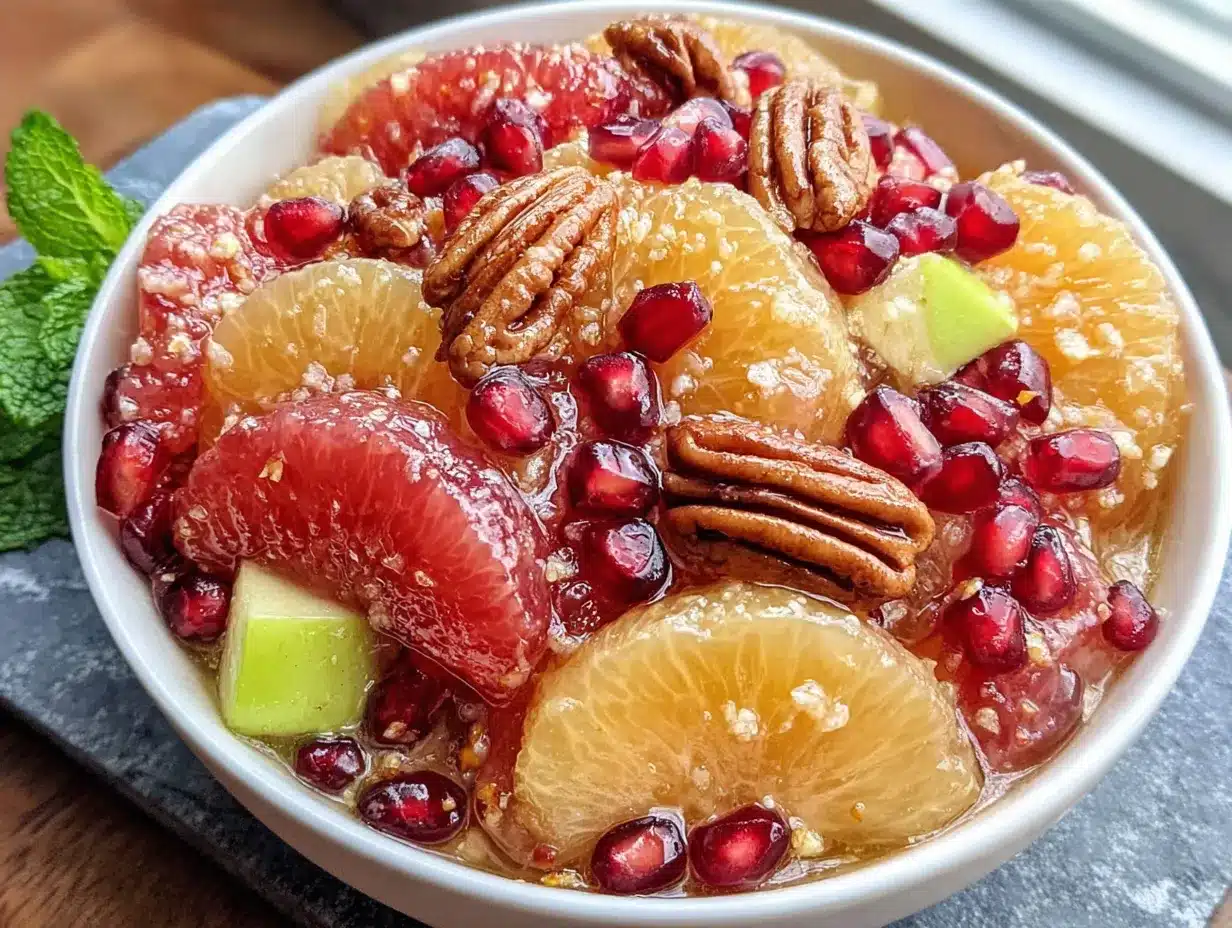
- ¼ cup toasted pistachios or walnuts: Adds crunch and a savory note. Toast them in a dry pan for 2-3 minutes until fragrant, then let them cool before adding.
- ½ cup pomegranate juice (for a dressing variation): Reduce it in a small saucepan until syrupy, then drizzle over the finished salad for extra pomegranate flavor.
- Pinch of flaky sea salt: Sounds weird, I know, but a tiny sprinkle of salt on top makes the sweetness pop. Trust me on this one.
- ¼ cup crumbled feta or goat cheese: For a savory twist, the creamy, tangy cheese pairs surprisingly well with the sweet fruit.
Ingredient Selection Tips
When you’re shopping for this recipe, look for pomegranates that are roughly the size of a baseball. Larger ones aren’t necessarily better—they can sometimes be dry inside. For persimmons, the color should be deep orange, not pale yellow. Pale persimmons are underripe and will be astringent and unpleasant. Give them a gentle squeeze; they should yield slightly but not feel mushy.
I’ve made this salad with different fruit combinations over the years, and honestly, this specific pairing is the winner. The pomegranate and persimmon have a natural affinity for each other—the crunch and the creaminess, the tart and the sweet. It’s like they were meant to be together.
Equipment Needed
One of the best things about this recipe is how little equipment it requires. You don’t need a stand mixer, a food processor, or any fancy gadgets. Here’s what you’ll need:
- A sharp chef’s knife: A good 8-inch chef’s knife makes quick work of the persimmons and pomegranate. A dull knife is dangerous—it’s more likely to slip. Keep yours sharpened, and you’ll thank yourself later.
- A cutting board: Any cutting board works, but I prefer a large wooden one because it gives you plenty of space. Make sure it’s stable—put a damp paper towel underneath if it slides around.
- A medium mixing bowl: Glass or ceramic is ideal because it won’t absorb flavors or stains. Stainless steel works too, but avoid plastic bowls—they can hold onto odors.
- A wooden spoon: This is for the pomegranate seed trick. A metal spoon works too, but wood is gentler on the fruit and less likely to bruise the seeds.
- A citrus juicer or reamer: You can squeeze the lime by hand, but a reamer gets more juice out with less effort. I use a simple wooden reamer that cost me five dollars.
- A small bowl for the dressing: Just something to whisk the lime juice and honey together before pouring over the fruit.
- A sharp paring knife (optional): Useful for scoring the pomegranate if you prefer that method. Not essential, but nice to have.
That’s it. No food processor, no blender, no special tools. If you have a knife and a bowl, you can make this salad. I’ve made it in a hotel room with a plastic knife and a paper bowl, and it still turned out great. Not ideal, but it worked. The point is, don’t let a lack of fancy equipment stop you.
Preparation Method
Alright, let’s get to the good part. This whole process takes about ten minutes, and I’ll walk you through every step. Take your time the first time, and you’ll be flying through it by the second or third go.
Step 1: Prepare the Pomegranate (5 minutes)
This is the part that scares most people, but I promise it’s easy. Start by cutting off the crown—the little bump at the top of the pomegranate. You want to slice about a quarter-inch off, just enough to expose the seeds inside. Then, score the pomegranate along the natural ridges you can feel through the skin. Don’t cut all the way through—just deep enough to break the skin, about a quarter-inch deep.
Now, here’s Rosa’s trick: hold the pomegranate over your mixing bowl, cut side down, and whack it firmly with a wooden spoon. I mean really whack it. The seeds will start raining down into the bowl like jewels. Rotate the pomegranate and whack it from different angles until all the seeds have fallen out. You’ll be left with the empty white pith, which you can compost or toss.
Sensory cue: You’ll hear a satisfying rain of seeds hitting the bowl, like little pebbles. The sound is oddly therapeutic. Pick out any bits of white pith that fall in—they’re bitter and you don’t want them in your salad. This method is faster and way less messy than trying to pick the seeds out by hand. Your fingers will thank me.
Step 2: Prepare the Persimmons (3 minutes)
Rinse the persimmons under cool water and pat them dry. Cut off the green stem and the flat bottom—just a thin slice. Now, stand the persimmon on its flat bottom and slice it in half from top to bottom. You’ll see a small, star-shaped pattern in the center. That’s the core, and it’s edible, so don’t worry about removing it.
Lay each half flat-side down and slice into thin half-moons, about a quarter-inch thick. You want them thin enough to be elegant but thick enough to hold their shape. If they’re too thin, they’ll turn to mush when you toss the salad. Too thick, and they’ll be awkward to eat. A quarter-inch is the sweet spot.
Sensory cue: A ripe Fuyu persimmon should slice like a firm apple—smooth and clean, not mushy. If it feels squishy, it’s overripe and better used for baking. The color should be a vibrant, almost glowing orange. Add the sliced persimmons to the bowl with the pomegranate seeds.
Step 3: Make the Dressing (1 minute)
In your small bowl, combine the fresh lime juice and honey. Whisk them together until the honey is fully dissolved. This takes about 30 seconds. If your honey is thick and crystallized, warm the jar in a bowl of hot water for a few minutes before measuring—it’ll blend much more easily.
Taste the dressing. It should be bright and tangy with a gentle sweetness. If it’s too tart for your taste, add another half-teaspoon of honey. If it’s too sweet, add a squeeze more lime. This is your chance to customize it to your preference. I like mine on the tangier side because the fruit is already sweet, but you do you.
Sensory cue: The dressing should smell fresh and citrusy, with the honey adding a warm, floral note. It should look slightly opaque from the honey, not clear like straight lime juice.
Step 4: Assemble the Salad (1 minute)
Pour the dressing over the pomegranate seeds and persimmons. Use a rubber spatula or a large spoon to gently toss everything together. Be gentle—you don’t want to bruise the persimmons or break the pomegranate seeds. Fold the fruit over itself a few times until everything is evenly coated.
Now, add the thinly sliced mint. Toss once more to distribute it evenly. The mint should be scattered throughout, not clumped in one spot. If you’re using any of the optional add-ins like nuts or cheese, add them now and give everything one final gentle toss.
Sensory cue: The finished salad should look like a bowl of jewels—deep red pomegranate arils, bright orange persimmon slices, and flecks of green mint. The dressing should glisten on the fruit without pooling at the bottom of the bowl.
Step 5: Rest and Serve (optional, but recommended)
Let the salad sit at room temperature for about 5 minutes before serving. This allows the flavors to meld together. The persimmons will release a tiny bit of their juice, mingling with the dressing to create a light syrup. If you’re serving it immediately, that’s fine too—it’s delicious either way.
Transfer the salad to a serving bowl or plate it individually on small dishes. Garnish with a few extra mint leaves and a tiny pinch of flaky sea salt if you’re feeling fancy. Serve immediately, or cover and refrigerate for up to 2 hours. Don’t let it sit longer than that, or the persimmons will start to break down and the salad will get watery.
Cooking Tips & Techniques
I’ve made this salad probably fifty times by now, and I’ve learned a few things along the way. Some through success, some through spectacular failure. Let me save you the trouble.
The pomegranate whacking technique takes practice. The first time I tried it, I hit the pomegranate too hard and sent seeds flying across the kitchen like little red grenades. My dog was very confused. The key is to use firm, controlled whacks, not wild swings. Hold the pomegranate close to the bowl, and hit it with the flat part of the spoon, not the edge. You’ll get the hang of it after two or three tries.
Don’t skip the lime juice. I know it might seem like an extra step, but the acid does two important things. First, it prevents the persimmons from oxidizing and turning brown. Second, it balances the sweetness and wakes up all the flavors. Without it, the salad tastes flat and one-dimensional. I learned this the hard way when I was in a hurry and left it out. The salad was fine, but it wasn’t great. The lime makes it great.
Slice the mint at the last minute. Mint starts to oxidize and lose its bright color almost immediately after cutting. For the prettiest presentation, slice your mint right before you’re ready to toss the salad. If you’re prepping ahead, keep the mint whole and slice it just before serving.
Temperature matters. This salad is best served at cool room temperature, not straight from the fridge. Cold temperatures dull the flavors, especially the sweetness of the fruit. If you’ve refrigerated the salad, let it sit on the counter for 10-15 minutes before serving. The fruit should feel cool but not cold to the touch.
Trust your instincts on sweetness. The sweetness of pomegranates and persimmons can vary wildly depending on the season and where they were grown. Some batches are incredibly sweet, while others are more tart. Taste your fruit before you add the honey, and adjust accordingly. If your pomegranate is already super sweet, you might only need a half-teaspoon of honey. If it’s tart, go for the full two teaspoons.
Make it a complete meal. This salad is obviously great on its own, but it also pairs beautifully with savory dishes. Serve it alongside roasted chicken, grilled pork chops, or even a simple cheese plate. The sweetness and acidity cut through rich, fatty foods perfectly.
Variations & Adaptations
One of the things I love about this recipe is how flexible it is. You can change it up based on what’s in season, what you have on hand, or what your family likes. Here are some of my favorite variations.
Seasonal Twists
Winter Citrus Version: Add segments of blood orange or grapefruit along with the pomegranate and persimmon. The citrus adds another layer of brightness and color. Use a mix of orange and lime juice for the dressing.
Spring Berry Version: Swap the persimmons for sliced strawberries and add a handful of blueberries. Use lemon juice instead of lime, and add a splash of vanilla extract to the dressing. It’s a completely different salad, but just as delicious.
Fall Apple Version: Replace the persimmons with thinly sliced Honeycrisp or Fuji apples. Add a sprinkle of cinnamon to the dressing and toss in some toasted pecans. This version is perfect for Thanksgiving or fall gatherings.
Dietary Adaptations
Vegan: Swap the honey for maple syrup or agave nectar. Both work beautifully, though maple syrup will add a subtle woodsy flavor that pairs well with the fruit.
Low-Sugar: Omit the honey entirely and let the natural sweetness of the fruit shine. Add a pinch of stevia or monk fruit sweetener if you need a little extra sweetness, but honestly, ripe pomegranates and persimmons are sweet enough on their own.
Nut-Free: Skip the optional nuts or replace them with seeds like pumpkin seeds or sunflower seeds. Toast them lightly for extra crunch.
Flavor Boosts
Spiced Version: Add a pinch of cardamom or cinnamon to the dressing. These warm spices complement the winter fruit beautifully and make the salad feel more festive.
Herb Swap: Replace the mint with fresh basil or cilantro for a completely different flavor profile. Basil adds a sweet, peppery note, while cilantro brings a fresh, citrusy brightness. Both are surprisingly good with the fruit.
Boozy Version (for adults only): Add a tablespoon of pomegranate liqueur or orange liqueur to the dressing. It adds depth and complexity without overwhelming the fruit. Perfect for holiday parties.
I once made a version with chili powder and lime for a friend who loves spicy food. It was weirdly amazing—the heat brought out the sweetness of the fruit in a way I didn’t expect. Don’t be afraid to experiment. The worst that can happen is you learn what doesn’t work.
Serving & Storage Suggestions
This salad is incredibly versatile when it comes to serving. Here’s how to make the most of it.
Serving Ideas
Serve this salad in a beautiful glass bowl to show off the colors. It’s stunning on a holiday table or as part of a brunch spread. For a more casual presentation, I like to serve it in individual small bowls or even in hollowed-out pomegranate halves for a fun, edible serving vessel.
Pair it with a crisp white wine like Sauvignon Blanc or a dry Riesling. The acidity in the wine complements the fruit beautifully. For a non-alcoholic option, sparkling water with a splash of pomegranate juice is perfect.
This salad also works wonderfully as a topping for yogurt, oatmeal, or pancakes. Spoon it over Greek yogurt for a quick breakfast, or pile it on top of fluffy buttermilk pancakes for a weekend treat. It’s also amazing with a dollop of mascarpone or whipped cream for dessert.
Storage Instructions
Store any leftovers in an airtight container in the refrigerator for up to 2 days. The salad will release some liquid as it sits, so give it a gentle stir before serving. The persimmons will soften over time, so it won’t look as pretty as it did fresh, but the flavor will still be good.
I don’t recommend freezing this salad. The pomegranate seeds will burst and the persimmons will turn to mush when thawed. This is definitely a make-and-eat-fresh kind of recipe.
Make-Ahead Tips
If you’re prepping for a party, you can prepare the components separately up to a day in advance. Store the pomegranate seeds and sliced persimmons in separate containers in the fridge. Make the dressing and store it in a small jar. Keep the mint whole and unwashed in a plastic bag. When you’re ready to serve, just toss everything together. It takes two minutes and tastes like you just made it.
The flavors actually develop and deepen slightly after about 30 minutes in the fridge, so don’t stress about timing. Just don’t let it sit overnight—the texture suffers.
Nutritional Information & Benefits
This salad isn’t just beautiful and delicious—it’s genuinely good for you. Here’s what you’re getting in each serving.
Estimated per serving (based on 4 servings):
- Calories: 120-150
- Carbohydrates: 30g
- Fiber: 5g
- Sugar: 22g (all natural from fruit and honey)
- Protein: 2g
- Fat: 1g
- Vitamin C: 25% of daily value
- Vitamin K: 30% of daily value
- Potassium: 10% of daily value
Health Highlights:
Pomegranates are packed with antioxidants called punicalagins, which are linked to heart health and reduced inflammation. They’re also a good source of vitamin C and fiber. Persimmons are rich in vitamin A, which supports eye health and immune function, and they contain a unique antioxidant called betulinic acid that may have anti-aging properties.
The lime juice adds a boost of vitamin C, while the honey provides small amounts of antioxidants and antibacterial compounds. Even the mint contributes—it’s known to aid digestion and freshen breath naturally.
Dietary Notes: This recipe is naturally gluten-free, dairy-free (unless you add cheese), and nut-free (unless you add nuts). It’s also suitable for vegetarian and vegan diets with the honey substitution mentioned above. It’s low in fat and sodium, making it a heart-healthy choice.
I personally love that I can serve this to my family knowing it’s packed with nutrients. My kids think they’re getting a treat, and I know they’re getting a serious dose of vitamins and antioxidants. Win-win.
Conclusion
This quick winter fruit salad has become a staple in my kitchen for a reason. It’s fast, it’s beautiful, and it tastes like pure winter sunshine. Every time I make it, I think of Rosa in her garden, sharing her wisdom and her fruit without a second thought. That’s the kind of cooking I love—simple, generous, and rooted in real connection.
I hope you’ll make this salad your own. Maybe you’ll add a different herb, swap in a seasonal fruit, or serve it in a way I never thought of. That’s the beauty of a simple recipe—it leaves room for you to play. Don’t be afraid to experiment. The worst that can happen is you learn something new.
When you make it, I’d love to hear how it went. Drop a comment below and let me know what you changed, what you loved, or even what went wrong. We’re all learning together here, and your experience might be exactly what someone else needs to hear.
Here’s to quick, beautiful food that brings a little joy to even the busiest weeknight. Happy cooking, friends.
Frequently Asked Questions
Can I use frozen pomegranate seeds?
Yes, you absolutely can. Frozen pomegranate seeds are a great time-saver and work perfectly in this salad. Just thaw them in the refrigerator overnight or run them under cool water for a few minutes before using. Drain off any excess liquid before adding them to the bowl. The texture will be slightly softer than fresh, but the flavor is still excellent.
What if I can’t find Fuyu persimmons?
If Fuyu persimmons aren’t available in your area, you have a few options. You can use Hachiya persimmons, but they need to be fully soft and jelly-like before using—they’re astringent and unpleasant when firm. Just scoop out the soft flesh and add it to the salad as a creamy component. Alternatively, you can substitute with ripe mango, which has a similar sweet, creamy texture, or with firm pears like Bosc or Anjou.
How do I pick a ripe pomegranate?
A ripe pomegranate should feel heavy for its size, which indicates it’s full of juice. The skin should be firm and taut, with a deep red or reddish-brown color. Avoid pomegranates with soft spots, cracks, or wrinkled skin. The shape should be slightly angular, not perfectly round—angular pomegranates tend to have more fully developed seeds inside.
Can I make this salad ahead of time for a party?
Absolutely, but with a few caveats. You can prepare the components up to 24 hours in advance and store them separately in the refrigerator. Combine the fruit, dressing, and mint no more than 2 hours before serving for the best texture and appearance. The persimmons will release moisture over time, so if you’re making it more than 2 hours ahead, consider adding the dressing just before serving.
Is this salad suitable for people with diabetes?
This salad contains natural sugars from fruit and honey, so portion control is important for those managing blood sugar. The fiber content (about 5 grams per serving) helps slow sugar absorption. You can reduce the honey to 1 teaspoon or omit it entirely to lower the sugar content. Pairing the salad with a source of protein, like Greek yogurt or nuts, can also help stabilize blood sugar. As always, consult with your healthcare provider for personalized dietary advice.
Pin This Recipe!
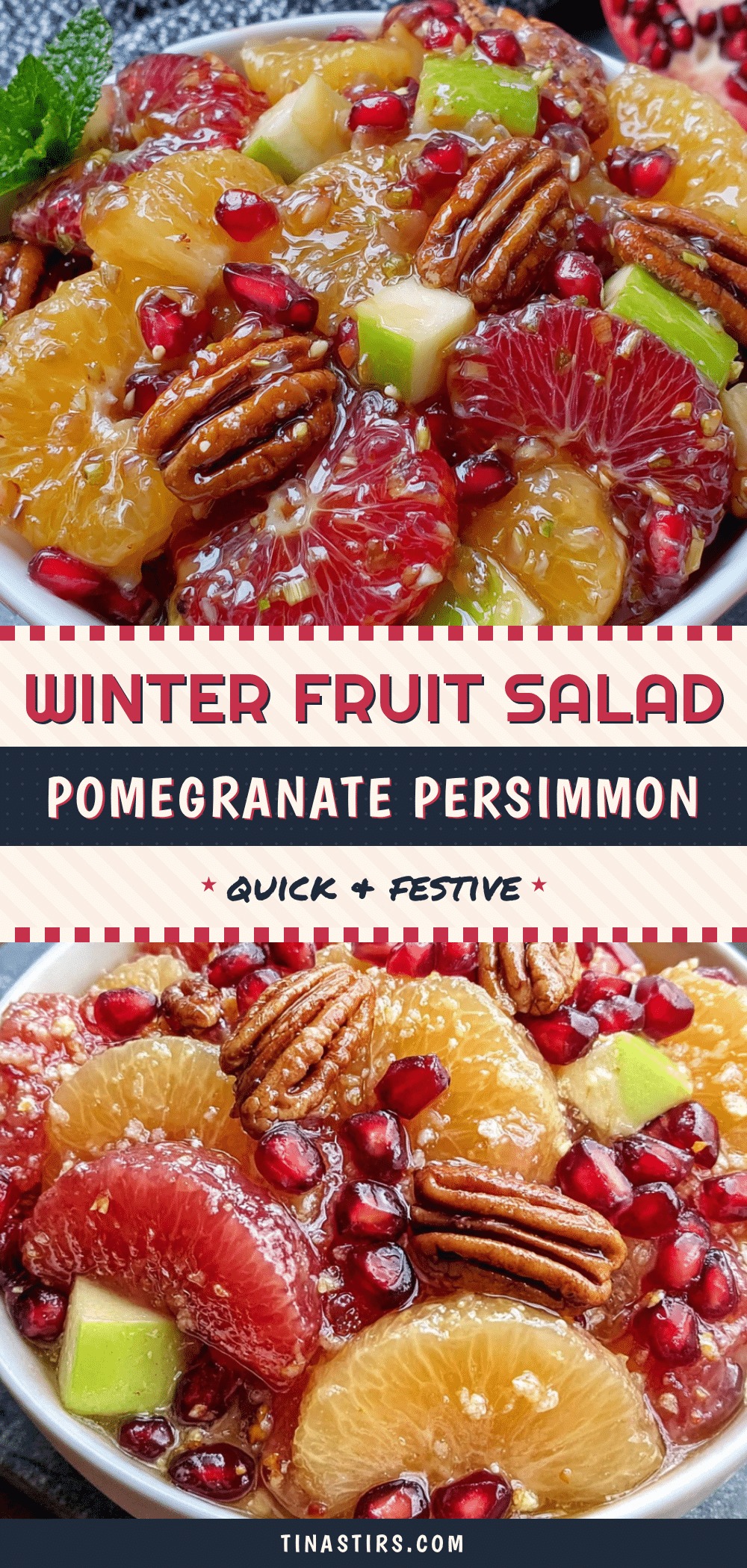
Quick Winter Fruit Salad with Pomegranate & Persimmon

A vibrant, 10-minute winter fruit salad featuring jewel-like pomegranate arils and honey-sweet persimmons, tossed with lime, honey, and fresh mint. It’s a bright, refreshing burst of flavor that’s perfect for busy weeknights or holiday gatherings.
- Prep Time: 10 minutes
- Cook Time: 0 minutes
- Total Time: 10 minutes
- Yield: 4 servings 1x
- Category: Side Dish
- Cuisine: American
Ingredients
- 1 large pomegranate (about 8–10 ounces of arils)
- 2 ripe Fuyu persimmons (about 6–8 ounces each)
- 1 tablespoon fresh lime juice (about half a lime)
- 1–2 teaspoons honey (adjust to taste)
- 2 tablespoons fresh mint leaves, thinly sliced
- ¼ cup toasted pistachios or walnuts (optional)
- ½ cup pomegranate juice (optional, for dressing variation)
- Pinch of flaky sea salt (optional)
- ¼ cup crumbled feta or goat cheese (optional)
Instructions
- Prepare the pomegranate: Cut off the crown, score along natural ridges, hold cut side down over a bowl, and whack firmly with a wooden spoon until seeds fall out. Pick out any white pith.
- Prepare the persimmons: Rinse, pat dry, cut off stem and bottom, slice in half, then cut into thin half-moons about ¼-inch thick. Add to the bowl with pomegranate seeds.
- Make the dressing: In a small bowl, whisk together fresh lime juice and honey until honey is dissolved. Taste and adjust sweetness or tartness as desired.
- Assemble the salad: Pour dressing over fruit and gently toss with a rubber spatula or spoon. Add sliced mint and toss once more. If using optional add-ins (nuts, cheese, salt), add them now and toss gently.
- Rest and serve: Let salad sit at room temperature for 5 minutes to meld flavors. Transfer to a serving bowl, garnish with extra mint and a pinch of flaky sea salt if desired. Serve immediately or refrigerate for up to 2 hours.
Notes
Use Rosa’s trick: whack the pomegranate with a wooden spoon over a bowl to release seeds without mess. Don’t skip the lime juice—it prevents persimmons from browning and balances sweetness. Slice mint at the last minute to keep it bright. Serve at cool room temperature for best flavor. Adjust honey based on fruit sweetness. For make-ahead, prep components separately and combine just before serving.
Nutrition
- Serving Size: 1 serving (about 1 c
- Calories: 135
- Sugar: 22
- Sodium: 5
- Fat: 1
- Carbohydrates: 30
- Fiber: 5
- Protein: 2
Keywords: winter fruit salad, pomegranate, persimmon, quick salad, healthy fruit salad, holiday salad, no-cook recipe