Love this? Save it for later!
Share the inspiration with your friends
Christmas dinner was in twelve hours and I’d completely forgotten to order a prime rib. My mother-in-law, who has hosted the holiday meal for twenty-three years straight, had called the night before to say she was sick. Just like that, the baton was passed. Everyone else would be bringing their A-game—my sister-in-law’s famous twice-baked potatoes, my brother’s chocolate yule log that takes three days to assemble. I had a frantic trip to the grocery store at 8 PM on Christmas Eve and a vague memory of a recipe I’d seen once on a cooking show. Honestly, I stood in the meat aisle staring at a beautiful, bone-in rib roast and felt my stomach drop.
I grabbed it anyway. I mean, what else was I going to do? Serve spaghetti? The price tag made me wince—this was supposed to be a budget-friendly Christmas, but desperate times call for desperate measures. I grabbed some fresh herbs from the produce section, a head of garlic, and hoped for the best. The whole ride home I was muttering to myself, “You can do this. It’s just a big piece of meat. How hard can it be?” Let me tell you, I was not confident.
The next morning, with flour on my counter and a slight panic in my eyes, I whipped up the herb crust. I slathered it on the roast, tied it up with some kitchen twine I found in the back of a drawer, and shoved it in the oven. I didn’t even have a proper meat thermometer—I had to use an old instant-read one that beeps when it feels like it. When I pulled that roast out, the golden-brown crust crackled under my knife. The smell? Unreal. My family walked in the door just as I was slicing it, and the silence that fell over the room was the best compliment I’ve ever gotten. That herb-crusted prime rib roast became the Christmas hero I never planned on being. And honestly? I’ve made it every year since.
Why You’ll Love This Recipe
Let’s be real—feeding a family on a budget during the holidays can feel like a high-wire act. You want something special, but you don’t want to blow your entire gift budget on one meal. This herb-crusted prime rib roast solves that problem. It looks like a million bucks, tastes like a five-star steakhouse, but it’s surprisingly straightforward to pull off. You don’t need to be a professional chef to nail this one.
- Simple Ingredients, Stunning Results: You’ll grab fresh rosemary, thyme, garlic, and a few pantry staples. No weird, expensive specialty items. The magic is in the technique, not the grocery list.
- Perfect for Christmas Dinner: This is the centerpiece that makes everyone stop and take a picture. It’s festive, impressive, and feeds a crowd without you being stuck in the kitchen all day.
- Crowd-Pleaser for Picky Eaters: I’ve served this to kids who “don’t like red meat” and uncles who claim they’ve had better steak in Argentina. Everyone cleans their plate. The herb crust adds flavor without being overwhelming.
- Foolproof Method: The high-heat sear followed by a low-and-slow roast means you get a perfect medium-rare every single time. No more guessing, no more dry, overpriced meat.
- Leftovers That Reheat Like a Dream: This is a big one for us. The leftover prime rib makes the most incredible sandwiches, hash, or even a quick stir-fry. Nothing goes to waste.
What makes this recipe different from the dozens you’ll find online? It’s the herb crust technique. Most recipes just rub the herbs on the outside, but I mix them with a little olive oil and Dijon mustard to create a paste that clings to the meat and forms a beautiful, flavorful bark. Plus, I’ll show you how to get that perfect crust without burning the herbs. It’s a small tweak that makes a huge difference.
This isn’t just another Christmas roast. It’s the one that makes you close your eyes after the first bite, the one that turns a stressful holiday meal into a moment of pure, quiet satisfaction. And when you’re feeding a family on a budget, that feeling is priceless.
What Ingredients You Will Need
This recipe uses simple, high-quality ingredients to deliver that show-stopping flavor. Most of these are pantry staples or easy to find at any grocery store. Let’s break down what you’ll need and why each one matters.
For the Prime Rib Roast
- 1 (4-5 pound) bone-in prime rib roast: Look for a roast with good marbling—those little streaks of fat running through the meat. That fat equals flavor and tenderness. I usually ask the butcher to cut it from the rib end for the most even cooking. If you’re on a tight budget, a boneless roast works too, just reduce the cooking time slightly.
- 2 tablespoons olive oil: This helps the herb paste stick and encourages browning. Use a good quality extra-virgin for the best flavor, but regular olive oil works fine.
- 1 tablespoon Dijon mustard: This is my secret weapon. It adds a subtle tang and helps the herb crust adhere to the meat. Don’t worry—you won’t taste mustard in the final dish.
- Salt and freshly ground black pepper: Don’t skimp here. A generous amount of kosher salt is crucial for seasoning the meat all the way through. I use about 1 teaspoon of salt per pound of meat.
For the Herb Crust
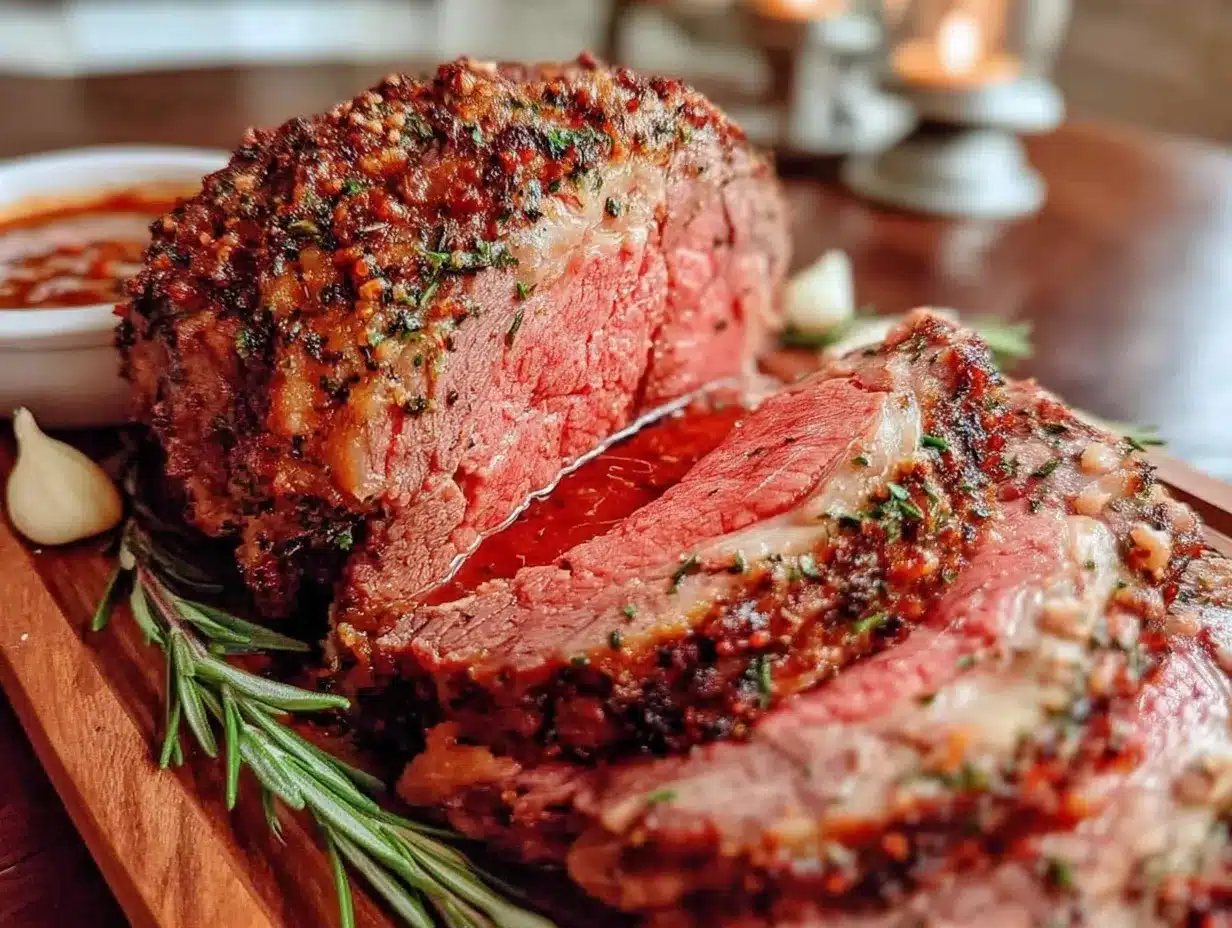
- 4 cloves garlic, minced: Fresh garlic is non-negotiable. The jarred stuff just won’t give you the same punch. I love the smell of garlic roasting with the herbs—it fills the whole house.
- 2 tablespoons fresh rosemary, finely chopped: Rosemary and beef are a classic pair. It adds an earthy, pine-like aroma that screams “Christmas dinner.” If you only have dried, use 2 teaspoons.
- 2 tablespoons fresh thyme leaves: Thyme is more subtle than rosemary but adds a lovely depth. Again, dried works in a pinch—use 2 teaspoons.
- 1 tablespoon fresh parsley, chopped: Parsley brightens up the herb mixture and adds a fresh, green note. It’s not just for garnish here.
- 1 teaspoon dried oregano: A little Italian flair. Oregano adds a slightly peppery, slightly bitter note that balances the richness of the beef.
- 1/2 teaspoon red pepper flakes (optional): I add these for a tiny kick of heat. It’s not spicy—just a little warmth that wakes up your taste buds. Leave it out if you’re feeding kids or sensitive palates.
For the Pan Drippings (Optional but Recommended)
- 1 cup beef broth: Use low-sodium so you can control the salt. This will deglaze the pan and form the base for a simple au jus.
- 1/4 cup dry red wine (optional): A splash of wine adds richness and complexity. If you don’t have wine, just use more broth.
- 1 tablespoon butter: A little butter whisked in at the end makes the jus silky and luxurious.
Substitution Tips: If you’re feeding a smaller family, you can easily halve this recipe using a 2-3 pound roast. For a dairy-free version, skip the butter in the jus and use a little olive oil instead. And if you don’t have fresh herbs, dried herbs will work—just use half the amount. No one will know the difference.
Equipment Needed
You don’t need a fancy kitchen to nail this roast. Here’s what you’ll actually use:
- Roasting pan with a rack: The rack lifts the roast off the bottom of the pan, allowing hot air to circulate evenly. If you don’t have a rack, you can use a few rolled-up balls of aluminum foil to prop the roast up.
- Instant-read meat thermometer: This is non-negotiable. A prime rib is too expensive to guess. I use a simple digital one that costs about $15. It’s the best investment you’ll make for cooking meat.
- Chef’s knife: For chopping the herbs and slicing the finished roast. A sharp knife makes all the difference.
- Cutting board: Preferably a large one with a groove to catch juices. You’ll need space to rest and slice the roast.
- Kitchen twine: To tie the roast between the bones. This helps it cook evenly and keeps its shape. If you don’t have twine, you can ask the butcher to do it.
- Small bowl: For mixing the herb paste.
- Aluminum foil: For tenting the roast while it rests. You’ll also use it to cover the bones if they start to burn.
Budget-Friendly Tip: You can often find roasting pans at thrift stores for a few dollars. I got mine for $5 and it’s been going strong for years. Don’t feel like you need to buy the most expensive equipment—simple tools work perfectly.
Preparation Method
Alright, let’s get cooking. This method is broken down into simple, clear steps. Follow them closely, and you’ll have a perfect roast every time.
- Take the Roast Out of the Fridge (1 hour before cooking): Remove the prime rib from the refrigerator and let it sit at room temperature for at least 1 hour. This is crucial. A cold roast will cook unevenly, giving you a raw center and an overcooked exterior. Pat it dry with paper towels—dry meat browns better.
- Preheat the Oven to 450°F (232°C): You want a screaming hot oven for the initial sear. Position the rack in the middle of the oven. While it’s heating, make the herb paste.
- Make the Herb Paste: In a small bowl, combine the minced garlic, chopped rosemary, thyme, parsley, oregano, red pepper flakes (if using), olive oil, and Dijon mustard. Stir until it forms a thick, fragrant paste. It should look like a green, chunky pesto. Give it a sniff—that’s Christmas right there.
- Season the Roast: Generously season all sides of the prime rib with salt and pepper. Don’t be shy. I use about 1 teaspoon of kosher salt per pound. Rub the salt into the meat, including the sides and the fat cap. Then, slather the herb paste all over the roast, covering every surface. Don’t forget the ends.
- Tie the Roast: Using kitchen twine, tie the roast between each rib bone. This helps it cook evenly and keeps the shape nice and round. If you have a butcher who already tied it, skip this step.
- Sear the Roast (15 minutes): Place the roast, bone-side down, on a rack in the roasting pan. Roast at 450°F for 15 minutes. This high heat will create a beautiful, brown crust. Don’t open the oven door—let it do its thing.
- Lower the Heat to 325°F (163°C): After 15 minutes, reduce the oven temperature to 325°F. Do not open the door to do this—just turn the dial. Continue roasting until the internal temperature reaches your desired doneness. Here’s a rough guide for a 4-5 pound roast:
- Rare (120-125°F): About 1 hour 15 minutes to 1 hour 30 minutes total roasting time.
- Medium-Rare (130-135°F): About 1 hour 30 minutes to 1 hour 45 minutes total.
- Medium (140-145°F): About 1 hour 45 minutes to 2 hours total.
- Check the Temperature: Start checking the internal temperature about 30 minutes before you think it’ll be done. Insert the thermometer into the thickest part of the meat, avoiding the bone. The temperature will rise another 5-10 degrees while it rests, so pull it out when it’s 5 degrees below your target. For medium-rare, pull at 125-130°F.
- Rest the Roast (20-30 minutes): This is the hardest part—waiting. Transfer the roast to a cutting board and tent it loosely with aluminum foil. Let it rest for at least 20 minutes, up to 30. Resting allows the juices to redistribute throughout the meat. If you cut it too soon, all those beautiful juices will run out onto the board, leaving you with dry meat.
- Make the Au Jus (While the Roast Rests): Place the roasting pan on the stovetop over medium heat. Add the beef broth and red wine (if using). Scrape up all the browned bits from the bottom of the pan—that’s pure flavor. Let it simmer for 3-4 minutes, then whisk in the butter until melted. Strain into a serving bowl if you want it smooth, or leave it rustic. Season with salt and pepper to taste.
- Slice and Serve: Remove the twine. Slice the roast between the bones into thick, beautiful slices. Serve immediately with the warm au jus on the side. Watch everyone’s faces light up.
Cooking Tips & Techniques
I’ve made this roast more times than I can count, and I’ve learned a few things the hard way. Here are my best tips to save you from my mistakes.
Don’t Skip the Resting Time: I know it’s tempting to slice into that beautiful roast right away, but trust me on this one. The first time I made this, I was so excited I cut into it after 10 minutes. Juice went everywhere, and the meat was noticeably drier. Resting is not optional—it’s essential. Use that time to make the au jus and set the table.
Use a Meat Thermometer, Not a Timer: Ovens vary wildly. My old oven ran 25 degrees hot, and I had no idea until I started using a thermometer. Relying on a timer alone is a recipe for disaster. A $15 thermometer will save your $70 roast. Insert it into the thickest part, away from the bone, for the most accurate reading.
Cover the Bones if They Get Too Dark: The exposed bones can burn before the meat is done. If you notice them getting too dark about halfway through, cover them with a small piece of aluminum foil. This keeps them looking pretty for the presentation.
Let the Roast Come to Room Temperature: This is the most common mistake I see. A cold roast from the fridge will cook unevenly. The outside will be overdone while the center is still cold. Giving it that hour on the counter makes a world of difference. Set a timer so you don’t forget.
Don’t Overcrowd the Pan: If you’re making a larger roast (say, 8 pounds), make sure it fits comfortably in the pan with some space around it. If it’s crammed in, the heat won’t circulate properly, and you’ll get uneven cooking. Use a larger pan if needed.
Variations & Adaptations
This recipe is wonderfully flexible. Here are a few ways to make it your own.
Herb Variations: Not a fan of rosemary? Swap it out for equal amounts of fresh sage or tarragon. Sage is especially lovely with beef—it has that earthy, almost peppery flavor. I once made a version with fresh dill and parsley for a spring dinner, and it was surprisingly light and bright.
Garlic Lovers’ Version: Double the garlic. I’ve made a “40-clove garlic” version where I stud the roast with whole garlic cloves before applying the herb paste. It’s intense, but if you love garlic, this is your jam. Just be prepared for some serious garlic breath.
Spicy Kick: Add a teaspoon of smoked paprika or chipotle powder to the herb paste. The smokiness pairs beautifully with the beef and adds a subtle heat that lingers. My brother-in-law, who loves everything spicy, requests this version every year.
Dietary Adaptations:
- Keto/Low-Carb: This recipe is naturally keto-friendly. Skip the red wine in the jus if you’re strict, or use a dry vermouth instead.
- Dairy-Free: Omit the butter in the au jus and use a little more olive oil. The herb paste itself is dairy-free.
- Gluten-Free: This recipe is naturally gluten-free. Just make sure your beef broth and Dijon mustard are certified gluten-free, as some brands contain additives.
Make It a Meal: Serve this roast with classic sides like roasted potatoes, creamed spinach, or a simple arugula salad with lemon vinaigrette. The richness of the beef pairs perfectly with something bright and acidic.
Serving & Storage Suggestions
This roast is a showstopper, so present it with pride. Slice it at the table for maximum drama. Arrange the slices on a warm platter, and pour a little au jus over the top for shine. Serve the remaining jus in a small gravy boat on the side.
What to Serve With It: I love pairing this with creamy mashed potatoes (they soak up the jus beautifully), roasted Brussels sprouts with balsamic glaze, and a crusty baguette to mop up every last drop. For drinks, a full-bodied red wine like Cabernet Sauvignon or a Malbec is a natural choice. If you’re not drinking wine, a sparkling water with a splash of cranberry juice feels festive.
Storing Leftovers: Wrap any leftover prime rib tightly in plastic wrap or aluminum foil, or place it in an airtight container. It will keep in the refrigerator for up to 4 days. The flavors actually deepen overnight, so leftovers are a treat.
Reheating Tips: The best way to reheat prime rib is low and slow. Place slices in a baking dish with a splash of beef broth, cover with foil, and warm in a 300°F oven for 10-15 minutes. This prevents the meat from drying out. You can also reheat slices in a skillet over medium-low heat with a little butter. Avoid the microwave—it will turn your beautiful roast into shoe leather.
Freezing Instructions: You can freeze cooked prime rib for up to 3 months. Wrap it tightly in plastic wrap, then a layer of aluminum foil. Thaw overnight in the refrigerator before reheating. The texture will be slightly softer after freezing, but it’s still delicious in sandwiches or hash.
Nutritional Information & Benefits
Let’s be honest—prime rib is a splurge, and that’s okay. It’s a special occasion meal. But it does have some nutritional benefits worth noting.
Estimated Nutritional Values (per 6-ounce serving, without au jus):
- Calories: 450
- Protein: 35g
- Fat: 34g
- Saturated Fat: 14g
- Carbohydrates: 1g
- Fiber: 0g
- Sugar: 0g
- Sodium: 480mg (varies with salt)
Health Benefits: Beef is an excellent source of high-quality protein, which is essential for muscle repair and growth. It’s also rich in iron, zinc, and B vitamins, particularly B12, which supports energy production and brain function. The herbs in the crust—rosemary, thyme, and oregano—are packed with antioxidants that help fight inflammation.
Dietary Considerations: This recipe is naturally low-carb and gluten-free. If you’re watching your saturated fat intake, you can trim some of the visible fat before cooking, but keep in mind that fat equals flavor and tenderness. For a lighter option, serve smaller portions alongside plenty of vegetables.
I believe in enjoying special foods in moderation. This roast is not an everyday meal—it’s a celebration. And sometimes, a celebration calls for a little indulgence. Life is too short to skip the good stuff.
Conclusion
This herb-crusted prime rib roast is the Christmas dinner hero you didn’t know you needed. It’s impressive enough to wow your guests, simple enough for a busy home cook, and budget-friendly enough to keep your holiday spending in check. The herb crust creates a beautiful, flavorful bark, while the low-and-slow method guarantees a perfectly tender, medium-rare center every time.
I love this recipe because it reminds me that you don’t need a perfect plan to pull off something amazing. Sometimes, the best meals come from a little panic, a rushed trip to the store, and a whole lot of hope. That first Christmas dinner I hosted, I was terrified. Now, it’s the meal I look forward to all year.
I’d love to hear how yours turns out! Did you add your own twist? Did your family love it? Drop a comment below and share your experience. And if you’re looking for more holiday inspiration, check out our cranberry sauce from scratch or these creamy garlic mashed potatoes to complete the feast. Happy cooking, and have a wonderful Christmas dinner!
Frequently Asked Questions
Can I use a boneless prime rib roast for this recipe?
Absolutely. A boneless roast will work just fine, but it will cook a little faster since there’s no bone to slow down the heat transfer. Start checking the temperature about 15-20 minutes earlier than the times listed above. The bone does add flavor and helps the roast hold its shape, so if you can swing it, go for bone-in.
How do I know when the roast is done without a thermometer?
Honestly, I really recommend getting a thermometer. It’s the only foolproof way to get the doneness you want. But if you’re in a pinch, you can use the “hand test.” Press the fleshy part of your palm below your thumb—that’s what rare feels like. Then touch your thumb to your index finger—that’s medium-rare. It’s not precise, but it’s better than guessing. But seriously, buy a thermometer.
Can I prepare the herb paste ahead of time?
Yes! You can make the herb paste up to 2 days in advance. Store it in an airtight container in the refrigerator. Let it come to room temperature for about 15 minutes before spreading it on the roast, as it will be quite firm when cold. This is a great time-saver for a busy holiday morning.
My roast is bigger than 5 pounds. How do I adjust the cooking time?
For larger roasts, the general rule is to add about 10-15 minutes per pound after the initial sear. So for an 8-pound roast, you’re looking at about 2 hours to 2 hours 15 minutes total roasting time after the sear. But again, use a thermometer. The internal temperature is the only reliable guide.
What should I do if the herb crust starts to burn?
If you notice the herb crust getting too dark during the low-temperature roasting, tent the roast loosely with a piece of aluminum foil. This will protect the herbs from direct heat while the meat continues to cook. Don’t worry—the crust will still be beautifully flavorful, just a little less dark.
Pin This Recipe!
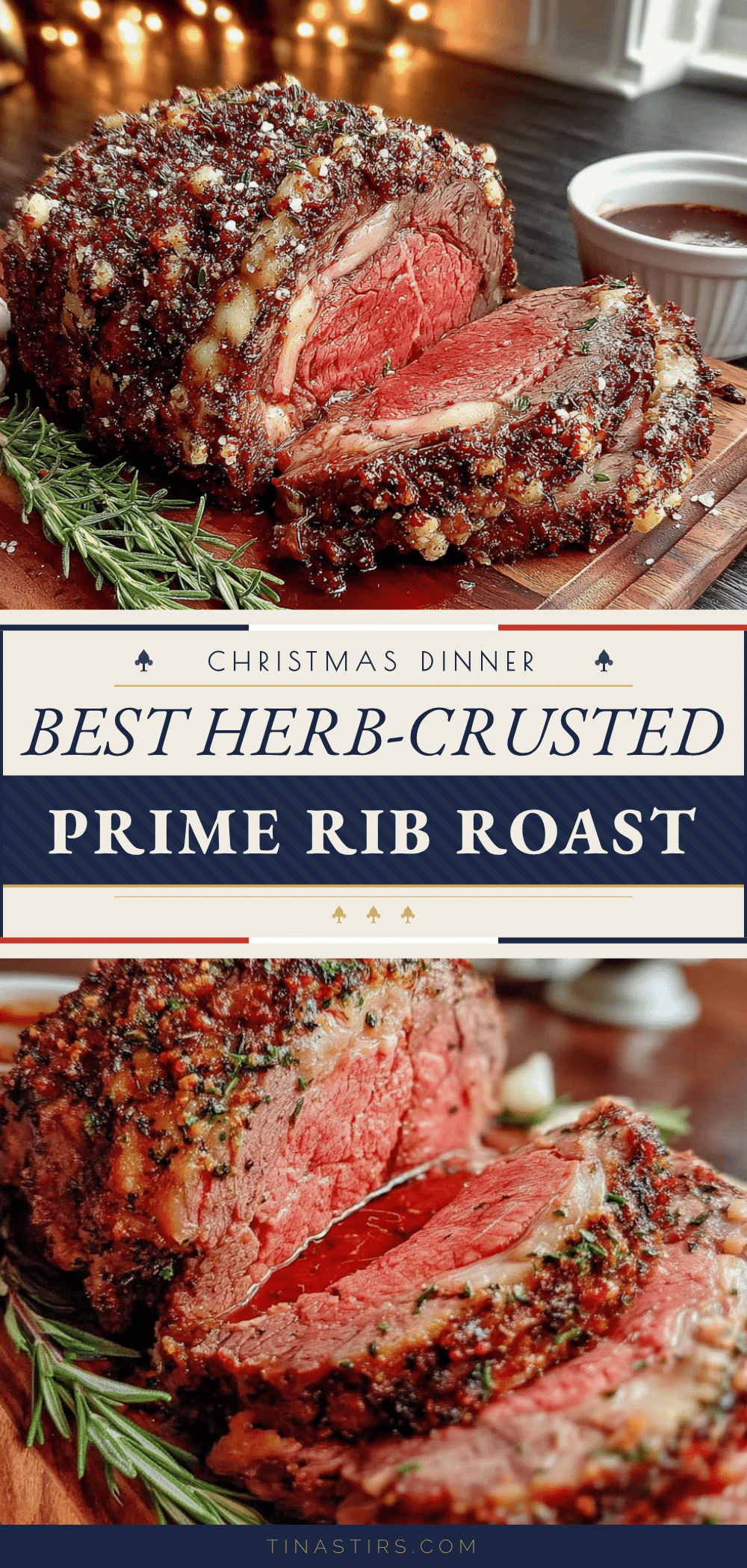
Best Herb-Crusted Prime Rib Roast for Christmas Dinner
This herb-crusted prime rib roast is the Christmas dinner hero you didn’t know you needed. It’s impressive enough to wow your guests, simple enough for a busy home cook, and budget-friendly enough to keep your holiday spending in check.
- Prep Time: 15 minutes
- Cook Time: 1 hour 45 minutes
- Total Time: 2 hours 30 minutes
- Yield: 8 servings 1x
- Category: Main Course
- Cuisine: American
Ingredients
- 1 (4-5 pound) bone-in prime rib roast
- 2 tablespoons olive oil
- 1 tablespoon Dijon mustard
- Salt and freshly ground black pepper (about 1 teaspoon kosher salt per pound of meat)
- 4 cloves garlic, minced
- 2 tablespoons fresh rosemary, finely chopped
- 2 tablespoons fresh thyme leaves
- 1 tablespoon fresh parsley, chopped
- 1 teaspoon dried oregano
- 1/2 teaspoon red pepper flakes (optional)
- 1 cup beef broth (low-sodium)
- 1/4 cup dry red wine (optional)
- 1 tablespoon butter
Instructions
- Take the Roast Out of the Fridge (1 hour before cooking): Remove the prime rib from the refrigerator and let it sit at room temperature for at least 1 hour. Pat it dry with paper towels.
- Preheat the Oven to 450°F (232°C): Position the rack in the middle of the oven.
- Make the Herb Paste: In a small bowl, combine the minced garlic, chopped rosemary, thyme, parsley, oregano, red pepper flakes (if using), olive oil, and Dijon mustard. Stir until it forms a thick, fragrant paste.
- Season the Roast: Generously season all sides of the prime rib with salt and pepper. Rub the salt into the meat, including the sides and the fat cap. Then, slather the herb paste all over the roast, covering every surface.
- Tie the Roast: Using kitchen twine, tie the roast between each rib bone.
- Sear the Roast (15 minutes): Place the roast, bone-side down, on a rack in the roasting pan. Roast at 450°F for 15 minutes.
- Lower the Heat to 325°F (163°C): After 15 minutes, reduce the oven temperature to 325°F. Continue roasting until the internal temperature reaches your desired doneness. For a 4-5 pound roast: Rare (120-125°F): about 1 hour 15 minutes to 1 hour 30 minutes total; Medium-Rare (130-135°F): about 1 hour 30 minutes to 1 hour 45 minutes total; Medium (140-145°F): about 1 hour 45 minutes to 2 hours total.
- Check the Temperature: Start checking the internal temperature about 30 minutes before you think it’ll be done. Insert the thermometer into the thickest part of the meat, avoiding the bone. Pull it out when it’s 5 degrees below your target (for medium-rare, pull at 125-130°F).
- Rest the Roast (20-30 minutes): Transfer the roast to a cutting board and tent it loosely with aluminum foil. Let it rest for at least 20 minutes, up to 30.
- Make the Au Jus (While the Roast Rests): Place the roasting pan on the stovetop over medium heat. Add the beef broth and red wine (if using). Scrape up all the browned bits from the bottom of the pan. Let it simmer for 3-4 minutes, then whisk in the butter until melted. Strain into a serving bowl if desired. Season with salt and pepper to taste.
- Slice and Serve: Remove the twine. Slice the roast between the bones into thick slices. Serve immediately with the warm au jus on the side.
Notes
Don’t skip the resting time—it’s essential for juicy meat. Use a meat thermometer for accuracy. Cover the bones with foil if they get too dark. Let the roast come to room temperature before cooking for even doneness.
Nutrition
- Serving Size: 6 ounces
- Calories: 450
- Sodium: 480
- Fat: 34
- Saturated Fat: 14
- Carbohydrates: 1
- Protein: 35
Keywords: prime rib, Christmas dinner, herb crust, roast beef, holiday recipe, bone-in prime rib, Christmas roast