Love this? Save it for later!
Share the inspiration with your friends
“You’ve got to taste this,” my neighbor Tom said one chilly Friday evening as I leaned over the fence, nursing a cup of coffee. He wasn’t one to fuss over food, usually sticking to simple burgers or pizzas, but that night he was proudly spooning a deep, glossy sauce over slices of prime rib. It smelled like something you’d find in a fancy steakhouse, but here we were, in his backyard, the grill still warm and the autumn leaves swirling around.
I wasn’t expecting much, honestly. I mean, Tom’s known more for his handyman skills than his kitchen prowess. But that red wine au jus? It was magic. The kind of sauce that makes you pause mid-bite and say, “How did he do that?” Turns out, it was a happy accident from a recipe he found tucked inside an old cookbook at a flea market—the kind of place where you dig through stacks of forgotten things and sometimes stumble on gold.
Since that night, I’ve been perfecting my own version of that red wine au jus, especially for prime rib and beef roasts. Let me tell you, it’s not just a sauce; it’s a partner to those juicy cuts, bringing out the best in every slice. Maybe you’ve been there, staring at your roast, wondering how to make the gravy that’ll get everyone’s eyes lighting up. This recipe stays with you because it’s easy, reliably delicious, and honestly, it turns a good roast into a memorable meal. So, let’s talk about how to make the perfect red wine au jus for prime rib and beef roasts—your next dinner party will thank you.
Why You’ll Love This Recipe
After countless kitchen trials, a few near disasters, and a lot of satisfied dinner guests, I can confidently say this red wine au jus recipe is a keeper. It’s been tested over and over, making it a reliable companion for any beef roast or prime rib.
- Quick & Easy: Comes together in about 20 minutes, great for when your roast is resting and you want that sauce ready without fuss.
- Simple Ingredients: No need for exotic spices or hard-to-find items—just pantry staples and a good bottle of red wine.
- Perfect for Special Occasions: Whether it’s holiday dinners, Sunday roasts, or a celebratory meal, this au jus adds that gourmet touch effortlessly.
- Crowd-Pleaser: The rich, savory flavor appeals to both beef lovers and sauce enthusiasts alike.
- Unbelievably Delicious: The balance of wine acidity and beefy richness creates a sauce that’s silky and full-bodied without overpowering the meat.
What sets this recipe apart? It’s all about patience and technique: gently reducing the red wine with pan drippings to concentrate flavor while keeping the sauce light enough to complement, not drown, your roast. Plus, a touch of fresh herbs and a hint of garlic round it out perfectly. Honestly, this isn’t just another red wine sauce; it’s the one I reach for when I want that restaurant-quality wow factor at home.
What Ingredients You Will Need
This recipe leans on simple, wholesome ingredients to bring out bold flavors without any fuss. Most are pantry staples, and you probably have them on hand right now.
- Beef drippings: The natural juices from your roast—this is the heart of your au jus, packed with flavor.
- Red wine: About 1 cup (240 ml) of a dry red wine like Cabernet Sauvignon or Merlot. I personally prefer Robert Mondavi for its smoothness, but any decent dry red works.
- Beef broth or stock: 1 cup (240 ml), preferably low sodium so you can control the saltiness.
- Shallots: 2 tablespoons, finely minced (adds a subtle sweetness).
- Garlic: 2 cloves, minced (for that gentle kick).
- Fresh thyme: 2-3 sprigs (or 1 teaspoon dried thyme).
- Butter: 1 tablespoon unsalted, for finishing and adding a silky texture.
- Salt and freshly ground black pepper: To taste.
- Olive oil: 1 teaspoon, for sautéing.
If you’re short on fresh thyme, dried works fine, but fresh really brightens the sauce. For a gluten-free option, double-check your beef broth ingredients or make your own. And if you’d like a slightly sweeter profile, a splash of balsamic vinegar (about 1 teaspoon) can add depth—something I sometimes do when I’m feeling a little adventurous.
Equipment Needed
- Roasting pan or skillet: To collect those precious beef drippings after roasting your prime rib or beef roast.
- Saucepan or small skillet: For making the au jus separately if you want to control the heat precisely.
- Fine mesh strainer: To strain the sauce for a smooth finish (optional but recommended).
- Wooden spoon or whisk: For stirring and scraping up the browned bits.
- Measuring cups and spoons: For accuracy (I like the clear plastic ones with easy-to-read marks).
If you don’t have a strainer, you can use a slotted spoon to remove solids, but the sauce won’t be as silky. I once tried making this without straining and ended up with a bit of a gritty texture, so take a moment to strain if you can. For budget-conscious cooks, a regular skillet and a sieve from the dollar store work just fine—no fancy gadgets necessary.
Preparation Method
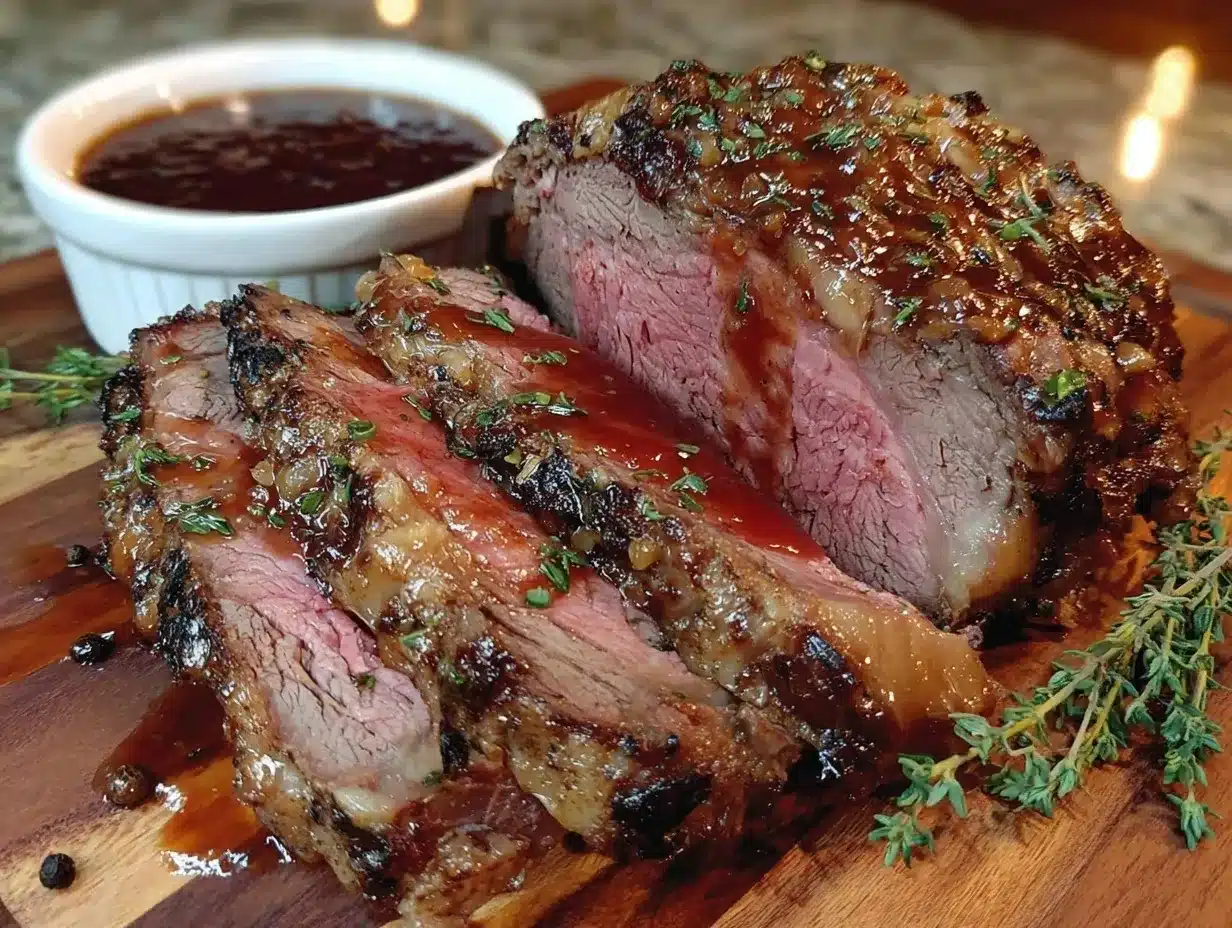
- Collect the drippings: After roasting your prime rib or beef roast, transfer the meat to a resting plate. Pour the pan drippings into a fat separator or let it sit for a few minutes. Skim off excess fat, leaving about 2 tablespoons for flavor. (This should take around 5 minutes.)
- Sauté aromatics: In a medium saucepan, heat 1 teaspoon olive oil over medium heat. Add minced shallots and garlic, stirring for about 2-3 minutes until softened and fragrant but not browned. Watch closely to avoid burning—burnt garlic is a mood killer here.
- Deglaze with red wine: Pour in the 1 cup (240 ml) of red wine, stirring to scrape up any browned bits stuck to the pan or roasting pan. Those bits are gold! Bring the mixture to a simmer and let it reduce by half, about 7-8 minutes. You’ll notice the aroma intensify and the liquid thicken slightly.
- Add beef broth and thyme: Stir in 1 cup (240 ml) beef broth and toss in the thyme sprigs. Let it simmer gently for another 5 minutes to marry the flavors. If you prefer, you can remove the thyme after simmering to avoid overpowering.
- Incorporate drippings and finish: Pour the reserved drippings into the sauce, stirring to combine. Add butter and whisk until melted and the sauce is glossy. Season with salt and pepper to taste. If the sauce feels too thick, add a splash more beef broth to loosen it up.
- Strain (optional): For a super smooth au jus, strain the sauce through a fine mesh sieve into a serving jug or bowl. This removes shallot bits and thyme stems, giving you that restaurant-quality texture.
- Serve warm: Keep the au jus warm until ready to serve alongside your prime rib or beef roast. It’s perfect for dipping or drizzling.
Pro tip: Keep an eye on the sauce while reducing. You want it rich but not syrupy. If you accidentally reduce too much, just add a little broth or even water to balance it out. And yes, I’ve done that—ended up with a sauce that was more glaze than jus and had to rescue it with extra broth. We all have those kitchen moments!
Cooking Tips & Techniques
Making the perfect red wine au jus isn’t rocket science, but a few lessons from experience can make a big difference.
- Use a good-quality wine: This sauce is simple, so the wine’s flavor really shines through. Avoid cooking wines—they usually taste flat or overly salty.
- Don’t rush the reduction: Letting the wine reduce slowly concentrates flavor and mellows acidity. Rushing or turning up the heat risks bitterness.
- Skim the fat: Too much fat can make the sauce greasy. Use a fat separator or a spoon to remove the excess, leaving just enough for richness.
- Fresh herbs matter: Thyme adds a subtle earthiness. If you don’t have fresh, dried works, but add it earlier in the simmering process to extract flavor.
- Balance seasoning at the end: Salt and pepper can be tricky before reduction since flavors concentrate. Taste at the end to avoid oversalting.
- Multitasking: Start your sauce as soon as the roast goes into the oven so you’re ready to build flavors while the meat cooks and rests.
One time, I forgot to add the garlic until the end and the sauce missed that aromatic punch. Little things like that teach you how each step builds flavor. So, be patient and savor every stage.
Variations & Adaptations
Feel free to tweak this red wine au jus to suit your preferences or dietary needs:
- Herb variations: Swap thyme for rosemary or add a bay leaf during simmering for a different herbal note.
- Make it vegetarian-friendly: Replace beef drippings and broth with mushroom broth and a splash of soy sauce for umami depth.
- Spicy kick: Add a pinch of crushed red pepper flakes or a dash of smoked paprika for warmth.
- Lower alcohol: Use grape juice mixed with a little balsamic vinegar instead of wine, simmered longer to develop flavor.
- Personal twist: I sometimes stir in a teaspoon of Dijon mustard at the end for a subtle tang that brightens the sauce.
For different cooking methods, such as slow-cooked beef roasts, gather the drippings as usual and reduce the sauce on the stovetop—it works just as well. And if you’re feeling experimental, try pairing this au jus with other meats like lamb or venison; it holds up beautifully.
Serving & Storage Suggestions
Serve your red wine au jus warm, ideally in a small gravy boat or dipping bowl. It pairs wonderfully with thick slices of prime rib or roast beef, allowing diners to spoon as much or as little as they like.
For presentation, sprinkle a few fresh thyme leaves on top for color and aroma. This sauce also complements roasted or mashed potatoes and steamed green beans beautifully. A bold red wine like Cabernet Sauvignon pairs nicely with the meal overall.
To store, keep the au jus in an airtight container in the refrigerator for up to 3 days. It thickens when cold, so gently reheat on the stove over low heat, adding a splash of beef broth or water to loosen if necessary. Flavors tend to deepen after a day, so leftovers are often even better!
Nutritional Information & Benefits
This red wine au jus is relatively low in calories and fat compared to cream-based sauces, making it a lighter option that still packs plenty of flavor. A typical serving (about ¼ cup or 60 ml) contains approximately 40-60 calories, mainly from the wine and beef drippings.
Rich in antioxidants from the red wine and beneficial compounds from fresh herbs like thyme, this sauce adds a flavorful boost without excess sodium or preservatives—especially if you choose a low-sodium beef broth.
Note: Contains alcohol from the wine and beef, so it’s not suitable for all diets. For gluten-free needs, verify your broth ingredients. Overall, it’s a tasty, moderately healthy addition to your roast meals that won’t weigh you down.
Conclusion
This perfect red wine au jus for prime rib and beef roasts brings that special something to the table without extra hassle. It’s the kind of sauce that makes you feel like a pro—even if you’re just starting out. I love how it transforms a simple roast into a feast worthy of company or a quiet night in.
Give it a try, play with the flavors to suit your taste, and don’t be afraid to make it your own. And hey, if you try this recipe, I’d love to hear how it went—leave a comment or share your tweaks! Cooking is more fun when we share those little kitchen victories.
Here’s to many delicious dinners with that perfect au jus drizzled on top!
FAQs
What type of red wine is best for au jus?
A dry red wine like Cabernet Sauvignon, Merlot, or Pinot Noir works best. Avoid sweet or cooking wines for the best flavor.
Can I make red wine au jus ahead of time?
Yes! You can prepare it a day ahead and refrigerate. Reheat gently on the stove, adding broth if needed to loosen the sauce.
What if I don’t have beef drippings?
You can use beef broth or stock, but the sauce won’t be as rich. Adding a splash of soy sauce or Worcestershire sauce can help boost umami.
Is it possible to make this au jus dairy-free?
Absolutely. Simply omit the butter at the end or substitute with a dairy-free margarine or olive oil.
How do I store leftover au jus?
Store in an airtight container in the fridge for up to 3 days or freeze for up to 2 months. Thaw and reheat gently before serving.
Pin This Recipe!
Perfect Red Wine Au Jus Recipe for Prime Rib and Beef Roasts
A quick and easy red wine au jus sauce that enhances the flavor of prime rib and beef roasts with a rich, savory, and silky texture.
- Prep Time: 5 minutes
- Cook Time: 15 minutes
- Total Time: 20 minutes
- Yield: About 1 cup sauce, serves 6-8 1x
- Category: Sauce
- Cuisine: American
Ingredients
- Beef drippings from roast (about 2 tablespoons reserved)
- 1 cup dry red wine (e.g., Cabernet Sauvignon or Merlot)
- 1 cup low sodium beef broth or stock
- 2 tablespoons finely minced shallots
- 2 cloves garlic, minced
- 2–3 sprigs fresh thyme or 1 teaspoon dried thyme
- 1 tablespoon unsalted butter
- Salt and freshly ground black pepper to taste
- 1 teaspoon olive oil
- Optional: 1 teaspoon balsamic vinegar for a slightly sweeter profile
Instructions
- After roasting your prime rib or beef roast, transfer the meat to a resting plate. Pour the pan drippings into a fat separator or let it sit for a few minutes. Skim off excess fat, leaving about 2 tablespoons for flavor (about 5 minutes).
- In a medium saucepan, heat 1 teaspoon olive oil over medium heat. Add minced shallots and garlic, stirring for 2-3 minutes until softened and fragrant but not browned.
- Pour in 1 cup of red wine, stirring to scrape up any browned bits stuck to the pan. Bring to a simmer and reduce by half, about 7-8 minutes.
- Stir in 1 cup beef broth and add thyme sprigs. Let simmer gently for another 5 minutes. Remove thyme if desired.
- Pour reserved drippings into the sauce, stir to combine. Add butter and whisk until melted and sauce is glossy. Season with salt and pepper to taste. Add more broth if sauce is too thick.
- Optional: Strain the sauce through a fine mesh sieve for a smooth finish.
- Serve warm alongside prime rib or beef roast.
Notes
Use a good-quality dry red wine for best flavor. Avoid cooking wines. Slowly reduce the wine to avoid bitterness. Skim excess fat but leave some for richness. Taste and season at the end to avoid oversalting. Straining the sauce gives a silky texture. For dairy-free, omit butter or substitute with dairy-free margarine or olive oil. Can add balsamic vinegar for sweetness or Dijon mustard for tang.
Nutrition
- Serving Size: 1/4 cup (60 ml)
- Calories: 50
- Sugar: 1
- Sodium: 150
- Fat: 3
- Saturated Fat: 1.5
- Carbohydrates: 3
- Protein: 1
Keywords: red wine au jus, prime rib sauce, beef roast sauce, easy au jus, red wine sauce, gravy, beef drippings sauce