Love this? Save it for later!
Share the inspiration with your friends
“I swear, it was just supposed to be a quick dinner experiment,” I told my friend Lisa last Thursday evening as we chatted over a glass of wine. I was making pasta—again—but this time, I forgot to bring out the cream for the sauce. Instead, I glanced down at the pot of boiling pasta water bubbling away and thought, “Why not?” Honestly, I wasn’t expecting much. But what happened next surprised me enough that I had to write it down and share it.
That simple splash of starchy pasta water transformed an ordinary tomato sauce into something unbelievably creamy and velvety, without a single drop of cream or butter. It was like magic—except it’s actually science and a trick professional chefs have known forever but rarely spill. You know that feeling when a recipe totally changes the way you cook? This creamy pasta water trick did exactly that for me.
I made a bit of a mess (because, well, multitasking and chatting don’t always mix), but the payoff was worth it. This recipe isn’t just a shortcut or a gimmick. It’s a game-changer that’s now my go-to whenever I want that perfect sauce that clings to every strand of pasta. Maybe you’ve been there—trying to get a sauce that’s neither too thin nor too gloopy. This little trick saved me from that frustration, and I’m betting it’ll do the same for you.
Why You’ll Love This Recipe
After testing this creamy pasta water trick over several weeks, I can confidently say it’s a kitchen must-know. Not only does it make your sauce creamier without heavy cream or cheese, but it also brings out a richer flavor and smoother texture that’s hard to beat.
- Quick & Easy: The entire process takes less than 20 minutes, perfect for busy weeknights or spontaneous dinners.
- Simple Ingredients: No need for fancy or hard-to-find items—just your basic pantry staples and pasta water.
- Perfect for All Pasta Types: Whether it’s spaghetti, penne, or even gnocchi, this trick works like a charm.
- Crowd-Pleaser: I made this for a casual dinner party, and everyone asked for seconds. Kids even went back for thirds!
- Unbelievably Delicious: That silkiness in the sauce makes every bite feel indulgent and comforting.
What sets this recipe apart is the technique itself—using the pasta water as a secret ingredient to bind and thicken the sauce naturally. The starch in the water acts like glue, giving you that creamy texture without extra fat or calories. It’s a little kitchen hack I wish I’d known years ago. Honestly, it’s comfort food reimagined—simple, satisfying, and just right.
What Ingredients You Will Need
This recipe uses simple, wholesome ingredients that come together beautifully to create a sauce that’s full of flavor and silky texture without fuss. Most of these are pantry staples you probably already have on hand.
- Dry pasta (e.g., spaghetti, penne, or fusilli) – 12 oz (340 g); any shape works but long pasta helps the sauce cling better
- Extra-virgin olive oil – 2 tablespoons (adds richness and a fruity note)
- Garlic cloves – 3, minced (fresh is best for that punch of flavor)
- Crushed red pepper flakes – ¼ teaspoon (optional, adds a subtle heat)
- Canned crushed tomatoes – 14 oz (400 g) (I recommend San Marzano for their natural sweetness)
- Salt – For pasta water and to taste in the sauce
- Fresh basil leaves – About ¼ cup, chopped (optional but adds freshness)
- Grated Parmesan cheese – For serving (optional, but a nice finishing touch)
Ingredient tips: If you want a dairy-free version, skip the Parmesan or swap it for a sprinkle of nutritional yeast. For gluten-free pasta, any brand like Barilla or Banza works well. In warmer months, fresh cherry tomatoes can replace canned for a lighter sauce, just cook them down a bit longer.
Equipment Needed
- Large pot for boiling pasta – A 6-quart (5.7 L) pot is ideal to give pasta room to cook evenly.
- Large skillet or sauté pan – For cooking the sauce; a wide pan helps reduce the sauce faster.
- Colander – For draining pasta; I prefer a fine-mesh colander to catch every noodle.
- Wooden spoon or silicone spatula – For stirring sauce without scratching pans.
- Measuring cups and spoons – To keep ingredient amounts precise.
If you don’t have a large skillet, a deep saucepan will do fine, just stir more to prevent sticking. I once tried this trick with a tiny pan and it was messier, so bigger is definitely better here. For budget-friendly options, most basic kitchen toolsets have what you need without breaking the bank.
Preparation Method
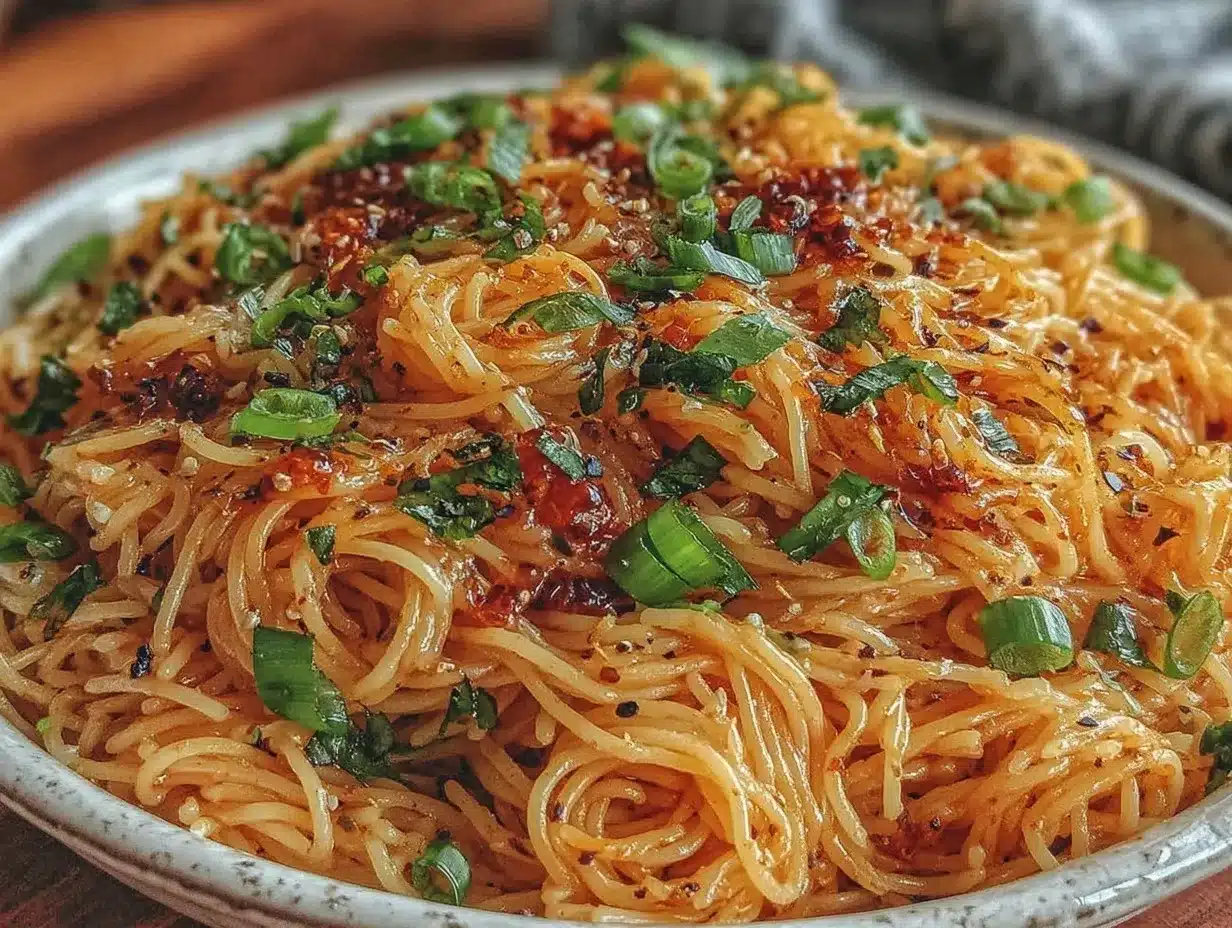
- Bring a large pot of salted water to a rolling boil. Use about 4 quarts (3.8 L) of water with 1 tablespoon of salt. The water should taste like the sea to properly season the pasta. This usually takes 8-10 minutes.
- Add the pasta and cook according to package instructions until al dente (usually 8-10 minutes). Stir occasionally to prevent sticking.
- While pasta cooks, heat olive oil in your skillet over medium heat. Add minced garlic and sauté for 1-2 minutes until fragrant but not browned—burnt garlic will taste bitter.
- Add crushed red pepper flakes (if using) and canned crushed tomatoes. Stir and bring the sauce to a gentle simmer. Season with salt to taste.
- When pasta is done, reserve about 1 cup (240 ml) of the pasta cooking water before draining. This starchy water is the secret to your creamy sauce.
- Drain the pasta well but don’t rinse it. Rinsing washes away the starch that helps the sauce stick.
- Add the drained pasta directly into the skillet with the simmering tomato sauce. Toss to combine.
- Slowly add reserved pasta water, a little at a time, stirring constantly. The starch in the water will emulsify the sauce, turning it silky and creamy. You might not need the whole cup—about ½ cup (120 ml) usually does the trick.
- Continue cooking and tossing the pasta in the sauce for 1-2 minutes. The sauce will thicken slightly and cling beautifully to the noodles.
- Remove from heat and stir in chopped fresh basil if using. Serve immediately with grated Parmesan on the side.
Pro tip: If your sauce seems too thick, add a splash more pasta water. Too thin? Let it simmer a bit longer while stirring. The key is patience and tasting as you go.
Cooking Tips & Techniques
One thing I learned the hard way is to never skip salting your pasta water properly. It’s the foundation of flavor, and you want the pasta itself to taste good before it even meets the sauce.
When adding pasta water to the sauce, do it gradually. Too much at once can make the sauce watery and slippery instead of creamy and rich. I usually add a tablespoon or two, stir, then decide if it needs more.
Also, don’t rinse your pasta after draining. I know it’s tempting to stop the cooking, but the starch on the noodles is what helps the sauce stick and thicken.
Another lesson? Timing. I like to have the sauce ready just before the pasta finishes cooking. That way, everything comes together hot and fresh, and you avoid overcooking the noodles.
Finally, a little olive oil in the sauce adds silkiness and depth, but don’t overdo it. Too much oil can make the sauce greasy rather than creamy.
Variations & Adaptations
This creamy pasta water trick is versatile and welcomes some fun tweaks.
- Dairy-Free Version: Skip the Parmesan and add a handful of toasted pine nuts or nutritional yeast for a cheesy flavor without dairy.
- Garlic Cream Sauce: Use the pasta water trick with a garlic and olive oil base, then finish with a splash of lemon juice and fresh parsley for a light, tangy sauce.
- Spicy Arrabbiata: Increase crushed red pepper flakes and add a pinch of smoked paprika for a smoky kick.
- Seasonal Veggie Boost: Toss in sautéed zucchini, cherry tomatoes, or spinach during the sauce step for added color and nutrients.
Personally, I’ve swapped out crushed tomatoes for roasted red peppers blended into the sauce, using the same pasta water trick. The result? A smoky, creamy sauce that my guests can’t stop talking about.
Serving & Storage Suggestions
This pasta is best enjoyed immediately while the sauce is warm and creamy. Serve it with a sprinkle of fresh basil and a side of garlic bread or a crisp green salad for a complete meal.
If you have leftovers (which are rare in my house), store them in an airtight container in the refrigerator for up to 2 days. When reheating, add a splash of water or broth and gently warm in a skillet over low heat to revive that creamy texture.
Flavors actually deepen after sitting overnight, so some folks prefer to make it ahead and reheat, but I think the texture is at its peak fresh off the stove.
Nutritional Information & Benefits
This recipe is relatively light, thanks to the clever use of pasta water replacing heavy cream or extra butter. An average serving (about 1 cup or 200g cooked) contains approximately:
| Calories | 320 |
|---|---|
| Carbohydrates | 60g |
| Protein | 10g |
| Fat | 5g |
| Fiber | 4g |
Using olive oil adds heart-healthy monounsaturated fats and antioxidants. Garlic contributes immune-boosting compounds, and fresh basil adds vitamins and a dose of freshness. This dish can easily fit into a balanced diet and suits vegetarian lifestyles. For gluten-free needs, simply swap the pasta for a certified gluten-free brand.
Conclusion
So, this creamy pasta water trick isn’t just a neat kitchen hack—it’s a recipe changer that turns simple ingredients into something truly special. I love that it’s fast, uses what you already have, and delivers a sauce that feels indulgent but isn’t heavy. Whether you’re a pasta purist or someone who likes to fuss a little, this method gives you perfect sauce every time.
Give it a try, play around with your favorite pasta shapes and sauces, and find your own groove with it. When you do, come back and tell me how it changed your pasta game—I’m always eager to hear new stories and tweaks!
FAQs
What exactly does pasta water do in the sauce?
The starchy pasta water acts as a natural thickener and binder, helping the sauce cling to the noodles and giving it a creamy texture without extra cream or butter.
Can I use this trick with any type of pasta?
Yes! Whether it’s spaghetti, penne, or even gluten-free pasta, the starch in the water works the same way to create a luscious sauce.
How much pasta water should I save?
Reserve about 1 cup (240 ml) of pasta water before draining. You usually only need ½ cup (120 ml) or less to adjust your sauce consistency.
Is this recipe suitable for vegans?
Absolutely! Just skip the Parmesan or use a vegan alternative like nutritional yeast for that cheesy finish.
Can I prepare the sauce in advance?
You can prep the tomato sauce ahead, but for best results, toss the pasta and sauce together with pasta water right before serving to keep the creamy texture.
Pin This Recipe!
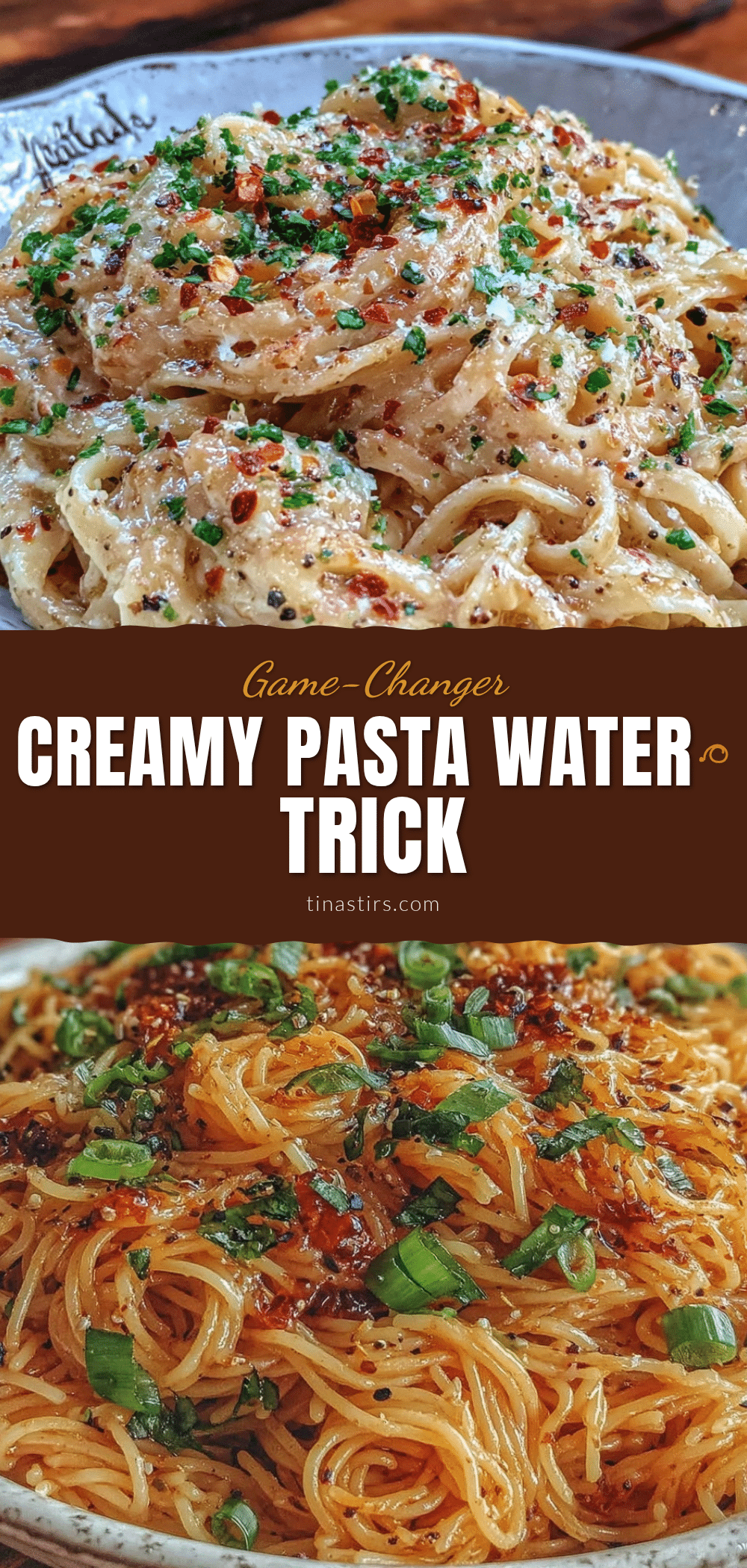
Creamy Pasta Water Trick for Perfect Sauce Easy Game-Changer Recipe

A simple kitchen hack using starchy pasta water to create a creamy, velvety tomato sauce without cream or butter. This trick transforms ordinary pasta sauce into a rich, smooth, and indulgent dish perfect for any pasta type.
- Prep Time: 10 minutes
- Cook Time: 10 minutes
- Total Time: 20 minutes
- Yield: 4 servings 1x
- Category: Main Course
- Cuisine: Italian
Ingredients
- 12 oz (340 g) dry pasta (e.g., spaghetti, penne, or fusilli)
- 2 tablespoons extra-virgin olive oil
- 3 garlic cloves, minced
- 1/4 teaspoon crushed red pepper flakes (optional)
- 14 oz (400 g) canned crushed tomatoes
- Salt, for pasta water and to taste in sauce
- 1/4 cup fresh basil leaves, chopped (optional)
- Grated Parmesan cheese, for serving (optional)
Instructions
- Bring a large pot of salted water (about 4 quarts) to a rolling boil. Use 1 tablespoon of salt; the water should taste like the sea.
- Add the pasta and cook according to package instructions until al dente, usually 8-10 minutes. Stir occasionally to prevent sticking.
- While pasta cooks, heat olive oil in a skillet over medium heat. Add minced garlic and sauté for 1-2 minutes until fragrant but not browned.
- Add crushed red pepper flakes (if using) and canned crushed tomatoes. Stir and bring the sauce to a gentle simmer. Season with salt to taste.
- When pasta is done, reserve about 1 cup (240 ml) of the pasta cooking water before draining.
- Drain the pasta well but do not rinse it.
- Add the drained pasta directly into the skillet with the simmering tomato sauce. Toss to combine.
- Slowly add reserved pasta water a little at a time, stirring constantly, until the sauce turns silky and creamy. Usually about 1/2 cup (120 ml) is enough.
- Continue cooking and tossing the pasta in the sauce for 1-2 minutes until the sauce thickens slightly and clings to the noodles.
- Remove from heat and stir in chopped fresh basil if using. Serve immediately with grated Parmesan on the side.
Notes
Do not rinse pasta after draining to keep starch for sauce binding. Add pasta water gradually to avoid watery sauce. Salt pasta water well for best flavor. Timing is key: have sauce ready just before pasta finishes cooking. Use a large skillet for better sauce reduction. For dairy-free, skip Parmesan or use nutritional yeast.
Nutrition
- Serving Size: About 1 cup (200 g)
- Calories: 320
- Fat: 5
- Carbohydrates: 60
- Fiber: 4
- Protein: 10
Keywords: pasta water trick, creamy pasta sauce, tomato sauce, easy pasta recipe, no cream sauce, quick dinner, pasta sauce hack