Love this? Save it for later!
Share the inspiration with your friends
You know that moment when you walk into someone’s house and the smell alone makes you instantly happy? That happened to me last June at my neighbor Carrie’s place. I wasn’t there for a party or anything fancy—just dropping off a package that got delivered to my house by mistake. She wasn’t trying to impress anyone. Honestly, I think she forgot I was coming over entirely. But the moment she opened the door, this incredible aroma of fresh basil and something sweet and tangy hit me. It was intoxicating, and there she was, completely nonchalant, putting together what looked like the simplest snack I’d ever seen. She was just assembling these beautiful little skewers on a wooden board, drizzling them with a dark, glossy glaze that looked like liquid gold. “Oh, this?” she said when I asked. “It’s nothing. Just something I threw together.” But let me tell you, that “nothing” was the most memorable thing I tasted all summer. The way the creamy mozzarella played with the sweet tomatoes and that punch of basil, all tied together with that slightly sweet, slightly tangy balsamic glaze—it was perfect. I stood there in her kitchen, probably looking a little too eager, and asked her to walk me through it. She laughed at me, but she showed me. And I’ve been making these fresh caprese skewers ever since. Maybe you’ve been there too—stumbling upon a recipe so simple you can’t believe you hadn’t thought of it yourself. That’s exactly what these are. And I’m so glad I was the one who got to learn it from her.
Why You’ll Love This Recipe
Let me be straight with you—I’ve tested this recipe about a dozen times since that day at Carrie’s. I’ve tried different tomatoes, different mozzarella, different glazes. And every single time, these caprese skewers come out amazing. They’re the kind of appetizer that makes you look like you spent hours in the kitchen when you really didn’t.
- Ready in 10 Minutes: No joke. From start to finish, you can have these on the table in under ten minutes. Perfect for when guests show up early or you need something fast for a weeknight dinner side.
- Just 5 Simple Ingredients: Fresh mozzarella, cherry tomatoes, basil, balsamic glaze, and salt. That’s it. No fancy grocery store runs required.
- Perfect for Any Occasion: These work for summer barbecues, holiday parties, lunchboxes, or even a light snack while you’re watching TV. They’re versatile like that.
- Always a Crowd-Pleaser: I’ve brought these to potlucks, family dinners, and work events. They disappear fast. Kids love them because they’re fun to eat, and adults love them because they taste like something from a fancy restaurant.
- Unbelievably Fresh: The combination of creamy mozzarella, juicy tomatoes, and fragrant basil is just unbeatable. It’s comfort food that feels light and refreshing.
What makes these different from every other caprese skewer recipe out there? It’s the little things. I use a specific type of mozzarella—the small, pearl-sized ones called bocconcini—because they’re the perfect bite-sized pieces. I also make sure my tomatoes are at room temperature, not cold from the fridge. And my balsamic glaze? I make it myself. It takes an extra five minutes, but the flavor is so much deeper and richer than store-bought. Trust me on this one. These aren’t just another version of caprese skewers—they’re the version you’ll come back to again and again.
What Ingredients You Will Need
This recipe uses simple, fresh ingredients that come together to create something truly special. Most of these are pantry staples or easy to find at any grocery store. Here’s what you’ll need:
For the Skewers
- Fresh mozzarella balls (bocconcini or ciliegine): 8 ounces, drained. I prefer the small pearl-sized ones because they fit perfectly on a skewer with a tomato. Look for ones packed in water or whey for the best texture. My go-to brand is BelGioioso, but any high-quality fresh mozzarella works great.
- Cherry tomatoes: 1 pint (about 2 cups). Choose firm, ripe tomatoes. I like using a mix of red and yellow for color contrast, but any variety works. If you can find them, Campari tomatoes are amazing for their sweetness.
- Fresh basil leaves: About 20-24 large leaves. Use the largest leaves you can find—they’re easier to thread onto the skewers. Fresh is absolutely essential here; dried basil won’t work for this recipe.
- Balsamic glaze (or balsamic reduction): ¼ cup. You can buy this pre-made at most grocery stores, or make your own by simmering balsamic vinegar until it thickens. I’ll share my method in the tips section.
- Flaky sea salt: ½ teaspoon, or to taste. Maldon sea salt is my favorite for its delicate crunch, but any flaky salt works. Avoid regular table salt—it’s too fine and can make the skewers taste overly salty.
- Extra-virgin olive oil (optional): 1 tablespoon, for drizzling. This adds a lovely richness, but it’s not strictly necessary if you’re watching calories.
- Black pepper (optional): Freshly ground, to taste. A little goes a long way.
For the Balsamic Glaze (If Making Your Own)
- Balsamic vinegar: 1 cup. Use a good-quality vinegar—nothing too cheap, but you don’t need the aged stuff that costs a fortune either. A mid-range vinegar works perfectly for reducing.
- Honey or brown sugar (optional): 1 tablespoon. This adds a touch of sweetness if your vinegar is particularly tart. I usually skip it, but it’s nice if you prefer a sweeter glaze.
Ingredient Selection Tip: When choosing cherry tomatoes, give them a gentle squeeze. They should be firm but give slightly under pressure. Avoid any that are mushy or have wrinkles. For the mozzarella, check the expiration date and look for balls that are uniformly white and plump. If they look yellow or deflated, they’re past their prime.
Substitution Guidance: If you can’t find fresh mozzarella balls, you can cut a larger mozzarella ball into small cubes. Just make sure they’re roughly the same size as your tomatoes for even skewering. For a dairy-free option, use firm tofu that’s been pressed and cubed, though the texture will be different. You can also swap the basil for fresh mint or parsley in a pinch, but basil really is the star here.
Equipment Needed
You don’t need much to make these caprese skewers, which is part of their charm. Here’s what you’ll need:
- Wooden or bamboo skewers: About 20-24, depending on how many skewers you’re making. I prefer short skewers (about 4-6 inches) for appetizers. If you only have long ones, you can break them in half. Soak them in water for 10 minutes before using if you’re worried about splinters.
- Cutting board: A standard wooden or plastic board works fine. You’ll use it for assembling the skewers.
- Sharp knife: For cutting anything that needs trimming, though honestly, you won’t need it much.
- Small saucepan (if making your own glaze): A 1-quart saucepan is perfect for reducing balsamic vinegar.
- Serving platter or wooden board: Something flat and wide to arrange the skewers on. A rustic wooden board looks beautiful for presentation.
- Small bowl or squeeze bottle: For drizzling the balsamic glaze. A squeeze bottle gives you more control, but a small spoon works too.
- Paper towels: For patting the mozzarella dry. This step matters more than you think—wet mozzarella makes the skewers slippery.
I’ve made these skewers with nothing more than a butter knife and a plate before, and they turned out fine. The equipment list is more about convenience than necessity. If you don’t have skewers, you can use toothpicks or even just arrange the ingredients on a plate and let people build their own. That’s what I did the first time, actually, because I ran out of skewers. It worked perfectly.
Preparation Method
Let’s get into the actual making of these caprese skewers. I’ll walk you through every step so you can replicate that perfect bite every time.
- Prepare your ingredients: Start by removing the mozzarella balls from their packaging and placing them on a plate lined with paper towels. Pat them gently to remove excess moisture. This is important—wet mozzarella makes the skewers slide around and can dilute the flavor of the balsamic glaze. Let them sit for about 5 minutes while you prep everything else. (Trust me on this one; I learned the hard way after my first batch turned into a slippery mess.)
- Wash and dry the tomatoes: Rinse your cherry tomatoes under cool water and pat them dry with a clean kitchen towel or paper towels. Remove any stems or leaves. If you’re using larger cherry tomatoes, you might want to cut them in half, but I prefer keeping them whole for a better presentation and easier skewering.
- Prepare the basil leaves: Gently wash the basil leaves and pat them dry. You want them completely dry so they don’t make the skewers soggy. Pick the largest, most beautiful leaves for the skewers. If some leaves are small, you can use two per skewer—just stack them together. Don’t chop the basil; whole leaves look prettier and hold up better on the skewer.
- Make the balsamic glaze (if making your own): Pour 1 cup of balsamic vinegar into a small saucepan. Bring it to a gentle simmer over medium heat, then reduce the heat to low. Let it simmer, stirring occasionally, for about 10-15 minutes, until it reduces by about half and becomes syrupy. You’ll know it’s ready when it coats the back of a spoon. Be careful not to let it boil too vigorously, or it can burn. Remove it from the heat and let it cool for a few minutes—it will thicken more as it cools. If you’re using store-bought glaze, skip this step.
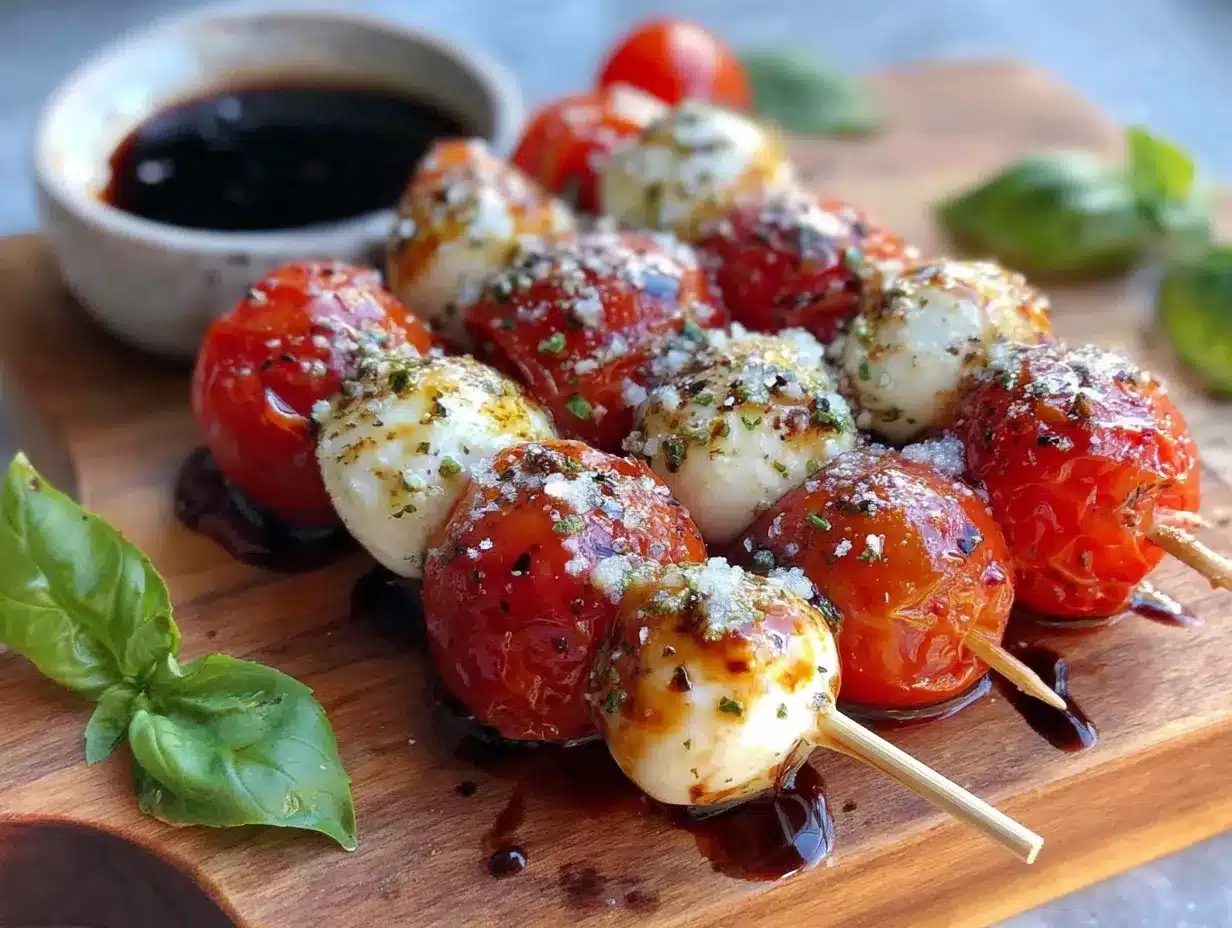
- Assemble the skewers: Now for the fun part. Take a skewer and thread one mozzarella ball onto it, pushing it about halfway down. Follow with a basil leaf (fold it in half if it’s large), then a cherry tomato. Repeat the pattern if you’re using longer skewers, or stop there for bite-sized appetizers. I like to end with a tomato because it looks prettiest on top. Repeat with the remaining skewers. You should get about 20-24 skewers from this recipe, depending on how many ingredients you use per skewer.
- Arrange on a platter: Place the assembled skewers on a serving platter or wooden board. You can arrange them in a single layer, slightly overlapping, or stand them up in a glass or jar for a more dramatic presentation. I’ve done both, and I honestly prefer the jar method—it looks like a little bouquet of deliciousness.
- Drizzle with balsamic glaze: Using a small spoon or squeeze bottle, drizzle the balsamic glaze over the skewers. Don’t drown them—a light, even drizzle is all you need. You want the glaze to complement the flavors, not overpower them. I usually start with about half the glaze and add more if needed.
- Season and serve: Sprinkle the flaky sea salt over the skewers. If you’re using black pepper, add a few grinds now. If you’re using olive oil, drizzle it lightly over the top. Serve immediately or within 30 minutes for the best flavor and texture. These are best at room temperature, so don’t refrigerate them before serving.
Sensory Cues: When you thread the mozzarella, it should feel soft and slightly springy. The basil leaves should be fragrant and bright green. When you drizzle the glaze, watch how it coats the ingredients—it should cling to them, not run off. The finished skewers should look glossy and inviting, with the green basil contrasting beautifully against the red tomatoes and white mozzarella.
Troubleshooting Tip: If your skewers are sliding around and the ingredients won’t stay in place, your mozzarella might be too wet. Pat it dry more thoroughly next time. Also, make sure your tomatoes are firm—overly ripe tomatoes can be too soft to hold their shape on the skewer.
Cooking Tips & Techniques
I’ve made these caprese skewers more times than I can count, and I’ve learned a few things along the way. Here are my best tips for getting them perfect every time.
Don’t skip drying the mozzarella. I know it seems like a small step, but it makes a huge difference. Wet mozzarella makes the skewers slippery and can water down the balsamic glaze. I learned this the hard way when I made a batch for a party and they kept sliding off the skewers. It was a mess. Now I always pat them dry and let them sit for a few minutes before assembling.
Use room-temperature ingredients. Cold mozzarella and tomatoes straight from the fridge don’t have the same flavor or texture. Let them sit out for about 15-20 minutes before assembling. The flavors are much more pronounced at room temperature. This is especially important if you’re serving these at a party—cold ingredients can make the whole dish feel flat.
Make the glaze ahead of time. If you’re making your own balsamic glaze, do it a day or two in advance. It keeps well in the fridge for up to two weeks, and having it ready makes assembly even faster. Just let it come to room temperature before using, as cold glaze can be too thick to drizzle nicely.
Toast the skewers for extra flavor. This is a trick I picked up from a chef friend. If you’re using wooden skewers, toast them lightly in a dry pan or under the broiler for about 30 seconds before assembling. It adds a subtle smoky flavor that pairs beautifully with the fresh ingredients. Just be careful not to burn them—they go from toasted to charred very quickly.
Layer flavors intentionally. The order of ingredients on the skewer matters. I always put the mozzarella first, then the basil, then the tomato. This way, the basil is pressed between the cheese and tomato, releasing its oils and flavor as you bite into it. If you put the basil on the outside, it can get crushed or fall off.
Common mistake to avoid: Don’t oversaturate the skewers with glaze. I’ve seen people pour on way too much, and it ends up pooling on the plate and making everything soggy. A light drizzle is all you need. You can always add more, but you can’t take it away.
Variations & Adaptations
One of the best things about this recipe is how easy it is to adapt. Here are some variations I’ve tried and loved.
Caprese Skewers with Pesto: Instead of drizzling with balsamic glaze, try brushing the skewers with a thin layer of basil pesto before serving. It adds a different kind of herbaceous flavor that’s still very Italian. I made this version for a summer barbecue, and it was a hit. Just use about 2 tablespoons of pesto and brush it lightly over the assembled skewers.
Grilled Caprese Skewers: Thread the ingredients onto metal skewers and grill them for about 2-3 minutes per side over medium heat. The mozzarella gets slightly melty, and the tomatoes develop a smoky sweetness. This is my go-to version for camping trips or backyard cookouts. Just be careful not to overcook them—the mozzarella can melt off the skewer if left too long.
Balsamic-Glazed Caprese Skewers with Prosciutto: For a heartier appetizer, wrap each mozzarella ball in a thin slice of prosciutto before threading it onto the skewer. The salty, savory prosciutto pairs beautifully with the sweet tomatoes and tangy glaze. This version is great for holiday parties or when you want something a little more substantial.
Vegan Caprese Skewers: Use marinated tofu cubes instead of mozzarella. Press firm tofu for about 30 minutes, then cut it into cubes and marinate it in olive oil, salt, and a splash of lemon juice for at least an hour. The texture won’t be exactly the same, but the flavor is surprisingly good. I’ve made this for vegan friends, and they loved it.
Seasonal Twist: In the summer, use heirloom cherry tomatoes in different colors—yellow, orange, even purple. In the fall, try adding thin slices of fresh fig between the mozzarella and basil. The sweetness of the figs complements the balsamic glaze beautifully. I discovered this combination at a farmer’s market last September, and it’s become a seasonal favorite.
Serving & Storage Suggestions
These caprese skewers are best served fresh, but there are a few tricks to make them work for different situations.
Serving Temperature: Serve these at room temperature for the best flavor. If you’ve refrigerated them, let them sit out for about 15-20 minutes before serving. Cold temperatures dull the flavors, especially the basil and tomatoes. I’ve made the mistake of serving them straight from the fridge at a party, and they just didn’t taste as good.
Presentation Ideas: Arrange the skewers on a rustic wooden board or a white platter for contrast. You can also stand them up in a short glass or mason jar for a more dramatic look. Garnish with extra basil leaves and a few whole cherry tomatoes around the base. For a party, I like to arrange them in a circular pattern on a large platter with a small bowl of extra balsamic glaze in the center for dipping.
What to Serve With Them: These skewers pair beautifully with a crisp white wine like Pinot Grigio or Sauvignon Blanc. For a non-alcoholic option, try sparkling water with a splash of lemon. They also go well with other Italian appetizers like bruschetta, antipasto platters, or crispy garlic chicken as a main course. If you’re serving them as part of a larger meal, they’re great alongside pasta dishes or grilled fish.
Storage Instructions: These are best eaten within a few hours of making them. If you have leftovers, store them in an airtight container in the refrigerator for up to 24 hours. The texture will change slightly—the tomatoes may release some juice, and the basil might wilt—but they’ll still be tasty. I don’t recommend freezing them, as the mozzarella becomes rubbery when thawed.
Reheating Methods: I actually prefer these cold or at room temperature, so I don’t usually reheat them. If you want to warm them up, try grilling them for about 1 minute per side on a hot grill or grill pan. This works best if you haven’t added the balsamic glaze yet—add it after grilling.
Flavor Development: Interestingly, the flavors actually meld together a bit if you let the skewers sit for about 30 minutes before serving. The balsamic glaze soaks into the mozzarella slightly, and the basil releases more of its oils. I’ve found that they’re actually at their peak about 20-30 minutes after assembly, not immediately. So don’t stress about timing—they’ll be perfect even if you make them a little ahead.
Nutritional Information & Benefits
These caprese skewers are not just delicious—they’re also packed with nutritional benefits. Here’s a breakdown of what you’re getting in each serving (based on 4 skewers per serving).
| Nutrient | Amount Per Serving (4 skewers) |
|---|---|
| Calories | 180-220 |
| Protein | 12-15g |
| Fat | 12-15g |
| Carbohydrates | 8-10g |
| Fiber | 1-2g |
| Sugar | 5-7g |
| Sodium | 300-400mg |
| Calcium | 250-300mg |
Health Benefits: Mozzarella is a great source of calcium and protein, which are essential for bone health and muscle repair. Tomatoes are rich in lycopene, a powerful antioxidant that supports heart health and may reduce the risk of certain cancers. Basil is packed with vitamin K and has anti-inflammatory properties. And balsamic vinegar, in moderation, can help with blood sugar regulation. These skewers are naturally gluten-free and low-carb, making them suitable for many dietary preferences. Just be mindful of the sodium content if you’re watching your salt intake—the mozzarella and sea salt add up quickly.
Dietary Considerations: This recipe is vegetarian, gluten-free, and low-carb. For a dairy-free version, use the tofu substitution I mentioned earlier. It’s also naturally low in added sugars (the glaze has some natural sugar from the vinegar). If you’re on a low-FODMAP diet, this recipe is generally safe, though some people with IBS may react to the lactose in mozzarella. As always, listen to your body and adjust accordingly.
FAQs
Can I make caprese skewers ahead of time? Yes, you can assemble them up to 4 hours ahead of time. Just keep them covered in the refrigerator and add the balsamic glaze and salt right before serving. The basil might wilt slightly, but they’ll still taste great. I wouldn’t recommend making them more than 4 hours ahead, as the tomatoes can release juice and make everything soggy.
What if I don’t have balsamic glaze? No problem! You can make your own by simmering balsamic vinegar until it thickens, or you can use a store-bought version. In a pinch, you can even use a good-quality balsamic vinegar mixed with a little honey. The flavor will be slightly different—more tangy and less syrupy—but it still works. I’ve done this when I ran out of glaze, and it was fine.
Can I use different types of cheese? Absolutely. While fresh mozzarella is traditional, you can experiment with other soft cheeses. Feta works well for a saltier flavor, though it’s crumbly so you’ll need to be gentle when threading. Burrata is amazing if you can find it—it’s creamier than mozzarella and adds a luxurious texture. Just be aware that softer cheeses might not hold their shape as well on the skewer.
How do I prevent the basil from wilting? Make sure your basil leaves are completely dry before assembling. Any moisture on the leaves can cause them to wilt faster. Also, keep the skewers at room temperature rather than refrigerating them, as cold temperatures can make basil leaves turn black. If you’re making them ahead, store the basil separately and add it to the skewers just before serving.
Are these skewers suitable for kids? Yes! Kids love these because they’re fun to eat and the ingredients are familiar. Just be careful with the skewers themselves—wooden skewers can have sharp points. You can use short skewers or even toothpicks for younger children. I’ve made mini versions for my niece’s birthday party, and they were a huge hit. Just skip the balsamic glaze if your kids are picky about new flavors.
Conclusion
These fresh caprese skewers with balsamic glaze are the kind of recipe that proves you don’t need complicated techniques or exotic ingredients to make something truly memorable. They’re simple, honest, and absolutely delicious. Every time I make them, I think back to that day in Carrie’s kitchen when I discovered just how good simple food can be. And honestly, that’s what cooking should be about—sharing something good with the people you care about.
I hope you give these a try. Play around with the variations, make them your own, and don’t stress about perfection. The best part about this recipe is that it’s forgiving. Even if your skewers aren’t perfectly uniform or your glaze is a little thick, they’ll still taste amazing. That’s the beauty of fresh ingredients—they do most of the work for you.
When you make these, I’d love to hear how they turn out. Leave a comment below and let me know if you tried any variations. Did you go with the prosciutto version? Or maybe you grilled them? I’m always looking for new ideas, and your experience might inspire someone else. And if you’re looking for more easy appetizer ideas, check out my crispy garlic chicken recipe—it’s another one of those dishes that looks fancy but is secretly simple to make. Happy cooking, and enjoy every bite!
Pin This Recipe!
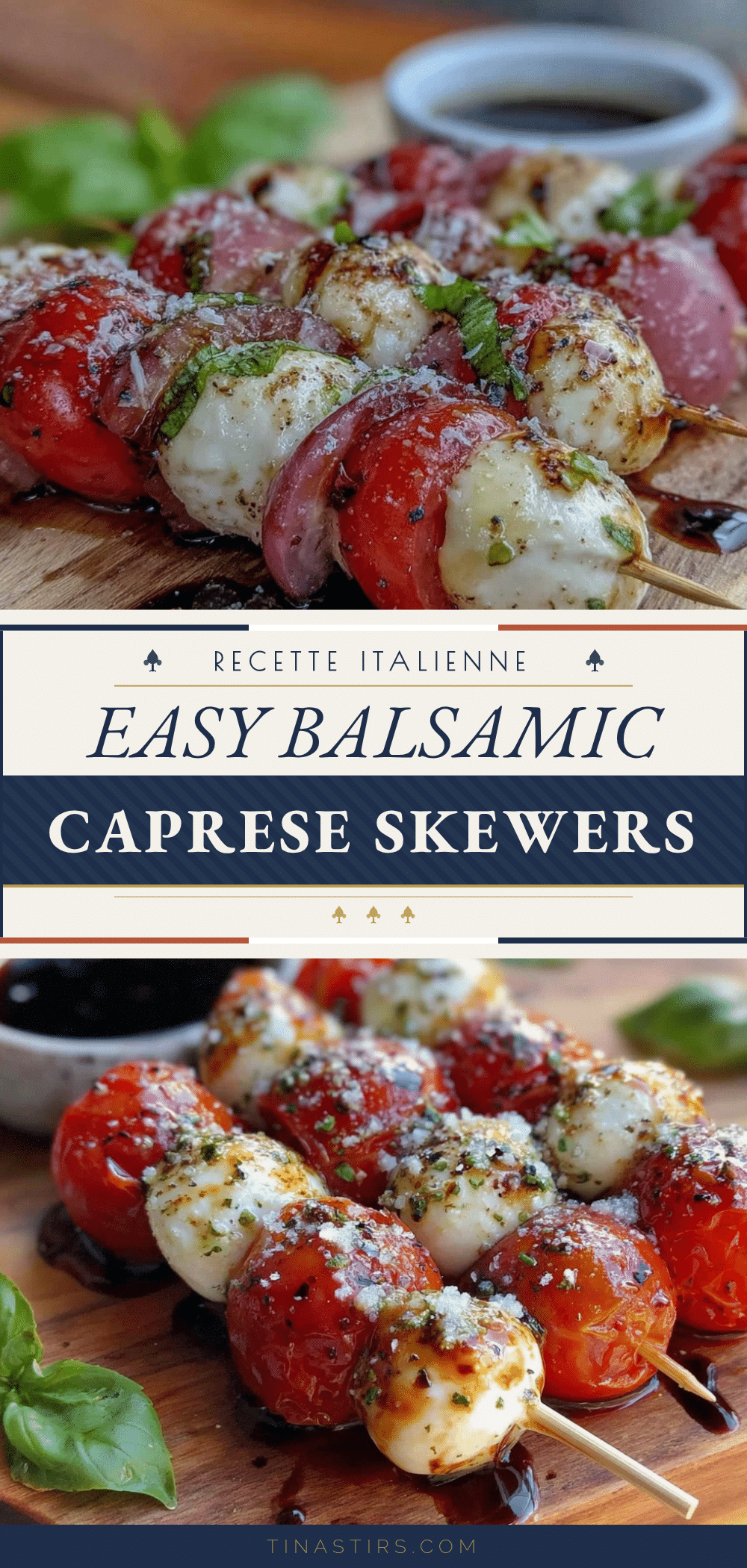
Best Easy Caprese Skewers with Balsamic Glaze Recipe

These fresh caprese skewers with balsamic glaze are the perfect appetizer, ready in just 10 minutes with only 5 simple ingredients. Creamy mozzarella, sweet cherry tomatoes, and fragrant basil are drizzled with a tangy balsamic glaze for a crowd-pleasing bite that’s ideal for any occasion.
- Prep Time: 10 minutes
- Cook Time: 0 minutes (15 minutes if making balsamic glaze)
- Total Time: 10 minutes (25 minutes if making balsamic glaze)
- Yield: 4 servings (about 20-24 skewers, 4-6 skewers per serving) 1x
- Category: Appetizer
- Cuisine: Italian
Ingredients
- 8 ounces fresh mozzarella balls (bocconcini or ciliegine), drained
- 1 pint (about 2 cups) cherry tomatoes
- 20–24 large fresh basil leaves
- ¼ cup balsamic glaze (or balsamic reduction)
- ½ teaspoon flaky sea salt (such as Maldon)
- 1 tablespoon extra-virgin olive oil (optional, for drizzling)
- Freshly ground black pepper (optional, to taste)
- For the balsamic glaze (if making your own): 1 cup balsamic vinegar
- For the balsamic glaze (if making your own): 1 tablespoon honey or brown sugar (optional)
Instructions
- Prepare your ingredients: Remove the mozzarella balls from their packaging and place them on a plate lined with paper towels. Pat them gently to remove excess moisture. Let them sit for about 5 minutes while you prep everything else.
- Wash and dry the tomatoes: Rinse your cherry tomatoes under cool water and pat them dry with a clean kitchen towel or paper towels. Remove any stems or leaves.
- Prepare the basil leaves: Gently wash the basil leaves and pat them dry. Pick the largest, most beautiful leaves for the skewers. If some leaves are small, you can use two per skewer—just stack them together. Don’t chop the basil.
- Make the balsamic glaze (if making your own): Pour 1 cup of balsamic vinegar into a small saucepan. Bring it to a gentle simmer over medium heat, then reduce the heat to low. Let it simmer, stirring occasionally, for about 10-15 minutes, until it reduces by about half and becomes syrupy. Remove it from the heat and let it cool for a few minutes—it will thicken more as it cools. If you’re using store-bought glaze, skip this step.
- Assemble the skewers: Take a skewer and thread one mozzarella ball onto it, pushing it about halfway down. Follow with a basil leaf (fold it in half if it’s large), then a cherry tomato. Repeat the pattern if you’re using longer skewers, or stop there for bite-sized appetizers. I like to end with a tomato because it looks prettiest on top. Repeat with the remaining skewers. You should get about 20-24 skewers.
- Arrange on a platter: Place the assembled skewers on a serving platter or wooden board. You can arrange them in a single layer, slightly overlapping, or stand them up in a glass or jar for a more dramatic presentation.
- Drizzle with balsamic glaze: Using a small spoon or squeeze bottle, drizzle the balsamic glaze over the skewers. Don’t drown them—a light, even drizzle is all you need.
- Season and serve: Sprinkle the flaky sea salt over the skewers. If you’re using black pepper, add a few grinds now. If you’re using olive oil, drizzle it lightly over the top. Serve immediately or within 30 minutes for the best flavor and texture. These are best at room temperature, so don’t refrigerate them before serving.
Notes
Don’t skip drying the mozzarella—wet mozzarella makes the skewers slippery and can water down the balsamic glaze. Use room-temperature ingredients for the best flavor; let them sit out for 15-20 minutes before assembling. If making your own balsamic glaze, do it a day or two in advance—it keeps well in the fridge for up to two weeks. The order of ingredients on the skewer matters: mozzarella first, then basil, then tomato, so the basil is pressed between the cheese and tomato, releasing its oils and flavor. These are best served within a few hours of making; store leftovers in an airtight container in the refrigerator for up to 24 hours. For a dairy-free version, use marinated firm tofu cubes instead of mozzarella.
Nutrition
- Serving Size: 4 skewers
- Calories: 180220
- Sugar: 57
- Sodium: 300400
- Fat: 1215
- Saturated Fat: 68
- Carbohydrates: 810
- Fiber: 12
- Protein: 1215
Keywords: caprese skewers, easy appetizer, mozzarella skewers, balsamic glaze, summer appetizer, no-cook recipe, party appetizer, Italian appetizer