Love this? Save it for later!
Share the inspiration with your friends
My neighbor Tom wasn’t trying to impress anyone. I’d stopped by to borrow a ladder—our gutters were overflowing from a surprise autumn storm—and the smell hit me before I even got through his screen door. It was sweet, but not cloying. Buttery, but somehow light. And warm, like someone had bottled up October and let it simmer on the stove.
“What is that?” I asked, probably sounding a little too eager for someone who was supposed to be focused on gutter maintenance.
Tom just shrugged, spatula in hand. “Oh, just some squash rings. Maple butter thing. My mom used to make ’em.”
He said it like it was nothing. Like he hadn’t just created the most intoxicating kitchen aroma I’d ever walked into. I stood there, dripping rainwater on his linoleum, watching him flip these golden-edged rings of acorn squash with the casual confidence of someone who’d made them a thousand times. The maple butter sizzled and caramelized on contact with the pan, and honestly, I forgot about the ladder entirely.
That’s the thing about the best recipes, isn’t it? They never come from someone trying to show off. They come from someone who’s been making them for years, who doesn’t think twice about what they’re doing. Maybe you’ve been there—standing in someone else’s kitchen, realizing you’re about to taste something that’ll ruin you for all other versions forever.
Tom handed me a ring straight off the skillet, still too hot to eat comfortably. I burned my tongue. Didn’t care. The edges were crispy, the center was tender, and that maple butter had seeped into every nook and cranny of the squash. I asked for the recipe before I’d even swallowed. He wrote it on the back of an envelope he fished out of a drawer. That envelope is still taped inside my recipe box, splattered with butter stains and pride of place.
These Best Easy Maple Butter Acorn Squash Rings have become my go-to for every fall gathering since that rainy afternoon. They’re the dish I bring to Friendsgiving, the side that disappears first at potlucks, the thing my family requests for Thanksgiving instead of the usual sweet potato casserole. And every time I make them, I think about Tom, standing at his stove like it was no big deal, accidentally changing the way I cook fall vegetables forever.
Why You’ll Love This Recipe
Let me tell you why these maple butter acorn squash rings have earned a permanent spot in my hosting rotation. I’ve tested this recipe at least a dozen times—tweaking the butter-to-maple ratio, experimenting with cooking times, even trying different squash varieties. This version is the one I keep coming back to, and here’s why it works so well for entertaining.
- Perfect for a Crowd : These rings are inherently shareable. You can easily double or triple the recipe without any fuss, and they look stunning arranged on a platter. Your guests will think you spent hours on them, but honestly, the active prep time is minimal.
- Simple Ingredients : Acorn squash, butter, maple syrup, and a few pantry spices. That’s it. No specialty grocery runs, no obscure ingredients you’ll use once and forget about. You probably have everything except the squash already.
- Make-Ahead Friendly : This is a lifesaver for hosting. You can slice the squash rings a day ahead, mix the maple butter, and store everything separately. When guests arrive, you just assemble and bake. No last-minute scrambling while trying to greet people at the door.
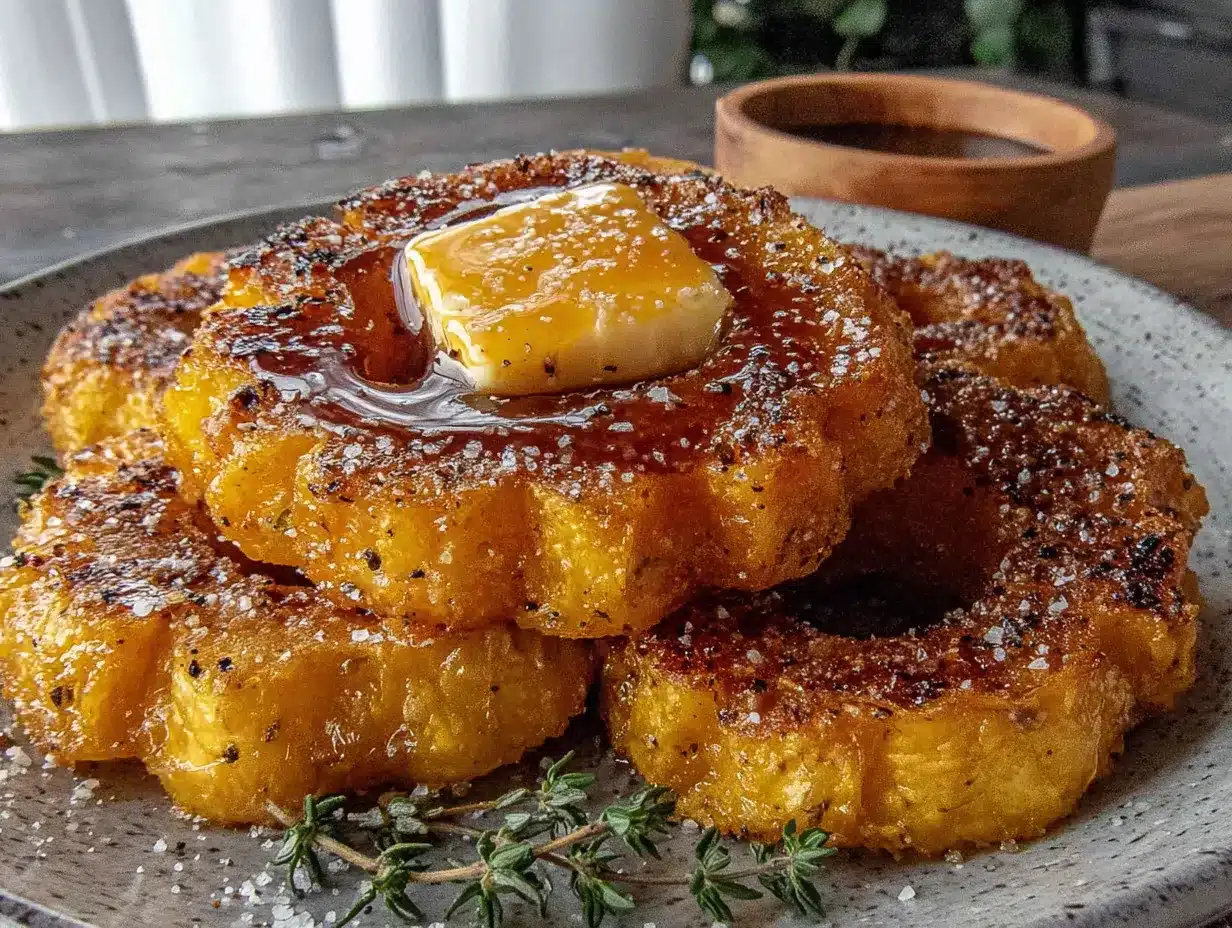
- Visually Stunning : The rings caramelize into these gorgeous golden-orange circles with slightly crispy edges. They look impressive on a serving platter, especially when you stack them or fan them out. Your table will look like it belongs in a magazine, I promise.
- Unbelievably Delicious : The combination of sweet maple syrup, rich butter, and warm spices with the natural nuttiness of roasted acorn squash is absolutely addictive. The edges get slightly chewy and caramelized while the centers stay tender. It’s the kind of side dish that people sneak back for seconds of when they think no one is looking.
- Kid-Approved, Adult-Adored : I’ve served these to picky eaters and food snobs alike, and they disappear every single time. The sweetness makes them approachable for kids, while the sophisticated flavor profile keeps adults coming back for more.
What makes this recipe different from other roasted squash dishes is the technique. Instead of cubing the squash or halving it, slicing it into rings ensures every piece has maximum surface area for that maple butter glaze to cling to. And the ring shape? It cooks more evenly, looks more elegant, and honestly, it’s just more fun to eat. This isn’t just another squash recipe—it’s the one that’ll have your guests asking for the recipe before they leave.
What Ingredients You Will Need
This recipe relies on a handful of quality ingredients that work together to create something truly special. I’ve tested plenty of variations over the years, and here’s what I’ve learned about each component.
- Acorn Squash (2 medium, about 1.5 pounds each): Look for squash that feels heavy for its size with a deep green color and a patch of orange on the side—that orange patch indicates it was vine-ripened and will be sweeter. The shape matters here: you want squash that’s relatively uniform in width so your rings come out similar in size. If one end is much narrower than the other, the rings will cook unevenly. I usually buy an extra squash just in case one is oddly shaped.
- Unsalted Butter (4 tablespoons, melted): I prefer unsalted here so I can control the salt level myself. The butter creates the rich base for the maple glaze and helps the edges caramelize beautifully. If you only have salted butter on hand, reduce the added salt in the recipe to 1/4 teaspoon. I’ve used both Kerrygold and store-brand butter successfully—just make sure it’s real butter, not margarine. The flavor difference is noticeable.
- Pure Maple Syrup (3 tablespoons): This is non-negotiable. Please don’t use pancake syrup or imitation maple syrup. Pure maple syrup has a complex, woodsy sweetness that’s thinner and more aromatic than the corn syrup-based stuff. Grade A Dark Amber is my go-to for this recipe because its stronger flavor holds up against the squash. If you only have Grade A Light Amber, that works too—your final dish will just be slightly less intensely maple-flavored.
- Brown Sugar (2 tablespoons, packed): Light or dark brown sugar both work, but dark brown sugar adds a deeper molasses note that I personally love. The brown sugar helps create that sticky, caramelized coating on the edges of the rings. If you’re out of brown sugar, you can substitute 2 tablespoons of white sugar mixed with 1/2 teaspoon of molasses.
- Cinnamon (1 teaspoon): The warm, sweet spice that complements maple and squash perfectly. I prefer Ceylon cinnamon for its milder, more complex flavor, but standard cassia cinnamon works just fine. Fresh cinnamon matters here—if yours has been sitting in the back of your spice cabinet for two years, it’s time for a new bottle.
- Nutmeg (1/4 teaspoon, freshly grated if possible): A little goes a long way. Freshly grated nutmeg has a warmth and fragrance that pre-ground nutmeg just can’t match. I keep whole nutmeg in my spice drawer and grate it directly over the bowl—it takes five seconds and makes a noticeable difference.
- Salt (1/2 teaspoon, plus flaky salt for finishing): Don’t skip the salt in the maple butter mixture—it balances the sweetness and makes the flavors pop. I use fine sea salt for the mixture and then sprinkle Maldon flaky sea salt over the finished rings right before serving. That final crunch of salt against the sweet, tender squash is what takes this from good to unforgettable.
- Optional Garnishes : Fresh thyme leaves, chopped pecans or walnuts, or a drizzle of extra maple syrup right before serving. I almost always add the flaky salt and fresh thyme—the herbiness cuts through the sweetness beautifully and makes the dish look more polished for company.
Equipment Needed
You don’t need a fancy kitchen to pull off these maple butter acorn squash rings. Here’s what I use and what I’ve learned works best.
- Sharp Chef’s Knife (8-inch or larger): Acorn squash is dense and can be tricky to cut. A sharp knife is essential for safety and clean cuts. I learned this the hard way after nearly losing a fingertip to a dull blade. A sharp knife will glide through the squash cleanly, while a dull one will slip and cause accidents.
- Cutting Board : A sturdy, non-slip cutting board is important. I place a damp paper towel underneath mine to keep it from sliding around while I’m cutting the squash.
- Large Baking Sheet (half-sheet pan, 18×13 inches): You want a rimmed baking sheet to catch any maple butter that drips off the rings. I line mine with parchment paper for easy cleanup—the caramelized maple butter can be stubborn to scrub off otherwise. If you don’t have parchment, a silicone baking mat works too.
- Mixing Bowl (medium-sized): For whisking together the maple butter mixture. Any bowl will do.
- Pastry Brush : For brushing the maple butter onto the squash rings. A silicone brush is easier to clean, but a natural bristle brush works fine too. In a pinch, you can use a spoon to drizzle the mixture over the rings, but a brush gives you more even coverage.
- Measuring Spoons and Cups : For accuracy. I know some cooks prefer to eyeb it, but for consistent results, especially when you’re scaling the recipe for a crowd, measuring is worth the extra thirty seconds.
- Small Saucepan (optional): If you want to simmer the maple butter mixture briefly to deepen the flavors before brushing it on. I do this when I’m feeling extra, but it’s not required.
Preparation Method
Let me walk you through this step by step. I’ve made these rings more times than I can count, so I’ll share all the little tricks I’ve picked up along the way.
- Preheat your oven to 400°F (200°C). Position the rack in the center of the oven. While the oven heats, line your baking sheet with parchment paper. Trust me on the parchment—the caramelized maple butter can turn into a sticky mess that’s brutal to scrub off.
- Prepare the squash. Using your sharp chef’s knife, carefully cut off the stem end and the very bottom tip of each acorn squash, just enough to create a flat, stable surface. Stand the squash upright on one of the flat ends. Now, slice straight down through the squash to create rings about 1/2-inch thick. I aim for rings that are uniform in thickness so they cook evenly. You’ll get about 5-6 rings per medium squash, depending on its size. Use a spoon or a small knife to scrape out the seeds and stringy pulp from the center of each ring. Don’t worry about getting every last fiber—a little bit of stringiness is fine and will soften during roasting.
- Make the maple butter mixture. In your mixing bowl, combine the melted butter, pure maple syrup, packed brown sugar, cinnamon, nutmeg, and fine sea salt. Whisk until everything is well combined and the brown sugar has mostly dissolved. Taste it. Seriously, dip a clean finger in there. It should be sweet, buttery, and warmly spiced with a hint of salt. If it tastes flat, add another pinch of salt. This is your chance to adjust the seasoning before it goes on the squash.
- Arrange the rings. Place the squash rings in a single layer on your prepared baking sheet. Don’t overlap them—if they’re crowded, they’ll steam instead of caramelizing. If you’re making a double batch, use two baking sheets or work in batches. Leave a little space between each ring so the hot air can circulate.
- Brush with maple butter. Using your pastry brush, generously brush the maple butter mixture over the tops and sides of each ring. Don’t be shy here. I like to brush, wait a minute for the mixture to soak in a bit, then brush again. You want every surface glistening. Flip the rings over and brush the other sides too. Any leftover mixture in the bowl gets drizzled evenly over the tops of the rings.
- Roast for 20 minutes. Place the baking sheet in the preheated oven and set a timer for 20 minutes. The kitchen will start smelling incredible around the 10-minute mark—that’s the maple syrup caramelizing. Resist the urge to open the oven door too often; you want to maintain a steady temperature.
- Flip and brush again. After 20 minutes, carefully remove the baking sheet from the oven. Using a spatula, flip each ring over. They should be starting to brown nicely on the bottom. Brush any pooled maple butter from the pan over the rings, or if the pan is dry, brush on a little extra maple butter from your reserved mixture (if you have any left). Return the sheet to the oven.
- Roast for another 15-20 minutes. Keep an eye on them during this last stretch. The rings are done when they’re tender all the way through—a fork should slide in easily with no resistance—and the edges are caramelized and slightly crispy. Some rings might have darker edges than others; that’s fine, those bits are the best part. If you want extra caramelization, you can switch the oven to broil for the last 1-2 minutes, but watch them like a hawk because they can burn fast.
- Rest and garnish. Let the rings cool on the baking sheet for 5 minutes. This allows the glaze to set slightly. Transfer them to a serving platter in a single layer or slightly overlapping. Sprinkle immediately with flaky sea salt and fresh thyme leaves, if using. The salt will stick to the warm glaze. If you’re adding nuts, scatter them over the top now so they adhere.
- Serve warm. These rings are best served warm, when the edges are still slightly crisp and the centers are tender. They’re delicious at room temperature too, so don’t stress if you’re not serving them straight from the oven. I’ve even eaten them cold straight from the fridge the next day, and they’re still pretty fantastic.
Cooking Tips & Techniques
After making these rings more times than I can count—including some memorable failures—I’ve gathered a few tips that’ll help you nail them on the first try.
Don’t skip the flipping step. I know it’s tempting to just brush and bake, but flipping the rings halfway through ensures even caramelization. I once tried to save time by skipping this step, and the bottoms came out perfectly caramelized while the tops were pale and unappealing. The extra five minutes of effort is absolutely worth it.
Watch your oven temperature. Every oven runs a little differently. If your oven runs hot, check the rings at the 30-minute mark instead of 35-40. The first time I made these in my friend’s oven, they were practically burnt at 35 minutes because her oven runs 25 degrees hotter than mine. Get to know your oven’s quirks. If the edges are browning too quickly but the centers aren’t tender yet, tent a piece of foil loosely over the baking sheet for the last 10 minutes.
Use room temperature butter for easier mixing. If you forget to soften your butter, microwave it in 10-second bursts until just melted. But be careful—you don’t want it hot, just melted. Hot butter will cook the maple syrup slightly and change the consistency of your glaze.
Scale smartly for a crowd. If you’re making these for a dinner party or potluck, you can prep the squash rings up to 24 hours ahead. Store them in an airtight container in the fridge with a slightly damp paper towel on top to keep them from drying out. The maple butter mixture can also be made ahead and refrigerated—just warm it slightly before using so it brushes on easily. When you’re ready to bake, just arrange, brush, and roast. You can also fully bake the rings a few hours ahead and reheat them in a 350°F oven for 5-7 minutes before serving.
Don’t overcrowd the pan. This is probably the most common mistake I see home cooks make. If the rings are touching or overlapping, they’ll steam instead of caramelizing, and you’ll end up with soggy, pale squash instead of golden, caramelized rings. Use two baking sheets if needed, and rotate them halfway through baking for even cooking.
Save the seeds! Don’t toss the seeds you scoop out of the squash centers. Rinse them, pat them dry, toss them with a little olive oil and salt, and roast them on a separate baking sheet at 350°F for about 10-12 minutes. They make a fantastic snack or garnish for soups and salads.
Variations & Adaptations
One of the things I love about this recipe is how adaptable it is. Here are some variations I’ve tried and loved.
Savory Herb Version : Swap the cinnamon and nutmeg for 1 teaspoon of dried rosemary and 1/2 teaspoon of black pepper. Add 2 cloves of minced garlic to the melted butter mixture. The result is a savory, aromatic ring that pairs beautifully with roasted chicken or pork. I made this version for a friend who doesn’t love sweet sides, and she asked for the recipe on the spot.
Spicy Maple Version : Add 1/4 teaspoon of cayenne pepper or 1/2 teaspoon of red pepper flakes to the maple butter mixture. The heat cuts through the sweetness and adds a lovely warmth that builds slowly. This version is fantastic served alongside grilled meats or as part of a fall-themed charcuterie board.
Vegan Adaptation : Substitute the butter with melted coconut oil or a high-quality vegan butter. I’ve used both, and coconut oil adds a subtle tropical note that actually works surprisingly well with the maple and squash. If using coconut oil, reduce the amount to 3 tablespoons since it’s richer than butter. The rings won’t get quite as crispy on the edges, but they’ll still be delicious.
Different Squash Options : While acorn squash is ideal for its shape and flavor, you can make this recipe with butternut squash too. Just peel the butternut squash first, then slice it into rounds (not rings, since there’s no center cavity). The cooking time might be slightly shorter since butternut squash tends to be less dense. Delicata squash also works beautifully and has the added bonus of edible skin, so you don’t need to peel it.
Nutty Crunch Version : After the final brush of maple butter, sprinkle chopped pecans or walnuts over the rings before returning them to the oven for the last 10 minutes. The nuts toast in the oven and add a wonderful crunch that contrasts with the tender squash. This is my personal favorite version for Thanksgiving—it feels a little more special without any extra effort.
Serving & Storage Suggestions
These maple butter acorn squash rings are incredibly versatile when it comes to serving. Here’s how I like to present them and what to do with leftovers (if there are any).
Serving Temperature and Presentation : These rings are best served warm, but they’re also delicious at room temperature. For a dinner party, I arrange them in a slightly overlapping spiral on a large white platter, which makes the golden-orange color really pop. Sprinkle with flaky sea salt and fresh thyme leaves right before serving. If you’re bringing them to a potluck, transport them in the baking sheet covered with foil, then transfer to a serving dish when you arrive.
What to Serve Alongside : These rings pair beautifully with roasted chicken, turkey, pork chops, or a hearty grain bowl. They’re also fantastic alongside a simple green salad with a tangy vinaigrette—the acidity cuts through the sweetness nicely. For a vegetarian main, serve them with a lentil loaf or stuffed portobello mushrooms. At Thanksgiving, they’re a welcome alternative to the usual sweet potato casserole and green bean casserole.
Storage Instructions : Store leftover rings in an airtight container in the refrigerator for up to 4 days. The edges will soften over time, but they’ll still be delicious. I actually love eating them cold straight from the fridge as a snack—they’re almost like candy.
Reheating Methods : To reheat, place the rings on a baking sheet in a 350°F oven for 5-7 minutes, or until warmed through. You can also reheat them in an air fryer at 350°F for 3-4 minutes, which helps restore some of the edge crispiness. I don’t recommend microwaving them—the texture becomes mushy and the glaze gets watery.
Freezing : You can freeze the baked rings in a single layer on a baking sheet, then transfer them to a freezer-safe bag or container for up to 3 months. To serve, thaw in the refrigerator overnight, then reheat in a 350°F oven for 8-10 minutes. The texture won’t be quite as perfect as fresh, but they’re still very good.
Nutritional Information & Benefits
While I wouldn’t call these maple butter acorn squash rings health food, they do have some redeeming nutritional qualities. Here’s a rough breakdown per serving (about 2 rings).
| Nutrient | Amount Per Serving |
|---|---|
| Calories | 180-200 |
| Total Fat | 8g |
| Saturated Fat | 5g |
| Carbohydrates | 28g |
| Fiber | 3g |
| Sugar | 16g |
| Protein | 2g |
| Vitamin A | 15% DV |
| Vitamin C | 20% DV |
| Potassium | 10% DV |
Acorn squash is actually quite nutritious. It’s packed with vitamin A (important for eye health and immune function), vitamin C (for collagen production and immune support), and fiber (for digestive health). The maple syrup and brown sugar add sweetness, but the overall sugar content is reasonable for a side dish. If you’re watching your sugar intake, you can reduce the maple syrup to 2 tablespoons and skip the brown sugar—the natural sweetness of the squash will still shine through.
For those with dietary restrictions: this recipe is naturally gluten-free and can be made vegan with the coconut oil substitution noted above. It contains dairy in the butter, so skip the butter if you’re lactose intolerant or use a dairy-free alternative. The main allergens here are dairy (butter) and tree nuts (if you add the pecan garnish).
Conclusion
I still have that envelope Tom wrote the recipe on, splattered with butter and stained with maple syrup. Every time I pull it out to make these rings for a gathering, I smile, remembering that rainy afternoon when I walked into his kitchen and discovered something I didn’t know I was missing. That’s the magic of a recipe like this—it’s simple enough to become a staple, but special enough to feel like an occasion every single time.
These Best Easy Maple Butter Acorn Squash Rings have become my signature fall dish, and I have a feeling they’ll become yours too. Whether you’re making them for a casual weeknight dinner, a festive Thanksgiving table, or a potluck where you want to impress without stress, they deliver every time. The combination of tender squash, caramelized edges, and that sweet-savory maple butter glaze is honestly hard to beat.
I’d love to hear how these turn out for you! Drop a comment below and let me know if you tried any variations, or share a photo of your rings on social media and tag me. And if you’re looking for more fall-inspired dishes to round out your menu, don’t forget to check out my cozy butternut squash soup or these simple roasted Brussels sprouts with balsamic—they’d make a perfect fall spread alongside these rings. Happy cooking, friends!
Frequently Asked Questions
Can I make these maple butter acorn squash rings ahead of time?
Absolutely! You can slice the squash rings and make the maple butter mixture up to 24 hours ahead. Store the rings in the fridge with a damp paper towel on top, and keep the maple butter in a sealed container. When you’re ready to bake, just arrange, brush, and roast as directed. You can also fully bake them a few hours ahead and reheat in a 350°F oven for 5-7 minutes.
Do I have to peel the acorn squash before slicing it into rings?
Nope! The skin of acorn squash is edible and becomes tender when roasted. I actually recommend leaving the skin on—it helps the rings hold their shape during cooking and adds a nice bit of texture. Just make sure to wash the squash thoroughly before slicing.
What if my acorn squash rings are different sizes?
That’s totally normal! Acorn squash aren’t perfectly cylindrical, so some rings will be smaller than others. Try to slice them to a uniform thickness (about 1/2 inch), and arrange the smaller rings around the edges of the baking sheet where they’ll cook a bit faster. Check the smaller rings a few minutes early and remove them if they’re done before the larger ones.
Can I use a different type of squash for this recipe?
Yes! Butternut squash works well—just peel it first and slice into rounds. Delicata squash is also excellent and doesn’t need peeling. The cooking time may vary slightly depending on the squash variety, so keep an eye on them and test for doneness with a fork.
How do I prevent the maple butter from burning in the pan?
The key is to not let the maple butter pool too much on the baking sheet. If there’s excess liquid in the pan, it can burn before the squash is fully cooked. Make sure your rings are in a single layer with space between them, and don’t pour all the leftover maple butter into the pan—just brush on what adheres to the rings. If you notice the pan getting too dark, add a splash of water to the pan to deglaze it and prevent burning.
Pin This Recipe!
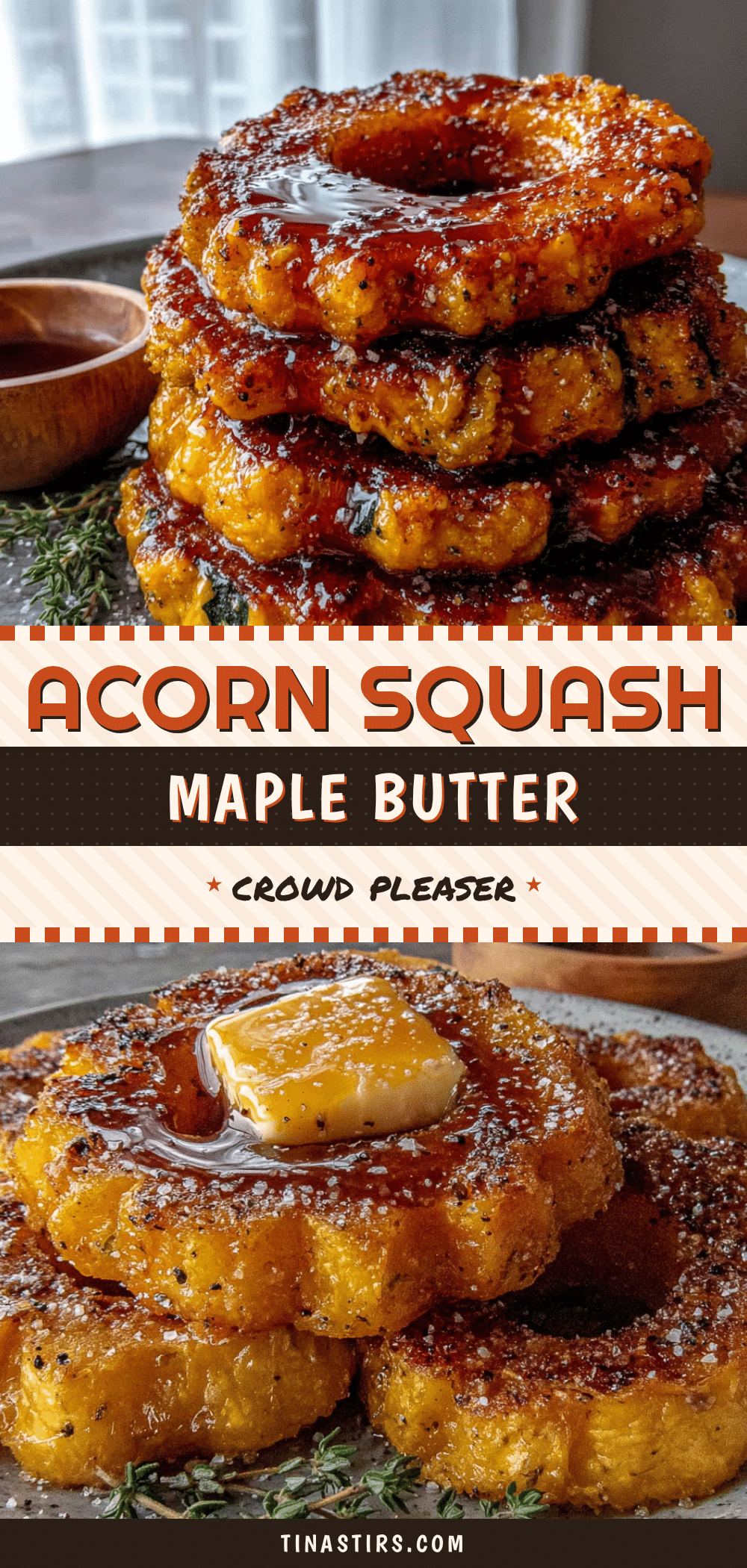
Best Easy Maple Butter Acorn Squash Rings Recipe
These maple butter acorn squash rings are caramelized, tender, and perfect for fall gatherings. They’re easy to make with simple ingredients and are always a crowd-pleaser.
- Prep Time: 15 minutes
- Cook Time: 35-40 minutes
- Total Time: 50-55 minutes
- Yield: 4 servings 1x
- Category: Side Dish
- Cuisine: American
Ingredients
- 2 medium acorn squash (about 1.5 pounds each)
- 4 tablespoons unsalted butter, melted
- 3 tablespoons pure maple syrup
- 2 tablespoons packed brown sugar
- 1 teaspoon cinnamon
- 1/4 teaspoon nutmeg, freshly grated if possible
- 1/2 teaspoon fine sea salt
- Flaky sea salt for finishing
- Fresh thyme leaves for garnish (optional)
- Chopped pecans or walnuts for garnish (optional)
Instructions
- Preheat your oven to 400°F (200°C). Position the rack in the center of the oven. Line a baking sheet with parchment paper.
- Prepare the squash: Cut off the stem end and bottom tip of each acorn squash to create flat surfaces. Stand the squash upright and slice into 1/2-inch thick rings. Scoop out the seeds and stringy pulp from the center of each ring.
- Make the maple butter mixture: In a mixing bowl, whisk together melted butter, maple syrup, brown sugar, cinnamon, nutmeg, and fine sea salt until well combined.
- Arrange the squash rings in a single layer on the prepared baking sheet, leaving space between each ring.
- Brush the maple butter mixture generously over the tops and sides of each ring. Flip and brush the other sides. Drizzle any leftover mixture over the tops.
- Roast for 20 minutes.
- Remove from the oven, flip each ring, and brush with any pooled maple butter from the pan or extra reserved mixture.
- Roast for another 15-20 minutes, until tender and edges are caramelized. For extra caramelization, broil for 1-2 minutes, watching carefully.
- Let the rings cool on the baking sheet for 5 minutes. Transfer to a serving platter and sprinkle with flaky sea salt and fresh thyme leaves or nuts, if using.
- Serve warm.
Notes
For make-ahead: slice squash rings and make maple butter up to 24 hours ahead. Store rings in fridge with damp paper towel. Reheat fully baked rings in 350°F oven for 5-7 minutes. To freeze: freeze baked rings in single layer, then transfer to freezer bag for up to 3 months. Thaw overnight in fridge and reheat.
Nutrition
- Serving Size: 2 rings
- Calories: 190
- Sugar: 16
- Sodium: 300
- Fat: 8
- Saturated Fat: 5
- Carbohydrates: 28
- Fiber: 3
- Protein: 2
Keywords: acorn squash, maple butter, fall recipe, side dish, roasted squash, easy recipe