Love this? Save it for later!
Share the inspiration with your friends
My neighbor watched me fumbling with a fillet of salmon last Thursday, peering over the fence that separates our tiny patios. She didn’t say anything at first. Then she just held up one finger, disappeared inside her apartment, and came back with a crumpled piece of paper covered in notes. “You’re overthinking it,” she said, handing it over. “Fish doesn’t need a fancy ceremony. It needs heat, fat, acid, and trust.”
That piece of paper had her lemon butter salmon bake written all over it—scratched out, rewritten, with a wine stain in the corner. I stood there holding it, honestly a little embarrassed that I’d been stressing over a complicated marinade situation while she had the answer in her back pocket the whole time. The recipe was simple. Almost too simple. But you know that feeling when something looks too easy and you just know it’s going to work anyway? That was this.
I made it that same night, and let me tell you, I almost cried. The fish came out so flaky it practically fell apart when I looked at it. The lemon butter sauce pooled around the fillets like a little golden lake, and the garlic—oh, the garlic made the whole apartment smell like a restaurant. I texted her a photo and she wrote back: “Told you.”
This is that recipe. The one that proves you don’t need a culinary degree or a pantry full of exotic spices to make something genuinely memorable. It’s light, it’s flaky, and it’s exactly the kind of meal you want on a Tuesday when you’re tired but still craving something that feels special. Maybe you’ve been there—standing in front of the seafood counter, unsure, hoping for something that won’t disappoint. This salmon bake won’t. I promise.
Why You’ll Love This Recipe
I’ve tested this lemon butter salmon bake about seven times now, tweaking the temperature, adjusting the butter ratio, even trying it with different types of salmon. And every single time, it delivered. Here’s why I keep coming back to it—and why I think you will too.
- Quick & Easy: From fridge to table in under 30 minutes. Seriously. No marinating, no complicated steps, just a few minutes of prep and the oven does the rest. Perfect for those nights when you’re hangry and impatient.
- Simple Ingredients: You probably already have butter, lemons, and garlic in your kitchen right now. The only thing you might need to pick up is the salmon itself. No grocery store scavenger hunts here.
- Perfect for Busy Weeknights: This isn’t a weekend project. It’s a Tuesday night lifesaver that still feels like a treat. Serve it with rice or a simple salad and you’ve got a complete meal that looks impressive with almost zero effort.
- Crowd-Pleaser: I’ve served this to picky eaters, seafood skeptics, and hardcore foodies. Everyone goes back for seconds. The lemon butter sauce is basically magic—it makes everything taste better.
- Unbelievably Delicious: The texture is what gets me every time. The salmon comes out so tender and flaky, it practically melts. And the sauce? Bright, buttery, with just enough garlic to make it interesting without overwhelming the fish.
What makes this version different from every other salmon recipe out there? It’s the balance. So many lemon butter salmon dishes end up either too heavy (drowning in butter) or too lean (dry and sad). This one hits the sweet spot. The butter is there to add richness, but the lemon keeps it light and fresh. The garlic adds depth without taking over. And the baking method ensures the fish cooks evenly every single time, no flipping required.
This isn’t just good salmon. It’s the kind of meal that makes you close your eyes after the first bite. Comfort food reimagined—healthier, faster, but with the same soul-soothing satisfaction. Perfect for impressing guests without stress, or turning a simple Tuesday into something memorable.
What Ingredients You Will Need
This recipe uses simple, wholesome ingredients to deliver bold flavor and satisfying texture without the fuss. Most of these are pantry staples, and the few that aren’t are easy to find at any grocery store.
For the Salmon
- 4 salmon fillets (6 oz / 170g each) – Look for fillets that are roughly the same thickness so they cook evenly. I prefer wild-caught when possible, but farm-raised works beautifully too. Just make sure they’re fresh or fully thawed if using frozen.
- Salt and black pepper – To taste. Don’t be shy with the salt—it helps bring out the salmon’s natural flavor.
- 1/2 teaspoon garlic powder – Adds a subtle savory note without the sharpness of fresh garlic. You can skip this if you’re using lots of fresh garlic in the sauce.
For the Lemon Butter Sauce
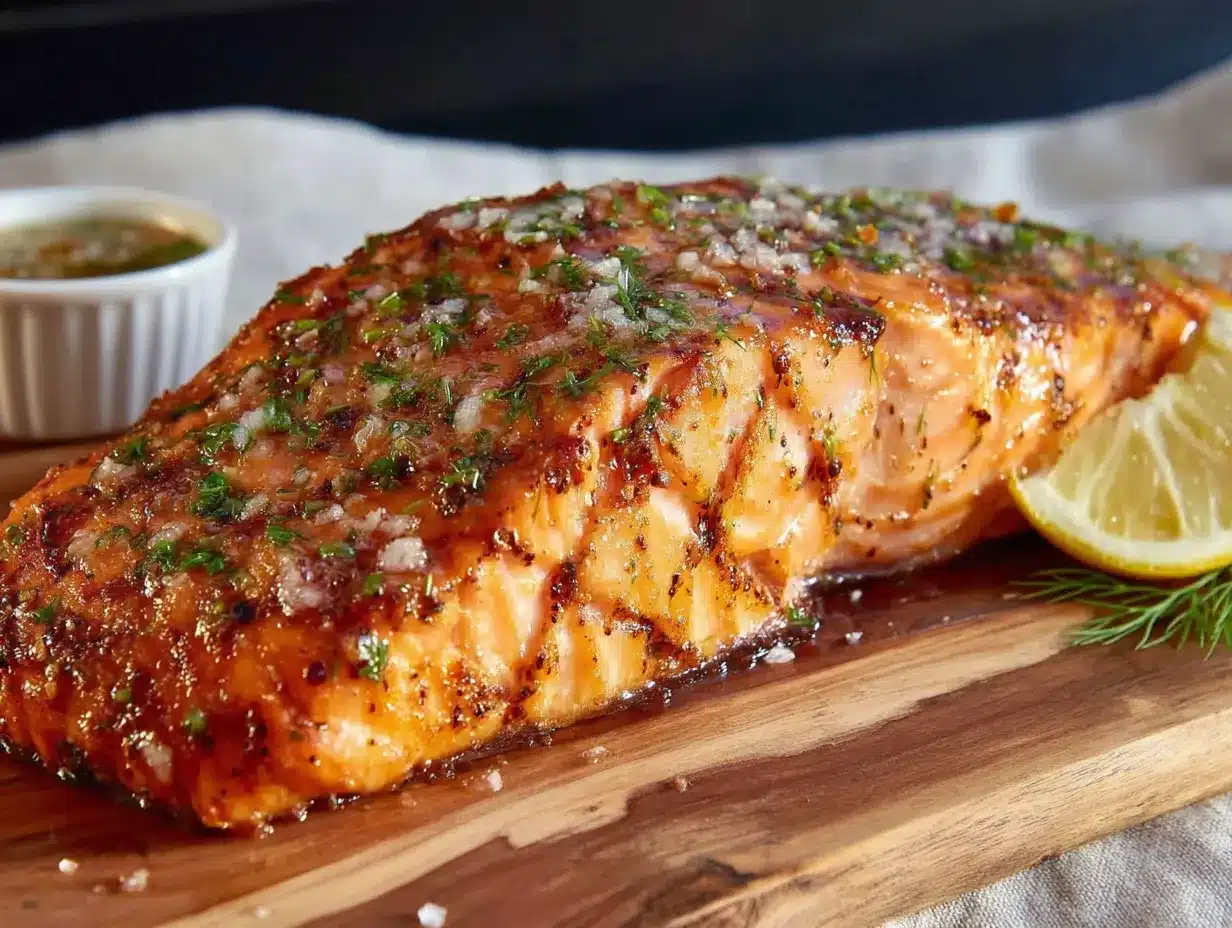
- 4 tablespoons unsalted butter (60g) – I recommend using a good quality butter like Kerrygold or Plugrà for the richest flavor. If you only have salted butter, just reduce the added salt slightly.
- 3 cloves garlic, minced – Fresh garlic is non-negotiable here. The jarred stuff won’t give you the same aromatic punch. Mince it finely so it melts into the butter.
- 1 large lemon – You’ll need both the zest and the juice. Roll the lemon on the counter before juicing to get every last drop. Meyer lemons work great if you can find them—they’re a bit sweeter and less acidic.
- 1 tablespoon fresh parsley, chopped – Optional but recommended for color and a hint of freshness. Flat-leaf parsley has more flavor than curly.
For Serving (Optional but Recommended)
- Lemon slices – For garnish. They look pretty and add extra citrus flavor as you eat.
- Fresh dill or thyme sprigs – If you have them, these herbs pair beautifully with salmon and lemon.
Ingredient Selection Tips: When buying salmon, look for fillets that are bright in color and smell clean—like the ocean, not fishy. The flesh should be firm to the touch and bounce back when pressed. If the edges look dried out or discolored, skip it. For the lemons, choose ones that feel heavy for their size—that means they’re juicy. And please, please use real butter. Margarine or spreads won’t create the same silky sauce texture.
Substitution Guidance: If you’re dairy-free, you can substitute the butter with a high-quality vegan butter or ghee (which is lactose-free but not dairy-free). For a lower-fat option, use olive oil instead, though the sauce won’t be as rich. No fresh parsley? No problem—use dried parsley or skip it entirely. The recipe still works.
Equipment Needed
You don’t need much for this lemon butter salmon bake, which is part of its charm. Here’s what you’ll need:
- 9×13-inch baking dish (or similar) – Glass or ceramic works best because they distribute heat evenly. I use a Pyrex dish and it’s never let me down. If you only have metal, just keep an eye on the cooking time—metal conducts heat faster.
- Small saucepan – For melting the butter and infusing it with garlic and lemon. Any small pot will do.
- Chef’s knife and cutting board – For mincing garlic and chopping parsley. A sharp knife makes the job so much easier.
- Microplane or zester – For getting the lemon zest without the bitter white pith. If you don’t have one, use the fine side of a box grater.
- Citrus juicer or reamer – Not essential, but it makes juicing lemons less messy. I use a simple handheld reamer.
- Measuring spoons – For accuracy, especially with the butter and garlic powder.
- Oven mitts – The dish gets hot, and you don’t want to learn that the hard way. Trust me on this one.
Budget-Friendly Options: Don’t have a baking dish? Use a rimmed baking sheet lined with parchment paper. No microplane? Use a vegetable peeler to remove the lemon zest in thin strips, then mince it finely. No saucepan? Melt the butter in the microwave in 15-second bursts, then stir in the garlic and lemon.
Preparation Method
Let’s get cooking. This lemon butter salmon bake comes together fast, so I recommend reading through all the steps first. Trust me, it makes everything smoother.
- Preheat your oven to 400°F (200°C). Give it a full 15 minutes to come to temperature. A properly preheated oven is the difference between perfectly flaky salmon and sad, overcooked fish. While it’s heating, take your salmon fillets out of the fridge and let them sit at room temperature for about 10 minutes. This helps them cook more evenly.
- Pat the salmon fillets dry with paper towels. This is important—excess moisture will steam the fish instead of baking it, and you won’t get that nice flaky texture. Season both sides generously with salt, pepper, and the garlic powder. Don’t be shy. The salt brings out the natural flavor of the salmon.
- Make the lemon butter sauce. In your small saucepan, melt the butter over medium-low heat. Once it’s fully melted, add the minced garlic and lemon zest. Cook for about 1 minute, stirring constantly, until the garlic is fragrant but not browned. Garlic burns fast, so keep an eye on it. Remove from heat and stir in the lemon juice and half of the chopped parsley.
- Arrange the salmon in your baking dish. Place the fillets skin-side down (if they have skin) with a little space between each piece. They shouldn’t be touching—crowding the pan leads to uneven cooking. Pour the lemon butter sauce over the fillets, making sure each one gets coated. Use a spoon to distribute the garlic pieces evenly.
- Bake for 12-15 minutes. The exact time depends on the thickness of your fillets. At 12 minutes, check for doneness: the salmon should be opaque and flake easily with a fork. If it still looks translucent in the center, give it another 2-3 minutes. I usually check at 12 minutes, then again at 14. Overcooked salmon is dry salmon, so err on the side of slightly underdone—it will continue cooking from residual heat.
- Optional: Broil for 1-2 minutes at the end. If you want a slightly golden top, switch your oven to broil for the last minute or two. Watch it carefully—broiling goes from perfect to burnt in seconds. I only do this when I’m feeling fancy.
- Remove from the oven and let rest for 2 minutes. This is hard, I know. You want to eat it immediately. But letting it rest allows the juices to redistribute throughout the fish, making it even more tender and flavorful. Sprinkle with the remaining fresh parsley and add lemon slices for garnish.
Sensory Cues: At the 10-minute mark, your kitchen should smell incredible—buttery, garlicky, with bright citrus notes cutting through. The sauce should be bubbling gently around the edges of the fillets. When you flake the salmon with a fork, it should separate into clean, moist layers without resistance. If it feels tough or resistant, it needs more time. If it’s already falling apart, it’s done.
Cooking Tips & Techniques
I’ve made this lemon butter salmon bake enough times to have a few hard-won tips to share. Some came from success, others from spectacular failure. Learn from my mistakes, please.
Don’t skip the resting time at room temperature. I once put ice-cold salmon straight from the fridge into the oven because I was in a rush. The outside cooked perfectly while the center stayed raw. Not a good look. Letting the fillets sit out for 10 minutes before baking ensures even cooking from edge to center.
Watch your garlic carefully. Burnt garlic is bitter garlic, and it will ruin your sauce. When you’re melting the butter, keep the heat at medium-low and stir constantly. The moment the garlic turns fragrant and slightly golden (about 60 seconds), pull it off the heat. If you’re nervous, you can even remove the pan from the heat before adding the garlic and let the residual heat cook it gently.
Use a thermometer if you have one. I know, I know, it feels fussy. But salmon cooked to exactly 125°F (52°C) at the thickest part is absolutely perfect—translucent in the center, flaky everywhere else. At 130°F (54°C), it’s still good but starting to dry out. At 140°F (60°C), you’ve got fish jerky. A simple instant-read thermometer takes the guesswork out completely.
Bake uncovered. I tried covering the dish with foil once because I was worried about the salmon drying out. Big mistake. The foil trapped steam and the fish ended up soggy instead of flaky. The uncovered method allows the sauce to reduce slightly and concentrate in flavor while the salmon develops that beautiful texture.
Double the sauce if you’re a sauce person. This recipe makes enough for a light coating on each fillet. If you’re like me and want extra to drizzle over rice or vegetables, go ahead and double the butter, garlic, and lemon. Just make sure your baking dish is big enough to hold the extra liquid.
Variations & Adaptations
One of the best things about this lemon butter salmon bake is how adaptable it is. Here are a few ways I’ve changed it up depending on what I had on hand or who I was cooking for.
Herb-Crusted Salmon: Before baking, press a mixture of fresh dill, thyme, and breadcrumbs (or almond flour for low-carb) onto the top of each fillet. The herbs add earthiness, and the breadcrumbs give a lovely crunch that contrasts with the tender fish. I did this for a dinner party once and everyone asked for the recipe.
Spicy Lemon Butter: Add 1/4 teaspoon of red pepper flakes or a pinch of cayenne to the butter sauce. The heat cuts through the richness beautifully and adds a subtle warmth that doesn’t overpower the lemon. My husband loves this version—he says it wakes up the dish.
Mediterranean Twist: Before baking, scatter halved cherry tomatoes, sliced olives, and capers around the salmon fillets. The tomatoes burst in the oven and create a little sauce that mixes with the lemon butter. Serve with crusty bread to soak it all up. This is my go-to when I want something that feels more like a complete meal in one dish.
Dairy-Free Version: Substitute the butter with a high-quality vegan butter or use olive oil infused with garlic. The texture will be slightly different—less rich—but still delicious. I’ve used Miyoko’s vegan butter and it worked surprisingly well.
Air Fryer Adaptation: Cook the salmon at 375°F (190°C) for 8-10 minutes in an air fryer. The sauce will reduce faster, so check it a minute or two early. The air fryer gives the top a nice caramelization that you don’t quite get in the oven.
Serving & Storage Suggestions
This salmon is best served fresh out of the oven, but here’s how to make the most of it whether you’re eating it now or later.
Serving Temperature: Serve the salmon warm, straight from the baking dish. Spoon some of the lemon butter sauce over each fillet right before serving—it’s the best part. If you’ve let it rest for a few minutes, the sauce will have thickened slightly and coats the fish beautifully.
What to Serve With It: This salmon pairs perfectly with simple sides that let it shine. Try it with fluffy white rice or quinoa to soak up the sauce. A crisp green salad with a light vinaigrette balances the richness. Roasted asparagus or green beans add color and texture. For something heartier, serve it with creamy mashed potatoes—trust me, the sauce on potatoes is incredible.
Storage Instructions: Leftover salmon keeps in an airtight container in the refrigerator for up to 3 days. The flavor actually gets even better as the lemon and garlic meld together overnight. However, the texture will be firmer than fresh, so don’t expect the same flaky tenderness.
Reheating Methods: The best way to reheat is in a low oven (300°F / 150°C) for about 10 minutes, covered loosely with foil to prevent drying out. You can also reheat in a microwave at 50% power in 30-second bursts, but be careful—it can easily overcook. I actually love eating leftover salmon cold, flaked over a salad for lunch the next day. The lemon butter sauce turns into a sort of dressing.
Freezing: I don’t recommend freezing cooked salmon—the texture suffers too much. But you can freeze the raw salmon fillets with the sauce in a freezer-safe bag for up to 3 months. Thaw overnight in the fridge, then bake as directed, adding a few extra minutes if needed.
Nutritional Information & Benefits
This lemon butter salmon bake isn’t just delicious—it’s genuinely good for you. Here’s a rough breakdown per serving (one fillet with sauce):
- Calories: Approximately 380-420
- Protein: 34-38g
- Fat: 24-28g (mostly healthy fats from salmon and butter)
- Carbohydrates: 2-3g
- Omega-3 Fatty Acids: High (salmon is one of the best sources)
- Vitamin D: Excellent source
- Selenium: High (important for thyroid health)
Health Benefits: Salmon is packed with omega-3 fatty acids, which are essential for brain health and reducing inflammation. The lemon provides a solid dose of vitamin C, and garlic is known for its immune-boosting properties. This dish is naturally low in carbs and high in protein, making it a great option for anyone watching their blood sugar or trying to build lean muscle.
Dietary Considerations: This recipe is naturally gluten-free, low-carb, and keto-friendly. It contains dairy (butter) and fish. For a dairy-free version, substitute with olive oil or vegan butter as mentioned in the variations section.
I’m not a nutritionist, but I’ve learned to listen to my body. Meals like this—simple, whole ingredients, balanced fats and protein—leave me feeling satisfied without being weighed down. That’s the kind of eating I can get behind.
Conclusion
This lemon butter salmon bake has become my go-to for so many reasons. It’s fast enough for a hectic weeknight, fancy enough for company, and simple enough that I can make it without thinking. The lemon and butter work together in a way that feels both indulgent and light—exactly what I want when I’m craving something satisfying but not heavy.
I love that this recipe came from a casual conversation with my neighbor. It’s a reminder that the best recipes often come from people who just love to cook, not from cookbooks or famous chefs. She didn’t teach me a technique. She taught me to trust the process and keep it simple.
Now I want to hear from you. Have you tried this salmon bake? Did you add your own twist? Drop a comment below and tell me how it turned out. And if you loved it, share this recipe with someone who needs an easy, delicious dinner in their life. Happy cooking!
Frequently Asked Questions
Can I use frozen salmon for this recipe?
Yes, you can use frozen salmon, but it’s important to thaw it completely first. Place the frozen fillets in the refrigerator overnight, or submerge them in cold water for about 30 minutes. Pat them dry thoroughly before seasoning—frozen salmon releases more water as it thaws, and excess moisture will prevent the fish from getting that nice flaky texture.
How do I know when the salmon is fully cooked?
The best way is to use an instant-read thermometer—125°F (52°C) at the thickest part is perfect. If you don’t have a thermometer, check that the salmon flakes easily with a fork and is opaque throughout. The center should be just slightly translucent if you like it on the tender side. Remember, it continues cooking for a minute or two after you take it out of the oven.
Can I make this recipe with other types of fish?
Absolutely. This lemon butter sauce works beautifully with any firm, flaky white fish like cod, halibut, or sea bass. Adjust the cooking time based on the thickness of the fillets—thinner fish like tilapia will cook faster, while thicker cuts like swordfish may need a few extra minutes. The key is to check for doneness early and often.
What if I don’t have a baking dish?
No problem at all. You can use a rimmed baking sheet lined with parchment paper or aluminum foil for easy cleanup. Just make sure the edges are raised enough to hold the sauce. You can also use a cast-iron skillet—it heats evenly and gives the salmon a nice crust on the bottom. Adjust your cooking time slightly since different materials conduct heat differently.
Can I prep this recipe ahead of time?
You can prep the lemon butter sauce up to 2 days in advance and store it in the refrigerator. Let it come to room temperature before pouring it over the salmon. I don’t recommend seasoning the salmon more than 30 minutes before baking, as the salt can draw out moisture and affect the texture. For the best results, assemble and bake right before serving.
Pin This Recipe!
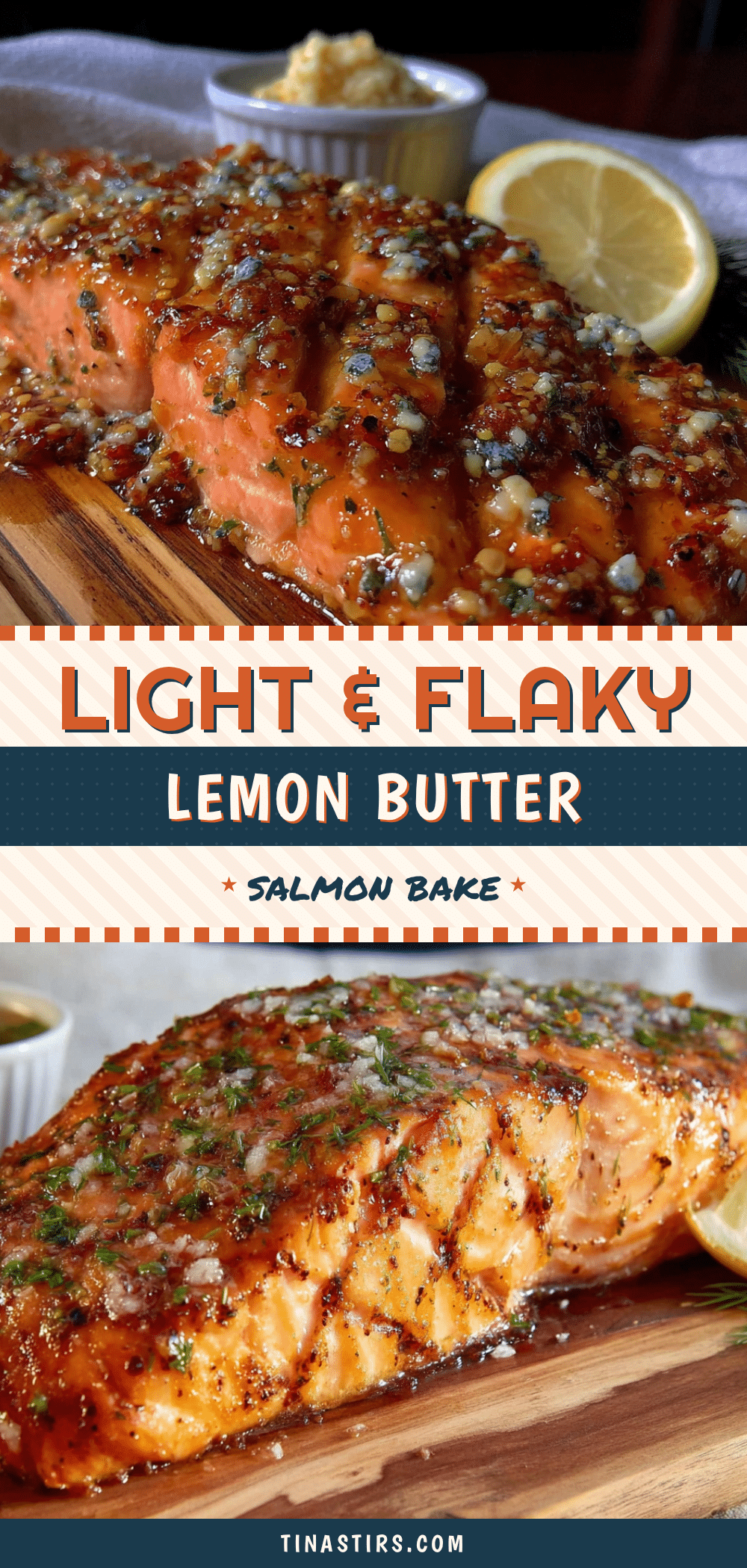
Easy Lemon Butter Salmon Bake – 30-Min Light & Flaky Dinner
A quick and easy lemon butter salmon bake that delivers tender, flaky fish in under 30 minutes. Perfect for busy weeknights, this simple recipe uses basic ingredients to create a bright, buttery sauce that makes every bite memorable.
- Prep Time: 10 minutes
- Cook Time: 15 minutes
- Total Time: 25 minutes
- Yield: 4 servings 1x
- Category: Main Course
- Cuisine: American
Ingredients
- 4 salmon fillets (6 oz / 170g each)
- Salt and black pepper to taste
- 1/2 teaspoon garlic powder
- 4 tablespoons unsalted butter (60g)
- 3 cloves garlic, minced
- 1 large lemon (zest and juice)
- 1 tablespoon fresh parsley, chopped
- Lemon slices for garnish (optional)
- Fresh dill or thyme sprigs for garnish (optional)
Instructions
- Preheat your oven to 400°F (200°C). Let the salmon fillets sit at room temperature for about 10 minutes.
- Pat the salmon fillets dry with paper towels. Season both sides generously with salt, pepper, and garlic powder.
- In a small saucepan, melt the butter over medium-low heat. Add the minced garlic and lemon zest, cook for about 1 minute until fragrant. Remove from heat and stir in the lemon juice and half of the chopped parsley.
- Arrange the salmon fillets skin-side down in a 9×13-inch baking dish, leaving space between each piece. Pour the lemon butter sauce over the fillets, ensuring even coating.
- Bake for 12-15 minutes, until the salmon is opaque and flakes easily with a fork. Optionally, broil for 1-2 minutes at the end for a golden top.
- Remove from the oven and let rest for 2 minutes. Sprinkle with remaining parsley and garnish with lemon slices.
Notes
Don’t skip the resting time at room temperature for even cooking. Watch the garlic carefully to avoid burning. Use an instant-read thermometer for perfect doneness (125°F/52°C). Bake uncovered for best texture. Double the sauce if you want extra for drizzling.
Nutrition
- Serving Size: 1 fillet with sauce
- Calories: 400
- Sugar: 1
- Sodium: 350
- Fat: 26
- Saturated Fat: 10
- Carbohydrates: 2
- Protein: 36
Keywords: lemon butter salmon, salmon bake, easy salmon recipe, 30-minute dinner, weeknight dinner, healthy salmon, gluten-free salmon