Love this? Save it for later!
Share the inspiration with your friends
I was standing in the middle of the canned vegetable aisle at the grocery store last Tuesday when the smell hit me. Not a real smell, you know? A memory-smell. That sweet-tangy aroma of brown sugar and ketchup bubbling together in the oven. And suddenly I was eight years old, standing on a step stool in my neighbor Mrs. Kowalski’s kitchen, watching her shape a mountain of ground meat with her worn-out hands. She’d let me press the glaze on top with a pastry brush, and I always made a mess of it—glaze dripping down the sides, pooling on the baking sheet. She never once corrected me. She just smiled and said, “Perfect. Just perfect.”
I haven’t thought about Mrs. Kowalski in years. She moved away when I was twelve, and I honestly can’t even remember her first name. But standing there in that fluorescent-lit aisle, I could feel the warmth of her kitchen, hear the faint hum of her old refrigerator, and taste that meatloaf—that impossibly tender, caramelized, brown-sugar-glazed meatloaf that her family begged her to make every single week. I grabbed a cart and started loading up ingredients before I even realized what I was doing. I mean, I had a list for completely different meals in my pocket, but sometimes your body just knows what it needs, right?
Here’s the thing about meatloaf—it gets a bad reputation. People think of it as dry, bland, or that sad cafeteria square sitting in a puddle of grease. But a good meatloaf? The kind that makes you close your eyes after the first bite? That’s a different story entirely. This easy classic meatloaf with brown sugar glaze is the kind that brings people to the table without any complaints. It’s the recipe I’ve been tweaking for years to get exactly right—tender enough to slice without crumbling, juicy in the middle, and topped with that sticky-sweet glaze that turns into something almost candied around the edges. And the best part? It comes together in about 15 minutes of active work. Maybe you’ve been there, staring at your fridge at 5:30 PM wondering what on earth to make for dinner. This is the answer.
Why You’ll Love This Recipe
Let me tell you why this particular meatloaf has earned a permanent spot in my weekly rotation. I’ve tested it more times than I care to admit—some failures were spectacular (don’t ask about the time I used oat flour as a binder), but this version? This is the one I keep coming back to.
- Quick & Easy: From fridge to table in about an hour, with only 15 minutes of hands-on work. Perfect for those weeknights when you’re running on empty but still want a real dinner.
- Simple Ingredients: Nothing fancy here. Ground beef, breadcrumbs, eggs, ketchup, brown sugar—stuff you probably already have in your pantry and fridge. No special trips to specialty stores required.
- Weeknight Hero: This isn’t a weekend-project recipe. It’s the kind of meal you can throw together after a long day, pop in the oven, and have dinner ready while you unload the dishwasher or help with homework.
- Crowd-Pleaser: I’ve served this to picky kids, skeptical in-laws, and hungry neighbors. Every single person has asked for the recipe. It’s just one of those dishes that everyone loves.
- Leftover Gold: Honestly, this meatloaf might be even better the next day. Cold meatloaf sandwiches on white bread with a swipe of mayo? That’s a whole separate reason to make this recipe.
What makes this different from all the other meatloaf recipes out there? It’s the balance. The meat mixture is seasoned just right—not too salty, not too bland. The breadcrumb-to-meat ratio is dialed in for maximum tenderness without falling apart. And that brown sugar glaze? It’s not just slapped on top. It bakes into the meatloaf, creating this caramelized crust that’s sweet, tangy, and slightly sticky. Every bite has a little bit of that magic. This isn’t just another version of meatloaf—it’s the one you’ll actually look forward to making.
What Ingredients You Will Need
This recipe uses simple, honest ingredients to create something genuinely special. Most of these are pantry staples, which is exactly what you want on a busy weeknight when you don’t have time for a grocery run.
For the Meatloaf
- Ground beef (80/20 blend) – 2 pounds (about 900g). I prefer 80/20 for the perfect balance of flavor and moisture. Leaner blends can make the meatloaf dry, so stick with this ratio if you can. I usually grab whatever brand is on sale at my local market, but I’ve had good luck with the store-brand organic blend too.
- Breadcrumbs (plain or Italian) – 1 cup (120g). Plain works fine, but Italian-seasoned adds a nice herbal note. If you’re out of breadcrumbs, crush up some saltines or even plain potato chips in a pinch—I’ve done both when I was desperate and honestly, it worked great.
- Milk – ½ cup (120ml). Whole milk adds richness, but 2% works perfectly fine. The milk soaks into the breadcrumbs and keeps the meatloaf tender instead of dense.
- Eggs – 2 large, lightly beaten. These bind everything together. Make sure they’re at room temperature if you can—cold eggs can make the meat mixture seize up a bit.
- Yellow onion – 1 medium, finely diced (about 1 cup). Don’t skip this. Onion adds moisture and sweetness as it bakes. I like to dice it really fine so there aren’t big chunks in the finished meatloaf.
- Garlic – 3 cloves, minced. Fresh garlic is best here, but in a pinch, 1 teaspoon of garlic powder works too.
- Ketchup – ¼ cup (60ml). This adds tang and moisture to the meat mixture itself. I’m a Heinz loyalist, but any brand works.
- Worcestershire sauce – 2 tablespoons. This is the secret weapon for deep, savory flavor. Don’t skip it—it makes a real difference.
- Dijon mustard – 1 tablespoon. Adds a subtle tang that balances the sweetness of the glaze. Yellow mustard works in a pinch, but Dijon is smoother.
- Dried thyme – 1 teaspoon. Earthy and slightly floral, thyme pairs beautifully with beef. If you have fresh thyme, use 1 tablespoon chopped.
- Salt – 1½ teaspoons. I use kosher salt. If you’re using table salt, reduce to 1 teaspoon.
- Black pepper – ½ teaspoon, freshly ground. Freshly ground makes a difference here—pre-ground pepper can be dusty and flat.
For the Brown Sugar Glaze
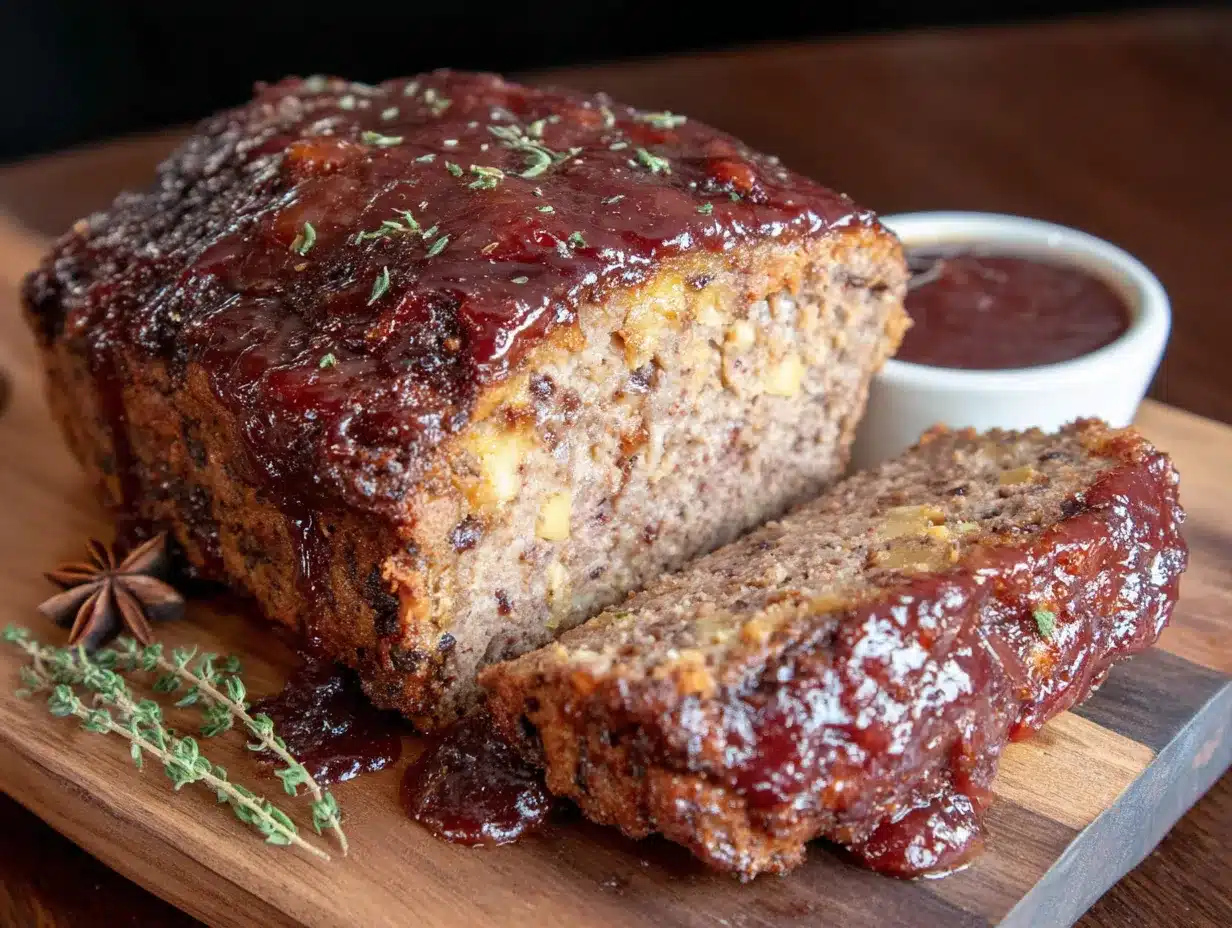
- Ketchup – ½ cup (120ml). This is the base of the glaze. It provides tang and color.
- Brown sugar (packed) – ⅓ cup (70g). Light or dark brown sugar both work. Dark brown sugar gives a deeper, more molasses-y flavor. I usually use light because that’s what I keep on hand.
- Apple cider vinegar – 1 tablespoon. Cuts through the sweetness and adds brightness. Red wine vinegar also works if that’s what you have.
- Worcestershire sauce – 1 teaspoon. Adds savory depth to the sweet glaze.
- Garlic powder – ½ teaspoon. Just a hint of savory to keep the glaze balanced.
Equipment Needed
You don’t need any fancy equipment for this recipe, which is exactly how weeknight cooking should be. Here’s what you’ll need:
- Large mixing bowl – For combining all the meatloaf ingredients. Any big bowl works—I use a ceramic one that my mom gave me years ago, but metal or glass is fine too.
- Baking sheet or loaf pan – I prefer a rimmed baking sheet lined with foil for easier cleanup. A 9×5-inch loaf pan works too, but you won’t get as much caramelized crust. If using a loaf pan, place it on a baking sheet to catch any overflow.
- Measuring cups and spoons – For accurate measurements. I’ve learned the hard way that eyeballing ingredients in meatloaf can lead to disaster.
- Chef’s knife and cutting board – For dicing the onion and mincing the garlic. A sharp knife makes this go much faster.
- Small bowl – For mixing the glaze ingredients together.
- Pastry brush or spoon – For spreading the glaze. A brush gives you an even coat, but a spoon works just fine.
- Meat thermometer – This is optional but highly recommended. It takes the guesswork out of knowing when your meatloaf is done. I use a simple instant-read thermometer that cost me about $10.
- Aluminum foil – For tenting the meatloaf while it rests. This keeps it warm and prevents it from drying out.
That’s it. Nothing complicated, nothing expensive. If you’ve got these basics, you’re ready to go.
Preparation Method
Alright, let’s make this meatloaf. I’ve broken everything down into clear steps so you can follow along without any confusion. Trust me—if I can pull this off on a Tuesday night after a long day, you can too.
- Preheat your oven to 350°F (175°C). Give it a good 15-20 minutes to come to temperature. While it’s heating up, line a rimmed baking sheet with foil or parchment paper for easy cleanup. I learned this trick after scrubbing baked-on glaze off my pans—never again.
- Soak the breadcrumbs. In your large mixing bowl, combine the breadcrumbs and milk. Stir them together and let them sit for about 5 minutes. The breadcrumbs will absorb the milk and turn into a paste-like consistency. This is what keeps your meatloaf tender instead of dense and dry. Don’t skip this step—it makes a real difference.
- Prep your aromatics. While the breadcrumbs are soaking, dice your onion and mince your garlic. I like to get the onion really fine—about ¼-inch pieces—so you get the flavor without big chunks of onion in every bite. If you’re someone who cries while cutting onions (same), try chilling the onion for 10 minutes before cutting. It helps, I swear.
- Mix the glaze. In a small bowl, whisk together the ½ cup ketchup, brown sugar, apple cider vinegar, Worcestershire sauce, and garlic powder. Set it aside for now. The sugar will dissolve as it sits. Give it a taste—it should be sweet with a tangy kick. Adjust if you want more tang or more sweetness. This is your recipe now.
- Combine the meatloaf ingredients. To the bowl with the soaked breadcrumbs, add the ground beef, beaten eggs, diced onion, minced garlic, ¼ cup ketchup, 2 tablespoons Worcestershire sauce, Dijon mustard, dried thyme, salt, and pepper. Now here’s the important part—use your hands to mix everything together. I know it’s messy, but your hands are the best tool for this job. Mix just until everything is combined. Overmixing will make the meatloaf tough. You want to see everything evenly distributed without working the meat too much. It should take about 1-2 minutes of gentle mixing.
- Shape the meatloaf. Transfer the meat mixture to your prepared baking sheet. Shape it into a loaf about 8 inches long, 5 inches wide, and about 2 inches tall. Don’t pack it too tightly—you want it to hold its shape but still be tender. I like to make the edges slightly higher than the center so the glaze pools a bit in the middle. It’s a small detail, but it works.
- Apply the first layer of glaze. Spoon about half of the brown sugar glaze over the top of the meatloaf. Use a pastry brush or the back of a spoon to spread it evenly over the top and slightly down the sides. Don’t go crazy—you want most of it on top so it can caramelize.
- Bake the meatloaf. Place the baking sheet in the preheated oven and bake for 45 minutes. After 45 minutes, remove the meatloaf from the oven and spread the remaining glaze over the top. Return it to the oven and bake for another 10-15 minutes. The total bake time should be about 55-60 minutes. Your kitchen is going to smell incredible at this point—like sweet, savory, home-cooked goodness.
- Check for doneness. The safest way to know your meatloaf is done is to use a meat thermometer. Insert it into the center of the loaf—it should read 160°F (71°C). If you don’t have a thermometer, look for these signs: the meatloaf is pulling away from the edges of the pan slightly, the glaze is bubbly and caramelized, and the juices run clear when you poke it with a fork.
- Rest before slicing. This is crucial—let the meatloaf rest on the baking sheet for 10-15 minutes before slicing. Tent it loosely with foil to keep it warm. During this time, the juices redistribute throughout the meatloaf, making every slice moist and tender. If you slice it too soon, it will fall apart. I know it’s hard to wait, but trust me on this one. I’ve made that mistake more times than I’d like to admit.
- Slice and serve. Use a sharp knife to cut the meatloaf into 1-inch thick slices. The glaze should be sticky and caramelized on top, and the inside should be tender and juicy. Serve with mashed potatoes, roasted vegetables, or just a simple salad. Or honestly, just eat a slice standing at the counter—no judgment here.
Cooking Tips & Techniques
After making this recipe more times than I can count, I’ve picked up a few tricks that make a real difference. Here are the ones I wish someone had told me earlier:
Don’t overmix the meat. This is the number one mistake people make with meatloaf. When you overmix, you develop the proteins in the meat too much, which leads to a dense, tough loaf. Mix just until everything comes together—you should still be able to see small flecks of the different ingredients. Think of it like making meatballs, not like kneading bread dough.
Use a rimmed baking sheet instead of a loaf pan. I know loaf pans are traditional, but hear me out. A baking sheet allows the excess fat to drain away from the meatloaf as it cooks, so you don’t end up with a greasy final product. Plus, you get more surface area for that caramelized brown sugar crust. If you do use a loaf pan, place it on a baking sheet to catch any overflow, and consider draining off the fat halfway through cooking.
Let the meatloaf rest. I mentioned this in the instructions, but it bears repeating. Resting is not optional—it’s essential. The meatloaf continues to cook slightly from residual heat, and the juices settle back into the meat. A rested meatloaf slices cleanly and stays moist. An unrested meatloaf crumbles into a sad pile on your cutting board. I learned this lesson the hard way when I was rushing to get dinner on the table for guests. It was not my finest moment.
Make a double batch of glaze. The recipe as written gives you exactly enough for the meatloaf, but I always make a little extra to serve on the side. Some people like extra glaze drizzled over their slice. I’m one of those people. Just simmer the extra glaze in a small saucepan for a few minutes to thicken it up before serving.
Check your oven temperature. Ovens run hot or cold, and an inaccurate oven can ruin a meatloaf. If your meatloaf is browning too quickly on top but isn’t cooked through, tent it with foil for the last 15-20 minutes of baking. If it’s not browning enough, you might need to increase the temperature slightly or move the baking sheet to a higher rack. I keep an oven thermometer in my oven because I’ve been burned (literally and figuratively) by unreliable temperature readings.
Use the foil-lining trick. Line your baking sheet with aluminum foil before you start. It makes cleanup almost effortless—just lift the foil off the pan when you’re done, and you’re left with a clean baking sheet. This is a game-changer for busy weeknights when you don’t have the energy to scrub pans.
Variations & Adaptations
One of the best things about this meatloaf recipe is how adaptable it is. I’ve tried quite a few variations over the years, and here are the ones that worked out well:
Turkey Meatloaf: Swap the ground beef for ground turkey (93/7 works best—leaner blends can be dry). Add 2 tablespoons of olive oil to the meat mixture to compensate for the lower fat content. The cooking time stays about the same, but check the internal temperature—turkey should reach 165°F (74°C). I make this version when I’m trying to eat a bit lighter, and honestly, my family barely notices the difference.
Gluten-Free Meatloaf: Replace the breadcrumbs with gluten-free breadcrumbs or crushed gluten-free crackers. I’ve used both and they work equally well. You can also use rolled oats (certified gluten-free if needed) as a binder—just pulse them in a food processor first so they’re closer to a breadcrumb consistency. My neighbor has celiac disease, and she swears by the oat version.
Cheese-Stuffed Meatloaf: This one’s a crowd-pleaser. After shaping the meatloaf on the baking sheet, make a trench down the center and fill it with shredded cheddar, mozzarella, or provolone. Then fold the meat over to seal it. The cheese melts into the center as it bakes, creating pockets of gooey goodness. I did this for a Super Bowl party once, and people lost their minds.
Spicy Kick Variation: Add 1-2 tablespoons of sriracha or your favorite hot sauce to the meat mixture, and stir a teaspoon of cayenne pepper into the glaze. The sweetness of the brown sugar balances the heat beautifully. My brother-in-law loves spicy food, and this is the only meatloaf he’ll eat.
Vegetable-Packed Meatloaf: Finely grate a carrot and a zucchini, squeeze out the excess moisture, and mix them into the meat mixture. You’ll add about a cup of vegetables total. This boosts the nutrition without changing the flavor much—perfect for sneaking veggies into picky eaters’ meals. I started doing this when my kids went through a “no green things” phase, and it worked like a charm.
Mini Meatloaves: Instead of shaping one large loaf, divide the mixture into 6-8 individual portions and shape them into small loaves on the baking sheet. Reduce the baking time to about 25-30 minutes. These cook faster, which is great for busy nights, and they’re perfect for portion control or meal prep.
Serving & Storage Suggestions
This meatloaf is versatile when it comes to serving. Here’s how I like to do it:
Serving: Slice the meatloaf into 1-inch thick pieces and serve warm. I love it with creamy mashed potatoes and a simple green vegetable like steamed green beans or roasted broccoli. The rich, savory meatloaf pairs perfectly with something bright and fresh—a simple side salad with a tangy vinaigrette is a great choice. For a classic comfort food meal, serve it with mac and cheese and roasted carrots. Honestly, it’s hard to go wrong.
Leftovers: This meatloaf makes incredible leftovers. Let it cool completely, then wrap it tightly in plastic wrap or aluminum foil, or store it in an airtight container. It will keep in the refrigerator for 3-4 days. The flavors actually meld and deepen overnight, so leftovers might even be better than the first meal.
Freezing: You can freeze the cooked meatloaf for up to 3 months. Let it cool completely, then wrap it tightly in plastic wrap, followed by a layer of foil. Thaw overnight in the refrigerator before reheating. You can also freeze the uncooked meat mixture—shape it into a loaf, wrap it well, and freeze. Thaw overnight in the fridge before baking as directed. I do this all the time for busy weeks—just pull it out in the morning and bake it when you get home.
Reheating: The best way to reheat meatloaf without drying it out is in the oven. Place slices on a baking sheet, cover loosely with foil, and warm at 300°F (150°C) for about 10-15 minutes. You can also microwave individual slices for about 1 minute, but the texture won’t be quite as good. If you’re making a meatloaf sandwich (which you absolutely should), cold meatloaf straight from the fridge is actually perfect—slice it thin, pile it on white bread with a smear of mayo and a little salt. That’s my favorite way to eat leftovers.
Flavor Development: The glaze sets into a firmer, stickier texture as the meatloaf cools. Some people actually prefer the meatloaf at room temperature or cold because the flavors are more concentrated. If you’re serving this for a gathering, you can make it a day ahead, refrigerate it, and serve it cold or gently reheated. It’s one of those dishes that just gets better with time.
Nutritional Information & Benefits
Here’s a rough estimate of the nutritional content per serving (based on 8 servings, using 80/20 ground beef):
- Calories: 380-420
- Protein: 28-32g
- Fat: 22-26g
- Carbohydrates: 18-22g
- Fiber: 1-2g
- Sugar: 12-15g
- Sodium: 680-720mg
This meatloaf is a good source of high-quality protein, which is essential for muscle repair and keeping you full and satisfied. The beef provides iron, zinc, and B vitamins, particularly B12, which is important for energy and brain function. The onions and garlic add antioxidants and compounds that support immune health. And while the brown sugar glaze does add some sugar, the amount per serving is reasonable—especially compared to many store-bought or restaurant versions.
If you’re watching your sodium intake, you can reduce the salt in the meat mixture and use low-sodium ketchup. For a lower-fat version, try the turkey variation I mentioned earlier, or use ground beef with a leaner ratio like 90/10. Just keep in mind that leaner meat will produce a slightly drier meatloaf, so you might want to add an extra tablespoon of ketchup or a splash of beef broth to the mixture.
This recipe contains gluten (from the breadcrumbs), dairy (from the milk), and eggs. For gluten-free and dairy-free options, check the variations section above. As always, consult with your healthcare provider about specific dietary needs.
Conclusion
This easy classic meatloaf with brown sugar glaze is more than just a recipe—it’s a weeknight lifesaver. It’s the kind of meal that fills your kitchen with that unmistakable aroma of home cooking, the kind that makes your family wander into the kitchen asking, “What’s for dinner?” with genuine excitement. It’s simple enough for a Tuesday night but special enough for Sunday dinner with company.
I hope you give this recipe a try and make it your own. Maybe you’ll add extra garlic, swap in a different kind of mustard, or double the glaze like I do. That’s the beauty of cooking—you can take a solid foundation and make it exactly what you need. Don’t be afraid to experiment. And if you mess up? That’s okay. I’ve made more than my share of kitchen mistakes, and they always taught me something.
I’d love to hear how yours turns out. Did you try a variation? Did your family love it? Did you discover a new favorite way to serve it? Drop a comment below and let me know. And if you found this recipe helpful, share it with a friend who could use a good, reliable dinner in their rotation. Happy cooking, friends—you’ve got this.
Frequently Asked Questions
Can I make this meatloaf ahead of time?
Absolutely. You can assemble the meatloaf, shape it on the baking sheet, cover it with plastic wrap, and refrigerate it for up to 24 hours before baking. You can also bake it completely, let it cool, and reheat it when you’re ready to serve. The glaze might be slightly less sticky after reheating, but the flavor will still be fantastic.
Why did my meatloaf fall apart when I sliced it?
This usually happens for one of two reasons: either the meatloaf didn’t have enough binder (eggs and breadcrumbs), or it wasn’t allowed to rest long enough after baking. Make sure you’re using the full amount of breadcrumbs and eggs called for in the recipe, and give it at least 10-15 minutes of rest time before slicing. The rest time is crucial—it lets the juices redistribute and the structure set.
Can I use ground turkey or chicken instead of beef?
Yes, you can. Ground turkey or chicken will work, but they’re leaner than beef, so the meatloaf might be drier. I recommend using 93/7 ground turkey and adding 2 tablespoons of olive oil to the meat mixture to add moisture. You can also add an extra egg or an extra ¼ cup of ketchup to the mixture. The cooking time stays about the same, but check the internal temperature—poultry should reach 165°F (74°C).
How do I know when the meatloaf is done without a thermometer?
Without a thermometer, look for these visual cues: the meatloaf should be pulling away from the edges of the pan slightly, the glaze should be bubbly and caramelized, and the juices should run clear when you poke the center with a fork. You can also make a small cut in the center to check—the meat should be cooked through with no pink remaining. But honestly, a meat thermometer is a worthwhile investment for perfectly cooked meat every time.
Can I freeze the leftovers?
Yes, and I encourage it. Cooked meatloaf freezes beautifully. Let it cool completely, then wrap it tightly in plastic wrap followed by a layer of aluminum foil. It will keep in the freezer for up to 3 months. To reheat, thaw overnight in the refrigerator, then warm slices in the oven at 300°F (150°C) for about 10-15 minutes, covered with foil to prevent drying. You can also freeze individual slices for quick lunches—just grab a slice, wrap it in a paper towel, and microwave for about a minute.
Pin This Recipe!
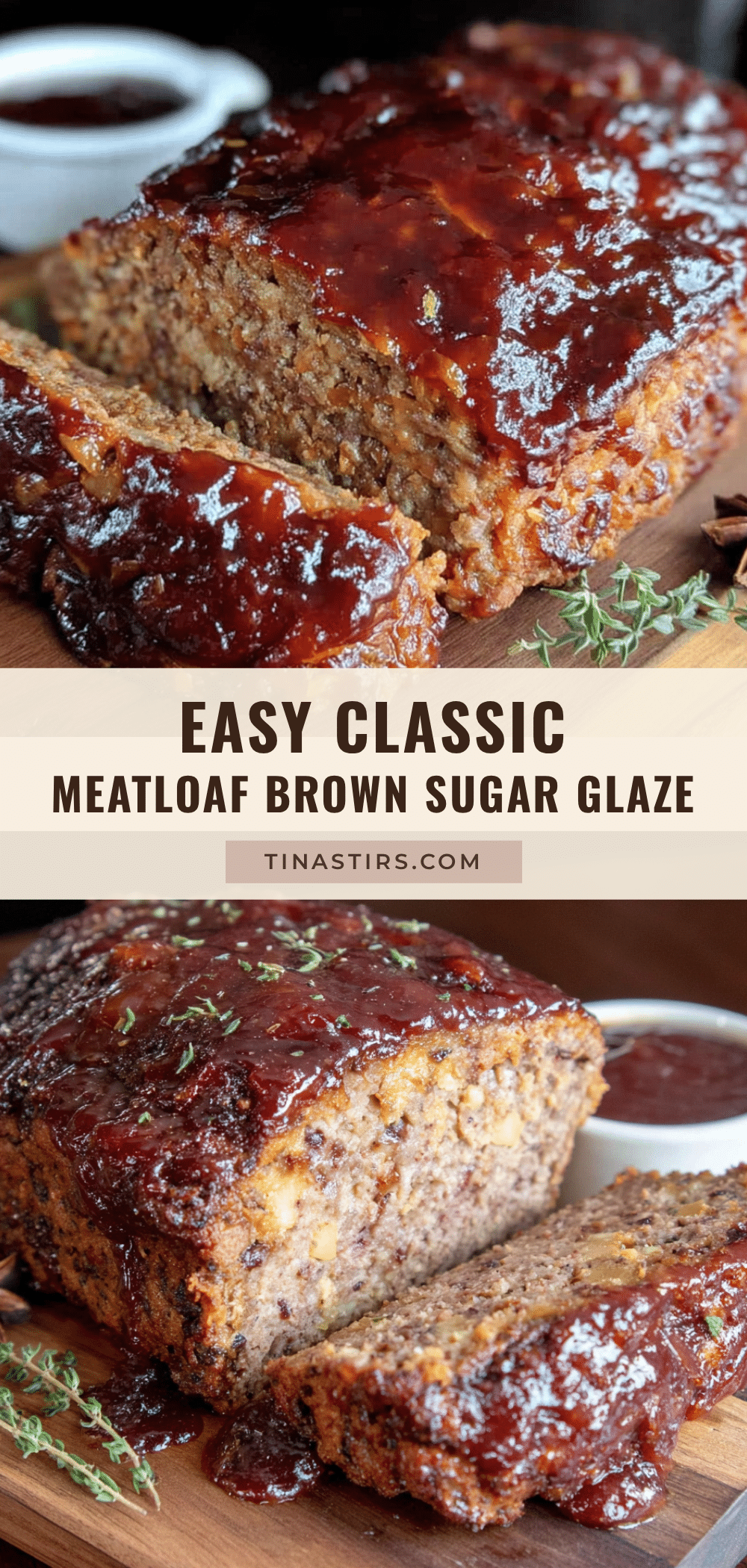
Easy Classic Meatloaf with Brown Sugar Glaze
This easy classic meatloaf with brown sugar glaze is tender, juicy, and topped with a sticky-sweet caramelized crust. It comes together in about 15 minutes of active work and is the perfect weeknight dinner that everyone will love.
- Prep Time: 15 minutes
- Cook Time: 55-60 minutes
- Total Time: 1 hour 10-15 minutes
- Yield: 8 servings 1x
- Category: Main Course
- Cuisine: American
Ingredients
- 2 pounds (about 900g) ground beef (80/20 blend)
- 1 cup (120g) plain or Italian breadcrumbs
- ½ cup (120ml) milk
- 2 large eggs, lightly beaten
- 1 medium yellow onion, finely diced (about 1 cup)
- 3 cloves garlic, minced
- ¼ cup (60ml) ketchup
- 2 tablespoons Worcestershire sauce
- 1 tablespoon Dijon mustard
- 1 teaspoon dried thyme
- 1½ teaspoons kosher salt (or 1 teaspoon table salt)
- ½ teaspoon freshly ground black pepper
- ½ cup (120ml) ketchup (for glaze)
- ⅓ cup (70g) packed brown sugar (light or dark)
- 1 tablespoon apple cider vinegar
- 1 teaspoon Worcestershire sauce (for glaze)
- ½ teaspoon garlic powder
Instructions
- Preheat your oven to 350°F (175°C). Line a rimmed baking sheet with foil or parchment paper for easy cleanup.
- In a large mixing bowl, combine the breadcrumbs and milk. Stir and let sit for about 5 minutes until the breadcrumbs absorb the milk and form a paste.
- While the breadcrumbs soak, dice the onion and mince the garlic.
- In a small bowl, whisk together the ½ cup ketchup, brown sugar, apple cider vinegar, 1 teaspoon Worcestershire sauce, and garlic powder to make the glaze. Set aside.
- To the bowl with the soaked breadcrumbs, add the ground beef, beaten eggs, diced onion, minced garlic, ¼ cup ketchup, 2 tablespoons Worcestershire sauce, Dijon mustard, dried thyme, salt, and pepper. Use your hands to mix gently until just combined—do not overmix.
- Transfer the meat mixture to the prepared baking sheet. Shape it into a loaf about 8 inches long, 5 inches wide, and 2 inches tall. Make the edges slightly higher than the center.
- Spoon about half of the glaze over the top of the meatloaf and spread evenly with a pastry brush or spoon.
- Bake for 45 minutes. Remove from the oven, spread the remaining glaze over the top, and return to the oven for another 10-15 minutes (total bake time: 55-60 minutes).
- Check for doneness: the internal temperature should reach 160°F (71°C) when inserted into the center. The glaze should be bubbly and caramelized.
- Let the meatloaf rest on the baking sheet for 10-15 minutes, tented loosely with foil, before slicing. This allows juices to redistribute.
- Slice into 1-inch thick pieces and serve warm.
Notes
Don’t overmix the meat to avoid a dense loaf. Use a rimmed baking sheet instead of a loaf pan for better caramelization and less grease. Let the meatloaf rest for 10-15 minutes before slicing to keep it moist. Make extra glaze to serve on the side if desired. For a turkey version, use 93/7 ground turkey and add 2 tablespoons olive oil; cook to 165°F (74°C). For gluten-free, use gluten-free breadcrumbs or crushed gluten-free crackers. For cheese-stuffed, fill a trench in the center with shredded cheese before baking.
Nutrition
- Serving Size: 1 slice (1-inch thic
- Calories: 380420
- Sugar: 1215
- Sodium: 680720
- Fat: 2226
- Carbohydrates: 1822
- Fiber: 12
- Protein: 2832
Keywords: meatloaf, brown sugar glaze, classic meatloaf, easy meatloaf, weeknight dinner, comfort food, ground beef