Love this? Save it for later!
Share the inspiration with your friends
My neighbor, Carol, wasn’t trying to impress anyone when I stopped by on a rainy Tuesday to borrow a drill. But the smell that hit me the second she cracked the door—rich, savory, deeply comforting—made me completely forget why I was there. She was stirring a pot on the stove, looking a little frazzled with flour on her cheek, and she barely looked up. “It’s just soup,” she said, shrugging. “Throw it in the slow cooker and forget about it.”
Just soup. Let me tell you, it was anything but “just” soup. That bowl of Light & Hearty Slow Cooker Beef Vegetable Soup was the kind of meal that makes you close your eyes after the first spoonful. It had this incredible depth of flavor, tender chunks of beef, and a broth that was somehow both rich and clean—not heavy at all. I stood there in her messy kitchen, eating it out of a mismatched mug, and I knew I had to figure out how she did it.
I’ve been making my own version ever since, tweaking it until it hit that perfect balance. You know that feeling when a recipe just clicks? This is that recipe. It’s the one I turn to when I want something that feels like a hug but doesn’t leave me feeling sluggish. It’s become my go-to for busy weeks when I need dinner to take care of itself. Honestly, I think Carol was onto something special, and I’m so glad she was too distracted by her baking project to notice me hovering.
Why You’ll Love This Recipe
This isn’t just another beef soup recipe. After countless batches and a few happy accidents (like the time I accidentally doubled the garlic), I’ve landed on a version that checks every box. Here’s why it deserves a permanent spot in your rotation:
- Set It and Forget It: The slow cooker does all the heavy lifting. You get that “simmered all day” flavor with about 15 minutes of active prep time in the morning.
- Light Yet Satisfying: This soup is packed with vegetables and lean beef, so it’s filling without being heavy. It’s the kind of meal that makes you feel good—not stuffed.
- Simple Pantry Ingredients: No weird specialty items here. You probably have most of these in your kitchen right now, which makes it perfect for those “I need to go grocery shopping” days.
- Budget-Friendly: Chuck roast is affordable, and the vegetables are cheap. This soup stretches a modest amount of beef into a meal that feeds a crowd.
- Weekend Prep, Weekday Win: This soup actually tastes better the next day. Make it on Sunday, and you’ve got lunches or quick dinners ready to go.
What makes this version different? It’s the technique of searing the beef first (trust me, don’t skip this), and the careful balance of herbs that keeps the broth from tasting muddy. I’ve tested it with different cuts of beef, varying amounts of vegetables, and even different slow cooker brands. This is the combination that consistently delivers the best results—tender beef, perfectly cooked vegetables, and a broth that tastes like it simmered all day, because it did.
What Ingredients You Will Need
This recipe uses simple, wholesome ingredients to create something truly special. Most of these are pantry staples, and I’ve included notes on what to look for to get the best results.
- Beef chuck roast (2 lbs or 900g): This is my go-to cut for slow cooking. It has just enough marbling to stay tender and flavorful without making the soup greasy. Trim off any large pieces of fat before cutting. I’ve tried stew meat from the store, but cutting your own chuck roast gives you better control over the size and quality.
- Olive oil (2 tablespoons): For searing the beef. You can use avocado oil if you prefer, but olive oil adds a nice subtle flavor.
- Yellow onion (1 large, diced): The foundation of flavor. A sweet onion works well here too.
- Garlic (4 cloves, minced): I’m generous with garlic. It adds depth without being overpowering.
- Carrots (3 large, peeled and sliced into rounds): They add natural sweetness and hold up well to long cooking.
- Celery (3 stalks, sliced): Essential for that classic soup base.
- Russet potatoes (2 medium, peeled and cut into 1-inch cubes): They break down slightly, which helps thicken the broth naturally. Yukon Golds work too, but russets give a creamier texture.
- Green beans (1 cup, trimmed and cut into 1-inch pieces): Fresh or frozen both work. If using frozen, add them in the last hour of cooking so they don’t get mushy.
- Frozen corn (1 cup): Adds a pop of sweetness and color.
- Frozen peas (1 cup): Stir these in at the very end to keep them bright green and tender.
- Canned diced tomatoes (14.5 oz or 400g, with juices): Look for fire-roasted tomatoes if you want an extra layer of flavor.
- Beef broth (4 cups or 950ml): Use low-sodium so you can control the salt. I prefer Pacific Foods or Swanson for consistent quality.
- Tomato paste (2 tablespoons): This adds richness and helps deepen the color of the broth.
- Dried thyme (1 teaspoon): Earthy and aromatic, thyme is a classic pairing with beef.
- Dried rosemary (½ teaspoon): A little goes a long way. Rub it between your palms to release the oils before adding.
- Bay leaves (2): They add subtle complexity. Remember to fish them out before serving!
- Worcestershire sauce (1 tablespoon): This is my secret weapon. It adds umami and depth without making the soup taste like Worcestershire.
- Salt and black pepper (to taste): Start with 1 teaspoon of salt and ½ teaspoon of pepper, then adjust at the end.
- Fresh parsley (¼ cup, chopped, for garnish): Optional, but it adds a fresh pop of color and brightness.
Equipment Needed
The beauty of this recipe is that you don’t need a lot of fancy gear. Here’s what you’ll need:
- Slow cooker (6-quart or larger): This is the star of the show. A 6-quart model gives you plenty of room for all the ingredients. If you have a smaller one, just reduce the recipe slightly.
- Large skillet or Dutch oven: For searing the beef. I’ve used a cast iron skillet for years, and it gives the best crust. A non-stick pan works in a pinch, but you won’t get quite the same browning.
- Cutting board and sharp knife: A good chef’s knife makes prep so much faster. I learned that lesson after years of using dull knives and fighting with carrots.
- Wooden spoon or spatula: For scraping up the browned bits from the skillet—that’s where so much flavor lives.
- Measuring cups and spoons: For accuracy, especially with the broth and seasonings.
- Vegetable peeler: For the carrots and potatoes. I’ve broken three cheap peelers before finally investing in a good OXO one. Worth every penny.
If you don’t have a slow cooker, you can absolutely make this in a Dutch oven on the stovetop or in the oven at 325°F (160°C) for about 2½ to 3 hours. Just simmer it low and slow.
Preparation Method
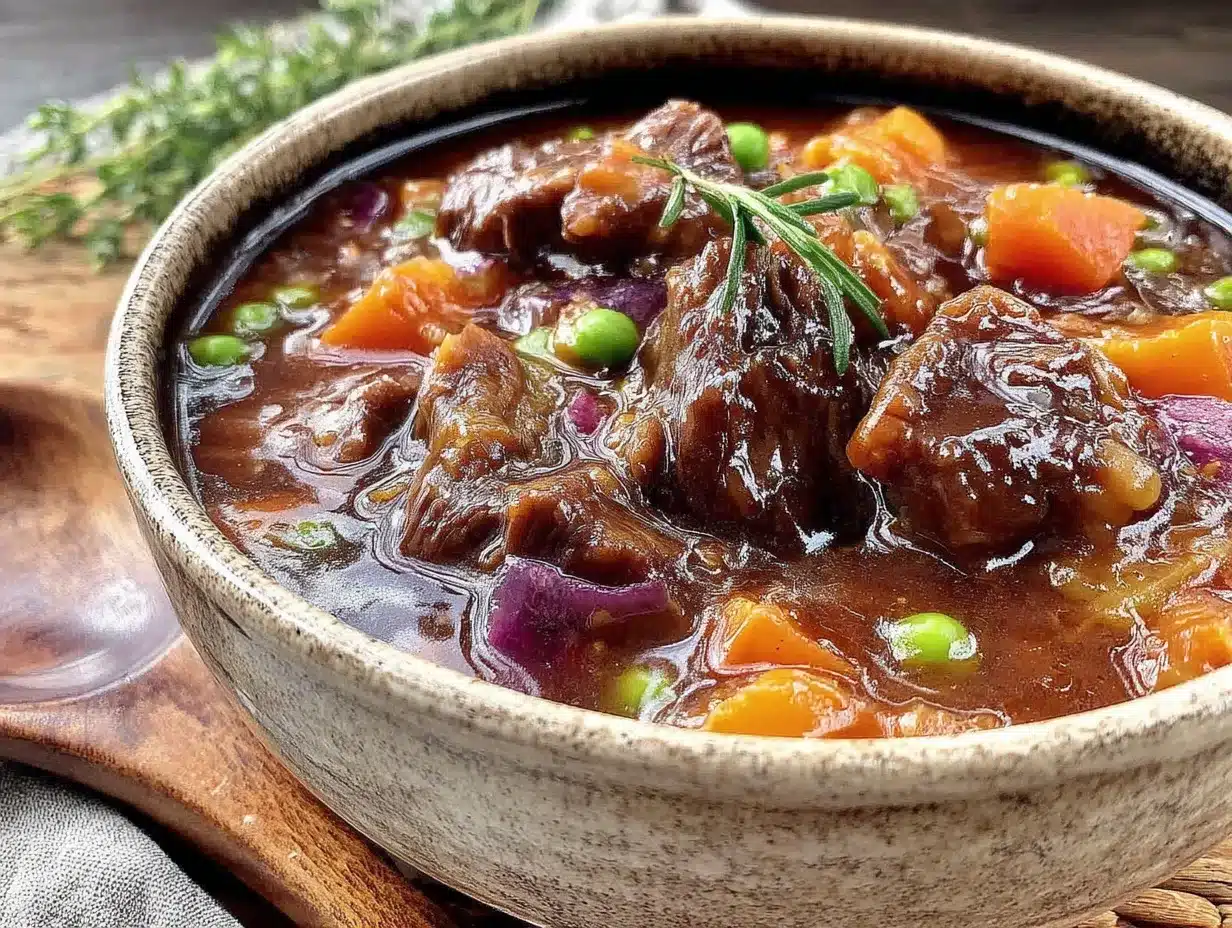
Let’s get cooking. I’ve broken this down into clear steps, with all the little notes I’ve picked up along the way.
- Prep the beef (5 minutes): Pat the chuck roast dry with paper towels. This is crucial—wet meat won’t brown properly. Cut it into 1½-inch cubes, trimming off any large pieces of fat as you go. Season generously with salt and pepper on all sides.
- Sear the beef (10 minutes): Heat the olive oil in your large skillet over medium-high heat until it shimmers. Working in batches so you don’t crowd the pan, add the beef cubes in a single layer. Let them sear undisturbed for 3-4 minutes per side until deeply browned. Transfer the seared beef to the slow cooker. Don’t rush this step—that brown crust is pure flavor.
- Sauté the aromatics (5 minutes): Reduce the heat to medium. Add the diced onion to the same skillet and cook for 3-4 minutes, stirring occasionally, until softened and starting to turn golden. Add the minced garlic and cook for another 30 seconds until fragrant. Scrape any browned bits from the bottom of the pan—this is called deglazing, and it’s where the magic happens.
- Add the tomato paste (2 minutes): Stir in the tomato paste and cook for 1-2 minutes, stirring constantly. This cooks out the raw flavor and deepens the color. You’ll notice the paste darkens slightly and smells richer.
- Combine in the slow cooker: Transfer the onion mixture to the slow cooker with the beef. Add the diced tomatoes (with their juices), beef broth, Worcestershire sauce, dried thyme, dried rosemary, and bay leaves. Give everything a good stir to combine.
- Add the hearty vegetables: Layer the carrots, celery, and potatoes on top of the liquid. Don’t stir them in yet—keeping them on top helps them cook evenly without getting too soft.
- Cook low and slow: Cover and cook on LOW for 7-8 hours or on HIGH for 4-5 hours. The beef should be fork-tender when it’s done. I prefer LOW for the most tender results—it gives the connective tissue time to break down properly.
- Add the tender vegetables (30 minutes before serving): About 30 minutes before you’re ready to eat, stir in the green beans and frozen corn. If you’re using fresh green beans, you can add them a little earlier. Cover and continue cooking.
- Finish with peas and adjust seasoning: Just before serving, remove the bay leaves. Stir in the frozen peas—they only need a minute or two to warm through. Taste the broth and adjust the salt and pepper. I usually add another ½ teaspoon of salt and a good crack of black pepper at this stage.
- Serve and garnish: Ladle the soup into bowls and sprinkle with fresh parsley if you’re using it. The parsley adds a fresh, bright note that balances the richness of the broth.
Pro tip from my kitchen: If you have time, let the soup cool and refrigerate it overnight. The flavors meld and deepen beautifully, and any excess fat will solidify on top, making it easy to skim off. This soup is honestly better the next day.
Cooking Tips & Techniques
I’ve made this soup more times than I can count, and I’ve definitely learned a few things the hard way. Here are my best tips to make sure yours turns out perfectly every time.
Don’t skip the sear. I know it’s an extra step, but it’s non-negotiable. That browned crust on the beef is where the deep, savory flavor comes from. I once tried to save time by throwing raw beef into the slow cooker, and the soup was bland and gray. Never again.
Cut your vegetables uniformly. This isn’t just about looks—it’s about even cooking. If your potato chunks are different sizes, some will be mushy while others are still hard. Take the extra minute to make them all roughly the same size.
Layer your ingredients wisely. Dense vegetables like carrots and potatoes go in at the beginning. Quick-cooking vegetables like peas and green beans go in at the end. This ensures everything is perfectly cooked without anything turning to mush.
Use low-sodium broth. This gives you control over the salt level. Different brands of broth have wildly different sodium content, and you can always add more salt at the end if needed.
Watch your liquid level. Slow cookers don’t let moisture evaporate like stovetop cooking does. You might be tempted to add more broth, but resist. The vegetables release their own liquid as they cook, and you don’t want a watery soup. Trust the recipe measurements.
My biggest failure: I once tried to speed things up by cooking on HIGH for the whole time. The beef was tough, the potatoes were falling apart, and the broth tasted flat. Low and slow is the way to go for tender beef and developed flavor. Patience pays off here.
Variations & Adaptations
This recipe is wonderfully adaptable. Here are some of my favorite variations:
Make it gluten-free: This soup is naturally gluten-free as written. Just double-check your Worcestershire sauce—some brands contain gluten. Lea & Perrins is gluten-free and my personal favorite.
Add more greens: Stir in a handful of chopped kale or spinach along with the peas at the end. It wilts beautifully and adds extra nutrients without changing the flavor.
Swap the protein: You can use boneless beef short ribs for an even richer flavor, or try cubed lamb shoulder for a different twist. Both work beautifully with the same cooking time.
Make it vegetarian: Omit the beef and use vegetable broth. Add a can of drained and rinsed chickpeas or lentils for protein. Sauté some mushrooms along with the onions for extra umami. It won’t be the same soup, but it will be delicious in its own right.
Spice it up: Add a pinch of red pepper flakes along with the dried herbs for a subtle warmth. Or stir in a tablespoon of harissa paste at the end for a North African twist.
My personal favorite variation: I sometimes add a parmesan rind to the slow cooker along with the broth. It infuses the soup with an incredible savory depth. Just fish it out before serving along with the bay leaves. It’s a game-changer.
Serving & Storage Suggestions
This soup is incredibly versatile when it comes to serving. Here’s how I like to enjoy it:
Serving temperature: Serve it piping hot straight from the slow cooker. It’s the ultimate comfort on a cold day.
What to serve with it: A chunk of crusty bread for dipping is practically mandatory. I love it with a slice of sourdough or a warm dinner roll. A simple green salad with a lemon vinaigrette on the side balances the richness perfectly.
Toppings: A sprinkle of fresh parsley, a drizzle of good olive oil, or a shower of grated parmesan cheese all work beautifully. Sometimes I add a dollop of pesto for an herby kick.
Storage instructions: Let the soup cool completely before storing. Transfer it to an airtight container and refrigerate for up to 5 days. The flavors actually improve over the first day or two as they meld together.
Freezing instructions: This soup freezes beautifully. Portion it into freezer-safe containers or zip-top bags, leaving about an inch of headroom for expansion. It will keep for up to 3 months. Thaw overnight in the refrigerator before reheating.
Reheating tips: Reheat gently on the stovetop over medium-low heat, stirring occasionally. You can also microwave individual portions in 1-minute intervals, stirring between each. If the soup has thickened during storage, add a splash of broth or water to loosen it up.
Nutritional Information & Benefits
This soup is packed with good-for-you ingredients that make it a genuinely healthy choice. Here’s the estimated nutritional breakdown per serving (based on 8 servings):
| Nutrient | Amount per Serving |
|---|---|
| Calories | 285 |
| Protein | 28g |
| Carbohydrates | 22g |
| Fiber | 5g |
| Fat | 9g |
| Saturated Fat | 3g |
| Sodium | 680mg |
| Vitamin A | 120% DV |
| Vitamin C | 25% DV |
| Iron | 25% DV |
Health highlights: This soup is loaded with fiber from all those vegetables, which helps keep you full and supports digestive health. The beef provides high-quality protein and iron, which is essential for energy. Carrots are packed with beta-carotene, and the tomatoes provide lycopene, a powerful antioxidant.
Dietary considerations: This recipe is naturally gluten-free and dairy-free. It’s also relatively low in calories for such a satisfying meal, making it a great option if you’re watching your weight. The sodium is moderate, but you can reduce it further by using no-salt-added broth and cutting back on the added salt.
Conclusion
This Light & Hearty Slow Cooker Beef Vegetable Soup has become a staple in my kitchen for good reason. It’s the kind of recipe that delivers on every promise—easy to make, packed with flavor, and genuinely good for you. Whether you’re feeding a family on a busy weeknight or meal-prepping for the week ahead, this soup has your back.
I love that I can throw it together in the morning and come home to a house that smells like someone has been cooking all day. It’s comfort food that doesn’t weigh you down, and honestly, that’s a rare and wonderful thing. I hope you’ll make it your own—tweak the vegetables, adjust the seasonings, and find your perfect version.
Have you tried this recipe? I’d love to hear how it turned out! Drop a comment below and let me know what variations you tried. And if you’re looking for another set-it-and-forget-it meal, you might enjoy my hearty lentil and sausage stew—it’s another one that fills the house with the best smells. Happy cooking, friends!
Frequently Asked Questions
Can I use a different cut of beef?
Absolutely. Chuck roast is ideal, but bottom round, brisket, or even stew meat will work. Just avoid very lean cuts like sirloin, which can become tough and dry during long cooking.
Can I make this in an Instant Pot?
Yes! Use the sauté function to sear the beef and cook the aromatics. Then pressure cook on HIGH for 35 minutes with a natural release. Add the green beans and corn, then sauté for 5 minutes before adding the peas.
Why is my soup watery?
This usually happens if you add too much liquid or if your vegetables release a lot of water. Next time, use the exact amount of broth called for and avoid adding extra. You can also remove the lid for the last 30 minutes of cooking to let some moisture evaporate.
Can I add pasta or rice?
You can, but I recommend cooking it separately and adding it to individual bowls. If you add it to the slow cooker, it will absorb too much liquid and become mushy. Leftovers will also suffer—the pasta or rice will continue to absorb broth and turn into a porridge.
How do I thicken the soup?
If you prefer a thicker broth, mash some of the cooked potatoes against the side of the slow cooker before serving. They’ll break down and naturally thicken the soup. You can also stir in a slurry of 1 tablespoon cornstarch mixed with 2 tablespoons cold water, then cook for 10 more minutes.
Pin This Recipe!
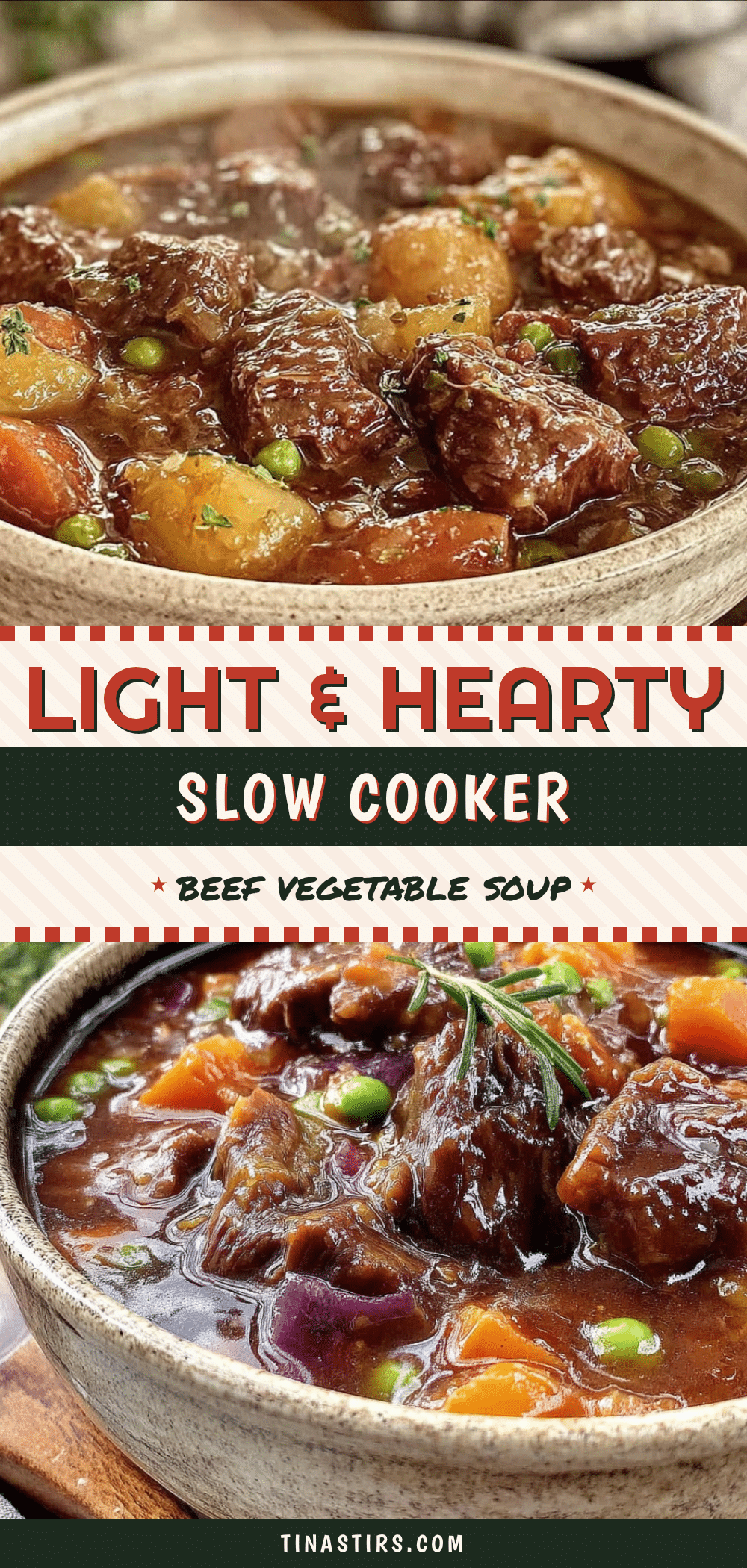
Light & Hearty Slow Cooker Beef Vegetable Soup
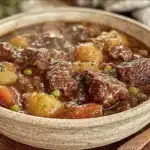
A rich, savory, and deeply comforting beef vegetable soup made in the slow cooker with tender chunks of beef, a medley of vegetables, and a broth that is both rich and clean. It’s a set-it-and-forget-it meal that’s light yet satisfying, perfect for busy weeknights.
- Prep Time: 15 minutes
- Cook Time: 7-8 hours (LOW) or 4-5 hours (HIGH)
- Total Time: 7 hours 15 minutes to 8 hours 15 minutes
- Yield: 8 servings 1x
- Category: Main Course
- Cuisine: American
Ingredients
- 2 lbs (900g) beef chuck roast, trimmed and cut into 1½-inch cubes
- 2 tablespoons olive oil
- 1 large yellow onion, diced
- 4 cloves garlic, minced
- 3 large carrots, peeled and sliced into rounds
- 3 stalks celery, sliced
- 2 medium russet potatoes, peeled and cut into 1-inch cubes
- 1 cup green beans, trimmed and cut into 1-inch pieces
- 1 cup frozen corn
- 1 cup frozen peas
- 14.5 oz (400g) canned diced tomatoes, with juices
- 4 cups (950ml) low-sodium beef broth
- 2 tablespoons tomato paste
- 1 teaspoon dried thyme
- ½ teaspoon dried rosemary
- 2 bay leaves
- 1 tablespoon Worcestershire sauce
- Salt and black pepper to taste
- ¼ cup fresh parsley, chopped (for garnish)
Instructions
- Pat the chuck roast dry with paper towels. Cut into 1½-inch cubes, trimming off large pieces of fat. Season generously with salt and pepper.
- Heat olive oil in a large skillet over medium-high heat. Working in batches, sear the beef cubes for 3-4 minutes per side until deeply browned. Transfer to the slow cooker.
- Reduce heat to medium. Add diced onion to the skillet and cook for 3-4 minutes until softened. Add minced garlic and cook for 30 seconds until fragrant, scraping up browned bits.
- Stir in tomato paste and cook for 1-2 minutes, stirring constantly.
- Transfer the onion mixture to the slow cooker. Add diced tomatoes, beef broth, Worcestershire sauce, dried thyme, dried rosemary, and bay leaves. Stir to combine.
- Layer carrots, celery, and potatoes on top of the liquid. Do not stir.
- Cover and cook on LOW for 7-8 hours or on HIGH for 4-5 hours, until beef is fork-tender.
- About 30 minutes before serving, stir in green beans and frozen corn. Cover and continue cooking.
- Just before serving, remove bay leaves. Stir in frozen peas and let warm through for 1-2 minutes. Adjust salt and pepper to taste.
- Ladle into bowls and garnish with fresh parsley.
Notes
For best results, sear the beef thoroughly and do not skip this step. Use low-sodium broth to control salt. The soup tastes even better the next day. If using fresh green beans, add them earlier than frozen. For a thicker broth, mash some cooked potatoes against the side of the slow cooker before serving.
Nutrition
- Serving Size: 1 serving (about 1.5
- Calories: 285
- Sugar: 6
- Sodium: 680
- Fat: 9
- Saturated Fat: 3
- Carbohydrates: 22
- Fiber: 5
- Protein: 28
Keywords: slow cooker beef soup, beef vegetable soup, hearty soup, easy dinner, comfort food, healthy soup, gluten-free soup