Love this? Save it for later!
Share the inspiration with your friends
It was 11:47 PM on a random Tuesday in October, and I had an unshakable need for lasagna. Not just any lasagna—the kind that tastes like fall feels. The problem? I didn’t have any ground meat thawed, and my usual Sunday sauce was a distant memory. But I had a butternut squash sitting on the counter, looking at me like it knew something I didn’t. I also had a tub of ricotta, a bag of spinach that was starting to wilt, and a crazy idea that just might work. I mean, squash and cheese? That’s basically a holiday on a plate, right?
So I started roasting that squash, and let me tell you, the whole kitchen smelled like a candle store within fifteen minutes. I was tired, honestly—it had been one of those days where you forget to eat lunch and then wonder why you’re cranky at 4 PM. But something about the late hour and the quiet house made me bold. I didn’t follow a recipe. I just… went for it. I layered things in a way that felt right, crossed my fingers, and hoped for the best. And when I pulled that pan out of the oven—golden, bubbly, a little bit lopsided because I’d used too much filling—I knew I’d stumbled onto something special. Maybe you’ve been there, standing in your kitchen at a weird hour, making magic out of what’s left in the fridge. This butternut squash lasagna is that magic, and I’ve been making it every fall since.
Why You’ll Love This Recipe
This isn’t just another lasagna recipe. This is the one that makes your guests ask for the recipe before they’ve even finished their first helping. I’ve tested this dish at three different dinner parties now, and honestly, it’s never let me down. Here’s why it’s going to become your new go-to for hosting:
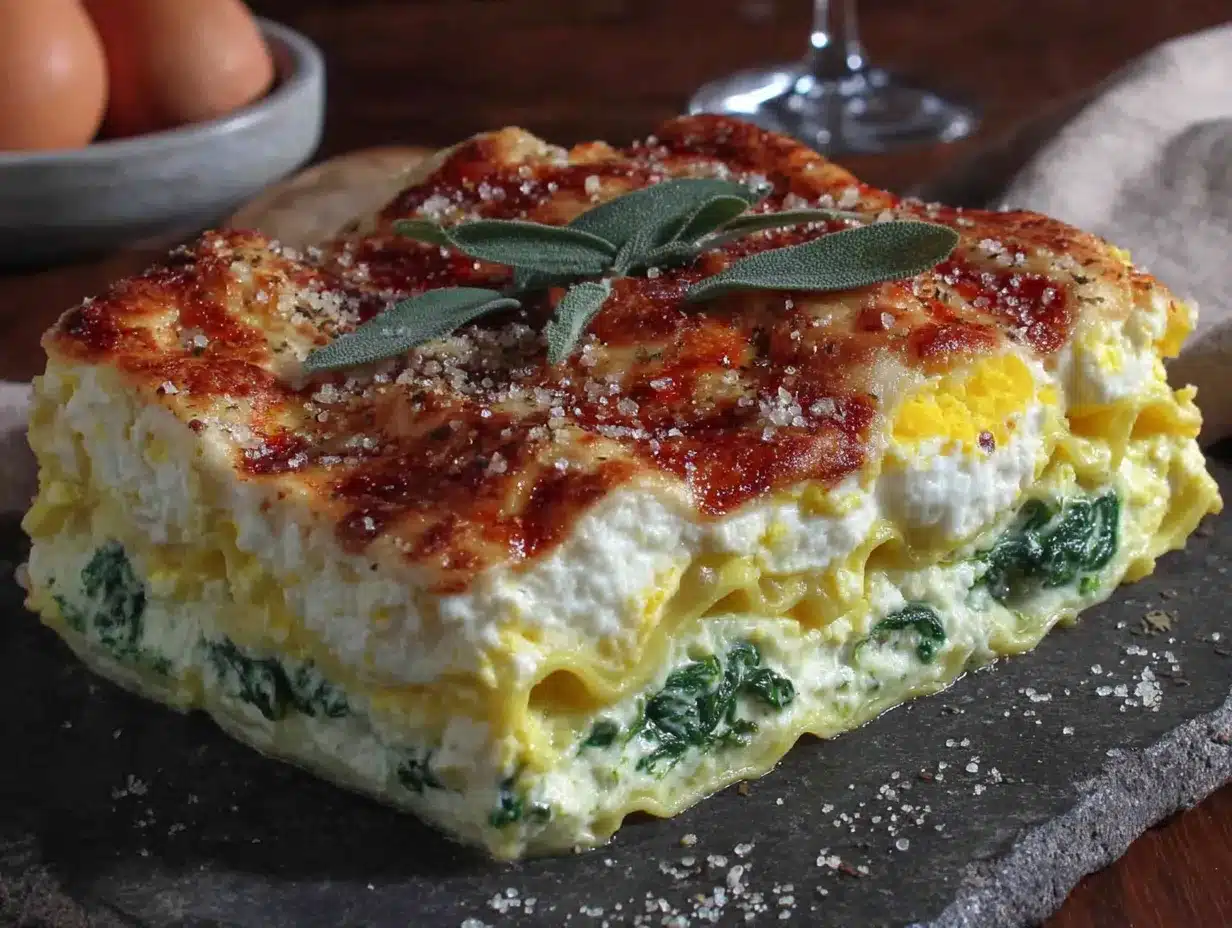
- Show-Stopping Presentation: The golden layers of roasted squash against the creamy white ricotta—it’s gorgeous without any fancy plating. Your friends will think you spent all day on it.
- Make-Ahead Magic: You can assemble this lasagna the morning of your party, pop it in the fridge, and bake it right before guests arrive. No last-minute stress.
- Feeds a Crowd: This recipe makes a generous 9×13 pan that easily serves 8 to 10 people. Perfect for potlucks, Thanksgiving sides, or Sunday dinners.
- Simple Ingredients: No weird specialty items. Butternut squash, ricotta, spinach, lasagna noodles, and a few pantry staples. You probably already have most of it.
- Vegetarian-Friendly: It’s hearty enough that no one will miss the meat. The squash and cheese create this incredibly satisfying, creamy texture that just works.
- That First-Bite Factor: There’s this moment when you take a bite and the sweetness of the squash hits the savory ricotta and the nutty Parmesan—it’s the kind of flavor combination that makes you close your eyes and forget where you are for a second.
This recipe is different from other squash lasagnas because I roast the squash instead of boiling or steaming it. That extra step makes all the difference—it concentrates the sweetness and gives you those caramelized edges that add so much depth. Plus, I mix the spinach right into the ricotta instead of layering it separately, which means every bite has that perfect balance of creamy and green. It’s comfort food reimagined—healthier than a traditional meat lasagna, but with the same soul-soothing satisfaction. Perfect for impressing guests without stress, or turning a simple fall dinner into something truly memorable.
What Ingredients You Will Need
This recipe uses simple, wholesome ingredients to deliver bold flavor and satisfying texture without the fuss. Most of these are pantry staples or easy to find at any grocery store. I’ve included a few notes based on my own trials and errors.
For the Roasted Butternut Squash
- 1 large butternut squash (about 3 pounds or 1.4 kg), peeled, seeded, and cut into 1-inch cubes (look for one that feels heavy for its size—that means it’s fresh and moist)
- 2 tablespoons olive oil (use a good quality one here; it really affects the flavor)
- 1 teaspoon salt
- 1/2 teaspoon black pepper
- 1/2 teaspoon dried sage (sage and squash are best friends, trust me)
For the Ricotta and Spinach Mixture
- 2 cups (16 ounces or 450g) whole milk ricotta cheese (I prefer Galbani or BelGioioso—the texture is creamier than store brands)
- 1 large egg, lightly beaten
- 1/2 cup (50g) grated Parmesan cheese, plus more for topping
- 1/4 teaspoon ground nutmeg (freshly grated if you have it—it’s a game-changer)
- 1/4 teaspoon salt
- 1/4 teaspoon black pepper
- 5 ounces (140g) fresh spinach (about 5 generous handfuls; you can use frozen, but thaw and squeeze it dry first)
For the Lasagna Assembly
- 12 lasagna noodles (about 1 box; I use Barilla oven-ready noodles to save time, but regular boiled noodles work too)
- 3 cups (700ml) whole milk (for the béchamel—don’t use skim, it won’t be as creamy)
- 4 tablespoons (60g) unsalted butter
- 1/4 cup (30g) all-purpose flour
- 1/2 teaspoon salt
- 1/4 teaspoon black pepper
- 1/4 teaspoon garlic powder (optional, but I love it)
- 2 cups (200g) shredded mozzarella cheese
- 1/2 cup (50g) grated Parmesan cheese, for topping
Ingredient Tips: If you want to save time, you can buy pre-cut butternut squash cubes from the grocery store. Just make sure they’re fresh, not frozen, because frozen squash releases too much water and makes the lasagna soggy. For the spinach, I’ve used both fresh and frozen—fresh gives a better texture, but frozen works in a pinch if you squeeze it really well. And if you’re dairy-free, you can swap the ricotta with a high-quality cashew ricotta and use a plant-based mozzarella. Just know the texture will be slightly different.
Equipment Needed
You don’t need a professional kitchen to pull this off. Here’s what you’ll need:
- 9×13-inch baking dish (glass or ceramic works best; metal can sometimes react with the cheese)
- Large rimmed baking sheet (for roasting the squash)
- Medium saucepan (for the béchamel sauce)
- Large skillet or sauté pan (for wilting the spinach)
- Mixing bowls (one large, one medium)
- Whisk (for the béchamel—a wooden spoon works too, but whisk is smoother)
- Chef’s knife and cutting board
- Vegetable peeler (for the squash)
- Aluminum foil (for covering the lasagna while baking)
If you don’t have a baking sheet, you can roast the squash in the same 9×13 dish you’ll use for the lasagna—just wipe it out afterward. And if you don’t have a whisk, honestly, a fork works in a pinch for the béchamel, just be prepared to whisk a little harder. I’ve been using the same glass Pyrex dish for years, and it’s never let me down. Budget-friendly option: skip the fancy baking dish and use a disposable aluminum pan—just put it on a baking sheet for stability.
Preparation Method
This looks like a lot of steps, but I promise it comes together faster than you think. Here’s the breakdown:
Step 1: Roast the Butternut Squash
Preheat your oven to 400°F (200°C). Line your baking sheet with parchment paper for easy cleanup. In a large bowl, toss the cubed squash with olive oil, salt, pepper, and dried sage until every piece is coated. Spread the squash in a single layer on the baking sheet—don’t overcrowd it, or it’ll steam instead of roast. Roast for 25 to 30 minutes, flipping halfway through, until the squash is tender and the edges are caramelized and golden. You want it soft enough to mash easily with a fork. Let it cool slightly, then transfer to a bowl and mash it roughly with a potato masher or fork. You want some chunks for texture, not a puree. Set aside.
Step 2: Make the Béchamel Sauce
While the squash roasts, start the béchamel. In a medium saucepan over medium heat, melt the butter. Once it’s bubbling, whisk in the flour and cook for 1 to 2 minutes, stirring constantly. You’re looking for a paste that smells slightly nutty—don’t let it brown. Slowly pour in the milk, whisking continuously to prevent lumps. Keep whisking until the sauce thickens, about 5 to 7 minutes. It should coat the back of a spoon. Remove from heat and stir in salt, pepper, and garlic powder if using. Set aside. If it gets too thick, just whisk in a splash of milk.
Step 3: Prepare the Spinach and Ricotta
In a large skillet over medium heat, add a drizzle of olive oil. Toss in the fresh spinach and cook for 2 to 3 minutes, stirring occasionally, until it’s wilted. Remove from heat and let it cool slightly. In a large mixing bowl, combine the ricotta, beaten egg, 1/2 cup Parmesan, nutmeg, salt, and pepper. Chop the wilted spinach roughly and fold it into the ricotta mixture. Taste it—it should be creamy and slightly savory with a hint of nutmeg.
Step 4: Cook the Lasagna Noodles
If you’re using regular lasagna noodles (not oven-ready), bring a large pot of salted water to a boil. Cook the noodles according to package directions until al dente—usually about 8 to 10 minutes. Drain and lay them flat on a sheet of parchment paper or a clean kitchen towel to prevent sticking. If you’re using oven-ready noodles, skip this step entirely.
Step 5: Assemble the Lasagna
Preheat your oven to 375°F (190°C). Spread a thin layer of béchamel sauce (about 1/2 cup) on the bottom of your 9×13 baking dish. This prevents the noodles from sticking. Now, layer like this:
- Layer 1: 4 lasagna noodles (slightly overlapping if needed)
- Layer 2: 1/3 of the mashed roasted squash, spread evenly
- Layer 3: 1/3 of the ricotta-spinach mixture, dolloped and spread
- Layer 4: 1/3 of the remaining béchamel sauce
- Layer 5: 1/3 cup of shredded mozzarella
Repeat the layering two more times. For the top layer, finish with the last of the béchamel, the remaining mozzarella, and the 1/2 cup of grated Parmesan. It should look gloriously messy and abundant.
Step 6: Bake the Lasagna
Cover the dish with aluminum foil (don’t let it touch the cheese—spray the foil with cooking spray to prevent sticking). Bake for 25 minutes. Then remove the foil and bake for another 20 to 25 minutes, until the top is golden and bubbly and the edges are slightly caramelized. Let it rest for at least 15 minutes before cutting—this is crucial. If you cut it too soon, it’ll turn into a soupy mess. Trust me, I learned that the hard way at a dinner party once.
Cooking Tips & Techniques
Here are the things I wish someone had told me before my first attempt:
- Don’t skip the roasting step. I know it adds time, but roasting the squash concentrates its natural sugars and gives you those caramelized bits that make the lasagna taste like fall. Boiling or steaming just makes it watery and bland.
- Season every layer. It’s easy to forget, but each component—the squash, the ricotta, the béchamel—needs its own pinch of salt. Otherwise, the lasagna tastes flat, no matter how much cheese you pile on.
- Let it rest. I cannot stress this enough. Those 15 minutes after baking are when the lasagna sets and the layers hold their shape. If you’re impatient, you’ll end up with a delicious puddle. I once served it after only 5 minutes and watched my beautiful creation slide off the spatula. Never again.
- Use whole milk ricotta. Low-fat or part-skim ricotta has more water, which can make the lasagna watery as it bakes. Whole milk ricotta is creamier and holds up better.
- Toast the noodles lightly. If you’re using oven-ready noodles, you can toast them in a dry skillet for 30 seconds per side before layering. It adds a subtle nutty flavor that pairs beautifully with the squash.
Variations & Adaptations
This recipe is incredibly forgiving. Here are some ways to make it your own:
- Vegetarian and Gluten-Free: Use gluten-free lasagna noodles (the brown rice ones work great) and make sure your béchamel uses gluten-free flour or cornstarch. The rest is naturally gluten-free.
- Add Some Protein: If you want to make it heartier, add a layer of cooked Italian sausage or shredded rotisserie chicken between the squash and ricotta. I’ve done this for a Super Bowl party and it was a hit.
- Change the Cheese: Swap the mozzarella for fontina or provolone for a sharper, more complex flavor. Or add a layer of crumbled goat cheese for tanginess.
- Seasonal Swaps: In winter, use roasted sweet potatoes instead of butternut squash. In spring, try roasted asparagus and peas. The method stays the same—just swap the squash for whatever’s in season.
- Make It Vegan: Use a cashew-based ricotta, vegan mozzarella, and a plant-based butter and milk for the béchamel. I tested this for a vegan friend, and honestly, it was still delicious—just a little less creamy.
Serving & Storage Suggestions
This lasagna is best served warm, not piping hot. Let it rest for 15 minutes after baking, then cut into squares and serve on a large platter. It pairs beautifully with a simple arugula salad dressed with lemon and olive oil—the peppery greens cut through the richness of the lasagna. For a full fall dinner, serve it alongside roasted Brussels sprouts or a crusty loaf of bread with butter. If you’re hosting, I love to garnish the top with a sprinkle of fresh sage leaves and a drizzle of balsamic glaze right before serving. It looks so fancy, and it takes two seconds.
Storage: Leftovers keep in the refrigerator for up to 5 days. Cover the dish tightly with foil or transfer individual portions to airtight containers. The flavors actually get better after a day or two as they meld together. To reheat, place a portion in a 350°F (175°C) oven for 15 minutes, or microwave for 2 to 3 minutes. The microwave is faster, but the oven keeps the texture better.
Freezing: This lasagna freezes beautifully. Assemble the entire dish (without baking), cover tightly with plastic wrap and then foil, and freeze for up to 3 months. To bake from frozen, remove the plastic wrap, cover with foil, and bake at 375°F (190°C) for 60 minutes, then remove the foil and bake for another 20 minutes. Let it rest before serving.
Nutritional Information & Benefits
Here’s an approximate nutritional breakdown per serving (based on 8 servings):
- Calories: 420
- Protein: 22g
- Fat: 22g
- Carbohydrates: 38g
- Fiber: 5g
- Sugar: 8g
- Sodium: 680mg
Butternut squash is packed with vitamin A, vitamin C, and fiber—it’s one of the healthiest winter squashes out there. Spinach adds iron and calcium, while the ricotta and Parmesan provide protein and bone-building calcium. This isn’t a light dish, but it’s definitely a nutritious one. I love that I can serve something this indulgent and still feel good about what I’m putting in my body. If you’re watching your carbs, you can reduce the noodles to 8 and add an extra layer of roasted squash instead.
Conclusion
This butternut squash lasagna has become my signature fall dish, and I honestly think it’ll become yours too. It’s the kind of recipe that feels special enough for a holiday table but easy enough for a random Tuesday night—especially if you’re cooking at 11 PM like I was. The combination of sweet roasted squash, creamy ricotta, and nutty Parmesan is just unbeatable, and the way it fills your kitchen with that warm, sage-y aroma is pure comfort.
I’d love to hear how it turns out for you. Did you add any twists? Did your guests ask for seconds? Leave a comment below and let me know—I read every single one, and I love seeing your photos. And if you’re looking for another crowd-pleaser, try my creamy mushroom risotto or this easy balsamic roasted vegetables for a complete fall menu. Happy cooking, friend—you’ve got this!
Frequently Asked Questions
Can I use frozen butternut squash instead of fresh?
You can, but I don’t recommend it for this recipe. Frozen squash releases a lot of water as it thaws and roasts, which can make your lasagna soggy. Fresh roasted squash gives you that concentrated, caramelized flavor that makes this dish special. If you’re really short on time, look for pre-cut fresh squash in the produce section.
Do I have to make béchamel from scratch?
It’s easy, but if you’re in a rush, you can use a high-quality store-bought Alfredo sauce instead. Just look for one that’s thick and creamy, not watery. I’ve done this in a pinch, and while it’s not quite the same, it still tastes great. Just add a pinch of nutmeg to mimic the béchamel flavor.
Can I make this lasagna ahead of time?
Absolutely! Assemble the lasagna completely (without baking), cover it tightly with foil, and refrigerate for up to 24 hours. When you’re ready to bake, add about 10 to 15 minutes to the covered baking time since you’re starting from cold. This is my go-to move for dinner parties.
Why did my lasagna turn out watery?
This usually happens for one of three reasons: the squash wasn’t roasted long enough (it releases water in the oven), the spinach wasn’t squeezed dry, or the lasagna wasn’t rested long enough before cutting. Next time, make sure your squash is nicely caramelized and let the lasagna sit for a full 15 minutes after baking. It makes all the difference.
Can I use no-boil lasagna noodles?
Yes! Oven-ready noodles work beautifully here. Just make sure your béchamel and ricotta mixture are on the wetter side so the noodles have enough moisture to soften during baking. If you’re using no-boil noodles, you might want to add an extra 1/4 cup of milk to the béchamel to compensate.
Pin This Recipe!
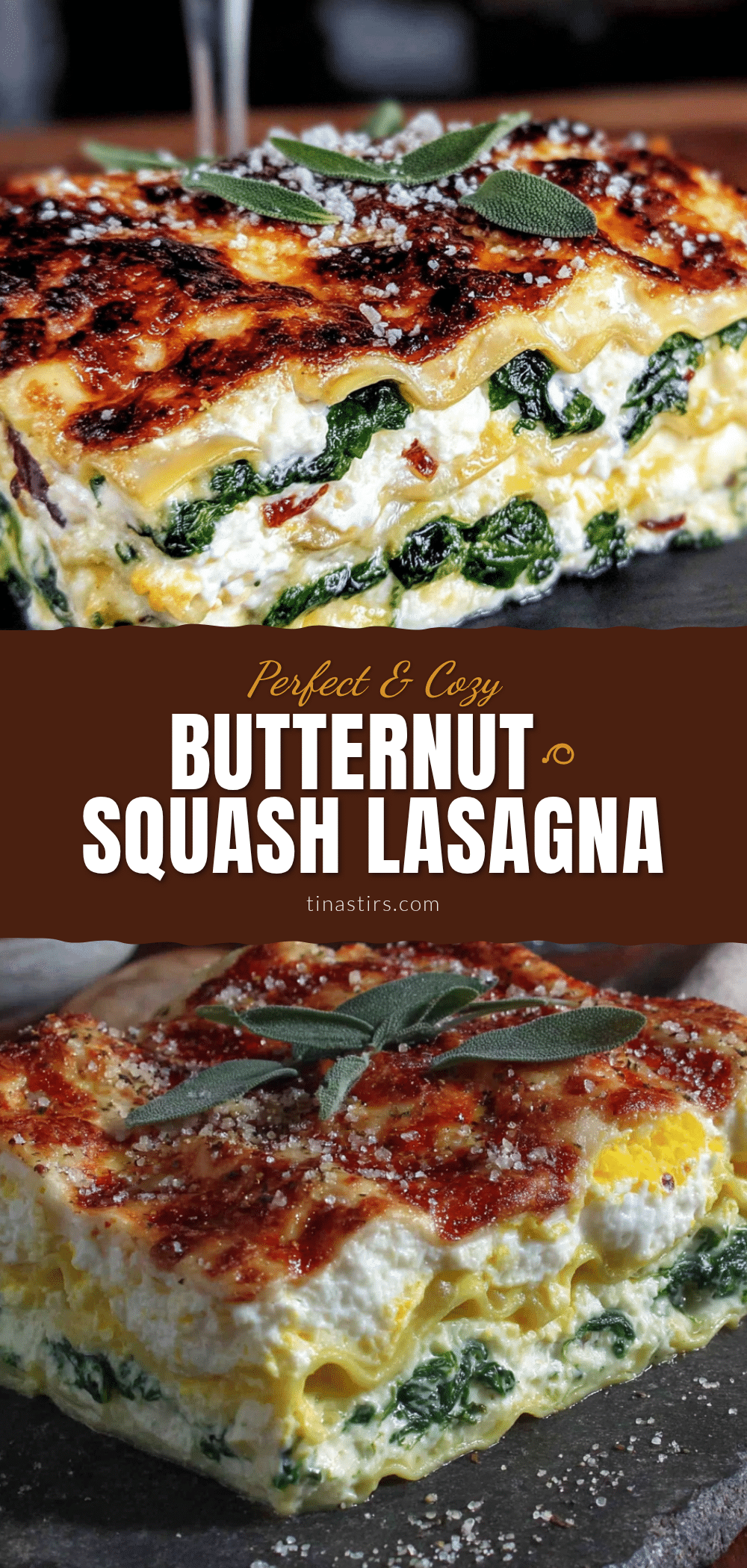
Perfect Butternut Squash Lasagna Easy Fall Dinner Recipe

A creamy, vegetarian butternut squash lasagna with roasted squash, ricotta, spinach, and a homemade béchamel sauce. Perfect for fall dinners and holiday gatherings.
- Prep Time: 30 minutes
- Cook Time: 1 hour 10 minutes
- Total Time: 1 hour 40 minutes
- Yield: 8 servings 1x
- Category: Main Course
- Cuisine: Italian
Ingredients
- 1 large butternut squash (about 3 pounds or 1.4 kg), peeled, seeded, and cut into 1-inch cubes
- 2 tablespoons olive oil
- 1 teaspoon salt
- 1/2 teaspoon black pepper
- 1/2 teaspoon dried sage
- 2 cups (16 ounces or 450g) whole milk ricotta cheese
- 1 large egg, lightly beaten
- 1/2 cup (50g) grated Parmesan cheese, plus more for topping
- 1/4 teaspoon ground nutmeg
- 1/4 teaspoon salt
- 1/4 teaspoon black pepper
- 5 ounces (140g) fresh spinach
- 12 lasagna noodles (about 1 box)
- 3 cups (700ml) whole milk
- 4 tablespoons (60g) unsalted butter
- 1/4 cup (30g) all-purpose flour
- 1/2 teaspoon salt
- 1/4 teaspoon black pepper
- 1/4 teaspoon garlic powder (optional)
- 2 cups (200g) shredded mozzarella cheese
- 1/2 cup (50g) grated Parmesan cheese, for topping
Instructions
- Preheat oven to 400°F (200°C). Line a baking sheet with parchment paper. Toss cubed squash with olive oil, 1 teaspoon salt, 1/2 teaspoon pepper, and dried sage. Spread in a single layer on the baking sheet. Roast for 25-30 minutes, flipping halfway, until tender and caramelized. Mash roughly with a fork and set aside.
- While squash roasts, make béchamel: In a medium saucepan over medium heat, melt butter. Whisk in flour and cook for 1-2 minutes. Slowly pour in milk, whisking constantly. Cook until thickened, about 5-7 minutes. Remove from heat and stir in 1/2 teaspoon salt, 1/4 teaspoon pepper, and garlic powder if using. Set aside.
- In a large skillet over medium heat, add a drizzle of olive oil. Cook spinach for 2-3 minutes until wilted. Let cool slightly, then chop roughly. In a large bowl, combine ricotta, beaten egg, 1/2 cup Parmesan, nutmeg, 1/4 teaspoon salt, and 1/4 teaspoon pepper. Fold in chopped spinach.
- If using regular lasagna noodles, cook according to package directions until al dente. Drain and lay flat on parchment paper. If using oven-ready noodles, skip this step.
- Preheat oven to 375°F (190°C). Spread a thin layer of béchamel (about 1/2 cup) on the bottom of a 9×13-inch baking dish. Layer: 4 noodles, 1/3 of mashed squash, 1/3 of ricotta-spinach mixture, 1/3 of remaining béchamel, 1/3 cup mozzarella. Repeat layers twice. Top with remaining béchamel, mozzarella, and 1/2 cup Parmesan.
- Cover with foil (spray foil with cooking spray to prevent sticking). Bake for 25 minutes. Remove foil and bake for another 20-25 minutes until golden and bubbly. Let rest for at least 15 minutes before cutting.
Notes
Don’t skip roasting the squash—it concentrates sweetness and prevents sogginess. Let the lasagna rest for 15 minutes after baking to set the layers. Use whole milk ricotta for best texture. For make-ahead, assemble without baking, cover, and refrigerate up to 24 hours; add 10-15 minutes to covered baking time.
Nutrition
- Serving Size: 1 serving (1/8 of la
- Calories: 420
- Sugar: 8
- Sodium: 680
- Fat: 22
- Saturated Fat: 12
- Carbohydrates: 38
- Fiber: 5
- Protein: 22
Keywords: butternut squash lasagna, fall dinner, vegetarian lasagna, roasted squash lasagna, easy lasagna recipe