Love this? Save it for later!
Share the inspiration with your friends
I was elbow-deep in a stack of vinyl records at a flea market outside Portland when the guy running the booth—who introduced himself as Dave, the accountant—started talking about squash. Not his taxes, not the weather, but the exact way to roast butternut squash so it caramelizes instead of steaming. I hadn’t asked. I was just trying to find a scratched copy of Fleetwood Mac’s Rumours, and suddenly I was getting a masterclass in fall cooking from a man in a faded Grateful Dead t-shirt. He told me his wife made this grain bowl every Sunday in the autumn, and he swore it was the only thing that got him through Monday mornings. I scribbled his instructions on the back of a receipt, half-convinced I’d lose it before I got home. But I didn’t. And honestly, that scribbled receipt became the foundation for what I now call the Best Fall Harvest Grain Bowl with Roasted Squash.
Maybe you’ve been there—you’re just going about your day, not looking for a recipe, and one finds you anyway. That’s exactly what happened with this dish. It wasn’t a glossy cookbook or a famous chef’s Instagram that taught me the trick to perfectly roasted squash; it was Dave, the accountant, who probably hasn’t thought about that conversation since I walked away with Rumours and a new obsession. But I’ve made this grain bowl more times than I can count, and every single time, I think about that dusty corner of the flea market and the unexpected generosity of a stranger who just really, really loved his squash.
This bowl has become my go-to for fall hosting. It’s the kind of dish that looks like you spent hours in the kitchen when really, most of the work is just letting the oven do its thing. The roasted squash gets all sweet and caramelized on the edges, the grains soak up a tangy maple-tahini dressing, and then you pile on all the crunchy, fresh toppings that make it feel like a celebration. It’s hearty enough to be a main course, but it also works beautifully as a side dish for a bigger spread. And let me tell you, when you bring this to a dinner party, people notice. They take a bite, look at the bowl, and then look at you like you just pulled off something magical. The truth is, it’s almost embarrassingly easy—but I’m not telling anyone that.
Why You’ll Love This Recipe
There are grain bowls, and then there’s this grain bowl. After testing more versions than I care to admit—some too soggy, some too bland, some that just felt like a sad pile of healthy stuff—I landed on this combination, and honestly, I haven’t looked back. This is the version I bring to every fall gathering, and it never fails to get that “wait, what’s in this?” reaction from guests.
- Impressive Without the Stress: You can roast the squash and cook the grains a day ahead. When guests arrive, you just assemble and drizzle. That’s it. You get to actually enjoy your own party.
- Simple, Seasonal Ingredients: No hunting down obscure superfoods. You need a good squash, some farro or wild rice, a few fresh herbs, and pantry staples for the dressing. That’s the whole list.
- Perfect for Fall Gatherings: Whether it’s a Friendsgiving, a cozy dinner party, or a potluck, this bowl fits right in. It’s colorful, it’s hearty, and it sits beautifully on a buffet table.
- Naturally Crowd-Pleasing: I’ve served this to vegans, meat-eaters, picky kids, and my uncle who claims he “doesn’t do salads.” Everyone went back for seconds. The roasted squash is that good.
- Texture Heaven: You get creamy squash, chewy grains, crunchy seeds, and fresh herbs all in one bite. It’s the kind of textural variety that makes eating genuinely exciting.
What makes this recipe different from every other grain bowl out there? It’s the double-roasting trick I learned from Dave. You roast the squash at a higher temperature initially to get color, then drop the heat to finish it through gently. That extra step—which takes zero extra effort—is what gives you squash that’s caramelized on the outside and velvety on the inside, not mushy or dry. The dressing is another game-changer. Most maple-tahini dressings are either too bitter or too sweet. Mine balances them with a splash of apple cider vinegar and a pinch of smoked paprika, which ties everything together like a warm fall sweater.
This isn’t just a healthy meal—it’s the kind of dish that makes you close your eyes after the first bite. It’s comfort food that happens to be good for you, and it’s perfect for impressing guests without breaking a sweat. When you’re hosting, you need dishes that work with you, not against you, and this grain bowl is the ultimate team player.
What Ingredients You Will Need
This recipe uses simple, wholesome ingredients that come together to create something genuinely special. Most of these are pantry staples or easy to find at any grocery store, especially during the fall season. Here’s what you’ll need and why each one matters.
For the Roasted Squash
- 1 medium butternut squash (about 2 pounds), peeled, seeded, and cut into 1-inch cubes. I prefer butternut for its sweetness and creamy texture, but you can use acorn, delicata, or even sugar pumpkin. Delicata doesn’t even need peeling, which is a nice shortcut.
- 2 tablespoons olive oil. Use a good-quality extra virgin here—it makes a difference in flavor.
- 1/2 teaspoon salt. I use fine sea salt for even seasoning.
- 1/4 teaspoon black pepper, freshly ground.
- 1/2 teaspoon smoked paprika. This adds a subtle warmth that complements the squash beautifully. I’m partial to the Spanish smoked paprika from Penzeys, but any brand works.
- 1/4 teaspoon cinnamon. Just enough to hint at fall without making it taste like a dessert.
For the Grains
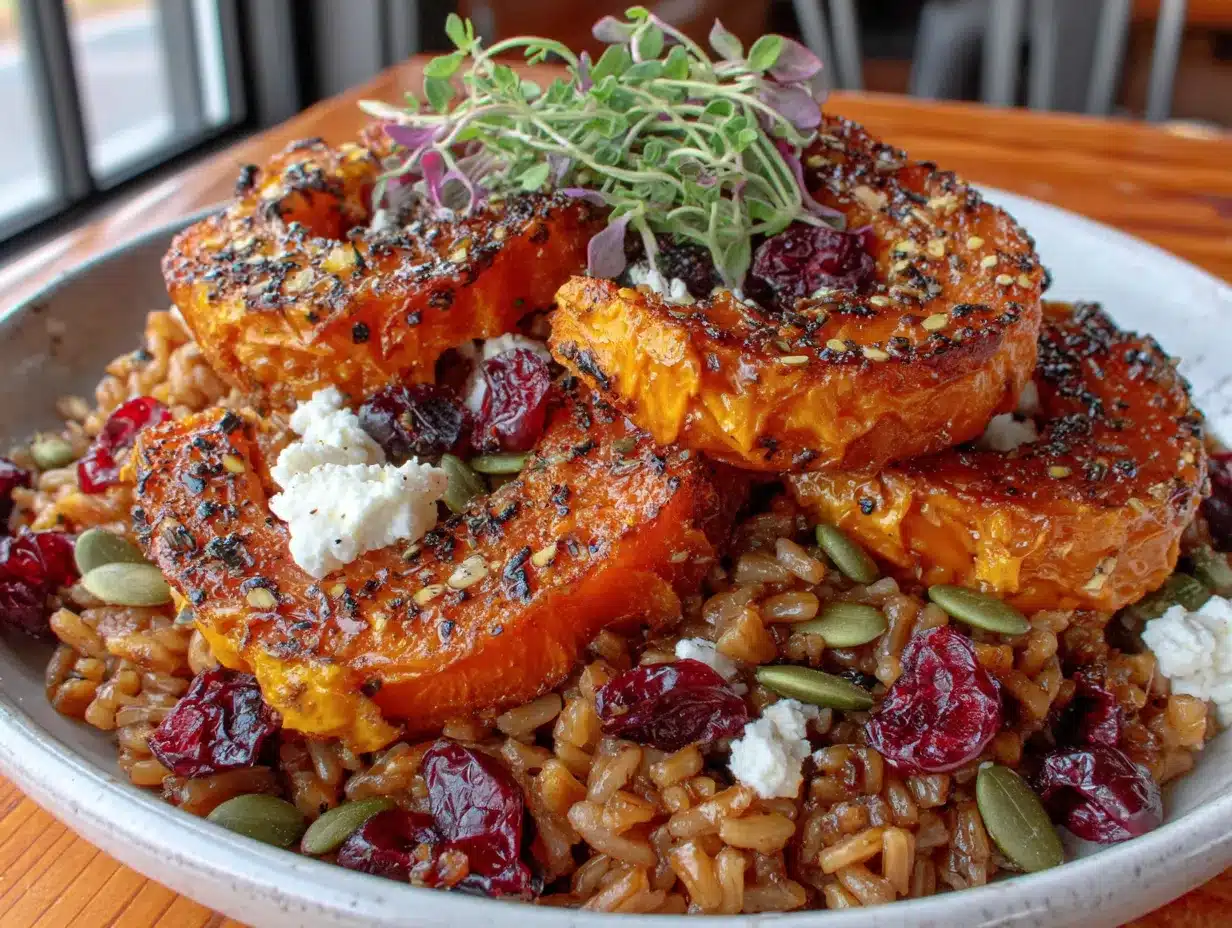
- 1 cup farro, rinsed. Farro has a wonderful chewy texture that holds up well in this bowl. If you can’t find farro, use wild rice, brown rice, or even quinoa. Pearl farro cooks faster than whole farro, so check your package.
- 2 cups water or vegetable broth. Broth adds more flavor, but water works perfectly fine.
- 1/2 teaspoon salt.
For the Maple-Tahini Dressing
- 1/4 cup tahini, well stirred. Tahini separates, so give it a good mix before measuring. I like the brand Soom for its smooth, not-bitter flavor.
- 2 tablespoons maple syrup. Pure maple syrup, not pancake syrup. Grade A dark amber has a stronger flavor that stands up well here.
- 2 tablespoons apple cider vinegar. This brightens everything up and cuts through the richness of the tahini.
- 1/4 cup warm water, plus more as needed to thin.
- 1 small garlic clove, minced or grated.
- 1/4 teaspoon salt.
- Pinch of smoked paprika, for a little extra warmth.
For the Toppings and Assembly
- 4 cups fresh spinach or mixed greens. Arugula works great too—it adds a peppery kick.
- 1/2 cup dried cranberries. Look for unsweetened or lightly sweetened ones to keep the sugar in check.
- 1/3 cup toasted pepitas (pumpkin seeds). Toasting them yourself takes just a few minutes and makes a huge difference in flavor.
- 1/4 cup crumbled feta cheese, optional. For a vegan version, leave it out or use a plant-based feta.
- 1/4 cup fresh parsley, chopped. Or use cilantro or mint—whatever you have on hand.
- 1 apple (Honeycrisp or Fuji), thinly sliced. This adds a fresh, crisp element that contrasts beautifully with the roasted squash. (Optional, but I highly recommend it.)
For substitutions, you can easily make this gluten-free by using quinoa or wild rice instead of farro. For a nut-free version, the dressing is naturally nut-free since tahini is made from sesame seeds. If you’re avoiding seeds, try sunflower seed butter in the dressing instead of tahini—it’s a little different but still delicious.
Equipment Needed
You don’t need a fancy kitchen to pull this off. Here’s what you’ll actually use:
- Baking sheet: A half-sheet pan (18×13 inches) is ideal. Line it with parchment paper for easy cleanup. I’ve used the same Nordic Ware sheet for years, and it’s never let me down.
- Medium saucepan: For cooking the farro. Any pot with a tight-fitting lid will work.
- Small bowl or jar: For whisking or shaking the dressing. A mason jar works perfectly—just screw the lid on and shake.
- Chef’s knife and cutting board: A sharp knife makes peeling and cubing squash so much easier. If your knife is dull, this task becomes a workout.
- Vegetable peeler: For peeling the squash. A Y-peeler is my favorite—it’s faster and gives you more control.
- Large mixing bowl: For assembling the bowl or tossing everything together.
- Measuring cups and spoons: Standard set is fine. I keep a set of magnetic ones on my fridge so I never lose them.
If you don’t have a baking sheet, a roasting pan works too. No saucepan? Use a small pot. Honestly, the only non-negotiable tool here is a sharp knife for the squash—everything else is flexible. If you’re on a budget, skip the fancy peeler and just use a paring knife. It takes a little longer, but it gets the job done.
Preparation Method
Let’s get cooking. This recipe has a few components, but they’re all straightforward. I recommend starting the squash and the grains at the same time to save yourself some minutes. Here’s how it all comes together.
- Preheat your oven to 425°F (220°C). Line a large baking sheet with parchment paper for easy cleanup.
- Prepare the squash: Peel the butternut squash using a vegetable peeler or a sharp knife. Cut it in half lengthwise and scoop out the seeds with a spoon. Cut the flesh into 1-inch cubes—try to keep them uniform so they roast evenly. Toss the cubes in a bowl with 2 tablespoons olive oil, 1/2 teaspoon salt, 1/4 teaspoon black pepper, 1/2 teaspoon smoked paprika, and 1/4 teaspoon cinnamon. Spread them in a single layer on the prepared baking sheet. Don’t overcrowd—if they’re too close together, they’ll steam instead of caramelize.
- Roast the squash: Roast for 15 minutes at 425°F. Then, without opening the oven, reduce the temperature to 375°F (190°C) and roast for another 15-20 minutes, until the squash is tender and the edges are golden brown and caramelized. Flip the pieces halfway through if you remember—if you forget, it’s still fine. The squash is done when a fork slides in easily but the pieces still hold their shape.
- Cook the farro: While the squash roasts, rinse 1 cup of farro under cold water. In a medium saucepan, combine the farro, 2 cups of water or vegetable broth, and 1/2 teaspoon salt. Bring to a boil over high heat, then reduce the heat to low, cover, and simmer for 25-30 minutes (for pearl farro) or 40-45 minutes (for whole farro). The farro is done when it’s tender but still chewy—think al dente pasta. Drain any excess liquid and set aside to cool slightly.
- Make the dressing: In a small bowl or mason jar, combine 1/4 cup tahini, 2 tablespoons maple syrup, 2 tablespoons apple cider vinegar, 1 minced garlic clove, 1/4 teaspoon salt, and a pinch of smoked paprika. Whisk or shake until smooth. Add 1/4 cup warm water, a little at a time, and whisk until the dressing reaches a pourable consistency. If it’s too thick, add another tablespoon of water. Taste it—it should be tangy, slightly sweet, and a little savory. Adjust the salt or maple syrup to your liking.
- Toast the pepitas: In a dry skillet over medium heat, toast 1/3 cup pepitas for 2-3 minutes, shaking the pan frequently, until they start to pop and smell nutty. Remove from the heat immediately—they burn fast. Set aside.
- Assemble the bowls: Divide the fresh spinach or mixed greens among serving bowls. Top with a generous scoop of cooked farro. Arrange the roasted squash cubes on top. Sprinkle with dried cranberries, toasted pepitas, crumbled feta (if using), fresh parsley, and thinly sliced apple (if using). Drizzle generously with the maple-tahini dressing.
- Serve immediately: This bowl is best served warm or at room temperature. If you’re hosting, you can set up a “grain bowl bar” with all the components in separate bowls and let guests build their own. It’s interactive, fun, and takes the pressure off you.
Troubleshooting tip: If your squash isn’t browning, your oven might not be hot enough, or the pieces are too crowded. Next time, use a second baking sheet if needed. And if your dressing is too bitter, add a pinch more maple syrup or a tiny splash more apple cider vinegar—the acidity balances the bitterness of the tahini.
Cooking Tips & Techniques
I’ve made this grain bowl more times than I can count, and I’ve definitely learned a few things the hard way. Here are my best tips to make yours turn out perfectly every time.
The double-roast method is non-negotiable. I know it seems fussy to change the temperature halfway through, but trust me on this. Starting at 425°F gives the squash that beautiful caramelized color on the outside. Dropping to 375°F lets the inside cook through gently without burning the exterior. I once tried to skip the temperature drop and just roasted at 400°F the whole time—the squash was fine, but it lacked that deep, sweet, almost jammy flavor that makes this dish special. Don’t skip it.
Don’t overcrowd the pan. This is the number one mistake people make with roasted vegetables. If the squash pieces are touching or overlapping, they release steam and end up soggy instead of caramelized. Give them space. Use two baking sheets if you have to. The air needs to circulate around each piece for that golden-brown magic to happen.
Toast your pepitas yourself. I know it’s tempting to buy them already toasted, but the difference is night and day. Raw pepitas toast in about 2 minutes in a dry pan, and the flavor becomes nutty and rich. Plus, you can control the salt level. I’ve burned them exactly once—walked away to check my phone—and the smell of burnt seeds lingers for hours. So stay close to the stove.
Make the dressing a day ahead. The flavors actually meld and deepen overnight. Just give it a good stir or shake before using, and add a splash of warm water if it’s thickened up in the fridge. This is one of those “prep ahead” wins that makes hosting so much easier.
Cook the farro in broth, not water. This is a small change that adds a surprising amount of flavor. Vegetable broth (or even chicken broth if you’re not keeping it vegetarian) infuses the grains with savory depth. If you only have water, add a bay leaf and a clove of garlic to the cooking liquid—it helps.
Warm the grains before assembling. Cold farro straight from the fridge makes the whole bowl feel sad. If you’ve prepped ahead, reheat the farro in the microwave or in a skillet with a splash of water for a minute or two. Warm grains + warm squash + cool greens = the perfect temperature contrast.
Variations & Adaptations
One of the best things about this grain bowl is how flexible it is. I’ve made it so many different ways depending on what I have in the fridge or who I’m serving. Here are some of my favorite variations.
Vegan Version: This one is easy—just skip the feta cheese. The bowl is already naturally vegan if you leave out the cheese and use maple syrup instead of honey in the dressing (which it already is). I often make it this way, and honestly, I don’t miss the cheese at all. The tahini dressing is rich enough to carry the whole dish.
Add Protein: If you’re serving hungry guests or want to make this a heartier main dish, add some protein. Grilled chicken, roasted chickpeas, or even a soft-boiled egg on top are all excellent. I once added leftover pulled pork from a party, and it was absurdly good—the smoky pork played beautifully with the maple-tahini dressing.
Seasonal Swaps: In the fall, butternut squash is king, but you can use any winter squash. I’ve made this with roasted delicata (no peeling needed!) and roasted acorn squash with great results. In the summer, swap the squash for roasted sweet potatoes or corn, and use fresh berries instead of dried cranberries. In the winter, try roasted Brussels sprouts and pomegranate seeds.
Grain Options: Not a farro fan? Use wild rice, brown rice, quinoa, or even freekeh. Each grain brings a different texture. Quinoa cooks in 15 minutes, which is great when you’re short on time. Wild rice has a nutty flavor that pairs beautifully with the squash.
Dressing Variations: If you’re out of tahini, try this dressing with almond butter or sunflower seed butter. It won’t be quite the same, but it’ll still be delicious. For a lighter option, swap the tahini dressing for a simple lemon vinaigrette with a touch of maple syrup.
Serving & Storage Suggestions
This grain bowl is incredibly versatile when it comes to serving. Here’s how I like to present it and how to handle leftovers.
Serving Temperature: Serve this bowl warm or at room temperature. The warm squash and grains contrast beautifully with the cool greens and fresh toppings. If you’re serving a crowd, I recommend keeping the components separate and letting people build their own bowls. It makes for a beautiful buffet spread and accommodates different dietary needs.
What to Serve Alongside: This bowl is hearty enough to be a main dish, but it also works as a side for roasted chicken, grilled salmon, or a hearty soup. For a fall dinner party, I’d serve it alongside a simple roasted carrot soup and some crusty bread. For a potluck, it’s perfect on its own—just bring the dressing in a separate container and drizzle it right before serving so the greens don’t get soggy.
Storage Instructions: Store each component separately in airtight containers in the refrigerator. The roasted squash keeps for up to 4 days, the cooked farro for up to 5 days, and the dressing for up to a week. The greens and fresh toppings should be stored separately and added just before serving.
Reheating Tips: To reheat, warm the squash and farro together in a skillet over medium heat with a splash of water or broth, or microwave them for 1-2 minutes. The dressing can be used straight from the fridge—just give it a good stir or shake, and add a splash of warm water if it’s too thick.
Flavor Development: Honestly, this bowl gets better as the flavors meld. If you’re meal-prepping, you can combine the warm components (squash and farro) and store them together. The flavors will deepen overnight. Just add the fresh toppings and dressing when you’re ready to eat.
Nutritional Information & Benefits
This grain bowl is as nourishing as it is delicious. Here’s a rough estimate of the nutritional values per serving (based on 4 servings, without feta):
- Calories: Approximately 450-500
- Protein: 12-15 grams
- Fiber: 12-15 grams
- Healthy Fats: 18-20 grams (from olive oil, tahini, and pepitas)
But beyond the numbers, this bowl is packed with ingredients that make you feel good. Butternut squash is loaded with vitamin A (great for your immune system and your eyes) and fiber. Farro is an ancient grain rich in protein, fiber, and magnesium. Tahini provides healthy fats and calcium from sesame seeds. Pepitas are a fantastic source of zinc and iron. And the spinach adds a boost of iron and vitamins K and C.
This recipe is naturally vegetarian and can easily be made vegan (skip the feta). It’s also gluten-free if you swap the farro for quinoa or wild rice. The only potential allergen is sesame from the tahini—if you’re avoiding sesame, use sunflower seed butter instead. It’s a well-balanced meal that leaves you satisfied without feeling heavy, which is exactly what I want from a fall bowl.
Conclusion
This Best Fall Harvest Grain Bowl with Roasted Squash is the kind of recipe that makes you look forward to autumn all year long. It’s warm, comforting, and full of texture and flavor—but it’s also easy enough to throw together on a busy weeknight and impressive enough to serve at your next dinner party. The roasted squash gets perfectly caramelized, the farro is chewy and satisfying, and that maple-tahini dressing ties everything together in the most delicious way.
I love that this recipe came from an unexpected place—a flea market conversation with an accountant who just really knew his way around a squash. It reminds me that the best recipes often come from the most surprising sources. And now I’m passing it on to you, with a few tweaks and improvements from my own kitchen.
I’d love to hear how yours turns out. Did you make any substitutions? Serve it at a party? Add something unexpected? Drop a comment below and let me know—I read every single one, and your ideas might just inspire my next version. If you loved this recipe, share it with a friend who needs a new fall favorite. Happy cooking, and here’s to many cozy bowls ahead!
Frequently Asked Questions
Can I make this grain bowl ahead of time for a party?
Absolutely. This is one of my favorite recipes for hosting because you can prep almost everything in advance. Roast the squash and cook the farro up to 2 days ahead, and make the dressing up to a week ahead. When your guests arrive, just reheat the warm components, toss the greens in a bowl, and let everyone build their own. It takes about 10 minutes to assemble, and you get to actually enjoy the party.
What can I use instead of farro?
So many options! Quinoa cooks in 15 minutes and is naturally gluten-free. Wild rice has a nutty flavor that pairs beautifully with the squash. Brown rice works too, though it’s a little less chewy. If you want to keep it low-carb, try cauliflower rice—just sauté it briefly to warm it through. Each grain gives the bowl a slightly different personality, so feel free to experiment.
My tahini dressing turned out bitter. What went wrong?
This happens sometimes, and it’s usually because the tahini itself is bitter. Some brands are more bitter than others. If your dressing tastes bitter, try adding an extra tablespoon of maple syrup or a splash more apple cider vinegar—the sweetness and acidity help balance it out. If that doesn’t work, start fresh with a different brand of tahini. I’ve had good luck with Soom and Seed + Mill.
How do I keep the roasted squash from getting soggy?
The key is not overcrowding the pan. Give each squash cube a little breathing room so the heat can circulate and caramelize the sugars. Also, make sure your oven is fully preheated before you put the squash in. If you’re roasting a lot, use two baking sheets. And don’t skip the double-temperature method—starting at 425°F gives you that golden crust, then dropping to 375°F finishes it gently.
Can I freeze this grain bowl?
I don’t recommend freezing the assembled bowl, but you can freeze the components separately. The cooked farro freezes beautifully—just let it cool completely, then store it in a freezer bag for up to 3 months. The roasted squash freezes okay, but the texture will be softer when thawed. The dressing and fresh toppings should always be made fresh. If you’re meal-prepping, it’s better to just store everything in the fridge and eat within 4-5 days.
Pin This Recipe!
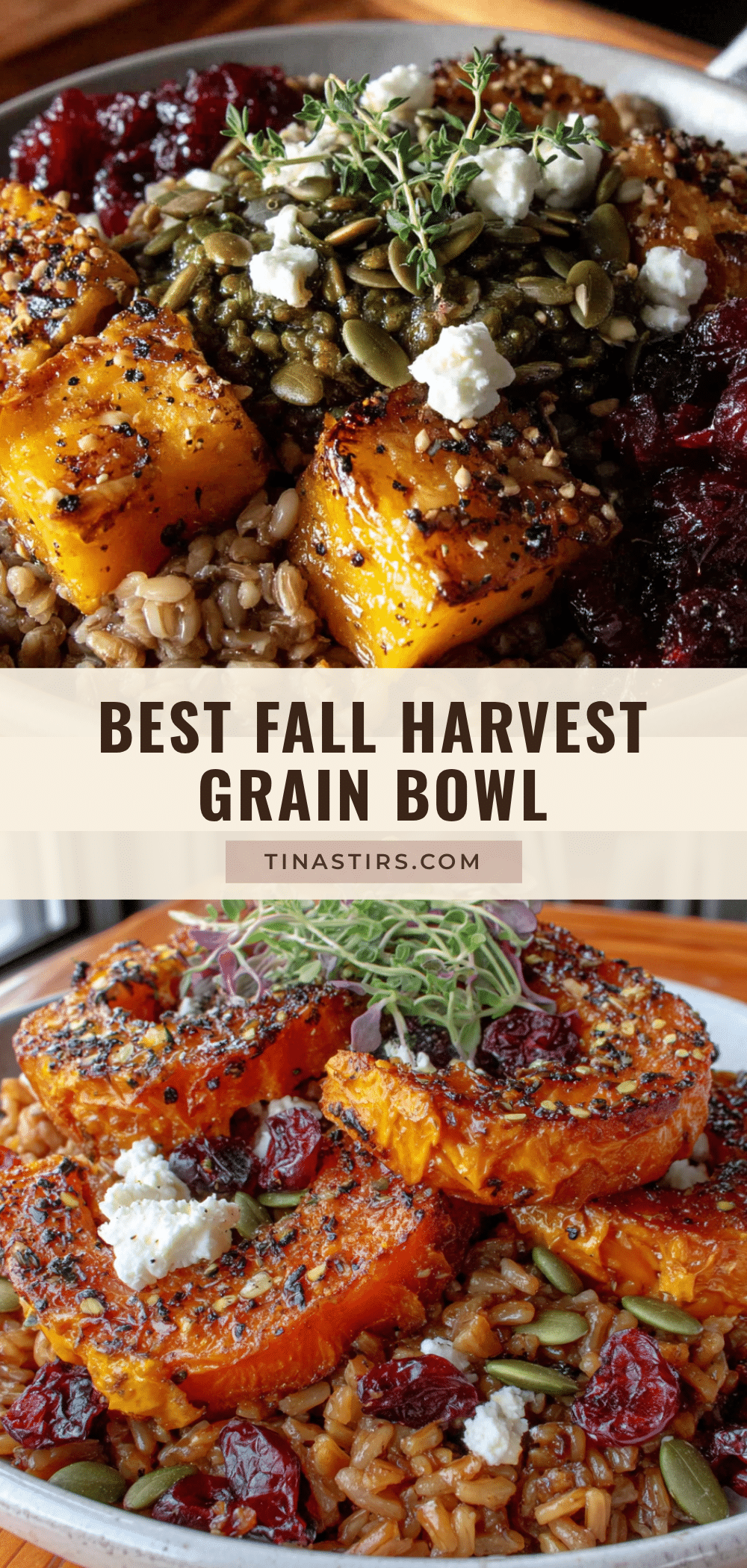
Best Fall Harvest Grain Bowl with Roasted Squash

A hearty and impressive grain bowl featuring caramelized roasted butternut squash, chewy farro, and a tangy maple-tahini dressing, perfect for fall gatherings or a cozy weeknight dinner.
- Prep Time: 15 minutes
- Cook Time: 45 minutes
- Total Time: 1 hour
- Yield: 4 servings 1x
- Category: Main Course
- Cuisine: American
Ingredients
- 1 medium butternut squash (about 2 pounds), peeled, seeded, and cut into 1-inch cubes
- 2 tablespoons olive oil
- 1/2 teaspoon salt
- 1/4 teaspoon black pepper, freshly ground
- 1/2 teaspoon smoked paprika
- 1/4 teaspoon cinnamon
- 1 cup farro, rinsed
- 2 cups water or vegetable broth
- 1/2 teaspoon salt
- 1/4 cup tahini, well stirred
- 2 tablespoons maple syrup
- 2 tablespoons apple cider vinegar
- 1/4 cup warm water, plus more as needed
- 1 small garlic clove, minced or grated
- 1/4 teaspoon salt
- Pinch of smoked paprika
- 4 cups fresh spinach or mixed greens
- 1/2 cup dried cranberries
- 1/3 cup toasted pepitas (pumpkin seeds)
- 1/4 cup crumbled feta cheese (optional)
- 1/4 cup fresh parsley, chopped
- 1 apple (Honeycrisp or Fuji), thinly sliced (optional)
Instructions
- Preheat your oven to 425°F (220°C). Line a large baking sheet with parchment paper.
- Prepare the squash: Peel the butternut squash, cut in half lengthwise, and scoop out seeds. Cut into 1-inch cubes. Toss with 2 tablespoons olive oil, 1/2 teaspoon salt, 1/4 teaspoon black pepper, 1/2 teaspoon smoked paprika, and 1/4 teaspoon cinnamon. Spread in a single layer on the prepared baking sheet.
- Roast the squash: Roast for 15 minutes at 425°F. Then reduce oven temperature to 375°F (190°C) and roast for another 15-20 minutes, until tender and caramelized. Flip halfway if desired.
- Cook the farro: Rinse 1 cup farro. In a medium saucepan, combine farro, 2 cups water or broth, and 1/2 teaspoon salt. Bring to a boil, then reduce heat to low, cover, and simmer for 25-30 minutes (pearl farro) or 40-45 minutes (whole farro), until tender but chewy. Drain any excess liquid.
- Make the dressing: In a small bowl or jar, combine 1/4 cup tahini, 2 tablespoons maple syrup, 2 tablespoons apple cider vinegar, 1 minced garlic clove, 1/4 teaspoon salt, and a pinch of smoked paprika. Whisk or shake until smooth. Add 1/4 cup warm water gradually until pourable. Adjust seasoning.
- Toast the pepitas: In a dry skillet over medium heat, toast 1/3 cup pepitas for 2-3 minutes, shaking frequently, until fragrant. Remove from heat.
- Assemble the bowls: Divide spinach or mixed greens among bowls. Top with farro, roasted squash, dried cranberries, toasted pepitas, feta (if using), parsley, and apple slices (if using). Drizzle with dressing.
- Serve immediately, warm or at room temperature.
Notes
The double-roast method (starting at 425°F then reducing to 375°F) is key for caramelized squash. Don’t overcrowd the pan. Toast pepitas yourself for best flavor. Make dressing a day ahead for deeper flavor. Cook farro in broth for more flavor. Warm grains before assembling for best texture.
Nutrition
- Serving Size: 1 bowl
- Calories: 475
- Sugar: 18
- Sodium: 680
- Fat: 19
- Saturated Fat: 3
- Carbohydrates: 65
- Fiber: 14
- Protein: 14
Keywords: fall harvest grain bowl, roasted squash, farro, maple-tahini dressing, vegetarian, healthy, autumn recipe