Love this? Save it for later!
Share the inspiration with your friends
My neighbor Jen wasn’t trying to impress me. I’d stopped by to borrow a baking dish—mine was mysteriously missing, probably in a teenager’s dorm room—and this smell hit me before I even got past her screen door. It was sweet, but not in a dessert way. Savory, but soft. Like autumn had been simmering on her stovetop.
She was standing there in her gardening clogs, stirring a pot with this completely casual expression, like she wasn’t making something that stopped me cold in her entryway. “Oh, it’s just squash soup,” she said when I asked. Just squash soup. I mean, I’ve made squash soup before. We’ve all made squash soup. But this one had this velvety thing going on, and there was this faint maple warmth that didn’t scream at you—it just hung there, cozy and right.
She handed me a spoonful from the pot, and honestly, I almost forgot why I’d come over. That’s the kind of recipe this is. The kind that makes you stand in someone else’s kitchen, spoon in hand, completely quiet, because your brain has stopped thinking about anything except that first taste. Maybe you’ve been there—when a recipe is so unexpectedly good it resets your whole afternoon.
I asked her what was in it. She shrugged. “Honeynut squash. Maple. Some cream. You know.” I did not know. But I watched her make it the next week, and I’ve been making it ever since. This cozy maple honeynut squash soup is the recipe I keep coming back to when I want something that feels like a hug in a bowl but doesn’t take all afternoon. It’s the soup that made me understand why some recipes don’t need to be fancy—they just need to be made by someone who knows what they’re doing, even if they think they’re not doing anything special.
Why You’ll Love This Recipe
Let me tell you why this cozy maple honeynut squash soup has earned a permanent spot in my fall rotation. I’ve tested this recipe at least a dozen times—tweaking the maple ratio, trying different cream levels, even experimenting with roasting versus simmering the squash. This version is the one that made my husband say “don’t change a thing,” which, if you know him, is basically a five-star Michelin review.
Here’s what makes it special:
- Quick & Easy: This comes together in about 30 minutes flat. No roasting required, which means no waiting for the oven to preheat and no extra dishes. Perfect for those nights when you want something cozy but don’t have an hour to spend in the kitchen.
- Simple Ingredients: Honeynut squash, onion, garlic, maple syrup, cream, broth—that’s basically it. Nothing weird, nothing you’ll have to hunt down at a specialty store. Your regular grocery trip covers this one.
- Perfect for Cozy Nights: This is the soup you want on a rainy Tuesday when you’re tired and the world feels heavy. It’s comfort food that doesn’t weigh you down.
- Crowd-Pleaser: I’ve served this to kids, picky eaters, and people who swear they don’t like squash. Empty bowls every single time. It’s that good.
- Unbelievably Delicious: The texture is what gets you. It’s silky without being heavy, sweet without being cloying. The maple and squash work together in a way that makes you wonder why you haven’t been doing this your whole life.
What makes this different from other squash soups is the technique. Instead of roasting the squash (which takes forever and dries it out), you simmer it directly in the broth. This keeps the squash tender and infuses the liquid with all that flavor. Then you blend it until it’s so smooth it almost feels like velvet. The maple syrup isn’t just a sweetener here—it’s a flavor bridge that connects the earthy squash with the rich cream. This isn’t just another version of squash soup. It’s the one you’ll make again and again.
What Ingredients You Will Need
This recipe uses simple, wholesome ingredients to deliver bold flavor and satisfying texture without the fuss. Most of these are pantry staples or easy to find at any grocery store. Here’s what you’ll need:
For the Soup Base
- 2 medium honeynut squash (about 1.5 pounds total) — peeled, seeded, and cubed into 1-inch pieces. Honeynut squash is smaller and sweeter than butternut, with a thinner skin that’s easier to peel. If you can’t find it, butternut squash works too.
- 1 tablespoon olive oil — for sautéing the aromatics. Use a good quality extra virgin for the best flavor.
- 1 medium yellow onion, diced — adds savory depth that balances the sweetness of the squash and maple.
- 2 cloves garlic, minced — because everything is better with garlic. I recommend fresh, not jarred.
- 1/2 teaspoon salt — I prefer fine sea salt for cooking. Adjust to taste at the end.
- 1/4 teaspoon black pepper — freshly ground, if possible. It makes a difference.
- 1/4 teaspoon ground nutmeg — just a hint, enough to warm things up without overpowering.
- 1/8 teaspoon cayenne pepper (optional) — adds a tiny kick that makes the sweetness pop. Totally optional but highly recommended.
- 3 cups vegetable or chicken broth — use a good quality broth since it’s a major flavor component. I love homemade vegetable broth when I have it, but store-bought works great too.
For the Creamy Finish
- 1/2 cup heavy cream — adds richness and that velvety texture. For a lighter version, you can use half-and-half or full-fat coconut milk (adds a subtle coconut flavor that’s actually lovely with the maple).
- 2 tablespoons pure maple syrup — not pancake syrup, the real stuff. Grade A dark amber is my go-to for cooking because it has a stronger maple flavor that stands up to the squash.
For Garnish (Optional but Recommended)
- Additional cream or coconut milk — for swirling on top
- Toasted pepitas (pumpkin seeds) — adds a nice crunch and visual appeal
- A drizzle of maple syrup — because why not?
- Fresh thyme or sage leaves — for a pop of color and herbal freshness
Ingredient Tips: When choosing honeynut squash, look for ones that feel heavy for their size with no soft spots. The skin should be a deep orange-tan color. If you can’t find honeynut, butternut squash is the best substitute—just note that you might need to add an extra tablespoon of maple syrup since butternut is slightly less sweet. I’ve also made this with kabocha squash, which gives it an even creamier texture. For the broth, I personally prefer homemade chicken broth for the richest flavor, but a good store-bought vegetable broth works beautifully for a vegetarian version.
Equipment Needed
You don’t need a fancy kitchen to make this soup. Here’s what you’ll actually use:
- Large pot or Dutch oven — A 4 to 5-quart pot is ideal. I use my enameled cast iron Dutch oven because it distributes heat evenly and looks pretty on the table. But any heavy-bottomed pot will work.
- Chef’s knife — A sharp one makes peeling and cubing the squash so much easier. Trust me on this. Dull knives and squash are a dangerous combination.
- Vegetable peeler — Honeynut squash has thinner skin than butternut, so a standard peeler works fine. I’ve also used a Y-shaped peeler, which I find gives me more control.
- Cutting board — Preferably one with a groove to catch any juices.
- Wooden spoon or spatula — For stirring the aromatics while they cook.
- Immersion blender — This is my preferred tool for blending hot soup directly in the pot. So much easier than transferring to a blender in batches. If you don’t have one, you can use a regular blender—just let the soup cool slightly and blend in batches, filling the blender no more than halfway full.
- Measuring cups and spoons — For accuracy, especially with the maple syrup and cream.
- Soup ladle — For serving.
Budget-Friendly Tips: If you don’t have an immersion blender, a standard countertop blender works perfectly. Just be careful with the hot liquid—remove the center cap from the blender lid and cover it with a kitchen towel to let steam escape. I learned this the hard way after a blender lid explosion incident that I’d rather not talk about.
Preparation Method
Let me walk you through this step by step. I’ve made this soup so many times I could do it in my sleep, but I’ll share all the little things I’ve learned along the way.
- Prep the squash — First, cut each honeynut squash in half lengthwise. Scoop out the seeds and stringy bits with a spoon (save the seeds to roast later if you’re feeling ambitious). Use a vegetable peeler to remove the skin. Honeynut skin is thinner than butternut, so this goes pretty quickly. Cut the squash into roughly 1-inch cubes. Don’t stress about perfect cubes—they’re all going to get blended anyway. Just try to keep them similar in size so they cook evenly.
- Sauté the aromatics — Heat the olive oil in your large pot over medium heat. Add the diced onion and cook for 4-5 minutes, stirring occasionally, until it’s soft and translucent. You want it to look like it’s sweating, not browning. Add the minced garlic and cook for another 30 seconds until fragrant. Don’t let the garlic burn—it gets bitter and ruins the whole thing.
- Add the squash and seasonings — Toss in the cubed honeynut squash, salt, pepper, nutmeg, and cayenne if using. Stir everything together so the squash gets coated in the seasoned oil. Let it cook for 2-3 minutes, stirring once or twice. You’ll start to smell the squash warming up—it’s a lovely, nutty aroma.
- Pour in the broth — Add the 3 cups of broth to the pot. The liquid should just about cover the squash. If it doesn’t quite reach, add a splash more broth or water. Bring it to a boil over high heat, then reduce the heat to medium-low and let it simmer. Cover the pot with the lid slightly ajar. Let it cook for 15-20 minutes, or until the squash is fork-tender. You should be able to easily pierce a cube with a fork—it should offer almost no resistance.
- Test and adjust — This is where I always taste the broth. Is it savory enough? Does it need more salt? More pepper? This is your chance to adjust before blending. I usually add a pinch more salt at this stage. The broth will taste slightly thin now, but that’s okay—it’ll thicken up once blended.
- Blend until smooth — Remove the pot from the heat. If you’re using an immersion blender, submerge it fully and blend until completely smooth. Work in a gentle up-and-down motion to incorporate everything. If you’re using a regular blender, let the soup cool for 5-10 minutes first, then transfer it in batches. Fill the blender no more than halfway, remove the center cap from the lid, and cover the opening with a kitchen towel. Blend on low speed, gradually increasing to high, until smooth. Pour each batch into a clean pot or large bowl.
- Add the cream and maple syrup — Once all the soup is blended and back in the pot (if you used a regular blender), stir in the heavy cream and maple syrup. Start with 1 1/2 tablespoons of maple syrup, taste, and add more if you want it sweeter. I usually use the full 2 tablespoons, but it depends on how sweet your squash is. The cream should be room temperature to prevent curdling—I just take it out of the fridge when I start cooking.
- Final warm-through — Return the pot to low heat and warm the soup gently for 2-3 minutes. Don’t let it boil after adding the cream, or it might separate. Stir occasionally. Taste one last time and adjust seasoning if needed. I often add another pinch of salt at this point—it helps all the flavors pop.
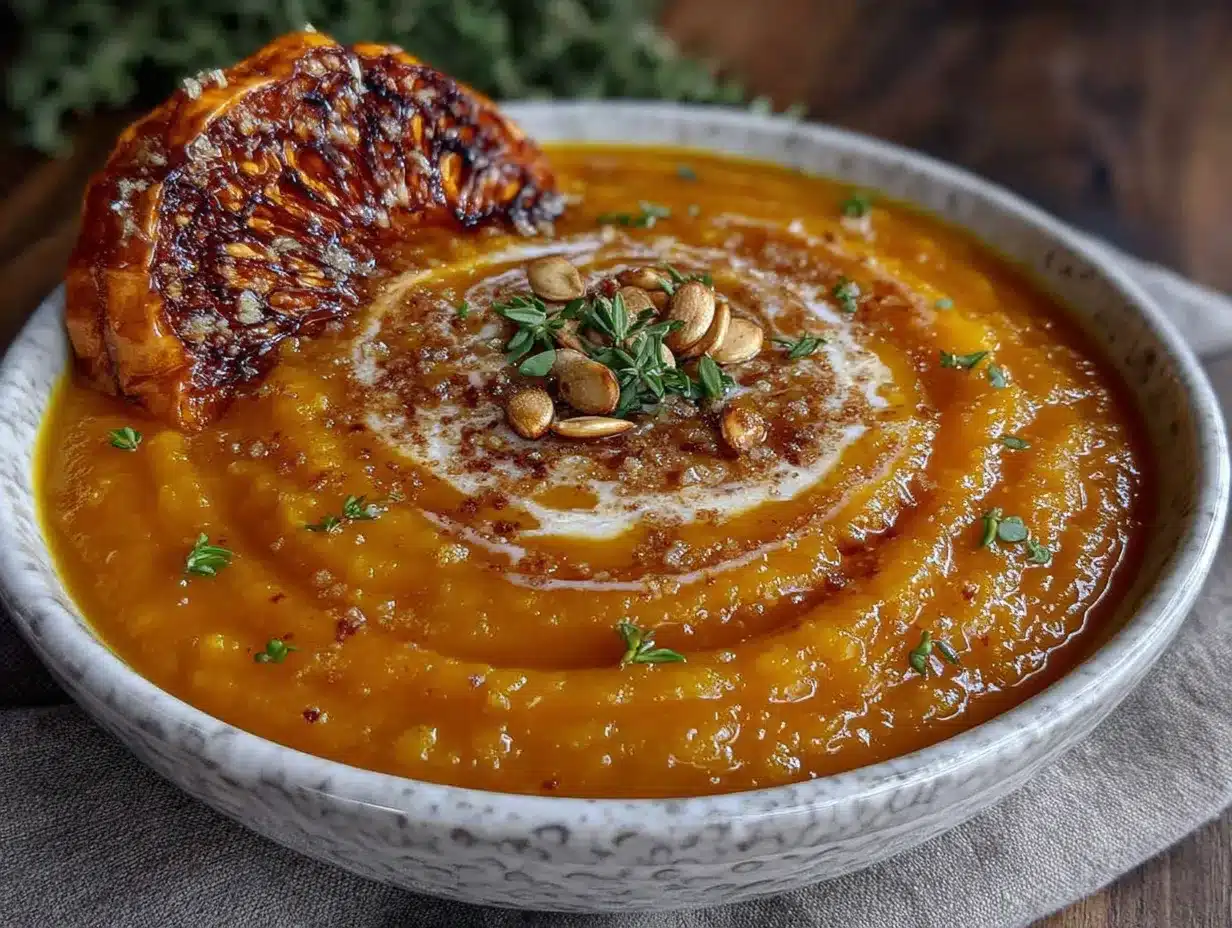
- Serve and garnish — Ladle the soup into bowls. Drizzle a little extra cream or coconut milk on top and swirl it with a toothpick or the tip of a knife. Sprinkle toasted pepitas over the top, add a few fresh thyme leaves, and finish with a tiny drizzle of maple syrup if you’re feeling fancy. Serve immediately.
Sensory Cues: When the squash is done simmering, the broth should look slightly cloudy and golden-orange. The squash cubes will be soft enough that they start to fall apart when you stir. After blending, the soup should be thick enough to coat the back of a spoon—if it’s too thick, stir in a little more broth or water. If it’s too thin, let it simmer uncovered for a few minutes to reduce.
Cooking Tips & Techniques
I’ve made enough mistakes with squash soup to fill a small cookbook. Let me save you some trouble with these tips:
Don’t skip the nutmeg. I know it seems like a small thing, but that pinch of nutmeg is what makes this soup taste like fall. It adds this warm, almost floral note that complements both the squash and the maple. Freshly grated nutmeg is even better—it has a brighter, more aromatic flavor than pre-ground.
Peel the squash efficiently. Here’s my trick: microwave the whole squash for 1-2 minutes before peeling. It softens the skin just enough that the peeler glides right through. Just let it cool enough to handle first. Also, a sharp Y-shaped peeler is way easier to use than a standard one for this job.
Blend in stages if using a regular blender. I cannot stress this enough. Hot liquid expands in the blender, and if you fill it too full, you’ll end up with soup on your ceiling. I know this from experience. Blend in small batches and always vent the lid.
Taste as you go. This is the single most important tip I can give you. Squash sweetness varies wildly depending on the season and how long they’ve been stored. Some batches need more maple, some need more salt. Trust your taste buds, not the recipe.
Make it ahead for better flavor. This soup actually tastes better the next day. The flavors meld and deepen overnight. I often make it a day ahead and reheat it gently. Just add a splash of broth or water when reheating because it thickens as it sits.
Don’t boil after adding cream. This is a rookie mistake I’ve made more than once. High heat can cause the cream to curdle, leaving you with a grainy texture instead of that silky smoothness. Warm it gently over low heat, and you’ll be fine.
Use the right blending technique. With an immersion blender, start at the bottom of the pot and work your way up. Tilt the blender slightly as you go to create a vortex that pulls everything in. This gives you the smoothest result with the least effort.
Variations & Adaptations
This cozy maple honeynut squash soup is wonderfully adaptable. Here are some variations I’ve tried and loved:
Vegan Version
Replace the heavy cream with full-fat coconut milk. The coconut flavor actually pairs beautifully with the maple and squash. Use vegetable broth instead of chicken broth, and you’ve got a completely plant-based soup that’s just as creamy and satisfying. I’ve served this to non-vegans who didn’t even notice the swap.
Spicy Maple Version
Increase the cayenne pepper to 1/4 teaspoon and add a pinch of smoked paprika. The heat balances the sweetness in a way that’s really addictive. I made this version for a soup swap last fall, and it was the first bowl to empty.
Roasted Squash Version
If you have more time, roast the cubed honeynut squash at 400°F for 25-30 minutes before adding it to the soup. This caramelizes the squash and adds a deeper, almost nutty flavor. Toss the cubes with olive oil, salt, and pepper before roasting. The trade-off is extra time and an extra dish, but the flavor is incredible.
Apple-Squash Fusion
Add one peeled and chopped apple (Honeycrisp or Fuji work great) to the pot along with the squash. The apple adds natural sweetness and a subtle fruity note that’s lovely with the maple. Reduce the maple syrup to 1 tablespoon since the apple adds sweetness.
Coconut-Ginger Twist
Sauté 1 tablespoon of fresh grated ginger with the onions and garlic. Replace the heavy cream with coconut milk and use only 1 tablespoon of maple syrup. The ginger adds warmth and brightness that’s perfect for when you’re feeling under the weather. This is my go-to cold-fighting soup.
Thicker Hearty Version
Add one peeled and cubed potato to the pot with the squash. The potato adds starchiness that makes the soup extra thick and creamy without needing as much cream. This is great for a main-dish soup that’ll keep you full longer.
Serving & Storage Suggestions
How to Serve: This soup is best served hot, right after blending. Ladle it into warm bowls (run them under hot water and dry them before serving) to keep it hot longer. The garnishes aren’t just for looks—the crunch of pepitas and the herbal freshness of thyme add texture and contrast that make each spoonful interesting.
What to Serve With: This soup pairs beautifully with a crusty sourdough bread or a simple grilled cheese sandwich. I love serving it alongside a roasted Brussels sprouts salad for a complete fall meal. For a lighter option, a simple green salad with a tangy vinaigrette cuts through the richness of the soup perfectly. A glass of crisp white wine or hard cider is also lovely with this.
Storage Instructions: Let the soup cool completely before storing. Transfer it to an airtight container and refrigerate for up to 5 days. The soup will thicken as it sits, which is normal. When you’re ready to eat it, thin it with a splash of broth or water and reheat gently on the stovetop or in the microwave.
Freezer Instructions: This soup freezes beautifully. Pour cooled soup into freezer-safe containers or zip-top bags, leaving about an inch of headspace for expansion. Freeze for up to 3 months. Thaw overnight in the refrigerator before reheating. I like to freeze it in individual portions for easy lunches.
Reheating Tips: Reheat on the stovetop over medium-low heat, stirring occasionally. Add a splash of broth or water if it’s too thick. If using the microwave, heat in 30-second intervals, stirring between each, until hot. Don’t let it boil, or the cream might separate.
Flavor Development: Here’s a secret: this soup actually tastes better the next day. The flavors have time to meld and deepen, and the texture becomes even silkier. If you can, make it a day ahead and refrigerate it overnight. Just reheat gently before serving.
Nutritional Information & Benefits
This cozy maple honeynut squash soup isn’t just delicious—it’s packed with good-for-you ingredients that make it a smart choice for health-minded eaters who still want food that tastes indulgent.
Estimated Nutritional Values (per serving, serves 4):
- Calories: 220
- Total Fat: 12g
- Saturated Fat: 6g
- Cholesterol: 30mg
- Sodium: 580mg
- Total Carbohydrates: 28g
- Dietary Fiber: 4g
- Sugars: 12g
- Protein: 4g
- Vitamin A: 350% DV
- Vitamin C: 30% DV
- Potassium: 600mg
Health Highlights: Honeynut squash is a nutritional powerhouse. It’s loaded with beta-carotene, which your body converts to vitamin A for healthy vision and immune function. It’s also a great source of fiber, which supports digestive health and keeps you feeling full. The maple syrup provides natural sweetness with a lower glycemic impact than refined sugar, and the cream adds a touch of healthy fats that help your body absorb the fat-soluble vitamins in the squash.
Dietary Considerations: This soup is naturally gluten-free and can easily be made vegan by substituting coconut milk for the heavy cream. It’s also low in added sugar—most of the sweetness comes from the squash itself. The cayenne pepper (if used) can boost metabolism and add anti-inflammatory benefits. For a lower-fat version, use half-and-half or unsweetened almond milk instead of heavy cream.
Allergen Notes: This recipe contains dairy (heavy cream). For a dairy-free version, use full-fat coconut milk or a dairy-free cream alternative. It’s naturally nut-free, egg-free, and soy-free. Always check your broth label if you have specific dietary concerns.
Conclusion
This cozy maple honeynut squash soup has become one of those recipes I turn to again and again. It’s the soup I make when I want something that feels special but doesn’t require a whole afternoon in the kitchen. It’s the soup I bring to friends who need a little comfort, the soup I make for myself on a quiet Tuesday when the world feels a bit too loud.
What I love most about it is how forgiving it is. You can swap the cream for coconut milk, add extra spice, throw in an apple—it always turns out delicious. It’s the kind of recipe that builds confidence in the kitchen because it’s hard to mess up and easy to make your own.
I hope you give this a try. And I hope it becomes one of those recipes that you make without thinking, the way Jen made it for me that day. Maybe you’ll even have someone show up at your door, drawn in by the smell, asking what you’re making. And you can shrug and say, “Oh, just squash soup.”
If you make this cozy maple honeynut squash soup, I’d love to hear about it. Leave a comment below and let me know how it turned out—did you add any twists? Did your family love it? Share your photos on Pinterest and tag me so I can see your beautiful bowls. Happy cooking, friends!
Frequently Asked Questions
Can I use butternut squash instead of honeynut squash?
Absolutely! Butternut squash is the best substitute. Just note that butternut is slightly less sweet than honeynut, so you might want to add an extra tablespoon of maple syrup. The cooking time might also be slightly longer since butternut cubes are often denser. Test with a fork to make sure they’re tender before blending.
Can I make this soup in an Instant Pot or pressure cooker?
Yes, you can! Use the sauté function to cook the onions and garlic, then add the squash, broth, and seasonings. Cook on high pressure for 8 minutes, then do a quick release. Blend, stir in the cream and maple syrup, and you’re done. It’s even faster than the stovetop method.
How can I make this soup thicker or thinner?
For a thicker soup, reduce the broth to 2 1/2 cups, or add a peeled potato to the pot with the squash. For a thinner soup, add more broth or water after blending until it reaches your desired consistency. Remember that the soup will thicken as it cools and as it sits in the refrigerator, so you might need to thin it when reheating.
Can I freeze this soup?
Yes, this soup freezes beautifully. Let it cool completely, then transfer to freezer-safe containers or zip-top bags. Leave about an inch of headspace for expansion. Freeze for up to 3 months. Thaw overnight in the refrigerator and reheat gently on the stovetop. You might need to add a splash of broth when reheating since it thickens as it freezes and thaws.
Is this soup suitable for a dairy-free diet?
Yes, with a simple swap. Replace the heavy cream with full-fat coconut milk or a dairy-free cream alternative. The coconut milk adds a subtle coconut flavor that pairs beautifully with the maple and squash. Use vegetable broth instead of chicken broth to keep it fully plant-based. The texture will still be wonderfully creamy and satisfying.
Pin This Recipe!

Cozy Maple Honeynut Squash Soup: Easy 30-Min Recipe

A velvety, comforting squash soup made with honeynut squash, maple syrup, and cream. Ready in just 30 minutes, this easy recipe is perfect for cozy nights and is a crowd-pleaser that will have everyone asking for seconds.
- Prep Time: 10 minutes
- Cook Time: 20 minutes
- Total Time: 30 minutes
- Yield: 4 servings 1x
- Category: Soup
- Cuisine: American
Ingredients
- 2 medium honeynut squash (about 1.5 pounds total), peeled, seeded, and cubed into 1-inch pieces
- 1 tablespoon olive oil
- 1 medium yellow onion, diced
- 2 cloves garlic, minced
- 1/2 teaspoon salt
- 1/4 teaspoon black pepper
- 1/4 teaspoon ground nutmeg
- 1/8 teaspoon cayenne pepper (optional)
- 3 cups vegetable or chicken broth
- 1/2 cup heavy cream
- 2 tablespoons pure maple syrup
- For garnish: additional cream or coconut milk, toasted pepitas, a drizzle of maple syrup, fresh thyme or sage leaves (optional)
Instructions
- Prep the squash: Cut each honeynut squash in half lengthwise. Scoop out seeds and stringy bits. Use a vegetable peeler to remove the skin. Cut into roughly 1-inch cubes.
- Sauté the aromatics: Heat olive oil in a large pot over medium heat. Add diced onion and cook for 4-5 minutes until soft and translucent. Add minced garlic and cook for 30 seconds until fragrant.
- Add the squash and seasonings: Toss in cubed squash, salt, pepper, nutmeg, and cayenne (if using). Stir to coat and cook for 2-3 minutes.
- Pour in the broth: Add 3 cups of broth. Bring to a boil, then reduce heat to medium-low. Cover with lid slightly ajar and simmer for 15-20 minutes until squash is fork-tender.
- Test and adjust: Taste the broth and adjust salt and pepper as needed.
- Blend until smooth: Remove from heat. Use an immersion blender to blend until completely smooth. Alternatively, let cool slightly and blend in batches in a regular blender, filling no more than halfway and venting the lid.
- Add cream and maple syrup: Stir in heavy cream and maple syrup. Start with 1 1/2 tablespoons maple syrup, taste, and add more if desired.
- Final warm-through: Return pot to low heat and warm gently for 2-3 minutes. Do not let it boil. Adjust seasoning if needed.
- Serve and garnish: Ladle into bowls. Drizzle extra cream, sprinkle toasted pepitas, add fresh thyme leaves, and finish with a drizzle of maple syrup if desired. Serve immediately.
Notes
For a vegan version, replace heavy cream with full-fat coconut milk. For a spicier version, increase cayenne to 1/4 teaspoon and add smoked paprika. The soup tastes even better the next day as flavors meld. Do not boil after adding cream to prevent curdling. If soup is too thick, add more broth or water when reheating.
Nutrition
- Serving Size: 1 serving (about 1 1
- Calories: 220
- Sugar: 12
- Sodium: 580
- Fat: 12
- Saturated Fat: 6
- Carbohydrates: 28
- Fiber: 4
- Protein: 4
Keywords: honeynut squash soup, maple squash soup, easy squash soup, 30-minute soup, fall soup, cozy soup, creamy squash soup