Love this? Save it for later!
Share the inspiration with your friends
I was standing in the grocery store parking lot last October, fumbling for my keys, when the air shifted. A cold front had blown in overnight, and the whole world smelled like wet leaves and woodsmoke — and suddenly I was seven years old, standing in my Aunt Lena’s tiny galley kitchen, watching her drop sage leaves into a pan of sizzling butter. I could almost hear the snap and hiss, that sound of something simple turning into something magical. I hadn’t thought about that kitchen in years. She passed when I was fifteen, and I never got a chance to ask her for the recipe. But I remember the way that mac and cheese tasted — creamy, savory, with that faint whisper of squash sweetness that made it feel like a hug you could eat. Honestly, I’ve spent the last decade trying to recreate it. I’ve made versions that were too watery, too grainy, too sweet, and one that I accidentally burned so badly I had to open every window in the house. But this one? This is the one. The butternut squash melts into the sauce so smoothly you barely know it’s there, and the crispy sage on top? Let me tell you, it’s the part you’ll fight over. Maybe you’ve had a moment like that — a taste from your past that you just can’t pin down. Well, here it is.
Why You’ll Love This Recipe
This isn’t just another mac and cheese recipe. It’s the kind that makes you close your eyes after the first bite — that little pause where everything else fades away. I’ve tested this version at least a dozen times, tweaking the ratio of squash to cheese until it hit that perfect sweet-savory balance. And I’m not shy about saying it: this is the best version.
- Quick & Easy: Comes together in about 45 minutes, most of which is hands-off roasting time. Perfect for a Tuesday night when you need comfort food fast.
- Simple Ingredients: No fancy grocery trips needed. Butternut squash, pasta, cheese, butter, sage, and a few pantry staples. That’s it.
- Perfect for Fall: This is the dish you want when the leaves start turning and you crave something warm and golden. Great for Thanksgiving side dish duty, too.
- Crowd-Pleaser: I’ve served this to kids who swear they hate squash and adults who think they’re too sophisticated for mac and cheese. It disappears every single time.
- Unbelievably Delicious: The texture is next-level — velvety smooth from the blended squash, with that salty crunch of fried sage on top. It’s comfort food that feels a little fancy, but stays completely down-to-earth.
What makes this recipe different? It’s the way the squash isn’t just a hidden veggie trick — it’s the star of the sauce, adding body and a subtle sweetness that plays off the sharp cheddar and nutty Gruyère. No flour, no roux, no fuss. Just roasted squash blended into creamy perfection.
What Ingredients You Will Need
This recipe uses simple, wholesome ingredients to deliver that deep, cozy flavor without any complicated steps. Most of these are probably in your kitchen right now — and if not, they’re easy to find at any grocery store.
- Butternut squash (1 medium, about 2-3 pounds) — Peeled, seeded, and cubed into 1-inch pieces. Look for a squash that feels heavy for its size and has a firm, unblemished skin. (I like using pre-cut cubes from the store when I’m short on time — just make sure they’re fresh.)
- Olive oil (2 tablespoons) — For roasting the squash. A good quality extra-virgin adds flavor, but regular works fine too.
- Salt and black pepper — To taste. I use kosher salt for roasting and fine sea salt for the sauce.
- Garlic cloves (3, smashed) — Roasted alongside the squash for that mellow, sweet garlic flavor that blends into the sauce.
- Elbow macaroni (1 pound, or about 4 cups dry) — Or any short pasta you like. Cavatappi, shells, or rotini work great too.
- Unsalted butter (4 tablespoons, divided) — 2 tablespoons for the sauce, 2 tablespoons for the crispy sage.
- Fresh sage leaves (about 20 leaves) — Look for bright, fragrant leaves without any brown spots. This is the magic topping.
- Whole milk (1 cup) — For the sauce. You can use 2% in a pinch, but whole milk gives the creamiest result.
- Sharp cheddar cheese (8 ounces, grated) — About 2 cups shredded. I prefer a good aged cheddar for maximum flavor. (Cabot or Kerrygold are my go-tos.)
- Gruyère cheese (4 ounces, grated) — About 1 cup. This adds that nutty, melty quality that takes the sauce over the top. (Emmental or Swiss can substitute.)
- Dijon mustard (1 teaspoon) — A tiny secret ingredient that brightens the whole dish. Trust me on this one.
- Nutmeg (¼ teaspoon, freshly grated if possible) — Just a whisper to warm up the flavors.
Substitution guidance: For a gluten-free version, use your favorite gluten-free pasta and check that your Dijon mustard is certified gluten-free. For a dairy-free option, swap the milk for unsweetened oat milk, use dairy-free butter, and replace the cheeses with a good vegan cheddar shred. The texture will be slightly different, but still delicious.
Equipment Needed
You don’t need a professional kitchen to pull this off. Here’s what you’ll need:
- Baking sheet — For roasting the squash. A rimmed half-sheet pan works best.
- Large pot — For boiling the pasta. At least a 5-quart pot gives the noodles room to cook evenly.
- Blender or food processor — To puree the roasted squash into a silky sauce base. I’ve used both; a high-speed blender gives the smoothest result. (My Vitamix is my favorite, but a regular blender works fine — just let the squash cool slightly first.)
- Large skillet or sauté pan — For making the sauce and combining everything. A 12-inch pan with high sides is ideal.
- Small skillet — For frying the sage leaves. Nonstick makes cleanup easier.
- Box grater — For grating the cheese. Pre-shredded cheese has anti-caking agents that prevent smooth melting, so grate your own.
- Wooden spoon or spatula — For stirring the sauce.
- Measuring cups and spoons — Standard set.
Budget-friendly tip: If you don’t have a blender, you can mash the roasted squash with a potato masher or fork. The sauce won’t be as silky, but it’ll still taste amazing. And honestly, some people prefer that slightly rustic texture.
Preparation Method
- Preheat your oven to 400°F (200°C). Line a baking sheet with parchment paper if you have it — it makes cleanup a breeze.
- Roast the squash: Toss the cubed butternut squash and smashed garlic cloves with 2 tablespoons olive oil, a generous pinch of salt, and a few cracks of black pepper. Spread them in a single layer on the baking sheet. Roast for 25-30 minutes, flipping halfway through, until the squash is tender and lightly browned at the edges. You should be able to pierce a cube easily with a fork. (Don’t skip the flipping — the caramelization adds so much flavor.)
- Cook the pasta: While the squash roasts, bring a large pot of generously salted water to a boil. Add the macaroni and cook according to package directions until al dente — usually about 7-8 minutes. Just before draining, reserve about 1 cup of the pasta water. Drain the pasta and set it aside. (Don’t rinse it — you want that starch to help the sauce cling.)
- Blend the squash sauce base: Transfer the roasted squash and garlic to a blender. Add 1 cup of whole milk and blend on high until completely smooth, about 30-45 seconds. If it seems too thick, add a splash of the reserved pasta water. The mixture should be velvety and pourable. Taste it — it should be sweet and savory, with that mellow roasted garlic coming through.
- Make the cheese sauce: In a large skillet or sauté pan over medium heat, melt 2 tablespoons of butter. Once it’s foaming, pour in the blended squash mixture. Stir in the Dijon mustard and nutmeg. Reduce the heat to low and gradually add the shredded cheddar and Gruyère, a handful at a time, stirring constantly until each addition is fully melted before adding the next. This takes patience, but it’s how you get that silky, non-grainy sauce. (I learned this the hard way after making a clumpy mess more than once.)
- Combine pasta and sauce: Add the drained macaroni to the skillet with the cheese sauce. Stir gently until every piece of pasta is coated. If the sauce seems too thick, add reserved pasta water a tablespoon at a time until it reaches your desired consistency. Taste and adjust salt and pepper. (Remember that the sage topping will add saltiness too, so go easy.)
- Fry the crispy sage: In a small skillet over medium heat, melt the remaining 2 tablespoons of butter. Once it’s hot and starting to foam, add the sage leaves in a single layer. They’ll sizzle immediately. Cook for 15-20 seconds per side, until they turn darker green and the edges start to curl. Don’t walk away — they burn fast. Transfer to a paper towel-lined plate and sprinkle with a tiny pinch of salt.
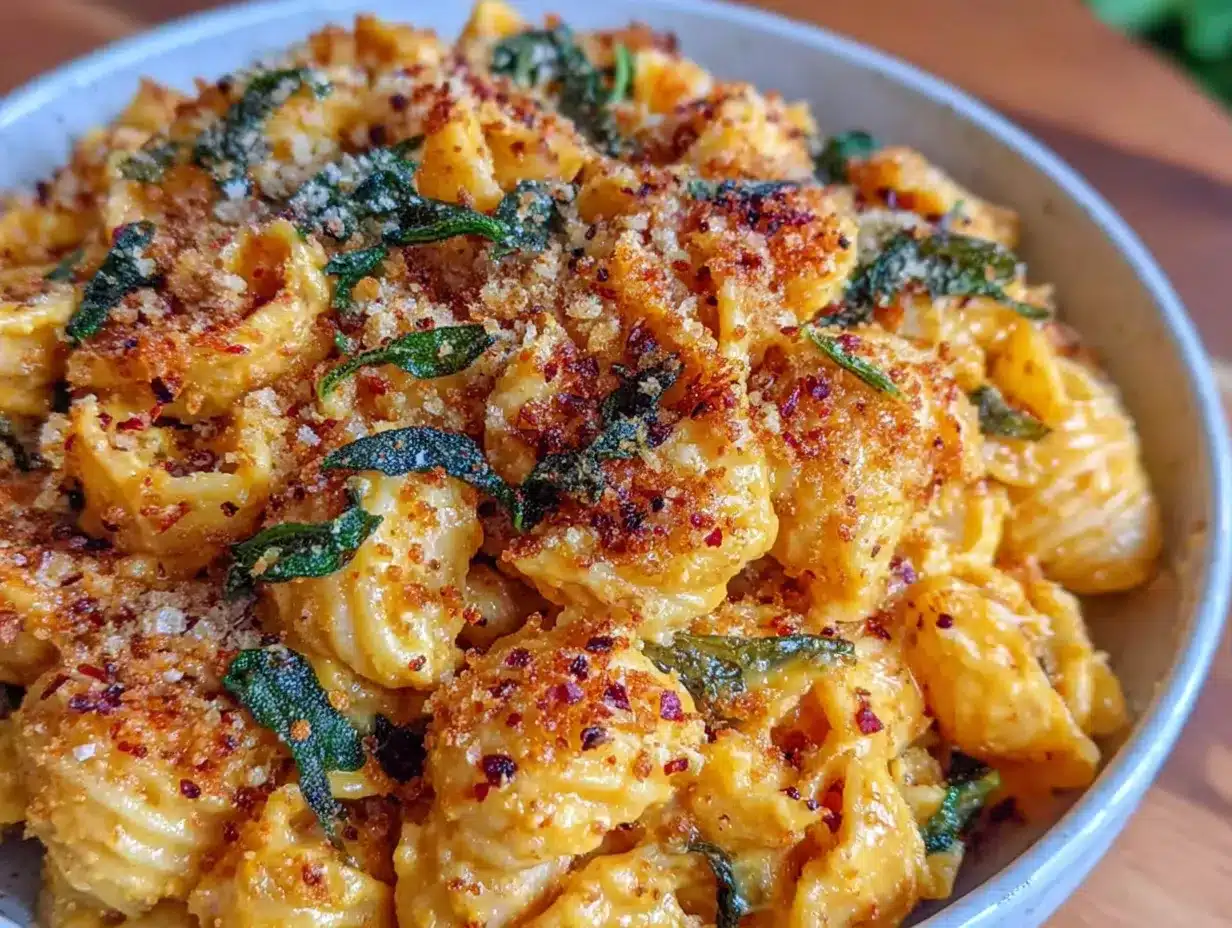
- Serve immediately: Spoon the mac and cheese into bowls, top with a generous scattering of crispy sage leaves, and eat right away. That first bite, with the creamy pasta and the crunchy, buttery sage? That’s the moment.
Cooking Tips & Techniques
Let me save you some trouble. I’ve made this recipe enough times to know where things can go sideways. Here’s what I’ve learned:
- Don’t skip roasting the squash. I tried boiling it once to save time, and the sauce came out watery and flat. Roasting concentrates the sweetness and gives you that deep, caramelized flavor that makes the dish special.
- Grate your own cheese. I know, I know — it’s an extra step. But pre-shredded cheese is coated with cellulose and starches that prevent it from melting smoothly. You’ll end up with a gritty sauce instead of that velvety texture. Just do it.
- Low and slow for the sauce. When you’re melting the cheese into the squash mixture, keep the heat low. High heat can cause the cheese to seize up and turn grainy. If you see little bubbles forming around the edges, turn it down.
- Reserve that pasta water. It’s liquid gold. The starch in the water helps the sauce cling to the pasta and gives it that perfect consistency. I always save a cup, even if I don’t end up using it all.
- Watch the sage like a hawk. Fried sage goes from perfect to burnt in about 10 seconds. Have your paper towel ready before you start, and pull the leaves the moment they darken. The residual heat will continue to crisp them.
- Multitasking strategy: Start the squash roasting first. While it’s in the oven, boil your water and grate your cheese. By the time the squash is done, you’ll have everything else ready to go. The whole process flows really smoothly this way.
Variations & Adaptations
This recipe is a great base to play with. Here are some variations I’ve tried and loved:
- Add some protein: Stir in 2 cups of shredded rotisserie chicken or cooked Italian sausage right before serving. Makes it a heartier meal — my husband’s favorite version.
- Make it spicy: Add ½ teaspoon of red pepper flakes to the butter when you fry the sage, or stir a pinch of cayenne into the cheese sauce. The heat cuts through the richness beautifully.
- Go gluten-free: Use gluten-free pasta (I like the brown rice penne from Jovial) and check your Dijon mustard label. Everything else is naturally gluten-free.
- Swap the squash: In a pinch, you can use frozen butternut squash cubes (thawed and patted dry) or even roasted sweet potato. The flavor will be a little different, but still delicious.
- Add a crunchy topping: Mix ½ cup panko breadcrumbs with 2 tablespoons melted butter and sprinkle over the mac before serving. Pop it under the broiler for 2 minutes for a golden crust. (I do this when I’m feeling extra fancy.)
- Vegan version: Use unsweetened oat milk, vegan butter, and your favorite vegan cheddar shreds. The sauce won’t be as creamy, but it’s still satisfying. I’ve made this for my vegan sister-in-law and she asked for seconds.
Serving & Storage Suggestions
This mac and cheese is best served immediately, while it’s hot and the sage is still crispy. Spoon it into wide, shallow bowls so the sage stays on top — you want that crunch in every bite.
What to serve with it: A simple green salad with a lemony vinaigrette cuts through the richness perfectly. I also love it alongside roasted Brussels sprouts or a bowl of tomato soup for the ultimate cozy meal. For drinks, a crisp apple cider or a light white wine like Sauvignon Blanc works beautifully.
Storage: Leftovers keep in an airtight container in the refrigerator for up to 3 days. The sage will lose its crunch, but the mac itself reheats well. To reheat, add a splash of milk and warm gently on the stovetop or in the microwave, stirring occasionally. Don’t use high heat or the sauce can separate.
Freezing: You can freeze the mac and cheese (without the sage topping) for up to 2 months. Let it cool completely, then transfer to a freezer-safe container. Thaw overnight in the fridge and reheat as directed. The texture won’t be quite as creamy as fresh, but it’s still a solid comfort food fix.
Flavor note: The flavors actually meld and deepen overnight. I’ve been known to make this a day ahead on purpose — it’s even better the next day, if you can believe it.
Nutritional Information & Benefits
Here’s an approximate nutritional breakdown per serving (based on 8 servings):
- Calories: 480
- Protein: 18g
- Fat: 22g
- Carbohydrates: 52g
- Fiber: 5g
- Sugar: 8g
Health benefits: Butternut squash is packed with vitamin A (great for eye health and immunity), vitamin C, and fiber. The sage adds antioxidants and has anti-inflammatory properties. And by using squash as the sauce base, you’re getting a serving of vegetables in every bowl — not bad for mac and cheese, right?
Dietary considerations: This recipe is vegetarian. For a lower-carb option, serve the sauce over roasted spaghetti squash or zucchini noodles instead of pasta. It’s also easy to make gluten-free or vegan with the swaps mentioned above. The main allergens are dairy and gluten (from the pasta).
I love that this recipe feels indulgent but has a little nutritional backbone. It’s comfort food that doesn’t leave you feeling heavy — just satisfied.
Conclusion
This butternut squash mac and cheese with crispy sage is the kind of recipe that becomes a tradition. It’s the dish you make when the first chill hits the air, when you need something warm and golden to hold onto. It’s for the nights when you want to feel like someone is taking care of you — even if that someone is you.
I hope you make it your own. Add extra sage if you’re feeling bold. Throw in some leftover chicken. Double the recipe and freeze half for a rainy day. However you make it, just know that this recipe came from a place of trying to hold onto a memory, one creamy, sage-scented bite at a time.
I’d love to hear how it turns out for you. Drop a comment below and tell me about your first bite — or if you added your own twist. And if you loved it, share it with someone who needs a little comfort right now. Because honestly? That’s what this is all about.
Frequently Asked Questions
Can I use pre-cut butternut squash from the store?
Absolutely. Pre-cut cubes save time and work perfectly. Just make sure they look fresh — no slimy spots or dry, brown edges. Pat them dry with a paper towel before roasting to help them caramelize.
Can I make this ahead of time?
Yes! Assemble the mac and cheese (without the sage topping) and refrigerate for up to 24 hours. When you’re ready to serve, reheat gently on the stovetop with a splash of milk, then fry the sage fresh. The sage doesn’t keep well, so always make it right before serving.
Why did my sauce turn out grainy?
This usually happens for one of two reasons: the heat was too high when you melted the cheese, or you used pre-shredded cheese. Keep the heat on low and stir constantly. And always grate your own cheese — it makes a noticeable difference.
Can I use a different type of squash?
Sure. Kabocha, buttercup, or even sweet potato work well. Each will give a slightly different sweetness and texture. Acorn squash is a bit more watery, so you might need to cook it a little longer to concentrate the flavor.
How do I make the sage extra crispy?
Make sure the butter is hot before you add the sage leaves — it should sizzle immediately. Don’t overcrowd the pan; cook them in a single layer. And pat the sage leaves dry with a paper towel first to remove any moisture. That’s the secret to maximum crunch.
Pin This Recipe!
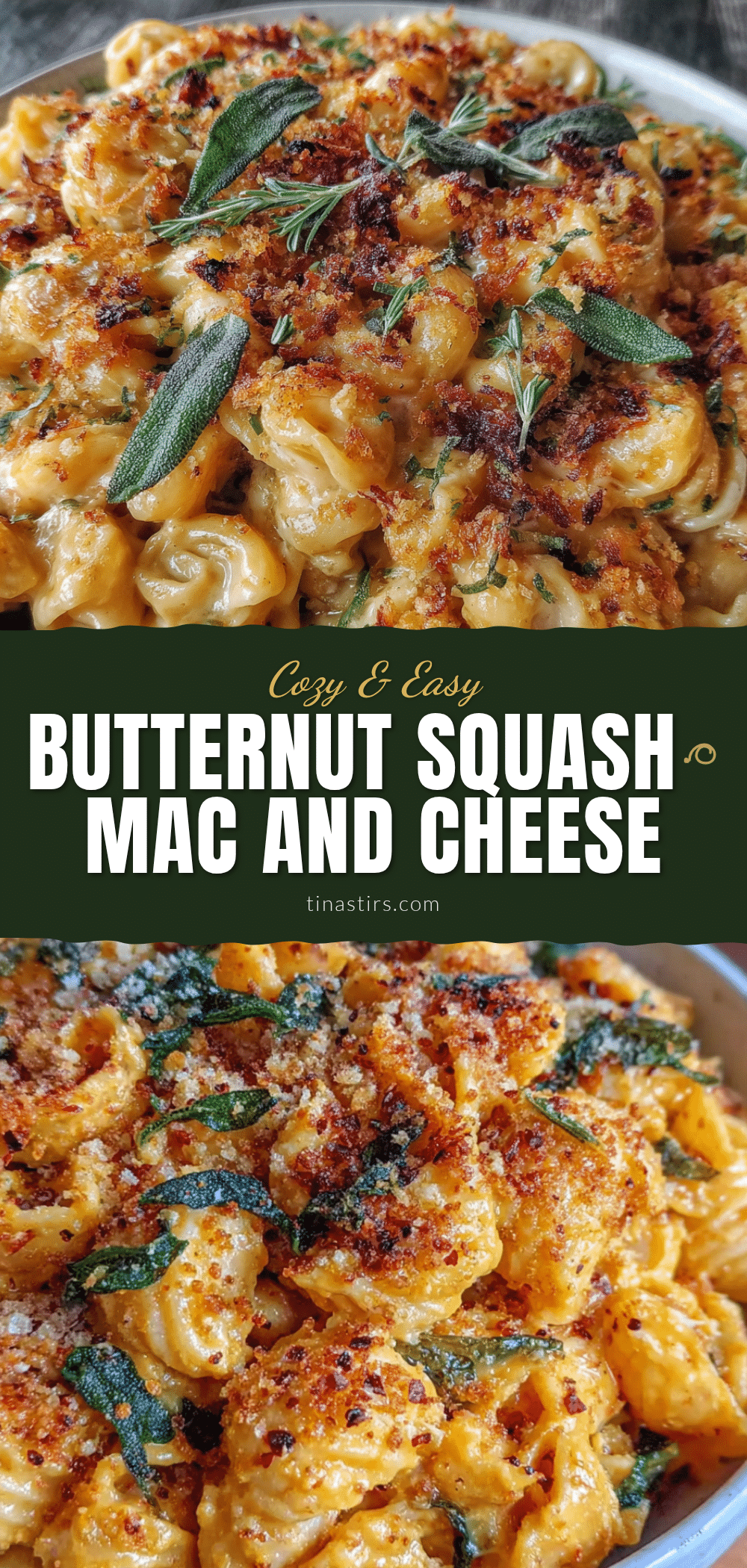
Easy Butternut Squash Mac and Cheese with Crispy Sage

A creamy, savory mac and cheese with roasted butternut squash blended into the sauce, topped with crispy fried sage leaves. This comforting fall dish is quick to make and packed with flavor.
- Prep Time: 15 minutes
- Cook Time: 30 minutes
- Total Time: 45 minutes
- Yield: 8 servings 1x
- Category: Main Course
- Cuisine: American
Ingredients
- 1 medium butternut squash (about 2–3 pounds), peeled, seeded, and cubed into 1-inch pieces
- 2 tablespoons olive oil
- Salt and black pepper to taste
- 3 garlic cloves, smashed
- 1 pound elbow macaroni (or other short pasta)
- 4 tablespoons unsalted butter, divided
- 20 fresh sage leaves
- 1 cup whole milk
- 8 ounces sharp cheddar cheese, grated (about 2 cups)
- 4 ounces Gruyère cheese, grated (about 1 cup)
- 1 teaspoon Dijon mustard
- ¼ teaspoon freshly grated nutmeg
Instructions
- Preheat your oven to 400°F (200°C). Line a baking sheet with parchment paper if desired.
- Toss the cubed butternut squash and smashed garlic cloves with 2 tablespoons olive oil, a generous pinch of salt, and a few cracks of black pepper. Spread in a single layer on the baking sheet. Roast for 25-30 minutes, flipping halfway through, until tender and lightly browned.
- While the squash roasts, bring a large pot of generously salted water to a boil. Add the macaroni and cook according to package directions until al dente (about 7-8 minutes). Reserve about 1 cup of pasta water before draining. Drain the pasta and set aside (do not rinse).
- Transfer the roasted squash and garlic to a blender. Add 1 cup of whole milk and blend on high until completely smooth, about 30-45 seconds. If too thick, add a splash of reserved pasta water.
- In a large skillet or sauté pan over medium heat, melt 2 tablespoons of butter. Once foaming, pour in the blended squash mixture. Stir in the Dijon mustard and nutmeg. Reduce heat to low and gradually add the shredded cheddar and Gruyère, a handful at a time, stirring constantly until each addition is fully melted before adding the next.
- Add the drained macaroni to the skillet with the cheese sauce. Stir gently until every piece of pasta is coated. If the sauce seems too thick, add reserved pasta water a tablespoon at a time until desired consistency. Taste and adjust salt and pepper.
- In a small skillet over medium heat, melt the remaining 2 tablespoons of butter. Once hot and foaming, add the sage leaves in a single layer. Cook for 15-20 seconds per side until darker green and edges curl. Transfer to a paper towel-lined plate and sprinkle with a tiny pinch of salt.
- Serve immediately: spoon mac and cheese into bowls, top with crispy sage leaves, and enjoy.
Notes
For best results, grate your own cheese (pre-shredded contains anti-caking agents that prevent smooth melting). Keep heat low when melting cheese to avoid graininess. Reserve pasta water to adjust sauce consistency. Fried sage burns quickly—watch carefully. Leftovers keep in the refrigerator for up to 3 days; reheat with a splash of milk.
Nutrition
- Serving Size: 1 serving (about 1 c
- Calories: 480
- Sugar: 8
- Sodium: 580
- Fat: 22
- Saturated Fat: 12
- Carbohydrates: 52
- Fiber: 5
- Protein: 18
Keywords: butternut squash mac and cheese, crispy sage, fall comfort food, vegetarian mac and cheese, easy mac and cheese