Love this? Save it for later!
Share the inspiration with your friends
I swore I hated Irish soda bread. For years, actually. The stuff I’d tried at bakeries and cafés was always this dense, dry, crumbly thing that tasted like it was already a day old the moment it came out of the oven. It felt like a punishment, not a treat. You know that feeling when everyone raves about something and you’re just standing there thinking, “Am I missing something?” That was me and soda bread.
Then my neighbor Margaret showed up at my door last St. Patrick’s Day holding a loaf wrapped in a tea towel, still warm. She said it was her grandmother’s recipe and she’d made too much. I took it out of politeness, honestly. Set it on the counter and didn’t think twice about it. But later that evening, the smell started getting to me. That buttery, toasty, almost sweet aroma kept drifting over from the kitchen. I cut myself a thin slice, mostly to be nice so I could tell her I tried it.
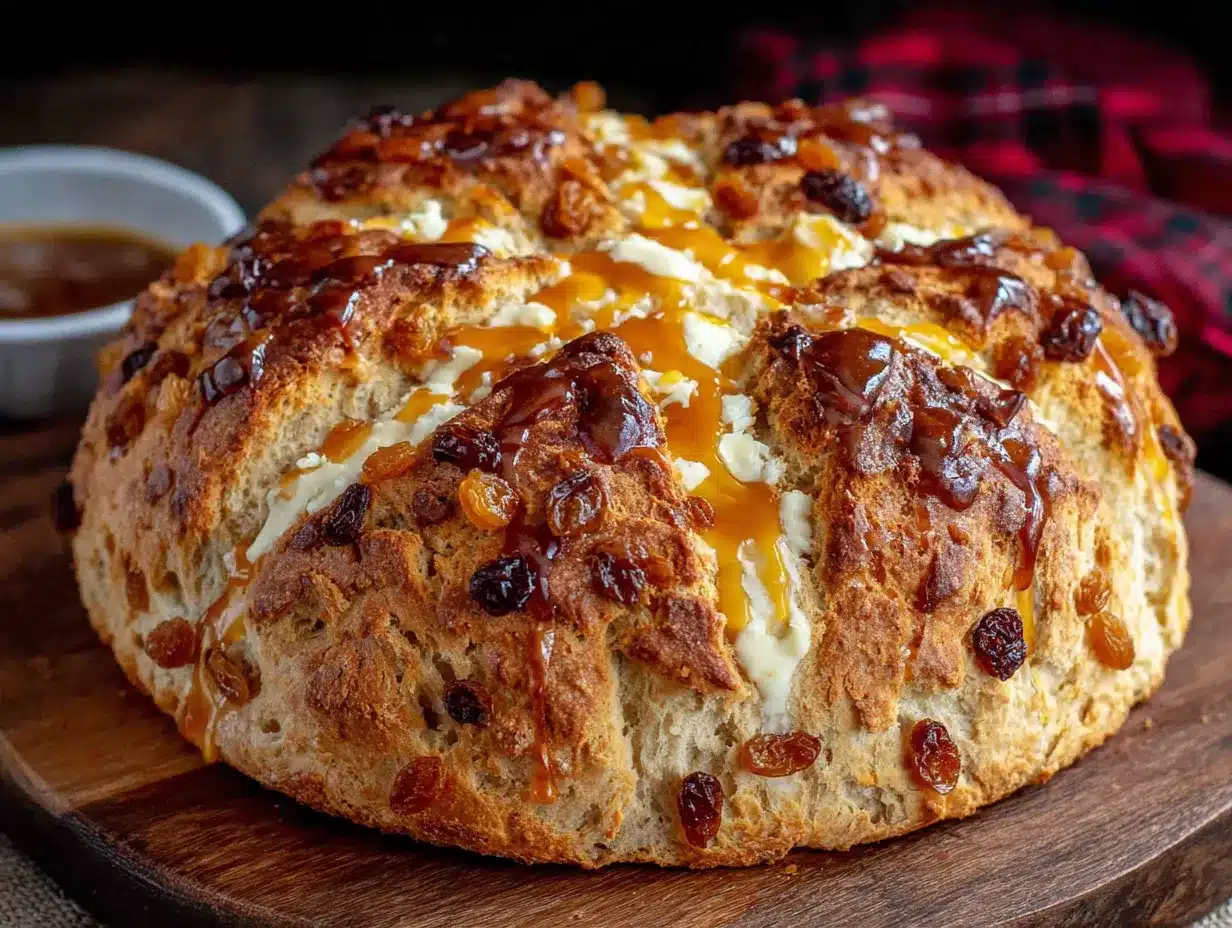
That first bite stopped me mid-chew. The crust cracked open with this perfect, satisfying snap, and the inside was tender and soft—not dry at all. And those golden raisins? They were plump and sweet, like little bursts of sunshine in every bite. I stood there at the counter, eating slice after slice, butter melting into the warm crumb. I think I finished half the loaf before I even sat down. I had to text Margaret and admit she’d completely changed my mind. She just laughed and said, “That’s what happens when you make it right.” She wasn’t wrong.
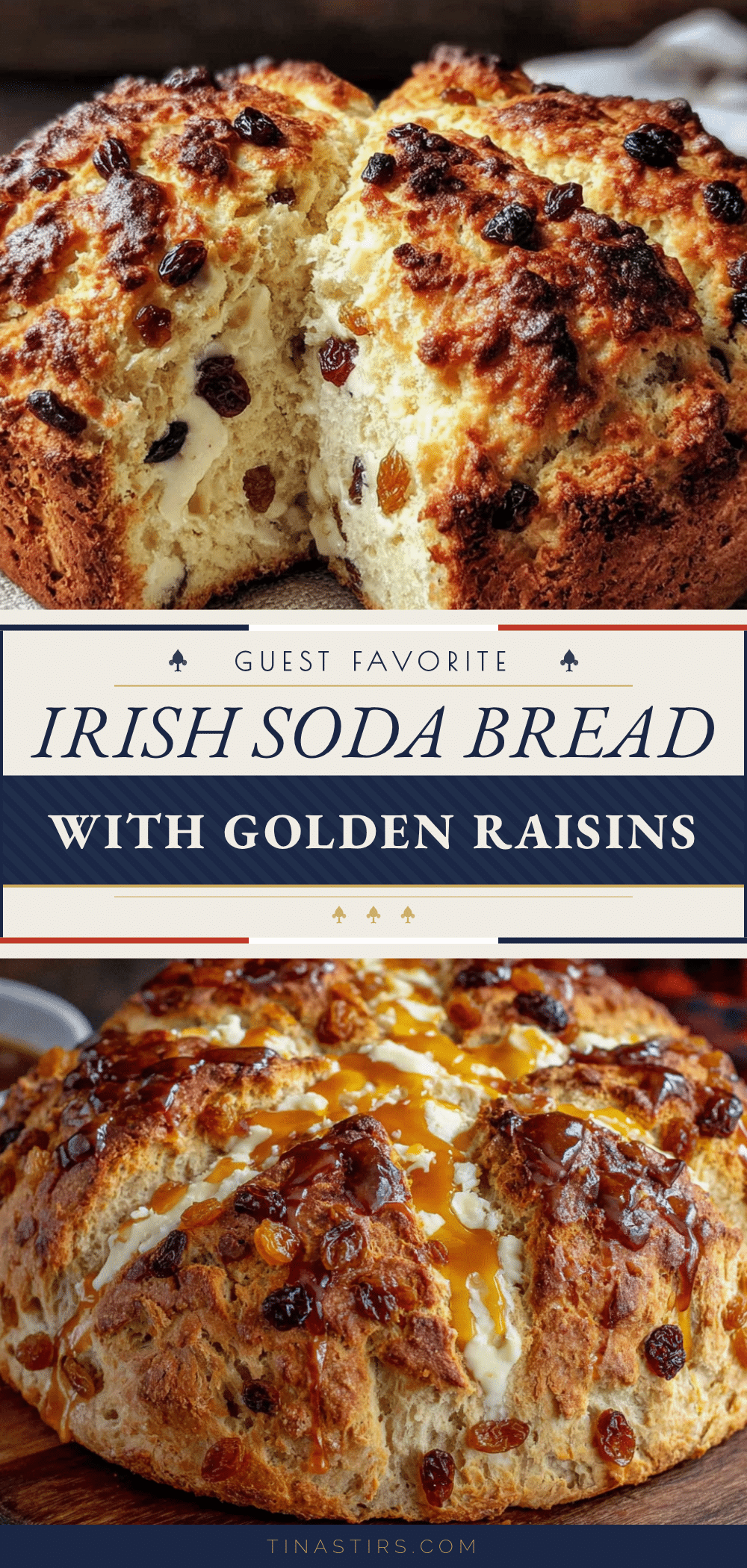
So here’s the thing about this Guest-Favorite Irish Soda Bread with Golden Raisins. It’s not that dense, sad loaf you remember. This version is the one that makes people close their eyes when they take a bite. The one that disappears before you can even get a photo for Instagram. The one that made me a believer. And now I’m going to show you exactly how to make it yourself.
Why You’ll Love This Recipe
Let me tell you why this recipe has become my go-to for every gathering, potluck, and holiday table. I’ve tested it more times than I care to admit, and I’ve never had a single complaint. Not one.
- Quick & Easy : Comes together in under an hour with no yeast, no kneading, and no rising time. You can have warm bread on the table in 45 minutes flat.
- Simple Ingredients : You probably already have everything in your pantry right now. Flour, buttermilk, baking soda, salt, sugar, and golden raisins. That’s it.
- Perfect for Hosting : This bread is a showstopper at dinner parties, brunches, and holiday gatherings. It looks impressive but requires almost no effort. Your guests will think you spent hours on it.
- Crowd-Pleaser : I’ve served this to kids, grandparents, picky eaters, and self-proclaimed bread snobs. Every single person has asked for the recipe. It’s that good.
- Unbelievably Delicious : The contrast between the crisp, golden crust and the soft, tender interior is next-level. The golden raisins add just the right amount of sweetness without making it taste like dessert.
What makes this recipe different from all the others? It’s the technique. I learned from Margaret that the secret is handling the dough as little as possible. Overworking it is what makes soda bread tough and dense. This version uses a light touch and a few simple tricks that make all the difference. It’s not just another recipe—it’s the one that will become your signature.
I make this bread for every single gathering I host. It’s the first thing to disappear from the table, and honestly, I love watching people’s faces when they take that first bite. There’s always that moment of surprise—like they weren’t expecting something so simple to taste so incredible. That’s the magic of this bread. It doesn’t try to be fancy. It just delivers.
What Ingredients You Will Need
This recipe uses simple, everyday ingredients to create something truly special. The beauty of Irish soda bread is that it relies on a chemical reaction between the buttermilk and baking soda rather than yeast, so you don’t need any fancy starters or long fermentation times. Here’s what you’ll need:
For the Bread
- 4 cups all-purpose flour (500g) — I recommend King Arthur Flour for consistent results. Spoon and level your flour rather than scooping directly from the bag to avoid packing it too tightly.
- 1 teaspoon baking soda — Make sure it’s fresh! Baking soda loses potency over time, and you need that chemical reaction with the buttermilk for the bread to rise properly.
- 1 teaspoon salt — Fine sea salt works best. Don’t skip this—it balances the sweetness of the raisins.
- 3 tablespoons granulated sugar (38g) — Just enough to add a hint of sweetness without making it taste like cake.
- 1 ½ cups buttermilk (360ml) — Full-fat buttermilk gives the best texture and flavor. If you don’t have buttermilk, you can make a quick substitute by adding 1 tablespoon of lemon juice or white vinegar to 1 ½ cups of whole milk and letting it sit for 5 minutes.
- 1 large egg — Room temperature. This adds richness and helps bind the dough together.
- 4 tablespoons unsalted butter (56g), melted and slightly cooled — I use Kerrygold butter for its rich, creamy flavor. The melted butter adds tenderness to the crumb.
- 1 cup golden raisins (150g) — Golden raisins are key here. They’re plumper and more subtly sweet than regular dark raisins. I prefer Sun-Maid brand. If you can’t find golden raisins, regular raisins work too, but the flavor will be slightly different.
Optional Add-Ins
- 1 tablespoon caraway seeds — Traditional Irish soda bread often includes caraway. I’m personally not a fan, but if you love that flavor, go for it.
- Zest of 1 orange — Adds a lovely citrus note that pairs beautifully with the golden raisins.
- 1 tablespoon honey — For extra sweetness if you prefer a sweeter bread.
One thing I’ve learned through trial and error: don’t skip the step of soaking the golden raisins. I know it seems fussy, but trust me. Plump raisins make all the difference. Just cover them with hot water for 10 minutes before you start, then drain them well. This keeps them from drying out during baking and ensures every bite is juicy and tender.
If you’re making this for someone with dietary restrictions, you can use a gluten-free all-purpose flour blend. I’ve tested it with Bob’s Red Mill 1-to-1 Baking Flour, and it works beautifully. Just know that the texture will be slightly different—still delicious, just a bit more crumbly.
Equipment Needed
You don’t need any fancy equipment for this recipe, which is part of why I love it so much. Here’s what you’ll need:
- Large mixing bowl — Any large bowl will do. I use a ceramic one because it’s heavy and doesn’t slide around.
- Whisk — For combining the dry ingredients evenly.
- Wooden spoon or rubber spatula — For mixing the dough. A wooden spoon feels right for this rustic bread.
- Bench scraper or sharp knife — For scoring the cross on top of the loaf. A bench scraper gives you cleaner cuts.
- Baking sheet — A standard half-sheet pan works perfectly. Line it with parchment paper for easy cleanup.
- Parchment paper — Makes transferring the bread a breeze and prevents sticking.
- Cooling rack — Essential for letting the bread cool properly so the bottom doesn’t get soggy.
- Pastry brush — For brushing melted butter on top after baking (optional but highly recommended).
If you don’t have a bench scraper, a sharp knife works just fine. And honestly, I’ve made this bread without parchment paper before—just greased the baking sheet well—and it still came out great. Don’t let missing equipment stop you from making this.
Preparation Method
Okay, let’s get to the good part. Here’s how to make the best Irish soda bread with golden raisins you’ve ever tasted. Follow these steps carefully, and I promise you’ll be amazed at what comes out of your oven.
- Preheat your oven to 375°F (190°C). Position a rack in the center of the oven. Line a baking sheet with parchment paper and set it aside.
- Soak the golden raisins. Place them in a small bowl and cover with hot tap water. Let them sit for 10 minutes while you prepare the dry ingredients. This step is non-negotiable if you want plump, juicy raisins in every bite. Drain them well and pat them dry with a paper towel before adding them to the dough.
- Whisk the dry ingredients together. In your large mixing bowl, combine the all-purpose flour, baking soda, salt, and sugar. Whisk them together thoroughly. This ensures the baking soda and salt are evenly distributed throughout the flour. I can’t tell you how many times I’ve skipped this step and ended up with a bitter pocket of baking soda in one bite. Don’t be like me.
- Mix the wet ingredients. In a separate bowl or large liquid measuring cup, whisk together the buttermilk, egg, and melted butter until smooth. The butter should be melted but not hot—you don’t want to scramble the egg.
- Combine wet and dry ingredients. Make a well in the center of the dry ingredients. Pour in the buttermilk mixture all at once. Add the drained golden raisins. Using a wooden spoon or rubber spatula, stir just until the dough comes together. Stop as soon as you no longer see streaks of flour. Overmixing is the enemy of tender soda bread.
- Turn the dough out onto a floured surface. Lightly flour your countertop or a large cutting board. Scrape the dough out of the bowl. It will be sticky and shaggy—that’s exactly what you want. Don’t be tempted to add more flour yet.
- Knead the dough very gently. Here’s the key: knead only 8 to 10 times, just enough to bring it together into a cohesive ball. Use floured hands and work quickly. The dough should be soft and slightly tacky but not sticky. If it’s too sticky to handle, sprinkle a tiny bit of flour on top—but go easy. Over-kneading develops the gluten and makes the bread tough.
- Shape the loaf. Pat the dough into a round disk about 6 inches (15 cm) in diameter and 2 inches (5 cm) thick. Don’t make it too flat or too tall. Place it on your prepared baking sheet.
- Score the top with a deep cross. Using a bench scraper or sharp knife, cut a deep cross into the top of the dough, about ½ inch (1 cm) deep. This isn’t just decorative—it’s traditional and helps the bread bake evenly by allowing heat to reach the center. Some say it’s also to “let the fairies out,” and honestly, I love that story.
- Bake for 40 to 45 minutes. Place the baking sheet in the preheated oven. Bake until the bread is golden brown and sounds hollow when you tap the bottom. If you have an instant-read thermometer, the internal temperature should reach 190°F (88°C).
- Cool on a wire rack. Transfer the bread to a cooling rack immediately. If you want that gorgeous, shiny crust, brush the top with melted butter while it’s still warm. Let it cool for at least 20 minutes before slicing. I know it’s hard to wait, but slicing too early will make the interior gummy.
One thing I’ve learned the hard way: don’t skip the scoring step. The first time I made this bread, I forgot to score the top, and the loaf cracked unevenly and looked like a science experiment gone wrong. It still tasted good, but it wasn’t pretty. The cross gives you that beautiful, rustic look that makes everyone think you’re a baking pro.
Cooking Tips & Techniques
After making this bread more times than I can count, I’ve collected a few tricks that make a real difference. Here are my best tips for perfect Irish soda bread every single time.
Use cold buttermilk. I know this sounds counterintuitive since most baking recipes call for room-temperature ingredients, but cold buttermilk actually helps the baking soda react more slowly, giving you a better rise. If your kitchen is warm, pop the buttermilk in the fridge for 15 minutes before you start.
Don’t twist when you cut the score. This was a game-changer for me. When you score the cross on top, cut straight down and lift the knife straight up. Don’t drag or twist the blade. Twisting creates rough edges that don’t open up as nicely during baking. Clean, straight cuts give you that beautiful, cracked-open top.
Check your baking soda freshness. Here’s a quick test: drop a teaspoon of baking soda into a small bowl of vinegar. If it fizzes vigorously, it’s still active. If it barely bubbles, toss it and buy a new box. Old baking soda is the number one reason soda bread turns out dense and flat.
Let the dough rest before baking. After you shape the loaf, let it sit on the baking sheet for 5 to 10 minutes before scoring and baking. This relaxes the gluten and gives you a more tender crumb. I usually use this time to clean up my workspace and preheat the oven if I haven’t already.
Use a light hand with the flour. The biggest mistake people make with soda bread is adding too much flour during kneading. The dough should be soft and slightly tacky, not stiff and dry. If it feels dry, you’ve gone too far. Next time, use less flour.
Bake on the center rack. This ensures even heat distribution. If your oven has hot spots (most do), rotate the baking sheet halfway through baking. I forgot to do this once and ended up with one side significantly darker than the other. Lesson learned.
Test for doneness with a thermometer. The hollow-sound test is traditional, but a digital thermometer is more reliable. The bread is done when it reaches 190°F (88°C) in the center. This takes the guesswork out of baking.
Variations & Adaptations
One of the best things about this recipe is how versatile it is. Here are some of my favorite variations that I’ve tested over the years.
Savory Irish Soda Bread : Omit the sugar and golden raisins. Add 1 cup of shredded sharp cheddar cheese, 2 tablespoons of fresh chopped rosemary, and ½ teaspoon of black pepper. This version is incredible served alongside a bowl of hearty soup or stew.
Whole Wheat Irish Soda Bread : Replace 1 cup of the all-purpose flour with whole wheat flour. The bread will be denser and nuttier, but still delicious. You might need to add an extra tablespoon or two of buttermilk since whole wheat flour absorbs more liquid.
Gluten-Free Version : Use a 1-to-1 gluten-free baking flour blend. I’ve had the best results with Bob’s Red Mill. The texture will be slightly more crumbly, but the flavor is still fantastic. Let the bread cool completely before slicing for the best results.
Dried Fruit Swap : Don’t have golden raisins? Try dried cranberries, chopped dried apricots, or chopped dates. Each gives a different flavor profile. Cranberries add a tartness that’s lovely, while apricots bring a more intense sweetness.
Spiced Version : Add 1 teaspoon of cinnamon, ½ teaspoon of nutmeg, and ¼ teaspoon of ground ginger to the dry ingredients. This makes the bread taste almost like a tea cake and is perfect for fall gatherings.
Vegan Adaptation : Use a plant-based buttermilk (1 ½ cups unsweetened almond or oat milk mixed with 1 tablespoon lemon juice) and replace the egg with a flax egg (1 tablespoon ground flaxseed mixed with 3 tablespoons water, let sit for 5 minutes). Use vegan butter or coconut oil instead of regular butter.
My personal favorite variation? The orange zest version. I add the zest of one orange to the dry ingredients and it transforms the whole loaf. The citrus brightens up the golden raisins in a way that feels both familiar and surprising. I made it for a spring brunch once, and three people asked for the recipe before they even finished their first slice.
Serving & Storage Suggestions
This bread is at its absolute best the day it’s made, still slightly warm from the oven. But that doesn’t mean you can’t enjoy it later. Here’s how to serve and store it like a pro.
Serving Temperature : Serve warm or at room temperature. If you’re serving it at a gathering, let it cool completely on a wire rack, then wrap it in a clean tea towel until you’re ready to slice. This keeps the crust from getting too hard.
How to Slice : Use a serrated bread knife and gentle sawing motions. Don’t press down too hard or you’ll crush the tender crumb. Cut thick slices—about 1 inch (2.5 cm) wide—so everyone gets a good ratio of crust to interior.
What to Serve With It : This bread is incredibly versatile. For breakfast or brunch, serve it with softened butter and a drizzle of honey or your favorite jam. For dinner, it’s perfect alongside a bowl of Irish stew, hearty beef soup, or roasted chicken. I also love it with a simple salad and a bowl of soup for an easy weeknight meal.
Beverage Pairings : A cup of strong black tea is the classic pairing, but it’s also wonderful with a glass of cold milk or even a cup of coffee. If you’re serving it at a dinner party, a full-bodied red wine or a crisp cider works beautifully.
Storing Leftovers : Wrap the bread tightly in plastic wrap or aluminum foil and store at room temperature for up to 3 days. Do not refrigerate—the fridge dries out the bread and makes it stale faster. If your kitchen is particularly humid, store it in a paper bag instead of plastic to prevent the crust from getting soggy.
Freezing Instructions : This bread freezes beautifully. Wrap it tightly in plastic wrap, then again in aluminum foil. Freeze for up to 3 months. To thaw, leave it at room temperature for a few hours. To refresh it, wrap it in foil and warm it in a 300°F (150°C) oven for 10 to 15 minutes.
Reheating Tips : The best way to reheat individual slices is in a toaster or toaster oven. For a whole loaf, wrap it in foil and warm it in a 350°F (175°C) oven for 10 minutes. The crust will crisp back up beautifully.
One thing I’ve noticed: the flavors actually meld together and improve slightly on the second day. The golden raisins continue to plump up and the crumb becomes even more tender. So don’t worry if you have leftovers—they’re just as delicious the next day.
Nutritional Information & Benefits
While Irish soda bread is definitely a treat, it does have some redeeming qualities. Here’s a rough nutritional breakdown for one slice (based on 12 slices per loaf):
| Nutrient | Amount per Slice |
|---|---|
| Calories | 210 |
| Total Fat | 5g |
| Saturated Fat | 3g |
| Cholesterol | 30mg |
| Sodium | 310mg |
| Total Carbohydrates | 36g |
| Dietary Fiber | 1g |
| Sugars | 10g |
| Protein | 5g |
Golden raisins are a good source of fiber, potassium, and iron. They also contain antioxidants that support overall health. The buttermilk adds calcium and probiotics (if you use traditional cultured buttermilk). And since this bread doesn’t contain any yeast, it’s naturally lower in sodium than many commercial breads.
This recipe is vegetarian-friendly and can be made vegan with the substitutions I mentioned earlier. It’s not gluten-free in its standard form, but the gluten-free version works well for those with sensitivities. Just be aware that the bread contains dairy and eggs, so it’s not suitable for those with allergies to those ingredients.
I personally love that this bread feels indulgent but isn’t loaded with sugar or fat. It’s the kind of thing you can enjoy without guilt, especially when you’ve made it yourself from scratch. There’s something deeply satisfying about knowing exactly what went into your food.
Conclusion
Look, I get it. You’ve probably been burned by dry, disappointing Irish soda bread before. I was right there with you. But this Guest-Favorite Irish Soda Bread with Golden Raisins is different. It’s the recipe that changed my mind and turned me into a believer. And honestly, it’s the recipe that’s made me look like a hero at every gathering I’ve brought it to.
The best part? It’s so simple. No yeast, no kneading, no complicated techniques. Just a few basic ingredients and a light touch. You can make this bread on a whim, even on a busy weeknight, and still end up with something that tastes like it came from a fancy bakery. That’s the kind of recipe worth keeping in your back pocket.
I’d love to hear how yours turns out. Did you stick with the golden raisins or try one of the variations? Did you serve it with soup or slather it with butter and honey? Drop a comment below and let me know. And if you make it for a gathering, tag me in your photos—I genuinely love seeing this bread out in the wild, making people happy.
Go ahead, give it a try. I promise you won’t regret it. And who knows? You might just find yourself becoming an Irish soda bread convert too.
Frequently Asked Questions
Why did my Irish soda bread turn out dense and heavy?
This usually happens for one of three reasons: over-kneading the dough, using too much flour, or old baking soda. Remember to knead gently and only 8 to 10 times. The dough should be soft and slightly tacky, not stiff. And always check that your baking soda is fresh before you start.
Can I use regular raisins instead of golden raisins?
Absolutely. Golden raisins have a milder, more delicate sweetness, but regular raisins work just fine. If you use regular raisins, consider soaking them a little longer—about 15 minutes—since they tend to be drier than golden raisins.
Do I have to use buttermilk, or can I use regular milk?
Buttermilk is essential for the chemical reaction with the baking soda. If you don’t have buttermilk, you can make a quick substitute by adding 1 tablespoon of lemon juice or white vinegar to 1 ½ cups of whole milk. Let it sit for 5 minutes before using. It won’t be as thick as real buttermilk, but it will work.
How do I know when the bread is fully baked?
The bread is done when it’s deep golden brown and sounds hollow when you tap the bottom. For the most reliable result, use an instant-read thermometer—the internal temperature should read 190°F (88°C). If you don’t have a thermometer, insert a thin skewer into the center; it should come out clean or with just a few moist crumbs.
Can I make this bread ahead of time for a party?
Yes, but it’s best baked the day you plan to serve it. If you need to make it a day ahead, wrap the cooled loaf tightly in plastic wrap and store at room temperature. To refresh it before serving, wrap it in foil and warm it in a 350°F (175°C) oven for 10 minutes. The crust will crisp back up and the interior will soften beautifully.
Pin This Recipe!
Easy Irish Soda Bread with Golden Raisins (Best Recipe)
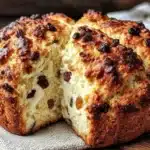
This Guest-Favorite Irish Soda Bread with Golden Raisins is tender, buttery, and studded with plump golden raisins. It comes together in under an hour with no yeast, no kneading, and no rising time, making it the perfect quick bread for any gathering.
- Prep Time: 15 minutes
- Cook Time: 40 minutes
- Total Time: 55 minutes
- Yield: 12 servings 1x
- Category: Bread
- Cuisine: Irish
Ingredients
- 4 cups all-purpose flour (500g)
- 1 teaspoon baking soda
- 1 teaspoon salt
- 3 tablespoons granulated sugar (38g)
- 1 ½ cups buttermilk (360ml)
- 1 large egg, room temperature
- 4 tablespoons unsalted butter (56g), melted and slightly cooled
- 1 cup golden raisins (150g)
- 1 tablespoon caraway seeds (optional)
- Zest of 1 orange (optional)
- 1 tablespoon honey (optional)
Instructions
- Preheat your oven to 375°F (190°C). Position a rack in the center of the oven. Line a baking sheet with parchment paper and set it aside.
- Soak the golden raisins in hot water for 10 minutes, then drain well and pat dry.
- In a large mixing bowl, whisk together the all-purpose flour, baking soda, salt, and sugar.
- In a separate bowl or large liquid measuring cup, whisk together the buttermilk, egg, and melted butter until smooth.
- Make a well in the center of the dry ingredients. Pour in the buttermilk mixture all at once. Add the drained golden raisins. Stir just until the dough comes together; do not overmix.
- Turn the dough out onto a lightly floured surface. Knead gently 8 to 10 times, just until it forms a cohesive ball. The dough should be soft and slightly tacky.
- Pat the dough into a round disk about 6 inches (15 cm) in diameter and 2 inches (5 cm) thick. Place on the prepared baking sheet.
- Using a bench scraper or sharp knife, cut a deep cross into the top of the dough, about ½ inch (1 cm) deep.
- Bake for 40 to 45 minutes, until golden brown and the internal temperature reaches 190°F (88°C).
- Transfer to a cooling rack. Brush with melted butter while warm if desired. Cool for at least 20 minutes before slicing.
Notes
Soak golden raisins in hot water for 10 minutes to keep them plump. Use cold buttermilk for better rise. Do not over-knead; knead only 8 to 10 times. Score the top with a deep cross to ensure even baking. Let the bread cool for at least 20 minutes before slicing to avoid a gummy texture.
Nutrition
- Serving Size: 1 slice
- Calories: 210
- Sugar: 10
- Sodium: 310
- Fat: 5
- Saturated Fat: 3
- Carbohydrates: 36
- Fiber: 1
- Protein: 5
Keywords: Irish soda bread, golden raisins, quick bread, St. Patrick's Day, buttermilk bread, easy bread recipe