Love this? Save it for later!
Share the inspiration with your friends
My dad claimed to hate ham for forty-seven years. That’s not an exaggeration—I have the birthday dinner photos to prove it, where he’d push the pink slices to the side of his plate and focus entirely on the mashed potatoes. “Too salty,” he’d say. “Too dry.” “Tastes like a shoe that walked through a smokehouse.” Then, three Christmases ago, I caught him standing alone in the kitchen at midnight, eating directly from the serving platter with his fingers. The ham I’d made was half-gone. He froze when he saw me, honey glaze dripping down his chin, and whispered, “Don’t tell your mother.” I didn’t. But I did write down exactly what I’d done to that ham, because something clearly worked. Honestly, I’d been nervous about hosting that year—my first big holiday dinner, and I’d decided to go rogue on the centerpiece. Most recipes for honey glazed ham feel like they’re holding back, you know? A little too safe. I wanted something that would make people stop mid-conversation and just stare at the table. So I doubled the brown sugar, added a splash of bourbon I’d been saving, and cranked the oven hotter than any recipe told me to. The result was this sticky, caramelized crust that shattered when you cut into it, with meat so tender it barely needed a knife. My dad’s conversion was just the bonus. What kept me making this honey glazed ham year after year is that moment when you pull it from the oven—the whole kitchen smells like a bakery and a barbecue had a beautiful baby—and everyone forgets what they were arguing about. Maybe you’ve had that feeling, the one where food just fixes things without trying. That’s what this recipe does.
Why You’ll Love This Recipe
Let me tell you why this honey glazed ham with brown sugar crust has become my non-negotiable holiday centerpiece. I’ve tested this recipe through three different ovens (including a rental with a broken thermostat), two different ham brands, and one memorable incident where I forgot to buy a roasting pan and used a disposable aluminum one instead. It worked every single time. That’s the kind of reliability you need when the whole meal is riding on one dish.
- Foolproof Caramelized Crust : The brown sugar and honey combination creates a bark-like crust that stays crunchy even after resting. No soggy glaze here.
- Simple Ingredients : You likely have everything in your pantry right now. Brown sugar, honey, butter, spices. No specialty stores required.
- Perfect for Feeding a Crowd : A single ham feeds 12-16 people with leftovers for days. This is the definition of stress-free entertaining.
- Make-Ahead Friendly : You can prep the glaze days in advance and score the ham the night before. The actual oven time is mostly hands-off.
- Leftovers That Steal the Show : Day-old ham sliced thin on biscuits, thrown into omelets, or fried crispy for breakfast. It’s the gift that keeps giving.
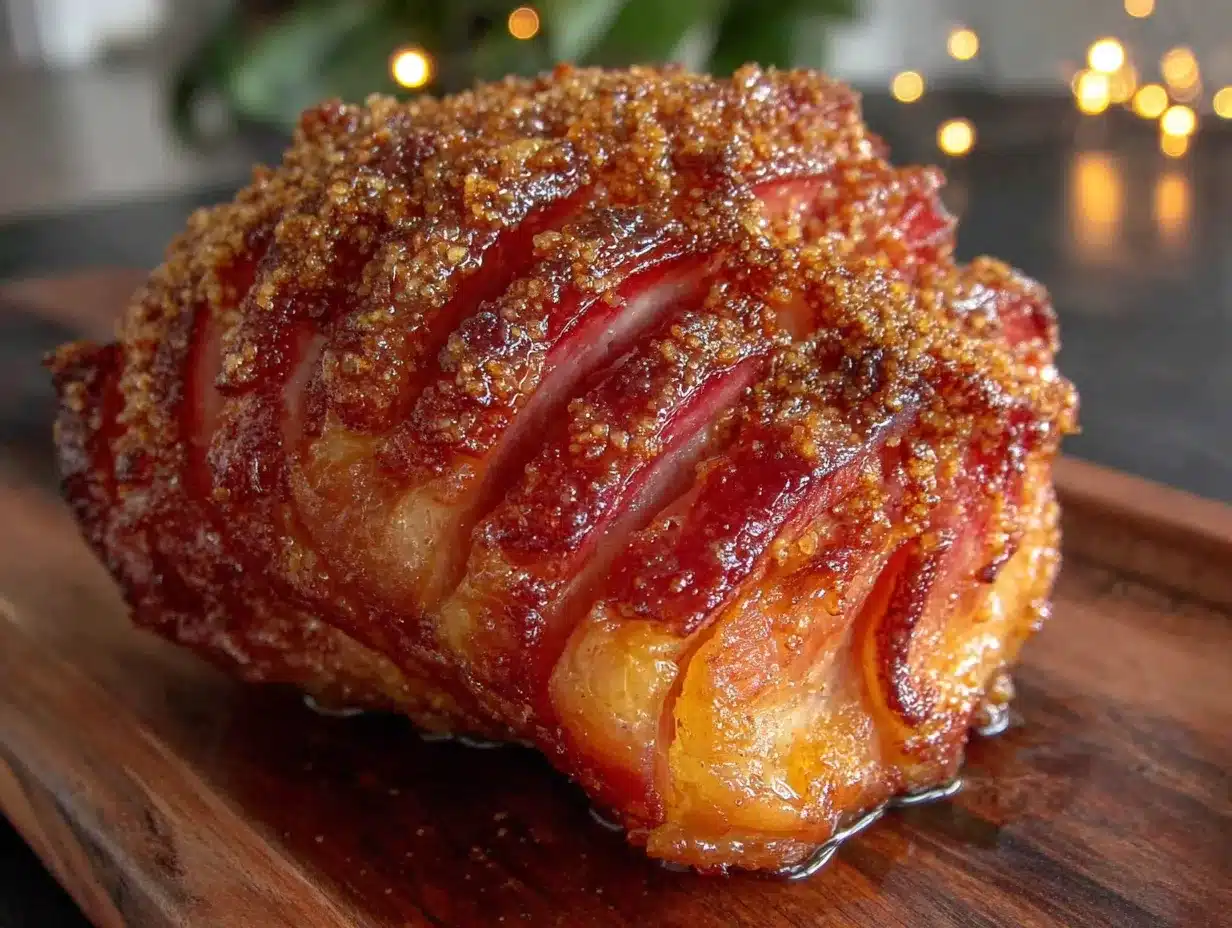
What sets this recipe apart from the dozens of honey glazed ham recipes online is the double-glaze technique. Most recipes brush the glaze on once and call it done. I apply a thick paste of brown sugar and butter first, then layer the honey glaze over top during the last hour of cooking. The sugar caramelizes into a crust that cracks when you slice it, while the honey keeps the interior moist. It’s not fancy—it’s just smart. This is the kind of honey glazed ham that makes people close their eyes after the first bite. The kind where someone inevitably says, “Wait, you made this yourself?” And you just smile, because honestly, it was barely any work.
What Ingredients You Will Need
This honey glazed ham recipe relies on simple, pantry-friendly ingredients that work together to create something far greater than the sum of their parts. The beauty is in the layering—each ingredient plays a specific role in building that signature crust and tender interior.
For the Ham
- 1 fully cooked bone-in spiral-cut ham (8-10 pounds) – I prefer the spiral-cut variety because it’s already pre-sliced, making serving effortless. Look for a ham labeled “city ham” or “wet-cured” for the best moisture content. If you can find one from Applegate Farms or Niman Ranch, the quality difference is noticeable—less water added, more actual ham flavor.
- Whole cloves (optional, about 30-40) – These are purely decorative but add a subtle warmth that complements the sweet glaze beautifully. Skip them if you’re short on time; the flavor difference is minimal.
For the Brown Sugar Crust Paste
- 1 cup packed dark brown sugar – Dark brown sugar has more molasses than light, giving the crust deeper color and a almost smoky sweetness. Pack it firmly into the measuring cup (adds richness and structure to the crust).
- 4 tablespoons unsalted butter, softened – Must be room temperature so it blends into a paste. Salted butter works in a pinch, just reduce the added salt elsewhere (use dairy-free butter if needed).
- 2 teaspoons Dijon mustard – Cuts through the sweetness and adds a tangy complexity (I recommend Grey Poupon for consistent results).
- 1 teaspoon ground cinnamon – Warm spice that makes the kitchen smell like the holidays. Freshly ground is noticeably more aromatic.
- ½ teaspoon ground cloves – Intense and floral. A little goes a long way.
- ¼ teaspoon ground nutmeg – Freshly grated is ideal, but pre-ground works fine.
For the Honey Glaze
- ½ cup honey – Use a mild honey like clover or orange blossom. Strong varietals like buckwheat can overpower the ham. Local honey adds a nice terroir if you have it.
- ¼ cup apple cider vinegar – Brightens the glaze and prevents it from being cloyingly sweet. White wine vinegar works too.
- 2 tablespoons bourbon or whiskey (optional) – Adds depth and a slight smokiness. Skip it if you prefer, or substitute with apple juice for a non-alcoholic version.
- 1 teaspoon vanilla extract – Rounds out the sweetness and adds warmth. Pure vanilla matters here—imitation tastes artificial.
For the Basting Liquid
- 1 cup apple cider or chicken broth – Creates steam in the roasting pan, keeping the ham moist. Apple cider adds sweetness; broth adds savory depth. Both work.
- 2 tablespoons honey – Extra insurance against dryness.
Ingredient Selection Tip : Look for a ham that’s labeled “natural” or “no water added.” Many commercial hams are injected with a saline solution that can make them overly salty and watery. A higher-quality ham will have better texture and flavor, and the glaze will adhere more effectively. I’ve used both budget-friendly and premium hams with this recipe, and while the premium version is noticeably better, the technique works beautifully on any fully cooked ham.
Equipment Needed
You don’t need a professional kitchen to pull off this honey glazed ham, but a few specific tools make the process significantly easier. Here’s what I use every time:
- Large roasting pan with a rack – The rack lifts the ham above the basting liquid so it roasts rather than steams. A disposable aluminum pan works fine, just double it up for stability.
- Sharp chef’s knife or ham knife – For scoring the surface if your ham isn’t pre-scored. A long, thin slicing knife makes serving the pre-sliced ham much cleaner.
- Pastry brush – For applying the honey glaze. Silicone brushes are easier to clean, but natural bristle brushes hold more liquid.
- Meat thermometer – Essential for ensuring the ham reaches a safe 140°F internal temperature. I use an instant-read digital thermometer from Thermapen—it’s pricey but worth every penny for accuracy.
- Small saucepan – For warming the honey glaze ingredients together. A heavy-bottomed pan prevents scorching.
- Aluminum foil – For tenting the ham if the crust browns too quickly.
- Carving board with grooves – Catches juices and prevents the ham from sliding around while you slice.
Budget-Friendly Alternatives : If you don’t own a roasting rack, roll up several balls of aluminum foil and place them in the pan to elevate the ham. It’s not pretty, but it works exactly the same way. And if you don’t have a pastry brush, use a clean basting brush or even a folded paper towel held with tongs.
Preparation Method
This honey glazed ham comes together in stages, but the active work is minimal. Most of the time, the oven is doing the heavy lifting while you prepare side dishes or set the table.
- Remove the ham from the refrigerator 1-2 hours before cooking. Let it sit at room temperature. This is crucial—a cold ham straight from the fridge will cook unevenly and take longer to reach the target temperature. I’ve made the mistake of rushing this step, and the outer slices were dry before the center was warm.
- Preheat your oven to 325°F (163°C). Position the rack in the lower third of the oven. This temperature is the sweet spot—hot enough to caramelize the glaze without drying out the meat.
- Prepare the ham for glazing. Remove the ham from its packaging and discard any plastic disk covering the bone. Rinse the ham briefly under cool water and pat it completely dry with paper towels. If your ham has a thick layer of skin, use a sharp knife to trim it off, leaving a ¼-inch layer of fat. Score the fat in a diamond pattern, cutting about ¼-inch deep. This creates more surface area for the crust to adhere.
- Insert whole cloves (optional). Press a clove into the center of each diamond. This is purely decorative, but the visual impact is worth the five minutes it takes. Plus, the kitchen smells incredible.
- Make the brown sugar crust paste. In a medium bowl, combine the dark brown sugar, softened butter, Dijon mustard, cinnamon, ground cloves, and nutmeg. Mash everything together with a fork until it forms a thick, spreadable paste. It should look like wet sand—if it’s too dry, add another tablespoon of softened butter. If it’s too wet, add a tablespoon more brown sugar.
- Apply the brown sugar paste. Using your hands (this is messy but effective), press the paste firmly onto the entire surface of the ham. Don’t be gentle—you want it to stick. Focus on the scored fat and any exposed meat. Leave the cut sides of the spiral slices exposed so the glaze can seep between them.
- Place the ham in the roasting pan. Set the ham flat-side down on the roasting rack. Pour the apple cider or chicken broth into the bottom of the pan, along with the extra 2 tablespoons of honey. This liquid will steam as it heats, keeping the ham moist. Do not pour it over the ham—that would wash off your carefully applied paste.
- Roast the ham for 1 hour. Place the ham in the oven and let it roast uncovered. During this first hour, the brown sugar paste will begin to melt and caramelize, forming the foundation of your crust. The kitchen will start smelling like heaven around minute 45.
- Make the honey glaze. While the ham roasts, combine the honey, apple cider vinegar, bourbon (if using), and vanilla extract in a small saucepan. Warm over low heat, stirring occasionally, until the mixture is thin and pourable. Do not boil—you just want to dissolve any crystallization and make it easy to brush.
- Apply the first honey glaze layer. After the ham has roasted for 1 hour, remove it from the oven. Using a pastry brush, apply a generous layer of the honey glaze over the entire surface. Return the ham to the oven and roast for another 30 minutes.
- Apply the second honey glaze layer. After 30 minutes, brush on another layer of honey glaze. At this point, check the bottom of the pan—if the basting liquid has evaporated, add another ½ cup of apple cider or water. You want steam in the pan, not a dry pan.
- Continue roasting and glazing. Apply a third layer of honey glaze after another 30 minutes. Total roasting time will be about 2 to 2½ hours for an 8-10 pound ham, or approximately 15 minutes per pound. The ham is ready when an instant-read thermometer inserted into the thickest part (avoiding the bone) registers 140°F (60°C).
- Check the crust. In the last 20 minutes, if the crust isn’t dark and caramelized enough, increase the oven temperature to 400°F (204°C) and watch it closely. The sugar can burn quickly—you want a deep amber color, not black.
- Rest the ham. Remove the ham from the oven and tent it loosely with aluminum foil. Let it rest for 20-30 minutes. This is not optional—resting allows the juices to redistribute throughout the meat. If you slice immediately, those juices will run out onto the cutting board instead of staying in the ham.
- Slice and serve. If you used a spiral-cut ham, simply follow the pre-cut slices and separate them. For an unsliced ham, use a sharp knife to cut thin slices against the grain. Arrange on a platter and spoon any pan juices over the top.
Sensory Cue : You’ll know the crust is perfect when you tap it with a knife and it makes a sharp cracking sound. The surface should look like stained glass—shiny, deeply browned, with visible cracks where the glaze has caramelized.
Cooking Tips & Techniques
Over the years, I’ve learned a few things the hard way so you don’t have to. Here are the tips that make the difference between a good honey glazed ham and a legendary one.
Don’t boil the glaze. I ruined my first batch by letting the honey mixture come to a full boil. The sugar crystallized and turned grainy, and the crust ended up looking like sandpaper instead of glass. Warm it just enough to make it liquid—barely bubbling is perfect.
Use a thermometer, not a timer. Hams vary in density, water content, and starting temperature. A meat thermometer removes all the guesswork. I’ve had a 9-pound ham take 2 hours and another take 3 hours. Trust the temperature, not the clock.
Baste every 30 minutes, no exceptions. I once got distracted making mashed potatoes and skipped a glazing round. That side of the ham had a noticeably thinner crust. Set a timer on your phone—the glaze layers are what build that signature crust.
Watch the sugar in the last 30 minutes. Brown sugar burns faster than you think. If you notice dark spots forming on the crust, tent the ham loosely with foil. The foil reflects heat and prevents burning while the interior continues cooking.
Don’t skip the rest. I know you’re hungry and guests are waiting. But slicing into a ham that hasn’t rested is like opening a soda can after shaking it—everything sprays out. Twenty minutes makes a noticeable difference in moisture.
Save the bone. After dinner, wrap the ham bone in plastic and freeze it. It’s the foundation for the best split pea soup or bean soup you’ll ever make. That’s not a tip—it’s a commandment.
Variations & Adaptations
This honey glazed ham recipe is forgiving enough to adapt to different tastes, dietary needs, and occasions. Here are the variations I’ve tested and loved:
Spicy Honey Glazed Ham : Add 1 teaspoon of cayenne pepper and ½ teaspoon of smoked paprika to the brown sugar paste. The heat cuts through the sweetness beautifully, and the smoky paprika adds a barbecue-like depth. I made this version for a New Year’s Eve party, and it disappeared faster than the traditional version.
Maple-Bourbon Glaze : Replace the honey with pure maple syrup and increase the bourbon to ¼ cup. This variation has a more complex, woodsy sweetness that pairs wonderfully with the ham’s saltiness. Use Grade B maple syrup for a stronger flavor.
Pineapple-Ginger Twist : Add ¼ cup of crushed pineapple (drained) and 1 tablespoon of freshly grated ginger to the honey glaze. The pineapple’s acidity cuts through the richness, and the ginger adds a bright, almost spicy note. This is my go-to spring variation for Easter brunch.
Dietary Adaptations : For a gluten-free version, this recipe is naturally gluten-free as written—just verify your Dijon mustard and bourbon are gluten-free (most are). For a lower-sugar option, reduce the brown sugar to ½ cup and replace the honey with a sugar-free maple syrup alternative. The crust won’t be as dramatic, but the flavor is still excellent.
Smoker Method : If you have a smoker, this ham takes on an incredible depth of flavor. Set your smoker to 250°F (121°C) using applewood or cherrywood chips. Smoke the ham for 2 hours, then apply the brown sugar paste and continue smoking for another 1-2 hours, brushing with honey glaze every 30 minutes. The smoky-sweet combination is absolutely next-level.
Serving & Storage Suggestions
This honey glazed ham is the centerpiece of the meal, but what you serve alongside it matters almost as much. Here’s how to make the whole experience memorable.
Serving Temperature : Serve the ham warm, not hot. Let it rest for the full 20-30 minutes, then slice and arrange on a warmed platter. Room temperature is also acceptable—the flavors actually become more pronounced as the ham cools slightly.
Presentation : Arrange the slices in a slightly overlapping pattern on a large wooden board or ceramic platter. Spoon a few tablespoons of the pan juices over the top for shine. Garnish with fresh rosemary sprigs, orange slices, and whole cranberries for a festive look that photographs beautifully.
Complementary Sides : The sweetness of the ham pairs perfectly with tangy, acidic, or bitter sides. Try a sharp Dijon mustard potato salad, roasted Brussels sprouts with balsamic vinegar, a bright citrus and arugula salad, or classic scalloped potatoes. For bread, soft dinner rolls or buttermilk biscuits are ideal for sopping up the pan juices.
Beverage Pairing : A lightly oaked Chardonnay or a dry Riesling cuts through the ham’s richness beautifully. For red wine drinkers, a Pinot Noir with low tannins works well. Non-alcoholic options include sparkling apple cider or a tart ginger beer.
Storage Instructions : Store leftover ham in an airtight container in the refrigerator for up to 5 days. The ham will continue to release juices as it sits—don’t drain them, as they keep the meat moist. For longer storage, wrap sliced ham tightly in plastic wrap, then foil, and freeze for up to 3 months.
Reheating Methods : The best way to reheat leftover ham is in a covered skillet over medium-low heat with a splash of apple juice or chicken broth. This steams the ham back to tenderness without drying it out. Alternatively, microwave individual portions on 50% power for 1-2 minutes. Avoid high heat—it turns the ham rubbery.
Flavor Development : Honestly, day-old ham often tastes better than fresh. The flavors meld overnight, and the saltiness becomes more balanced. Cold ham sliced thin on a sandwich the next day is one of life’s simple pleasures.
Nutritional Information & Benefits
This honey glazed ham is a celebration, not a health food, but it does offer some nutritional value beyond pure indulgence. Here’s what you’re working with per 4-ounce serving (about two thin slices):
- Calories : Approximately 290-320
- Protein : 22-25 grams
- Fat : 14-16 grams
- Carbohydrates : 18-22 grams (from the glaze)
- Sodium : 900-1100 mg (varies by ham brand)
- Sugar : 16-20 grams
Health Benefits : Ham is an excellent source of high-quality protein, which supports muscle repair and keeps you feeling full. It also provides significant amounts of B vitamins (especially B6 and B12), zinc for immune function, and selenium, an antioxidant that supports thyroid health. The bone-in cooking method leaches some minerals into the meat, adding small amounts of calcium and phosphorus.
Dietary Considerations : This recipe is naturally gluten-free and dairy-free if you use dairy-free butter. It is not suitable for low-sodium diets due to the ham’s inherent salt content. For a lower-sugar option, reduce the brown sugar in the paste by half—the crust will be less dramatic but still delicious.
Personal Perspective : I don’t believe holiday meals should be about counting calories. But knowing that this ham provides real nutritional value—protein, vitamins, minerals—makes me feel slightly less guilty about that second slice with an extra drizzle of glaze. Everything in moderation, including moderation.
Conclusion
This honey glazed ham with brown sugar crust has earned its place at my holiday table through sheer reliability. It’s the recipe I turn to when I need to feed a crowd, impress in-laws, or simply create a meal that feels special without requiring all day in the kitchen. The crust crackles, the meat stays tender, and the leftovers stretch into days of delicious meals.
What I love most about this recipe is how it makes people feel. There’s something about walking a golden, glistening ham to the table that silences a room in the best way. The oohs and ahhs are inevitable. But the real magic is in the quiet moments—the person who asks for seconds, the friend who texts you the next day for the recipe, the dad who gets caught eating it at midnight with his fingers.
I encourage you to make this recipe your own. Adjust the spices, try a different glaze, experiment with the smoker. The technique is solid, but the soul of the dish comes from your hands and your table. When you make it, tag me or leave a comment below—I genuinely love hearing how these recipes turn out in other kitchens. And if you have a variation I haven’t tried, please share it. There’s always more to learn.
Now go make that ham. Your people are waiting.
Frequently Asked Questions
Can I use a bone-in ham that isn’t spiral-cut?
Absolutely. A bone-in ham that isn’t pre-sliced works perfectly—you’ll just need to slice it yourself after resting. The cooking time stays roughly the same, though a whole ham without spiral cuts may take slightly longer to heat through since the heat penetrates more slowly through solid meat.
How do I prevent the glaze from burning?
Watch the ham during the last 30 minutes of cooking. If the crust is darkening faster than you’d like, tent the ham loosely with aluminum foil. The foil reflects heat and prevents the sugar from scorching while the interior continues cooking. Also, make sure there’s liquid in the bottom of the pan—dry heat accelerates burning.
Can I make this honey glazed ham ahead of time?
Yes, with a slight adjustment. You can fully cook the ham up to two days in advance. Let it cool completely, wrap it tightly in foil, and refrigerate. To reheat, place the wrapped ham in a 300°F (149°C) oven for about 20 minutes per pound, or until it reaches 140°F (60°C) internally. Brush with fresh honey glaze before serving to revive the crust.
What’s the best way to slice a ham for even portions?
For a spiral-cut ham, simply follow the pre-cut slices. For an unsliced ham, use a long, sharp knife and cut thin slices against the grain (perpendicular to the muscle fibers). Start at the thinnest end and work your way toward the bone. Aim for slices about ¼-inch thick—thin enough to be tender, thick enough to hold their shape.
How long do leftovers last, and what’s the best way to use them?
Leftover ham keeps in the refrigerator for 5 days or in the freezer for 3 months. The best uses for leftovers include ham and cheese omelets, split pea soup (using the bone), ham salad sandwiches, fried rice with diced ham and vegetables, or simply sliced thin and served cold on a cheese board. The ham also freezes beautifully—just wrap slices tightly in plastic wrap and foil before freezing.
Pin This Recipe!
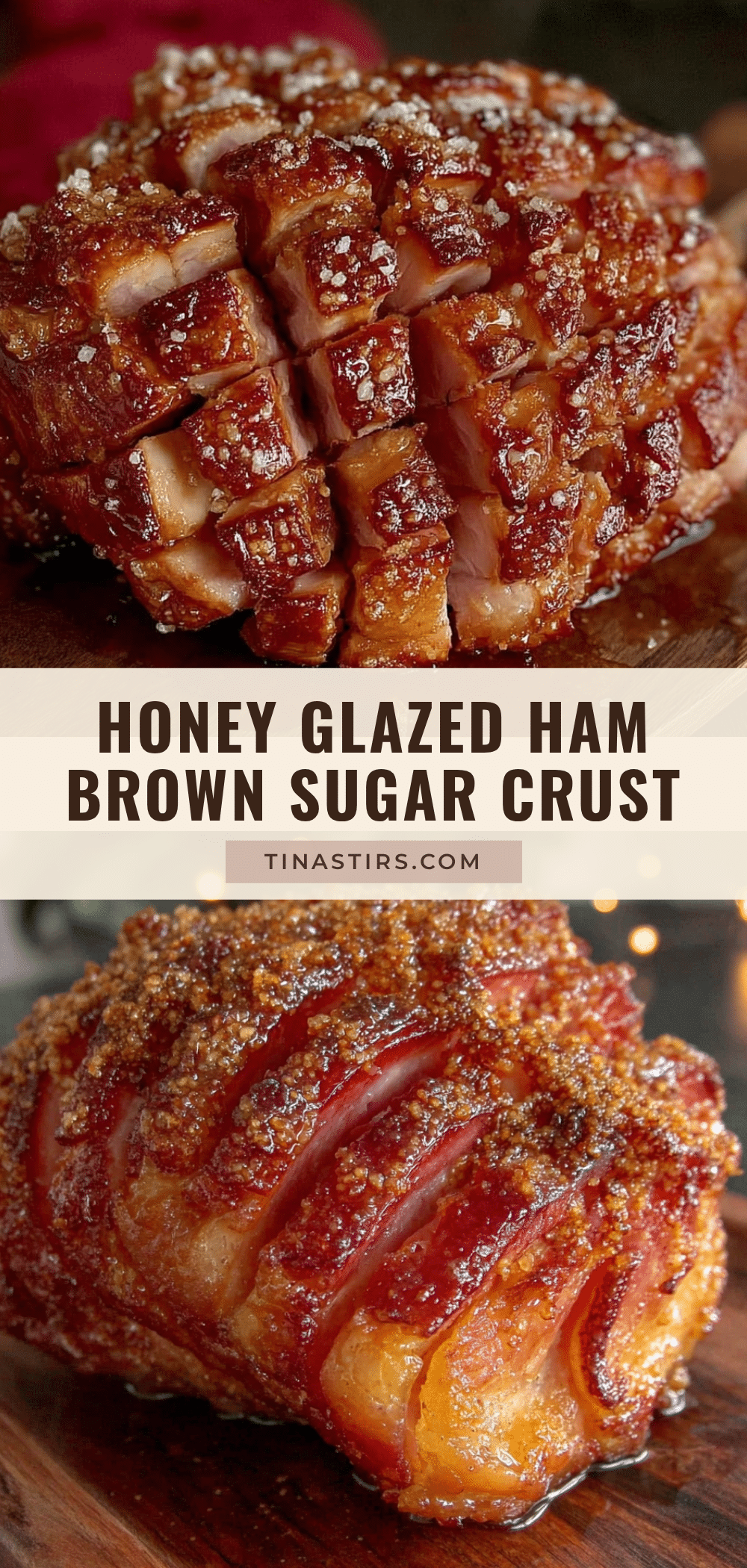
Honey Glazed Ham: Best Brown Sugar Crust Recipe
A foolproof honey glazed ham with a caramelized brown sugar crust that stays crunchy even after resting. This recipe features a double-glaze technique for a sticky, tender ham that feeds a crowd and makes for incredible leftovers.
- Prep Time: 20 minutes
- Cook Time: 2 hours 30 minutes
- Total Time: 3 hours 20 minutes
- Yield: 12-16 servings 1x
- Category: Main Course
- Cuisine: American
Ingredients
- 1 fully cooked bone-in spiral-cut ham (8–10 pounds)
- Whole cloves (optional, about 30-40)
- 1 cup packed dark brown sugar
- 4 tablespoons unsalted butter, softened
- 2 teaspoons Dijon mustard
- 1 teaspoon ground cinnamon
- ½ teaspoon ground cloves
- ¼ teaspoon ground nutmeg
- ½ cup honey
- ¼ cup apple cider vinegar
- 2 tablespoons bourbon or whiskey (optional)
- 1 teaspoon vanilla extract
- 1 cup apple cider or chicken broth
- 2 tablespoons honey
Instructions
- Remove the ham from the refrigerator 1-2 hours before cooking to let it come to room temperature.
- Preheat oven to 325°F (163°C). Position rack in the lower third of the oven.
- Remove ham from packaging, rinse briefly under cool water, and pat completely dry. Trim thick skin if present, leaving ¼-inch layer of fat. Score fat in a diamond pattern, cutting about ¼-inch deep.
- Insert whole cloves into the center of each diamond (optional).
- Make the brown sugar crust paste: In a medium bowl, combine dark brown sugar, softened butter, Dijon mustard, cinnamon, ground cloves, and nutmeg. Mash with a fork until it forms a thick, spreadable paste.
- Apply the brown sugar paste: Using your hands, press the paste firmly onto the entire surface of the ham, focusing on the scored fat and exposed meat.
- Place ham flat-side down on a roasting rack in a large roasting pan. Pour apple cider or chicken broth and 2 tablespoons honey into the bottom of the pan (not over the ham).
- Roast the ham uncovered for 1 hour.
- While ham roasts, make the honey glaze: In a small saucepan, combine honey, apple cider vinegar, bourbon (if using), and vanilla extract. Warm over low heat until thin and pourable (do not boil).
- After 1 hour, remove ham from oven and brush a generous layer of honey glaze over the entire surface. Return to oven and roast for 30 minutes.
- Apply a second layer of honey glaze. Check pan liquid; if evaporated, add ½ cup apple cider or water. Roast another 30 minutes.
- Apply a third layer of honey glaze. Total roasting time is about 2 to 2½ hours for an 8-10 pound ham (about 15 minutes per pound), or until internal temperature reaches 140°F (60°C).
- If crust isn’t dark enough in the last 20 minutes, increase oven temperature to 400°F (204°C) and watch closely to prevent burning.
- Remove ham from oven, tent loosely with aluminum foil, and let rest for 20-30 minutes.
- Slice and serve: For spiral-cut ham, follow pre-cut slices. For unsliced ham, cut thin slices against the grain. Arrange on a platter and spoon pan juices over the top.
Notes
Don’t boil the glaze or it will crystallize. Use a meat thermometer for accuracy. Baste every 30 minutes without exception. Watch the sugar in the last 30 minutes to prevent burning. Don’t skip the resting time. Save the bone for split pea soup.
Nutrition
- Serving Size: 4 ounces (about 2 th
- Calories: 305
- Sugar: 18
- Sodium: 1000
- Fat: 15
- Saturated Fat: 6
- Carbohydrates: 20
- Protein: 23
Keywords: honey glazed ham, brown sugar ham, holiday ham, Easter ham, Christmas ham, spiral ham, glazed ham recipe