Love this? Save it for later!
Share the inspiration with your friends
There used to be a little German-style bakery on the corner of 5th and Maple in my hometown—the kind with a wooden sign that creaked in the wind and a window display that fogged up from the steam inside. Every December, they’d sell this thick, velvety eggnog that wasn’t like anything you could buy at the grocery store. It had actual flecks of vanilla bean floating in it, and it was so rich it almost felt like dessert in a cup. When the bakery closed suddenly in 2018—the owner retired and moved to Florida, of all places—I honestly felt a little lost. That eggnog had become part of my holiday rhythm, you know? I’d stop by on my way home from work, grab a small cup, and suddenly the Christmas lights seemed brighter. After 11 tries—and let me tell you, some of those early batches were disasters—I finally cracked the code. This classic old-fashioned cooked custard eggnog is the one. It’s the make-ahead version that tastes like that bakery’s recipe, but better because you can make it in your own kitchen.
The secret, I learned, is in the custard base. Most store-bought eggnog is basically flavored milk with thickeners. Not this. This recipe uses real eggs, cream, and a gentle cooking technique that transforms them into a silky, pourable custard. The first time I got it right, I was standing in my kitchen at 10 PM on a Tuesday, and I actually teared up a little. Maybe that sounds dramatic, but when you’ve been chasing a flavor memory for years, finding it again feels like reuniting with an old friend. I poured myself a small glass, took a sip, and there it was—that same warmth, that same richness, that same feeling of the holidays wrapping around me like a blanket.
This isn’t one of those recipes you have to babysit on Christmas morning. The make-ahead aspect is what makes it a game-changer for hosting. You cook the custard, chill it overnight, and then just stir in the booze (or leave it out) and serve. Your guests will think you spent hours fussing, but really, you were just relaxing with a glass of wine while the eggnog did its thing in the fridge. Honestly, I’ve brought this to three different holiday parties now, and each time someone asks for the recipe. One friend said it was “the best eggnog she’d ever had” and then asked if she could lick the pitcher. I said no, but I respected the enthusiasm. So if you’re hosting a dinner party, a potluck, or a festive get-together this season, this is the dish that steals the table.
Why You’ll Love This Recipe
Let’s be real—there are a lot of eggnog recipes out there. Some are raw, some are complicated, and some just don’t deliver that thick, luxurious texture we all crave. This one is different. Here’s why you’ll keep coming back to it:
- Make-Ahead Magic: Cook it up to three days in advance. The flavors actually get better as they meld in the fridge, so you’re not scrambling on party day.
- Real Custard Texture: No cornstarch or flour here. The eggs and cream do all the work, giving you that silky, spoonable consistency that feels indulgent without being heavy.
- Perfect for Crowds: This recipe scales beautifully. I’ve made it for cozy gatherings of four and for parties of twenty. Just double or triple as needed.
- Simple Ingredients: You probably already have eggs, cream, sugar, and vanilla in your kitchen. No weird additives or specialty items required.
- Kid-Friendly Option: Since it’s cooked, you can serve it to the little ones without worry. Just leave out the bourbon and rum, and they’ll think it’s the most amazing milkshake they’ve ever had.
- Booze-Friendly Base: The custard is the perfect canvas for your favorite spirits. Bourbon, dark rum, brandy—they all work beautifully. You can even set up a little bar and let guests customize their own.
What makes this recipe different from the rest is the technique. I spent months testing different ratios of eggs to cream, different cooking temperatures, and different chilling times. The result is a custard that’s rich but not greasy, sweet but not cloying, and smooth enough to make you close your eyes after the first sip. It’s comfort food reimagined—familiar but somehow better than you remember. Perfect for impressing guests without stress, or turning a simple holiday gathering into something memorable.
I’ve had professional chefs taste this and ask for the recipe. I’ve had my picky uncle—who claims to hate eggnog—finish a full glass. I’ve even had a friend text me the next morning saying she dreamed about it. That’s the kind of recipe this is. It’s not just good; it’s the kind that becomes a tradition.
What Ingredients You Will Need
This recipe uses simple, wholesome ingredients to deliver that classic old-fashioned flavor. Most of these are pantry staples, but a few are worth seeking out for the best results. Here’s what you’ll need:
For the Custard Base
- 6 large egg yolks (room temperature works best for smooth emulsification)
- 1/2 cup granulated sugar (I prefer organic cane sugar for a cleaner flavor, but any white sugar works)
- 2 cups whole milk (don’t substitute with low-fat—the richness is key here)
- 1 cup heavy cream (look for cream with at least 36% milk fat for the best texture)
- 1 vanilla bean (or 2 teaspoons pure vanilla extract—but the bean gives those beautiful specks)
- 1/4 teaspoon ground nutmeg (freshly grated is ideal, but pre-ground works in a pinch)
- 1/4 teaspoon ground cinnamon (optional, but adds a lovely warmth)
- Pinch of salt (don’t skip this—it balances the sweetness)
For Serving
- 1/2 cup bourbon (I recommend Buffalo Trace or Maker’s Mark for a smooth finish)
- 1/4 cup dark rum (Gosling’s or Myers’s work beautifully)
- 1/4 cup brandy (optional, but adds complexity)
- Additional heavy cream (for whipping into a topping, if desired)
- Freshly grated nutmeg (for garnish—this makes it look fancy)
A few notes on ingredient selection: When it comes to the vanilla bean, I’ve found that Madagascar vanilla beans give the best flavor for the price. They’re available at most grocery stores or online. If you’re using extract, make sure it’s pure vanilla extract, not imitation. The difference is noticeable. For the dairy, I recommend Organic Valley or Horizon Organic for their consistent quality, but any brand you trust will work. If you’re looking for a dairy-free option, you can substitute full-fat oat milk and coconut cream, but the texture will be slightly different—still delicious, just not as rich.
For the spirits, you can absolutely adjust the amounts to your taste. Some people prefer a stronger kick, while others want just a hint. I’ve found that the combination of bourbon and rum gives a nice depth, but you can use all bourbon or all rum if that’s what you have. And if you’re serving kids or non-drinkers, simply leave out the alcohol and add an extra splash of vanilla extract instead. The custard is perfectly delicious on its own.
Equipment Needed
You don’t need a ton of fancy equipment for this recipe, but a few tools will make the process smoother. Here’s what I recommend:
- Medium saucepan (heavy-bottomed is best to prevent scorching—I use a 3-quart All-Clad)
- Whisk (a balloon whisk works well, but a flat whisk gets into the corners of the pan)
- Fine-mesh strainer (this is non-negotiable—it catches any cooked egg bits for a silky texture)
- Large mixing bowl (for whisking the egg yolks and sugar)
- Glass or ceramic pitcher (for storing the finished eggnog)
- Instant-read thermometer (optional but highly recommended—it takes the guesswork out of tempering)
- Rubber spatula (for scraping every last drop of custard into the pitcher)
- Microplane or fine grater (for fresh nutmeg—it makes a huge difference)
If you don’t have an instant-read thermometer, don’t worry. You can test the custard by dipping a spoon in and running your finger across the back—if the line stays clean, it’s ready. I learned that trick from my grandmother, and it’s never failed me. For the saucepan, any heavy-bottomed pan will work. I’ve even used a non-stick pan in a pinch, just be careful not to scratch it with the whisk. And if you don’t have a fine-mesh strainer, you can use cheesecloth or even a clean kitchen towel, but honestly, a $5 strainer from the grocery store is worth the investment.
Preparation Method
This recipe comes together in about 30 minutes of active time, plus at least 4 hours of chilling. The make-ahead aspect is what makes it perfect for hosting. Here’s how to do it:
- Split the vanilla bean. Using a sharp knife, cut the vanilla bean lengthwise down the center. Scrape out the seeds with the back of the knife. You’ll have a sticky, fragrant paste—this is liquid gold. Add the seeds and the empty pod to a medium saucepan along with the milk, heavy cream, and a pinch of salt. Heat over medium-low until small bubbles form around the edges—about 5 minutes. Do not let it boil. You want it hot but not scalding.
- Whisk the egg yolks and sugar. While the milk mixture heats, add the egg yolks and sugar to a large mixing bowl. Whisk vigorously until the mixture turns pale yellow and thickens slightly—about 2 minutes. It should fall off the whisk in a ribbon. This is called “ribbon stage,” and it’s important for creating a smooth custard. If you’re not sure, lift the whisk and let the mixture drip back into the bowl. If it holds a shape for a second before disappearing, you’re good.
- Temper the eggs. Here’s where people get nervous, but I promise it’s simple. Slowly drizzle about 1/2 cup of the hot milk mixture into the egg mixture while whisking constantly. This warms the eggs gradually so they don’t scramble. Then, pour the egg mixture back into the saucepan with the remaining milk, whisking continuously. It should look smooth and uniform.
- Cook the custard. Place the saucepan over medium-low heat and stir constantly with a rubber spatula or whisk. You’re looking for the mixture to thicken enough to coat the back of a spoon—about 8 to 10 minutes. If you’re using a thermometer, aim for 170°F to 175°F. Do not let it go above 180°F, or the eggs will start to curdle. I’ve done that before, and it’s heartbreaking. If you see any lumps forming, remove the pan from heat immediately and whisk vigorously—you might be able to save it.
- Strain the custard. Once the custard has thickened, remove it from heat. Place your fine-mesh strainer over a clean bowl or pitcher and pour the custard through it. This catches any tiny bits of cooked egg or vanilla bean pod. Press on the solids with a spatula to extract every bit of liquid. You should have a smooth, silky custard. Stir in the ground nutmeg and cinnamon at this point.
- Chill completely. Let the custard cool to room temperature, about 30 minutes. Then cover and refrigerate for at least 4 hours, but overnight is better. The custard will thicken further as it chills. This is the make-ahead magic—you can do this step up to three days before your party.
- Add the spirits. Just before serving, stir in the bourbon, dark rum, and brandy if using. Start with the smaller amounts and taste as you go. I like a balanced flavor where the spirits enhance the custard without overwhelming it. If you’re serving kids, divide the custard into two pitchers and add booze to only one.
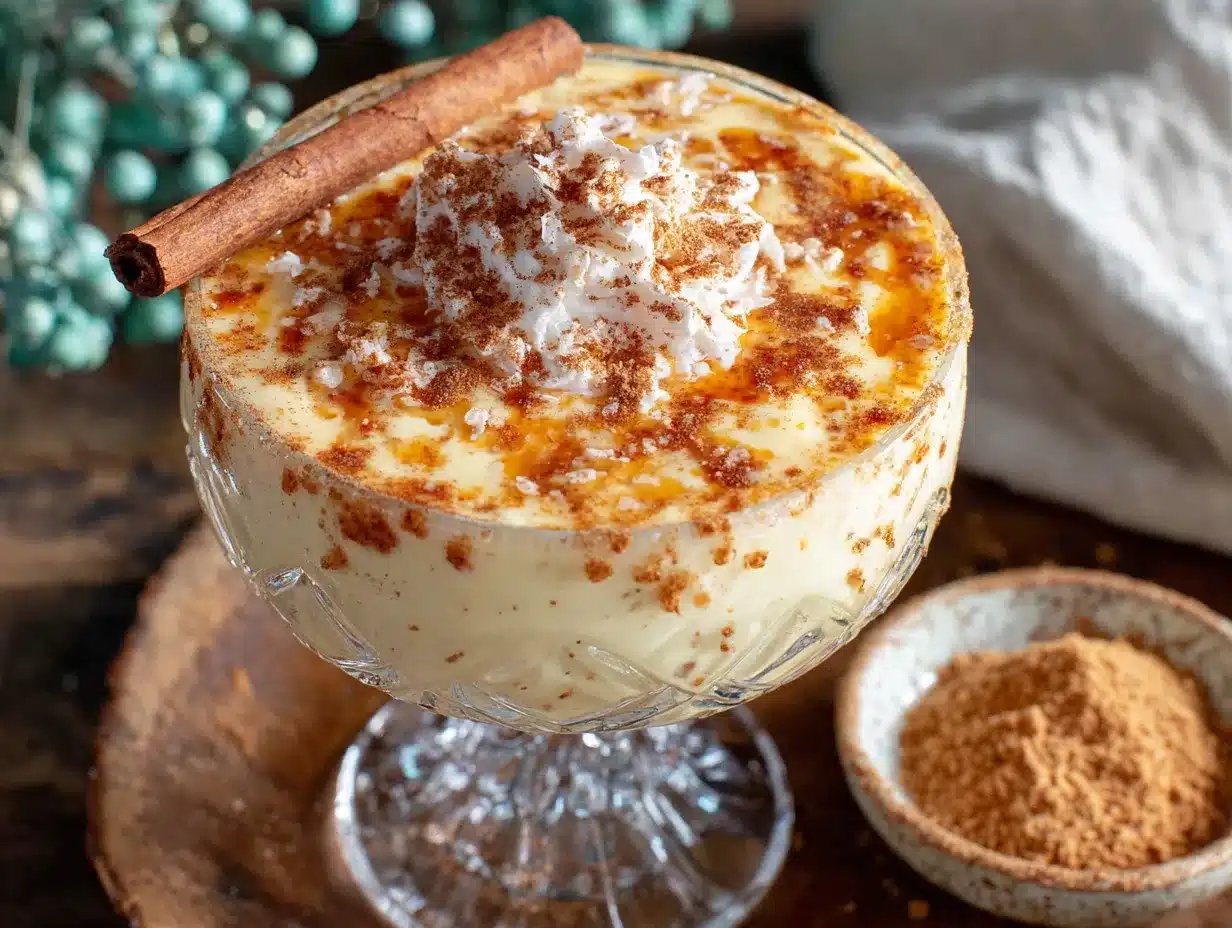
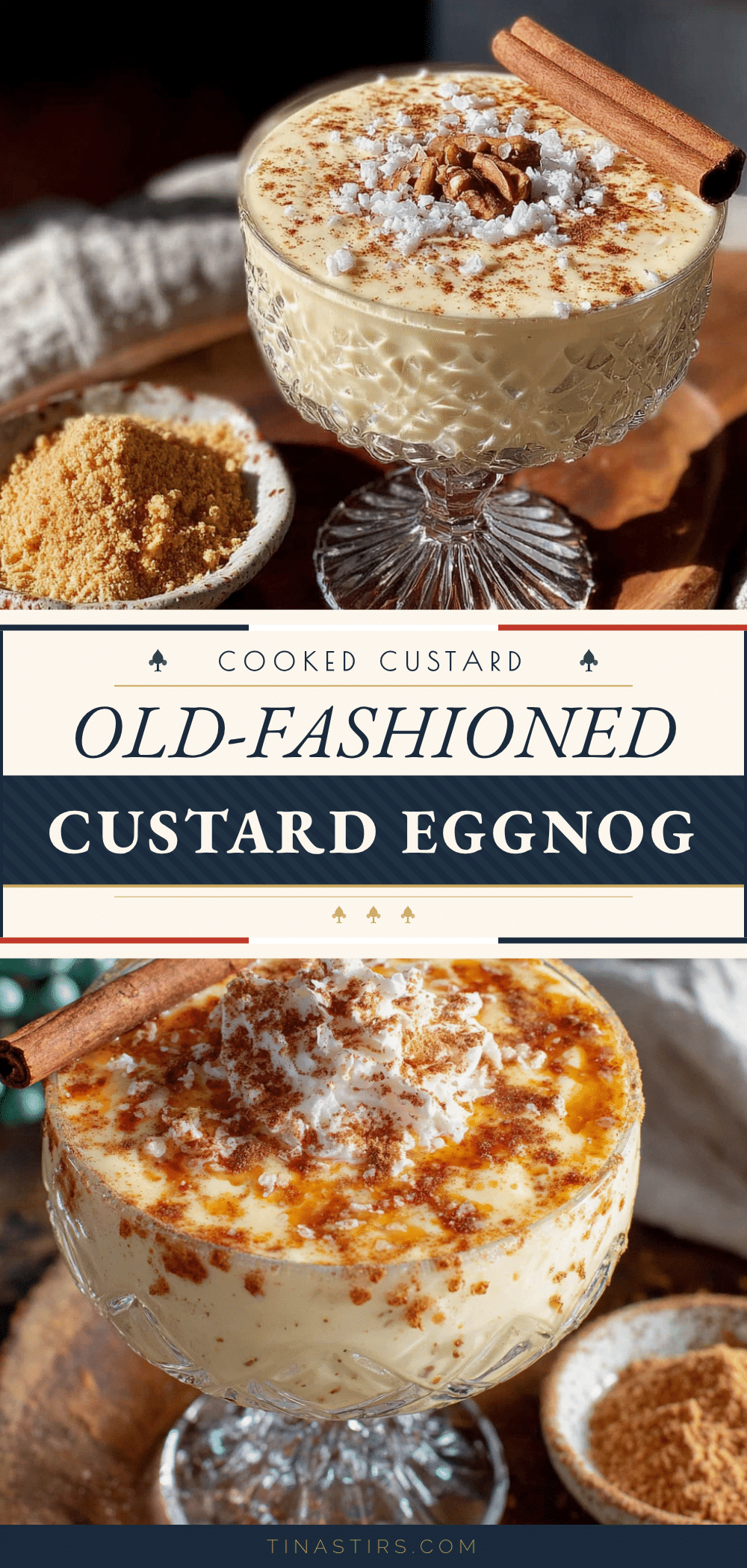
- Serve with style. Pour the eggnog into small glasses or cups. Top with a dollop of whipped cream if you’re feeling fancy, and grate fresh nutmeg over the top. The visual of the dark nutmeg against the pale cream is gorgeous. Serve immediately.
A few notes on timing: If you’re hosting a party, I recommend making the custard two days ahead. The flavors meld beautifully, and you’ll have one less thing to worry about. On party day, just stir in the spirits, pour into a festive pitcher, and you’re done. Your guests will think you spent hours, but you’ll know the secret.
Cooking Tips & Techniques
Over the years, I’ve made this recipe more times than I can count, and I’ve learned a few things the hard way. Here are my best tips for success:
Low and slow is the way to go. When you’re cooking the custard, resist the urge to crank up the heat. Medium-low is your friend. High heat will give you scrambled eggs in milk, and nobody wants that. I once tried to speed things up because my guests were arriving early, and I ended up with lumpy custard. I had to start over. Patience pays off here.
Whisk constantly but gently. You don’t need to beat the custard like it owes you money. A steady, gentle whisking motion keeps the mixture moving and prevents hot spots. I like to use a rubber spatula for this part because it reaches the edges of the pan and scrapes the bottom. If you see any brown bits forming on the bottom, you’re cooking too fast.
Don’t skip the strainer. I know it’s an extra step and another dish to wash, but it makes a massive difference. Even if you’re careful, tiny bits of cooked egg can sneak through. The strainer catches them and gives you that silky, professional texture. I’ve strained custard through a fine-mesh strainer and then through cheesecloth, and honestly, the fine-mesh alone is enough.
Chill time is not optional. The custard needs at least 4 hours to set properly. If you serve it warm, it will be thin and soupy. Chilling allows the fats to solidify and the flavors to meld. I’ve made the mistake of serving it after only 2 hours, and it was good but not great. Overnight is ideal. The texture becomes almost mousse-like, and the spices bloom beautifully.
Taste as you go. Everyone’s palate is different. You might want more nutmeg, less cinnamon, or a stronger bourbon kick. I always taste the custard before adding spirits, then again after. If it’s too sweet, add a pinch more salt. If it’s too heavy, add a splash of milk. You’re in control.
Multitask like a pro. While the milk mixture is heating, whisk the egg yolks and sugar. While the custard is cooling, wash your dishes. The active time is only about 30 minutes, so use those gaps wisely. I like to set out my serving glasses and grate the nutmeg while the custard chills. It makes the final assembly feel effortless.
Variations & Adaptations
One of the best things about this recipe is how versatile it is. Here are a few ways to make it your own:
Dairy-Free Version: Substitute the whole milk with full-fat oat milk and the heavy cream with coconut cream. The texture will be slightly thinner, but the flavor is still fantastic. I’ve tested this for a friend with lactose intolerance, and she said it was the best eggnog she’d had in years. Just make sure to use a brand of oat milk that doesn’t have added flavors.
Spiced Eggnog: Add a cinnamon stick, two star anise, and a few cloves to the milk mixture while it heats. Strain them out before tempering the eggs. This gives the eggnog a warm, holiday-spice flavor that’s perfect for Christmas parties. I did this for a Thanksgiving gathering once, and everyone asked what the secret ingredient was.
Chocolate Eggnog: Whisk in 2 tablespoons of unsweetened cocoa powder with the egg yolks and sugar. The chocolate adds a rich, deep flavor that pairs beautifully with the bourbon. This is my personal favorite variation—it feels like a grown-up hot chocolate. Serve it with a sprinkle of sea salt on top for a sweet-salty finish.
Eggnog Latte Base: Make the custard without the spirits and use it as a base for homemade lattes. Just add a shot of espresso and warm milk. It’s incredible. I’ve been doing this all December, and it’s ruined me for coffee shop eggnog lattes forever.
Booze-Free Version: Simply omit the spirits and add an extra teaspoon of vanilla extract. The custard is delicious on its own. I’ve served this at a family gathering where half the guests were kids and half were adults, and everyone was happy. Just label the pitchers clearly so nobody accidentally gets the spiked version.
For a fun presentation, set up a “build-your-own eggnog bar” with different spirits, toppings like whipped cream and cinnamon sticks, and garnishes like star anise and orange zest. Your guests will love customizing their own cups, and you’ll look like a hosting genius.
Serving & Storage Suggestions
This eggnog is best served chilled, straight from the refrigerator. I like to pour it into small, clear glasses so guests can see the beautiful pale color and the flecks of vanilla bean. If you’re feeling fancy, rim the glasses with cinnamon sugar for an extra touch.
What to serve alongside: This eggnog is rich, so I recommend pairing it with lighter fare. A plate of gingerbread cookies, shortbread, or biscotti works beautifully. For a savory option, try a cheese board with sharp cheddar, crackers, and apple slices. The contrast between the sweet, creamy eggnog and the sharp, salty cheese is divine. I’ve also served it alongside a simple salad of bitter greens and vinaigrette—the acidity cuts through the richness perfectly.
Storage instructions: Store the eggnog in a sealed pitcher or jar in the refrigerator for up to 5 days. The flavors will continue to develop, so day two is often even better than day one. Do not freeze the eggnog—the texture will separate and become grainy when thawed. If you have leftovers, you can use them in baking (eggnog pancakes, anyone?) or as a base for French toast.
Reheating notes: If you prefer warm eggnog, gently reheat it in a saucepan over low heat, stirring constantly. Do not boil. You can also microwave individual servings for 30 seconds. The texture will be slightly thinner than cold eggnog, but still delicious. I actually prefer it warm on a cold winter night—it’s like a hug in a cup.
How flavors develop over time: The spices will mellow and meld after a day or two, creating a more balanced flavor. The alcohol will also integrate more fully, so the eggnog will taste smoother. I’ve found that the sweet spot is day two or three. If you’re making it for a party, prepare it two days ahead for the best results.
Nutritional Information & Benefits
Let’s be honest—this is a treat, not a health food. But that doesn’t mean it’s without merit. Here’s a rough breakdown per 4-ounce serving (without alcohol):
- Calories: 280
- Fat: 18g
- Carbohydrates: 22g
- Protein: 6g
- Sugar: 20g
The egg yolks are rich in choline, which supports brain health, and the cream provides fat-soluble vitamins A, D, and E. The spices—nutmeg and cinnamon—have anti-inflammatory properties and add warmth without extra sugar. If you’re watching your intake, you can reduce the sugar to 1/3 cup and use half-and-half instead of heavy cream. The texture will be thinner, but the flavor will still be lovely.
For those with dietary restrictions: This recipe contains dairy and eggs, so it’s not suitable for vegans or those with allergies to those ingredients. The dairy-free version mentioned above works well for lactose intolerance. The alcohol can be omitted for a kid-friendly or alcohol-free version. Always check your labels if you’re serving guests with specific dietary needs.
My personal perspective? I believe in enjoying the holidays fully. This eggnog is a once-a-year indulgence, and I don’t apologize for the calories. Life is short—drink the good eggnog.
Conclusion
This classic old-fashioned cooked custard eggnog is more than just a drink—it’s a memory in a glass. It’s the taste of holiday gatherings, of laughter around the table, of those quiet moments when everything feels right with the world. Whether you’re serving it at a dinner party, a potluck, or just enjoying a quiet evening by the fire, this recipe delivers every time.
I hope you’ll try it and make it your own. Add a little extra nutmeg if that’s your thing. Swap the bourbon for rye whiskey. Serve it warm on a cold night. The beauty of this recipe is how forgiving and adaptable it is. It’s been tested by a home cook who made every mistake in the book, and it still comes out perfect.
So go ahead—make a batch this weekend. Your future self will thank you when guests arrive and you’re relaxed, prepared, and serving the best eggnog they’ve ever had. And when they ask for the recipe, send them my way. Happy holidays, friends. Cheers to good food, good company, and traditions worth keeping.
Frequently Asked Questions
Can I make this eggnog without alcohol?
Absolutely! Simply omit the bourbon, rum, and brandy. The custard base is delicious on its own. Add an extra teaspoon of vanilla extract for depth. This version is perfect for kids or anyone who prefers non-alcoholic drinks.
How far in advance can I make this eggnog?
You can make the custard base up to three days ahead. Store it in a sealed container in the refrigerator. Add the spirits just before serving for the freshest flavor. The eggnog will keep for up to five days total in the fridge.
Why did my custard turn out lumpy?
Lumpy custard usually means the heat was too high or the eggs weren’t tempered properly. Next time, make sure to whisk the hot milk into the eggs slowly, and keep the heat at medium-low. If you do get lumps, strain them out with a fine-mesh strainer—the texture will still be good.
Can I use pre-ground nutmeg instead of fresh?
Yes, but fresh nutmeg really does make a difference. Pre-ground nutmeg loses its essential oils quickly and can taste flat. If you’re using pre-ground, add it at the end of cooking rather than during. A microplane grater is cheap and lasts forever—worth the investment.
What’s the best way to scale this recipe for a crowd?
This recipe doubles and triples beautifully. Just use a larger saucepan and increase the cooking time slightly. I’ve made a quadruple batch for a holiday party of 30 people, and it was perfect. Just make sure you have a big enough pitcher for storage.
Pin This Recipe!
Classic Old-Fashioned Cooked Custard Eggnog – Best Make-Ahead Recipe
This classic old-fashioned cooked custard eggnog is a rich, velvety holiday drink made with real eggs, cream, and vanilla bean. It’s a make-ahead recipe that tastes like a beloved bakery’s eggnog, perfect for impressing guests without stress.
- Prep Time: 15 minutes
- Cook Time: 15 minutes
- Total Time: 30 minutes (plus at least 4 hours chilling)
- Yield: 8 servings 1x
- Category: Beverage
- Cuisine: American
Ingredients
- 6 large egg yolks (room temperature)
- 1/2 cup granulated sugar (organic cane sugar preferred)
- 2 cups whole milk
- 1 cup heavy cream (at least 36% milk fat)
- 1 vanilla bean (or 2 teaspoons pure vanilla extract)
- 1/4 teaspoon ground nutmeg (freshly grated preferred)
- 1/4 teaspoon ground cinnamon (optional)
- Pinch of salt
- 1/2 cup bourbon (Buffalo Trace or Maker’s Mark recommended)
- 1/4 cup dark rum (Gosling’s or Myers’s recommended)
- 1/4 cup brandy (optional)
- Additional heavy cream (for whipped topping, if desired)
- Freshly grated nutmeg (for garnish)
Instructions
- Split the vanilla bean lengthwise and scrape out the seeds. Add the seeds and pod to a medium saucepan with the milk, heavy cream, and a pinch of salt. Heat over medium-low until small bubbles form around the edges (about 5 minutes). Do not boil.
- While the milk mixture heats, whisk the egg yolks and sugar in a large mixing bowl until pale yellow and thick (about 2 minutes), reaching ribbon stage.
- Slowly drizzle about 1/2 cup of the hot milk mixture into the egg mixture while whisking constantly to temper the eggs. Then pour the egg mixture back into the saucepan with the remaining milk, whisking continuously.
- Cook the custard over medium-low heat, stirring constantly with a rubber spatula or whisk, until it thickens enough to coat the back of a spoon (about 8 to 10 minutes). If using a thermometer, aim for 170°F to 175°F. Do not exceed 180°F.
- Remove from heat and strain the custard through a fine-mesh strainer into a clean bowl or pitcher. Press on solids with a spatula. Stir in the ground nutmeg and cinnamon.
- Let the custard cool to room temperature (about 30 minutes), then cover and refrigerate for at least 4 hours, preferably overnight. The custard will thicken further as it chills.
- Just before serving, stir in the bourbon, dark rum, and brandy (if using). Taste and adjust spirits as desired.
- Pour into small glasses or cups. Top with whipped cream if desired and grate fresh nutmeg over the top. Serve immediately.
Notes
For best results, make the custard base up to three days ahead. The flavors meld and improve over time. If serving kids or non-drinkers, omit the alcohol and add an extra teaspoon of vanilla extract. For a dairy-free version, substitute full-fat oat milk and coconut cream. Do not freeze the eggnog as the texture will become grainy.
Nutrition
- Serving Size: 4 ounces
- Calories: 280
- Sugar: 20
- Sodium: 80
- Fat: 18
- Saturated Fat: 10
- Carbohydrates: 22
- Protein: 6
Keywords: eggnog, old-fashioned eggnog, cooked custard eggnog, make-ahead eggnog, holiday drink, Christmas eggnog, homemade eggnog