Love this? Save it for later!
Share the inspiration with your friends
My neighbor, a quiet man named Mr. Kowalski who kept to himself mostly, saw me wrestling a bag of cheap stew meat out of my trunk one Tuesday afternoon. He didn’t say anything at first. He just stood there, holding a pair of pruning shears, and watched me fumble with the grocery bag. Then, he shuffled over and said, “That meat needs a good bath. Red wine. A whole bottle. It’s the only way.” I laughed, thinking he was joking. He wasn’t. He disappeared into his garage and came back with a dusty bottle of Cabernet that had probably been sitting there since the 90s. “Don’t use the good stuff,” he said with a wink. “Use the stuff you’d drink while you cook.” That was the beginning of my obsession with this cozy beef stew with red wine.
I’ll be honest with you—I messed it up the first time. I used a fancy Burgundy I’d been saving for a special occasion, and the stew came out tasting… sad. Too sharp, too thin. It didn’t have that deep, soul-warming richness you want on a cold night. So I tried again with a cheap Merlot, the kind that comes in a bottle with a screw cap. And bingo. That was the one. The meat got tender in a way that felt like a hug. The vegetables soaked up all that wine and turned into little flavor bombs. My kids, who usually pick out anything that looks like a “grown-up” ingredient, asked for seconds. Maybe you’ve been there—standing over a pot, wondering why your stew doesn’t taste like the one your grandmother made. I get it. This recipe is the fix.
What I love most about this cozy beef stew with red wine is how it turns a regular Tuesday into something special without any extra fuss. It’s not a show-off meal. It’s the kind of dinner that fills the house with a smell that makes everyone wander into the kitchen, asking, “What’s for dinner?” It’s the recipe that made Mr. Kowalski nod at me from across the fence the next week and say, “Told you.” And honestly? That moment—that quiet connection over a pot of stew—is why I keep making it. It’s not just about the food. It’s about the people who share it with you.
Why You’ll Love This Recipe
Let’s be real for a second. There are a million beef stew recipes out there. Some are watery. Some are too complicated. Some use ingredients you can’t find at a regular grocery store. This cozy beef stew with red wine is none of those things. It’s the one I’ve tested and tweaked over dozens of cold winter nights, and it’s the one that finally made my husband say, “This is better than my mom’s.” And trust me, that’s a big deal in our house.
- Quick & Easy: I know “stew” sounds like something you need to babysit all day, but this one comes together in about 15 minutes of active prep. The oven does the rest of the work. You can literally walk away and fold laundry or help with homework while it cooks.
- Simple Ingredients: You probably have most of these in your pantry right now—carrots, onions, potatoes, garlic. The only “special” thing is the red wine, and I promise you don’t need to spend more than $8 on it. I’ve tested it with everything from a $6 bottle to a $20 bottle, and honestly? The cheap stuff works better.
- Perfect for Family Dinners: This is the meal that makes everyone sit down at the table together. The kids love the tender beef and potatoes. The adults love the rich, wine-infused broth. It’s a crowd-pleaser that doesn’t require separate meals for picky eaters.
- Unbelievably Delicious: The secret is the way the wine breaks down the meat over low, slow heat. It creates a broth that’s so rich and savory, you’ll want to drink it with a spoon. And the carrots? They get almost sweet from soaking up all that wine and beef fat. It’s next-level comfort food.
This isn’t just another beef stew recipe. It’s the one that uses a simple technique—browning the meat in batches so it gets a proper crust—that makes all the difference. It’s the one that adds a splash of balsamic vinegar at the end to brighten everything up. It’s the one that’s been tested by a mom who needs dinner to be both delicious and manageable on a school night. And it works every single time.
What Ingredients You Will Need
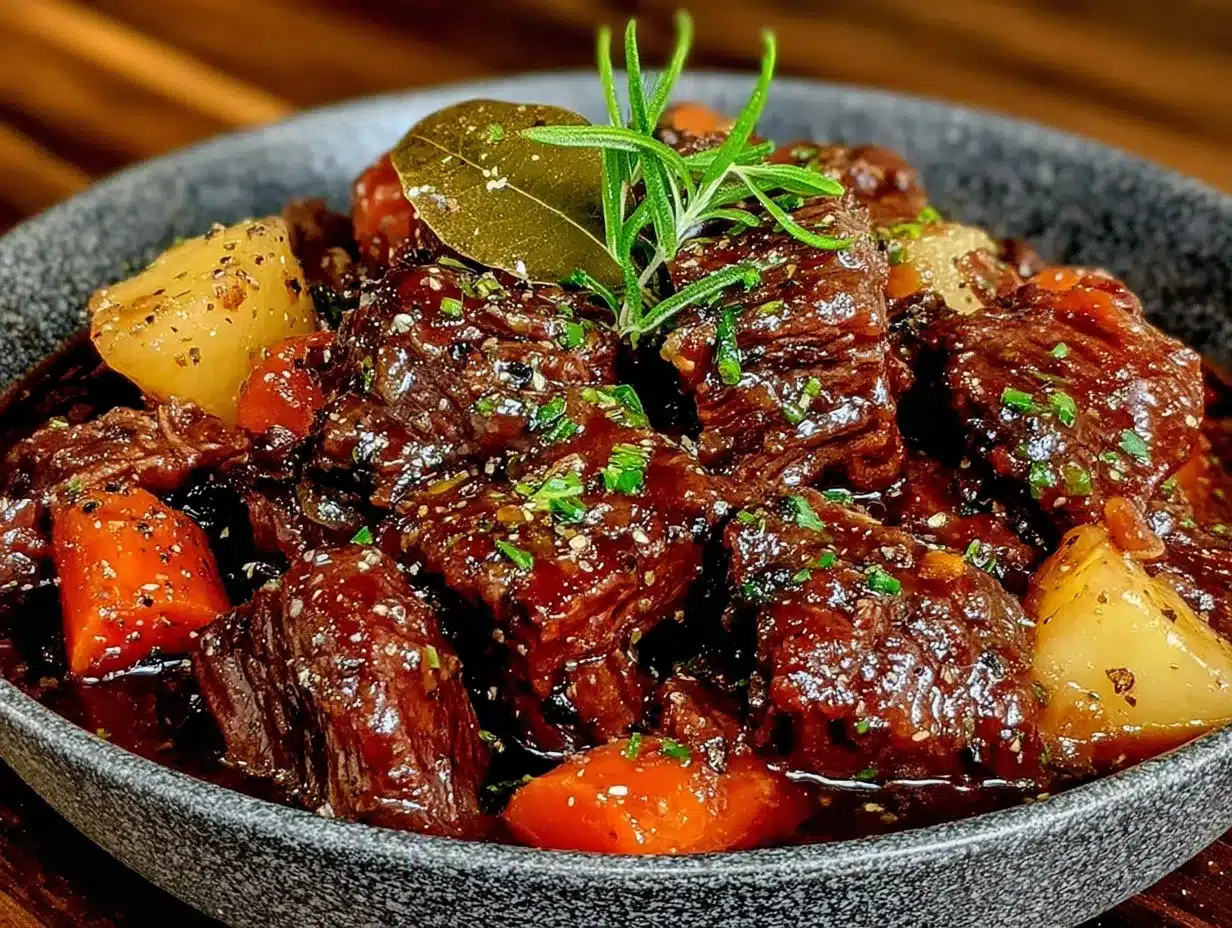
This cozy beef stew with red wine uses simple, wholesome ingredients that work together to create a rich, deeply flavored broth without any fancy techniques or hard-to-find items. Most of these are probably already in your kitchen. Here’s what you’ll need:
For the Stew Base
- 2 pounds beef chuck, cut into 1-inch cubes (look for chuck roast—it has enough marbling to stay tender during long cooking. I’ve tried sirloin, and it gets tough. Trust me on this one.)
- 2 tablespoons olive oil (use a good-quality one for browning. Extra virgin works fine, but regular olive oil is cheaper and does the job.)
- 1 large yellow onion, diced (about 1 ½ cups. Don’t use red onion—it’s too sharp. Yellow onion gives the right sweetness.)
- 3 cloves garlic, minced (fresh is best here. The jarred stuff works in a pinch, but fresh garlic adds a punch that makes a difference.)
- 4 large carrots, peeled and cut into 1-inch chunks (about 2 cups. I like to cut them on the bias—it looks prettier and they cook more evenly.)
- 3 ribs celery, sliced (about 1 cup. Don’t skip this. Celery adds a subtle savory note that balances the sweetness of the carrots.)
- 1 ½ pounds Yukon Gold potatoes, cut into 1-inch chunks (about 3 cups. Yukon Golds hold their shape better than russets. If you only have russets, cut them a little bigger so they don’t fall apart.)
- 2 cups beef broth (low-sodium is best so you can control the salt. I like Swanson’s or Kitchen Basics for consistent flavor.)
- 1 can (14.5 ounces) diced tomatoes, undrained (fire-roasted if you can find them. They add a subtle smokiness that’s amazing with the wine.)
- 1 cup dry red wine (Cabernet Sauvignon, Merlot, or even a Zinfandel works. Don’t use cooking wine—it’s salty and weird. Just buy a bottle you’d drink. You’ll use the rest for yourself while you cook.)
- 2 tablespoons tomato paste (this thickens the broth and adds umami. I buy the tube kind so I don’t waste half a can.)
- 1 tablespoon Worcestershire sauce (adds depth. Lea & Perrins is my go-to.)
- 2 bay leaves (fresh or dried—both work. Just remember to take them out before serving.)
- 1 teaspoon dried thyme (or 3 sprigs fresh. Thyme and beef are best friends.)
- 1 teaspoon salt (plus more to taste. Start with less—you can always add more at the end.)
- ½ teaspoon black pepper (freshly ground is always better.)
- 1 tablespoon balsamic vinegar (added at the end. This is my secret weapon—it brightens the whole dish.)
For Thickening (Optional)
- 2 tablespoons all-purpose flour (for coating the beef before browning. This helps thicken the stew naturally. If you’re gluten-free, use cornstarch mixed with cold water at the end.)
Ingredient Tips: For the beef, look for chuck with good marbling—those little white streaks of fat. That fat melts during cooking and keeps the meat tender. If you can’t find chuck, bottom round works, but cut it into smaller pieces and cook it a little longer. For the wine, I usually grab a bottle of Barefoot Merlot or Yellow Tail Cabernet. They’re cheap, they’re drinkable, and they make the stew taste like you spent hours on it. Don’t overthink the wine—just use something dry, not sweet.
Equipment Needed
You don’t need a fancy kitchen to make this cozy beef stew with red wine. Here’s what you’ll actually use:
- Large Dutch oven or heavy-bottomed pot (5 to 6 quarts is ideal. I use a Lodge enameled cast iron pot that I found on sale for $40. It’s heavy, but it holds heat beautifully. If you don’t have one, a thick stainless steel pot works too. Just avoid thin pots—they’ll burn the bottom.)
- Sharp chef’s knife (you need something that can cut through beef and vegetables without slipping. A Victorinox is affordable and stays sharp.)
- Cutting board (wood or plastic—doesn’t matter. Just make sure it’s big enough to hold all that meat.)
- Wooden spoon or silicone spatula (for stirring. Wooden spoons are cheap and won’t scratch your pot.)
- Measuring cups and spoons (you’ll need them for the broth, wine, and seasonings.)
- Tongs (for flipping the beef while browning. Much easier than a fork.)
- Small bowl (for coating the beef with flour if you’re using that method.)
- Ladle (for serving. A good ladle makes you feel like a professional chef.)
- Oven mitts (the pot gets hot. Like, really hot. Don’t skip these.)
Budget-Friendly Tip: If you don’t have a Dutch oven, use a slow cooker instead. Brown the beef in a skillet first, then transfer everything to the slow cooker and cook on low for 8 hours. It’s not quite the same texture, but it’s close. Just skip the flour coating if you’re using a slow cooker—it can make things gluey.
Preparation Method
This cozy beef stew with red wine comes together in a few simple stages. Don’t rush the browning step—that’s where all the flavor lives. Here’s how to do it:
- Prep the beef (5 minutes): Pat the beef cubes dry with paper towels. This is important—wet meat won’t brown properly. If you’re using the flour method, toss the beef in a bowl with the flour, salt, and pepper until evenly coated. Shake off the excess. If you’re skipping the flour, just season the beef directly with salt and pepper.
- Brown the beef in batches (15 minutes): Heat 1 tablespoon of olive oil in your Dutch oven over medium-high heat. Add half the beef in a single layer—don’t crowd the pot. Let it sit without moving for 3-4 minutes until the bottom is deep brown and crusty. Flip each piece with tongs and brown the other side for 2-3 minutes. Transfer to a plate. Repeat with the remaining oil and beef. Don’t rush this step. If you crowd the pot, the meat will steam instead of brown, and you’ll lose that rich flavor.
- Sauté the aromatics (5 minutes): Reduce the heat to medium. Add the diced onion to the pot and cook for 3-4 minutes, scraping up the browned bits from the bottom with your wooden spoon. Those bits are pure flavor. Add the garlic and cook for 30 seconds until fragrant. Don’t let the garlic burn—it turns bitter.
- Build the base (3 minutes): Stir in the tomato paste and cook for 1 minute. It’ll turn a deeper red and smell amazing. Then pour in the red wine and use your spoon to scrape up any remaining browned bits from the bottom of the pot. Let the wine simmer for 2 minutes to cook off some of the alcohol. It should smell rich and savory, not boozy.
- Add the vegetables and liquid (5 minutes): Return the beef to the pot along with any juices on the plate. Add the carrots, celery, potatoes, diced tomatoes (with their juice), beef broth, Worcestershire sauce, bay leaves, and dried thyme. Stir everything together. The liquid should almost cover the ingredients—if it doesn’t, add a little more broth or water.
- Simmer low and slow (2 to 2 ½ hours): Bring the stew to a gentle simmer, then reduce the heat to low, cover the pot, and let it cook. Check it after 1 hour and give it a stir. After 2 hours, check the beef—it should be fork-tender and starting to fall apart. If it’s still tough, let it go another 30 minutes. The potatoes should be soft but not mushy. If they’re falling apart, you’ve cooked them a bit too long, but honestly, it’ll still taste great.
- Finish and adjust (5 minutes): Remove the bay leaves and stir in the balsamic vinegar. Taste the broth and add more salt or pepper if needed. I usually add about ½ teaspoon more salt at this point. If the stew seems too thin, let it simmer uncovered for 10 minutes to thicken. If it’s too thick, add a splash of broth or water.
- Rest before serving (10 minutes): Turn off the heat and let the stew sit for 10 minutes. This allows the flavors to meld and the broth to settle. I know it’s hard to wait, but trust me—it’s worth it.
Sensory Cues: When the beef is browning, you should hear a loud sizzle. If it’s quiet, the pan isn’t hot enough. The stew should smell like a cozy kitchen—rich, savory, with a hint of wine and herbs. When it’s done, the broth should be thick enough to coat the back of a spoon. The carrots should be tender but not mushy, and the beef should break apart with gentle pressure from a fork.
Cooking Tips & Techniques
I’ve made this cozy beef stew with red wine at least twenty times, and I’ve learned a few things the hard way. Here are my best tips:
Don’t skip the browning. I know it’s tempting to just dump everything in the pot and walk away. I’ve done it. The stew was edible, but it didn’t have that deep, rich flavor that makes you close your eyes after the first bite. Browning the beef creates the Maillard reaction—fancy science speak for “it tastes way better.” Take the extra 15 minutes. Your future self will thank you.
Use the right wine. I once used a sweet red blend because it was on sale, and the stew came out tasting like dessert. Not in a good way. Stick with dry red wines—Cabernet Sauvignon, Merlot, or Pinot Noir. If you wouldn’t drink it, don’t cook with it. But also don’t use the $50 bottle you’re saving for a special occasion. The middle ground is your friend.
Cut the vegetables the same size. This is one of those little things that makes a big difference. If your potatoes are cut into 1-inch chunks and your carrots are cut into ½-inch pieces, the carrots will be mush before the potatoes are done. Take the extra 30 seconds to make them uniform. Your stew will look better and cook more evenly.
Watch the salt. Beef broth and Worcestershire sauce both have salt, so go easy at the beginning. I always start with 1 teaspoon of salt and adjust at the end. You can add salt, but you can’t take it out. I learned this the hard way when I made a stew so salty it was practically a brine. We ate it anyway, but we drank a lot of water that night.
Let it rest. I know you’re hungry. I know the house smells amazing. But if you serve the stew right away, the flavors won’t be fully developed. Letting it sit for 10-15 minutes allows the broth to thicken slightly and the flavors to meld. It’s the difference between a good stew and a great one.
Make it ahead. This stew actually gets better after a day in the fridge. The flavors continue to develop, and the texture improves. I often make it on a Sunday and serve it on Monday. It’s like magic—the second day is always better than the first.
Variations & Adaptations
One of the best things about this cozy beef stew with red wine is how flexible it is. Here are some variations I’ve tried and loved:
Slow Cooker Version: Brown the beef and sauté the onions in a skillet first, then transfer everything to a slow cooker. Cook on low for 8 hours or on high for 4-5 hours. Add the potatoes in the last 2 hours so they don’t get mushy. This is my go-to on busy days when I want dinner ready when I walk in the door.
Gluten-Free Adaptation: Skip the flour coating on the beef. Instead, use 2 tablespoons of cornstarch mixed with 2 tablespoons of cold water (a slurry) stirred into the stew in the last 15 minutes of cooking. It thickens just as well without the gluten. I’ve made this for friends with celiac disease, and they couldn’t tell the difference.
Vegetable-Packed Version: Add a cup of frozen peas in the last 10 minutes of cooking for a pop of color and sweetness. You can also add a cup of chopped mushrooms along with the onions—they add an earthy flavor that pairs beautifully with the red wine. My kids don’t even notice the mushrooms because they’re hidden in the rich broth.
Herb Variations: Swap the thyme for rosemary or add a sprig of fresh sage. I once added a cinnamon stick (removed before serving) and a pinch of nutmeg for a warm, spiced version that was incredible on a snowy night. Don’t be afraid to experiment—herbs are forgiving.
Budget-Friendly Twist: Use half the beef and add a can of drained and rinsed chickpeas or white beans. They add protein and fiber without the cost. I’ve done this on weeks when the grocery budget was tight, and honestly, it’s still delicious. The beans soak up all that wine-infused broth and become little flavor sponges.
Spicy Version: Add a teaspoon of smoked paprika and a pinch of cayenne pepper along with the thyme. It adds a subtle warmth that’s perfect for cold winter nights. I made this for a dinner party once, and everyone asked for the recipe.
Serving & Storage Suggestions
This cozy beef stew with red wine is a complete meal on its own, but here’s how to make it even better:
Serving Temperature: Serve it piping hot in deep bowls. The broth should be steaming when it hits the table. I like to ladle it over a scoop of mashed potatoes or egg noodles for extra comfort. Crusty bread is non-negotiable—you need something to soak up every last drop of that amazing broth.
Presentation: Garnish with a sprinkle of fresh parsley or thyme leaves for a pop of color. A drizzle of olive oil on top adds a nice finish. If you’re feeling fancy, add a dollop of sour cream or Greek yogurt—the tanginess cuts through the richness of the stew.
Complementary Dishes: A simple green salad with a tangy vinaigrette is the perfect side—it balances the richness of the stew. Roasted Brussels sprouts or steamed green beans also work well. For drinks, a glass of the same red wine you used in the stew is a no-brainer.
Storage: Let the stew cool completely before storing. Transfer it to an airtight container and refrigerate for up to 4 days. The flavors get even better after a day or two. I often make a double batch and freeze half for busy weeks.
Freezing Instructions: This stew freezes beautifully. Portion it into freezer-safe containers or zip-top bags, leaving an inch of headroom for expansion. Freeze for up to 3 months. Thaw overnight in the refrigerator before reheating.
Reheating: Reheat gently on the stovetop over medium-low heat, stirring occasionally. Add a splash of broth or water if it’s too thick. You can also microwave individual portions in 30-second bursts, stirring between each. The broth might separate slightly, but a good stir will bring it back together.
Flavor Development: I’ll let you in on a secret—this stew is even better the next day. The flavors meld and deepen overnight. So if you can, make it a day ahead. Your future self will thank you.
Nutritional Information & Benefits
This cozy beef stew with red wine is comfort food that actually has some nutritional merits. Here’s the breakdown per serving (based on 6 servings):
- Calories: Approximately 420-480 per serving (varies based on beef fat content and potato size)
- Protein: 32-38 grams (the beef provides a solid protein punch that keeps you full)
- Carbohydrates: 35-40 grams (mostly from potatoes and carrots—complex carbs that provide steady energy)
- Fat: 14-18 grams (some from the beef, some from olive oil—healthy fats that add flavor)
- Fiber: 5-7 grams (from the vegetables, which is pretty good for a stew)
- Iron: 25-30% of the daily value (beef is an excellent source of heme iron, which is easily absorbed)
- Vitamin A: 80-100% of the daily value (carrots are packed with beta-carotene)
- Vitamin C: 15-20% of the daily value (from potatoes and tomatoes)
Health Benefits: The red wine in this stew contains antioxidants called polyphenols, which are good for heart health. The beef provides high-quality protein and essential B vitamins. The vegetables add fiber and vitamins. It’s not a health food, but it’s a balanced meal that will keep you satisfied without the processed ingredients found in canned stews.
Dietary Considerations: This recipe is dairy-free and nut-free. For gluten-free, skip the flour coating and use cornstarch instead. For lower sodium, use low-sodium beef broth and go easy on the added salt. For lower fat, trim the beef well and use less olive oil.
Potential Allergens: Worcestershire sauce contains anchovies (fish) and soy (gluten in some brands). Check labels if you have allergies. You can substitute coconut aminos or additional balsamic vinegar.
Personal Note: I love that this stew feels indulgent but isn’t loaded with cream or butter. It’s rich from the natural flavors of the beef and wine, not from added fats. It’s the kind of meal that makes you feel good—both while you’re eating it and after.
Conclusion
This cozy beef stew with red wine has become a staple in our home for good reason. It’s affordable, it’s forgiving, and it turns a regular weeknight into something that feels special. The beef gets tender, the vegetables soak up all that wine-infused broth, and the whole house smells like comfort. It’s the kind of meal that makes everyone slow down and actually sit at the table together.
I hope you give it a try—and I hope you make it your own. Add more vegetables if you have them. Use a different wine if that’s what’s open. Forget the balsamic vinegar one time and see what happens (it’ll still be good). This recipe is a starting point, not a rulebook. The best version is the one that works for your family.
I’d love to hear how it turns out for you. Did your kids ask for seconds? Did you add something unexpected that made it even better? Drop a comment below and let me know. And if you’re looking for more cozy family meals, check out our slow cooker chicken stew or our hearty lentil soup—both are budget-friendly and perfect for busy nights.
Until next time, happy cooking. And remember—use the cheap wine. Mr. Kowalski would approve.
Frequently Asked Questions
Can I make this beef stew without red wine?
Yes, absolutely. Substitute the red wine with an equal amount of beef broth plus 2 tablespoons of balsamic vinegar or red wine vinegar. It won’t have the exact same depth, but it will still be delicious. I’ve made it this way for friends who don’t drink alcohol, and they loved it.
What’s the best cut of beef for stew?
Beef chuck is the gold standard. It has enough marbling to stay tender during long cooking without drying out. Bottom round or brisket also work, but they can be a bit leaner. Avoid sirloin or tenderloin—they’re too lean and will get tough.
Can I use frozen vegetables?
You can, but fresh vegetables give better texture and flavor. Frozen carrots and celery can get mushy during long cooking. If you’re in a pinch, add frozen peas or corn in the last 10 minutes. They’ll hold up better than frozen root vegetables.
How do I thicken the stew if it’s too thin?
Mix 2 tablespoons of cornstarch with 2 tablespoons of cold water until smooth, then stir it into the simmering stew. Let it cook for 5-10 minutes, and it should thicken nicely. Alternatively, mash a few of the potatoes against the side of the pot—they’ll release their starch and naturally thicken the broth.
Can I cook this stew in an Instant Pot?
Yes! Use the sauté function to brown the beef and cook the onions, then add all the ingredients. Pressure cook on high for 35 minutes with a natural release (about 10-15 minutes). The texture will be slightly different—the meat will be very tender, but the broth won’t reduce as much. If it’s too thin, use the sauté function to simmer it down for a few minutes after pressure cooking.
Pin This Recipe!
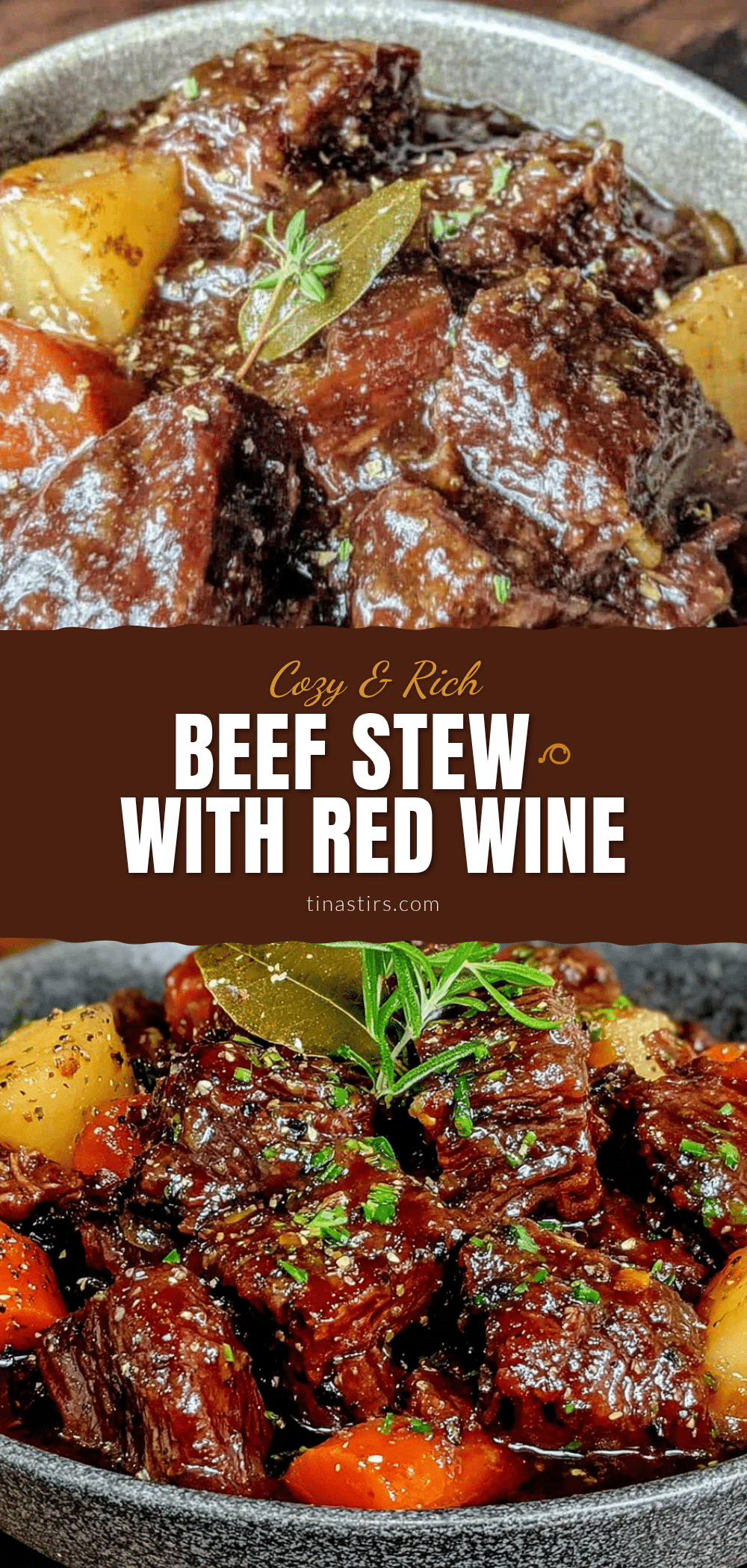
Cozy Beef Stew with Red Wine: Easy Family Favorite

This cozy beef stew with red wine is a family favorite that turns a regular Tuesday into something special. Tender beef, hearty vegetables, and a rich, wine-infused broth come together with minimal fuss for a soul-warming meal.
- Prep Time: 15 minutes
- Cook Time: 2 hours 30 minutes
- Total Time: 2 hours 45 minutes
- Yield: 6 servings 1x
- Category: Main Course
- Cuisine: American
Ingredients
- 2 pounds beef chuck, cut into 1-inch cubes
- 2 tablespoons olive oil
- 1 large yellow onion, diced (about 1 ½ cups)
- 3 cloves garlic, minced
- 4 large carrots, peeled and cut into 1-inch chunks (about 2 cups)
- 3 ribs celery, sliced (about 1 cup)
- 1 ½ pounds Yukon Gold potatoes, cut into 1-inch chunks (about 3 cups)
- 2 cups low-sodium beef broth
- 1 can (14.5 ounces) diced tomatoes, undrained (fire-roasted preferred)
- 1 cup dry red wine (Cabernet Sauvignon, Merlot, or Zinfandel)
- 2 tablespoons tomato paste
- 1 tablespoon Worcestershire sauce
- 2 bay leaves
- 1 teaspoon dried thyme (or 3 sprigs fresh)
- 1 teaspoon salt (plus more to taste)
- ½ teaspoon black pepper (freshly ground)
- 1 tablespoon balsamic vinegar
- 2 tablespoons all-purpose flour (optional, for coating beef)
Instructions
- Prep the beef (5 minutes): Pat the beef cubes dry with paper towels. If using the flour method, toss the beef in a bowl with the flour, salt, and pepper until evenly coated. Shake off excess. If skipping flour, season the beef directly with salt and pepper.
- Brown the beef in batches (15 minutes): Heat 1 tablespoon olive oil in a Dutch oven over medium-high heat. Add half the beef in a single layer—don’t crowd the pot. Let sit without moving for 3-4 minutes until deep brown and crusty. Flip each piece with tongs and brown the other side for 2-3 minutes. Transfer to a plate. Repeat with remaining oil and beef.
- Sauté the aromatics (5 minutes): Reduce heat to medium. Add diced onion to the pot and cook for 3-4 minutes, scraping up browned bits. Add garlic and cook for 30 seconds until fragrant.
- Build the base (3 minutes): Stir in tomato paste and cook for 1 minute. Pour in red wine and scrape up any remaining browned bits. Let wine simmer for 2 minutes.
- Add the vegetables and liquid (5 minutes): Return beef to pot along with any juices. Add carrots, celery, potatoes, diced tomatoes (with juice), beef broth, Worcestershire sauce, bay leaves, and dried thyme. Stir together. Liquid should almost cover ingredients—add more broth or water if needed.
- Simmer low and slow (2 to 2 ½ hours): Bring to a gentle simmer, then reduce heat to low, cover, and cook. Check after 1 hour and stir. After 2 hours, check beef—it should be fork-tender. If still tough, cook another 30 minutes.
- Finish and adjust (5 minutes): Remove bay leaves and stir in balsamic vinegar. Taste and add more salt or pepper if needed. If stew is too thin, simmer uncovered for 10 minutes to thicken. If too thick, add a splash of broth or water.
- Rest before serving (10 minutes): Turn off heat and let stew sit for 10 minutes to allow flavors to meld.
Notes
Don’t skip browning the beef—it creates deep flavor. Use a dry red wine you’d drink, but not an expensive one. Cut vegetables uniformly for even cooking. Let stew rest before serving for best flavor. This stew tastes even better the next day.
Nutrition
- Serving Size: 1 serving (about 1 ½
- Calories: 450
- Sugar: 8
- Sodium: 800
- Fat: 16
- Saturated Fat: 5
- Carbohydrates: 38
- Fiber: 6
- Protein: 35
Keywords: beef stew, red wine stew, cozy stew, family dinner, comfort food, winter meal, easy stew