Love this? Save it for later!
Share the inspiration with your friends
This was supposed to be a lemon garlic pasta. I had it all planned out—the fresh lemon I bought that morning, the garlic I was mincing with a little too much confidence, the white wine I’d opened specifically for the sauce. But then I got distracted. My phone rang, the cat knocked over a plant, and I grabbed the wrong butter. Not the regular unsalted stuff I usually reach for, but a block I’d stashed in the back of the fridge after a baking spree. It was European-style, higher fat, and I didn’t even check the label. I tossed it in the pan, let it melt, and walked away to clean up the mess.
By the time I came back, the butter had turned a deep, nutty brown. The kitchen smelled incredible—like toasted hazelnuts and something almost caramel-like. I stared at the pan, panicking for a solid ten seconds. The garlic was already in a bowl, waiting. The lemon was sliced. But the butter… it had done something beautiful. I made a split-second decision. I threw in the sage leaves I’d been saving for another recipe, let them crisp up, and tossed it all with the pasta. Honestly, I didn’t even taste it before serving. I was too annoyed at myself for messing up the plan.
That first bite was humbling. I mean, really humbling. It was rich and savory, with this warm, almost toasty flavor that wrapped around the pasta like a blanket. The sage was crispy and fragrant, and the whole thing came together in less time than my original recipe would have taken. I sat there, fork in hand, and just laughed. Maybe you’ve been there—when a kitchen mistake turns into something you’ll make for the rest of your life. This Cozy Brown Butter Sage Pasta was born from a moment of chaos, and honestly, I think that’s why it works. It’s simple, forgiving, and deeply comforting. I’ve made it every week since that night, and it never gets old.
Why You’ll Love This Recipe
This isn’t just another pasta recipe. After testing this dish with different butter types, sage amounts, and pasta shapes, I can tell you this version is the sweet spot. It’s been taste-tested by my neighbor, my picky nephew, and a friend who swears she doesn’t like sage. They all asked for seconds.
- Quick & Easy: From start to finish, this dish is on the table in 20 minutes. Perfect for those nights when you need something comforting but don’t have the energy for a long cook.
- Simple Ingredients: You only need 6 main ingredients. No fancy grocery trips required. I bet you have most of them right now.
- Perfect for Cozy Nights: This is the meal you want on a cold Tuesday, a rainy Sunday, or after a rough day. It’s like a hug in a bowl.
- Crowd-Pleaser: It’s rich enough to satisfy adults but simple enough that kids love it. My nephew calls it the “butter noodles with fancy leaves.”
- Unbelievably Delicious: The nutty brown butter and crispy sage create a flavor combo that tastes way more complex than it is. It’s comfort food at its finest.
What makes this recipe different? It’s the technique. Browning the butter adds a deep, toasty flavor that regular melted butter just can’t match. It’s a small step that makes a huge difference. Plus, this recipe is forgiving. You can use dried sage if that’s what you have, swap in gluten-free pasta, or add a protein if you’re hungry. It works every time.
This pasta isn’t just good—it’s the kind that makes you close your eyes after the first bite. It’s comfort food reimagined: faster, simpler, but with the same soul-soothing satisfaction. Perfect for impressing guests without stress, or turning a regular weeknight into something special.
What Ingredients You Will Need
This recipe uses simple, wholesome ingredients to deliver bold flavor and satisfying texture without the fuss. Most of these are pantry staples, which makes this dish perfect for last-minute cravings.
- Pasta (8 oz / 225 g): I recommend a shape that catches the sauce, like fettuccine, pappardelle, or rigatoni. Long strands work beautifully, but short pasta like orecchiette is also great. (Use gluten-free pasta if needed.)
- Unsalted Butter (4 tbsp / 56 g): This is the star of the show. Use unsalted so you can control the salt level. European-style butter (like Plugrà or Kerrygold) browns more evenly due to its higher fat content, but regular butter works fine.
- Fresh Sage Leaves (10-12 leaves): Fresh sage is key here—it crisps up beautifully in the butter. Dried sage can be used in a pinch (use 1 teaspoon), but you’ll miss that crispy texture. Look for leaves that are vibrant green and not wilted.
- Garlic (3 cloves, thinly sliced): Adds a gentle aromatic flavor. Thin slices infuse the butter without burning. Avoid minced garlic here—it can burn too quickly in the brown butter.
- Salt (1 tsp / 5 g): Use a good quality sea salt or kosher salt. You’ll need it for the pasta water and for finishing the dish.
- Black Pepper (½ tsp / 1 g): Freshly cracked is best. It adds a subtle warmth that complements the nutty butter.
- Parmesan Cheese (½ cup / 50 g, grated): Adds saltiness and umami. I recommend grating it fresh from a block—it melts better than pre-shredded. (Use a dairy-free alternative if needed.)
- Optional: Red Pepper Flakes (¼ tsp): For a tiny kick of heat. I add this when I want a little warmth on a cold night.
- Optional: Lemon Zest (from ½ lemon): A bright note to cut through the richness. I love this addition in spring or summer.
Ingredient Selection Tips: For the best brown butter, don’t use margarine or spreadable butter—they contain water and won’t brown properly. If you’re dairy-free, try a high-quality vegan butter like Miyoko’s; it browns surprisingly well. For the sage, if your grocery store is out, check the herb section for pre-packaged fresh sage—it keeps for about a week in the fridge.
Equipment Needed
You don’t need much for this recipe, which is part of its charm. Here’s what you’ll need:
- Large Pot (5-6 quart / 5-6 L): For boiling the pasta. A heavy-bottomed pot is ideal for even heating.
- Large Skillet or Frying Pan (10-12 inch / 25-30 cm): A light-colored skillet is best for browning butter—it helps you see the color change. Non-stick works, but stainless steel or cast iron gives better browning.
- Colander: For draining pasta. Don’t forget to reserve some pasta water before draining!
- Wooden Spoon or Silicone Spatula: For stirring the butter and tossing the pasta.
- Chef’s Knife and Cutting Board: For slicing garlic and sage.
- Microplane or Box Grater: For grating Parmesan and lemon zest.
- Measuring Spoons and Kitchen Scale: For accuracy. A scale is handy for the pasta and butter.
Personal Note: I’ve made this with a cheap non-stick pan and a fancy stainless steel one. Both work, but the stainless steel gives you better control over the browning because you can actually see the butter turn amber. If you’re using non-stick, keep the heat on medium—don’t go too high or the butter will burn before you notice.
Preparation Method
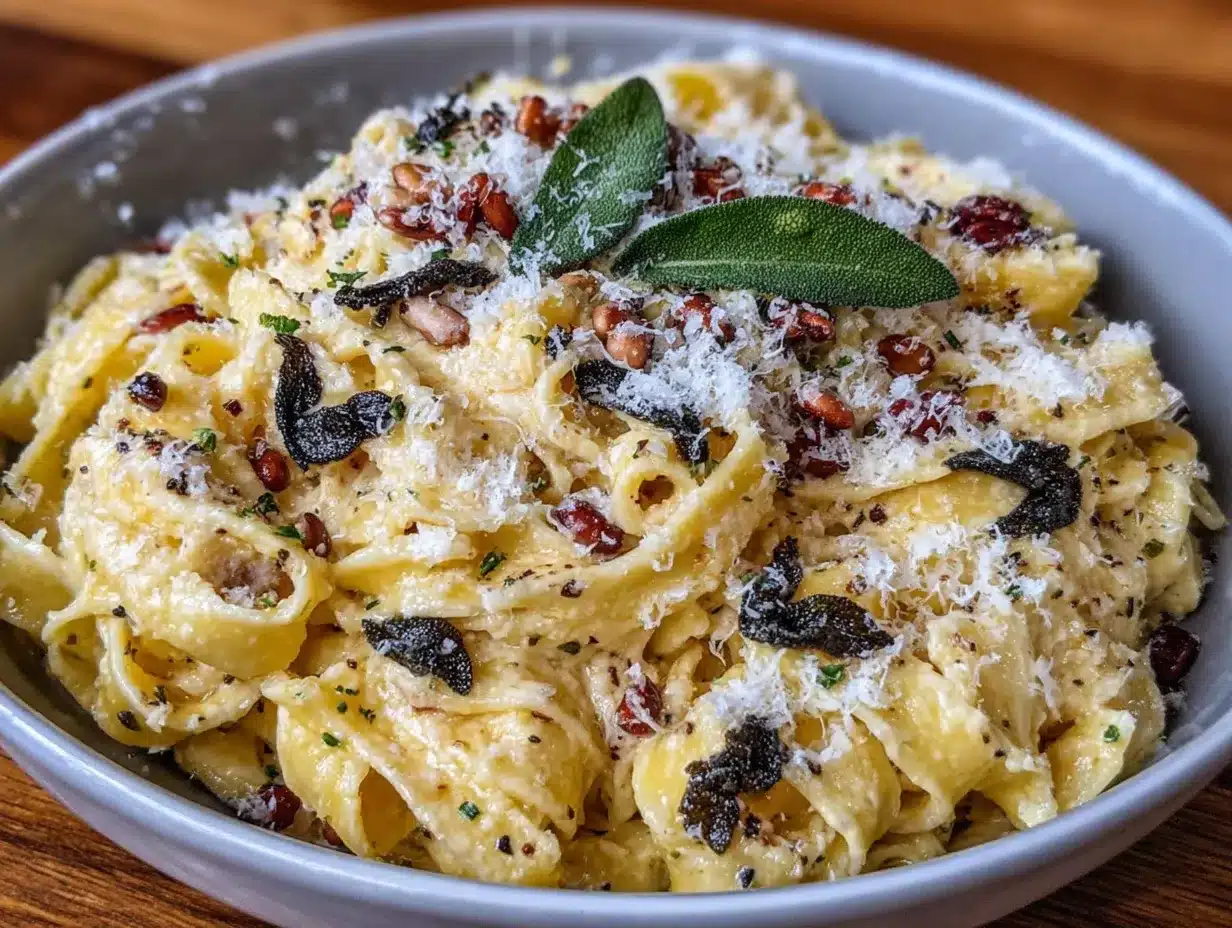
- Bring a large pot of water to a rolling boil. Add 1 tablespoon of salt (yes, a full tablespoon—the pasta absorbs it). While the water heats, get your ingredients ready. This recipe moves fast once you start cooking, so prep everything first.
- Add the pasta and cook according to package directions. For al dente pasta, usually 8-10 minutes. Stir occasionally to prevent sticking. Before draining, reserve 1 cup (240 ml) of the starchy pasta water. This is liquid gold—it helps the sauce coat the pasta perfectly.
- While the pasta cooks, start the brown butter. Place the large skillet over medium heat. Add the 4 tablespoons of butter. Let it melt completely, then swirl the pan occasionally. The butter will foam up, then subside. Watch closely—it will go from pale yellow to golden to amber. This takes about 3-4 minutes. Sensory cue: You’ll smell a nutty, toasty aroma. The butter will have tiny brown specks at the bottom. That’s what you want.
- Add the sage leaves and garlic. Once the butter is amber, toss in the sage leaves. They’ll sizzle and crisp up in about 30 seconds. Add the sliced garlic and cook for another 30 seconds, stirring constantly. Garlic burns fast, so don’t walk away. Troubleshooting tip: If the garlic starts browning too quickly, remove the pan from the heat for a few seconds.
- Add the pasta directly to the skillet. Using tongs, transfer the cooked pasta from the pot to the skillet with the brown butter. Don’t drain it completely dry—a little water clinging to the pasta is fine. If you already drained it, add ¼ cup of the reserved pasta water.
- Toss everything together. Add ¼ cup of the reserved pasta water and toss the pasta with the butter, sage, and garlic. The water helps emulsify the sauce, creating a silky coating. If the pasta seems dry, add more pasta water, 1 tablespoon at a time.
- Add the Parmesan and season. Sprinkle in the grated Parmesan and toss until melted and combined. Add salt and black pepper to taste. If using red pepper flakes or lemon zest, add them now and give it one more toss.
- Serve immediately. Divide the pasta into bowls. Garnish with extra Parmesan, a few crispy sage leaves, and a crack of black pepper. Eat it while it’s hot—this dish doesn’t reheat as well as it tastes fresh.
Personal efficiency tip: Start the butter about 2 minutes before the pasta is done. That way, both finish at the same time, and you can combine them immediately. I learned this after letting my pasta sit and get clumpy while I fumbled with the butter.
Cooking Tips & Techniques
Brown butter can be intimidating the first time, but once you get the hang of it, you’ll find yourself browning butter for everything—cookies, vegetables, even popcorn. Here’s what I’ve learned after many trials and a few burnt batches:
The key to perfect brown butter is patience. Use medium heat, not high. High heat will burn the butter before the milk solids have a chance to toast. I burned my first three attempts because I was in a hurry. The butter went from melted to black in seconds. Medium heat gives you a 30-second window where the butter is perfectly amber. Watch for the foam to subside—that’s your cue that the browning is happening.
Use a light-colored pan. Dark non-stick pans make it nearly impossible to see the color change. If that’s all you have, rely on your nose. The moment you smell toasted nuts, it’s ready. Don’t second-guess yourself.
Don’t skip the pasta water. I know it’s tempting to just drain the pasta and move on. But that starchy water is the secret to a silky sauce. It helps the butter and cheese cling to the pasta instead of pooling at the bottom of the bowl. I once forgot to reserve it and ended up with a greasy mess. Never again.
Fresh sage is non-negotiable for the crispy texture. Dried sage will work in terms of flavor, but it won’t get crispy. If you only have dried, crumble it into the butter after you remove the pan from the heat, so it doesn’t burn.
Multitasking strategy: While the pasta boils, set a timer for the butter. I use my phone timer set to 3 minutes. When it goes off, I check the color. This system has saved me from burning butter more times than I can count.
Variations & Adaptations
This recipe is incredibly flexible. Here are some variations I’ve tried and loved:
- Add Protein: Toss in cooked chicken, shrimp, or crispy pancetta. I’ve added leftover rotisserie chicken on busy nights, and it turns this into a heartier meal. For a vegetarian option, try toasted pine nuts or chickpeas.
- Make it Vegan: Use a high-quality vegan butter (Miyoko’s is my favorite for browning) and a dairy-free Parmesan alternative. Nutritional yeast also works for a cheesy flavor. The rest of the recipe stays the same.
- Seasonal Twist: In fall, add roasted butternut squash cubes and a pinch of nutmeg. In spring, toss in fresh peas and asparagus tips. In summer, add cherry tomatoes that burst in the butter. Each season brings a new dimension to this dish.
- Gluten-Free Option: Use your favorite gluten-free pasta. Brown rice pasta or chickpea pasta work well. Just be careful not to overcook it—gluten-free pasta can get mushy fast.
- Spicy Version: Add ½ teaspoon of red pepper flakes with the garlic, plus a drizzle of chili oil at the end. This is my go-to when I have a cold and need something warming.
Personal variation I love: I once added a handful of baby spinach at the very end, letting it wilt in the residual heat. It added color and a bit of freshness. Now I do it almost every time.
Serving & Storage Suggestions
This pasta is best served immediately, while the butter sauce is glossy and the sage is crispy. Divide it into warm bowls—I run my bowls under hot water and dry them before serving. It keeps the pasta hot longer.
What to serve with it: A simple side salad with lemon vinaigrette balances the richness. I also love it with roasted broccoli or a crusty piece of bread to soak up any leftover butter in the bowl. For drinks, a crisp white wine like Sauvignon Blanc or a light sparkling water with lemon works perfectly.
Storage: If you have leftovers, store them in an airtight container in the refrigerator for up to 2 days. The pasta will absorb the sauce, so it won’t be as glossy when reheated. To reheat, add a splash of water or milk and warm it in a skillet over medium-low heat, stirring gently. Microwaving works in a pinch, but the texture won’t be as good.
Freezing: I don’t recommend freezing this dish. The sauce can separate, and the pasta becomes mushy. Make it fresh—it’s only 20 minutes!
Flavor development: Honestly, the flavors don’t improve overnight. This is a dish meant to be eaten right away. That’s part of its charm—it’s a moment of immediate comfort.
Nutritional Information & Benefits
Here’s an approximate nutritional breakdown per serving (based on 4 servings):
| Nutrient | Amount |
|---|---|
| Calories | 420 |
| Total Fat | 18g |
| Saturated Fat | 11g |
| Carbohydrates | 52g |
| Fiber | 3g |
| Protein | 14g |
| Sodium | 580mg |
Health benefits: Sage is packed with antioxidants and has anti-inflammatory properties. It’s also known to aid digestion. Garlic supports immune health, and Parmesan adds calcium and protein. While this isn’t a low-calorie dish, it’s made with whole, recognizable ingredients—no preservatives or additives. If you’re watching your intake, use less butter (3 tbsp instead of 4) and add extra vegetables.
Dietary considerations: This recipe contains dairy and gluten. For a dairy-free version, see the variations section. For gluten-free, use certified gluten-free pasta. The recipe is naturally nut-free and egg-free.
Conclusion
This Cozy Brown Butter Sage Pasta is proof that the best recipes often come from happy accidents. It’s simple enough for a weeknight but special enough to serve to guests. The nutty butter, crispy sage, and tender pasta come together in a way that feels both indulgent and comforting—exactly what you need after a long day.
I love this recipe because it reminds me that perfection isn’t the goal. That night I messed up the lemon garlic pasta, I could have started over. Instead, I went with the mistake, and it turned into something I now make weekly. I hope you give it a try and make it your own. Add your favorite protein, toss in extra veggies, or keep it exactly as written. It’s your kitchen, after all.
If you make this recipe, I’d love to hear about it. Drop a comment below and tell me how it turned out, or share your own variation. And if you’re looking for more quick comfort meals, check out my creamy garlic mushroom pasta or this one-pot lemon herb chicken and rice for another cozy night in. Happy cooking, friends!
Frequently Asked Questions
Can I use dried sage instead of fresh?
Yes, but the texture will be different. Dried sage won’t crisp up like fresh leaves. Use about 1 teaspoon of dried sage, and add it to the butter after removing the pan from the heat to prevent burning.
Why did my butter burn?
This usually happens when the heat is too high. Keep the burner on medium and watch the butter closely. Once it foams and the foam subsides, it’s ready. If you see black specks, you’ve gone too far—start over.
Can I make this ahead of time?
This dish is best served immediately. The sauce absorbs into the pasta as it sits, so leftovers won’t have the same glossy texture. If you must make it ahead, undercook the pasta slightly and reserve extra pasta water to revive it when reheating.
What pasta shape works best?
Long noodles like fettuccine, linguine, or pappardelle are classic choices. They hold the butter sauce well. Short shapes like rigatoni or orecchiette also work—the sauce gets trapped in the curves.
Is this recipe suitable for meal prep?
Not really. The pasta absorbs the sauce and becomes dry. This is a quick, fresh meal meant to be eaten right after cooking. If you want to meal prep, cook the pasta and make the brown butter separately, then combine them when you’re ready to eat.
Pin This Recipe!
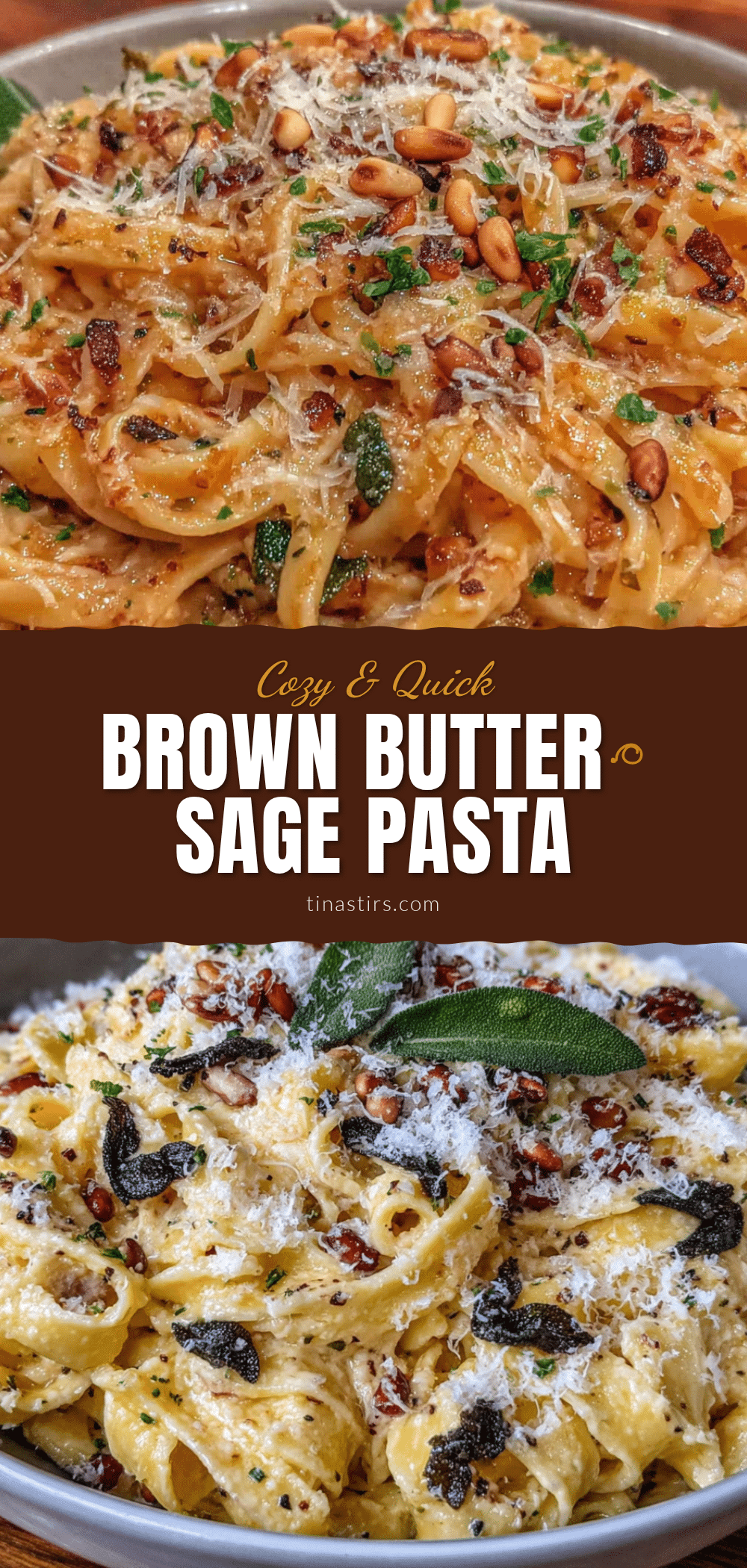
Cozy Brown Butter Sage Pasta Ready in 20 Minutes

A quick and comforting pasta dish featuring nutty brown butter and crispy sage, born from a happy kitchen accident. Ready in just 20 minutes with simple ingredients.
- Prep Time: 5 minutes
- Cook Time: 15 minutes
- Total Time: 20 minutes
- Yield: 4 servings 1x
- Category: Main Course
- Cuisine: Italian
Ingredients
- 8 oz (225 g) pasta (fettuccine, pappardelle, or rigatoni)
- 4 tbsp (56 g) unsalted butter (European-style preferred)
- 10–12 fresh sage leaves
- 3 cloves garlic, thinly sliced
- 1 tsp (5 g) salt (plus more for pasta water)
- ½ tsp (1 g) black pepper, freshly cracked
- ½ cup (50 g) grated Parmesan cheese
- ¼ tsp red pepper flakes (optional)
- Zest of ½ lemon (optional)
Instructions
- Bring a large pot of water to a rolling boil. Add 1 tablespoon of salt.
- Add pasta and cook according to package directions until al dente (8-10 minutes). Before draining, reserve 1 cup (240 ml) of starchy pasta water.
- While pasta cooks, place a large skillet over medium heat. Add butter and let it melt completely, swirling occasionally. Cook until butter turns amber and smells nutty, about 3-4 minutes.
- Add sage leaves to the butter; they will sizzle and crisp in about 30 seconds. Add sliced garlic and cook for another 30 seconds, stirring constantly.
- Transfer cooked pasta directly to the skillet using tongs. Add ¼ cup of reserved pasta water and toss to combine.
- Add grated Parmesan and toss until melted and combined. Season with salt and black pepper to taste. Add red pepper flakes or lemon zest if using.
- Serve immediately, garnished with extra Parmesan, crispy sage leaves, and a crack of black pepper.
Notes
Use a light-colored pan to monitor butter browning. Start the butter about 2 minutes before pasta is done so both finish at the same time. For best results, serve immediately; leftovers can be stored in an airtight container in the refrigerator for up to 2 days and reheated with a splash of water or milk.
Nutrition
- Serving Size: 1 serving
- Calories: 420
- Sugar: 2
- Sodium: 580
- Fat: 18
- Saturated Fat: 11
- Carbohydrates: 52
- Fiber: 3
- Protein: 14
Keywords: brown butter sage pasta, quick pasta recipe, 20 minute pasta, comfort food, easy dinner