Love this? Save it for later!
Share the inspiration with your friends
There used to be this tiny Mediterranean place tucked behind a dry cleaner on the corner of Elm and 3rd that made the most incredible roasted squash I’ve ever had. When they closed—just a “Sorry, we’re done” sign taped to the door one Tuesday—I honestly felt a little lost. That dish haunted me. The way the squash caramelized at the edges, the pop of pomegranate against the salty feta, the whole thing drizzled with something tangy and warm. After seven tries—some burnt, some soggy, one that my husband politely called “interesting”—I finally got it. This Easy Roasted Butternut Squash with Pomegranate and Feta is that exact memory on a plate.
I remember standing in my kitchen at 9 PM on a Thursday, the third attempt cooling on the counter, thinking, “What am I missing?” The squash was fine, sure. But fine wasn’t what I was after. I wanted that specific feeling—the one you get when a dish surprises you so completely that you forget to talk for a minute. Maybe you’ve been there, chasing a flavor from a restaurant that no longer exists. It’s a little ridiculous, honestly. But also kind of beautiful.
This recipe is my little victory. It’s weeknight-friendly, uses simple ingredients you can grab at any grocery store, and somehow manages to taste like you spent hours in the kitchen. The secret? A hot enough pan, a little patience, and that gorgeous pop of pomegranate and feta right at the end. Let me tell you, when you pull this out of the oven, the whole kitchen smells like something special.
Why You’ll Love This Recipe
Let’s be real for a second. Weeknight cooking is hard. You’re tired, the kids need something, and you’ve got maybe 20 minutes of actual energy left. This Easy Roasted Butternut Squash with Pomegranate and Feta is here to save the night. It’s not just another side dish—it’s the kind of thing that makes you close your eyes after the first bite.
- Quick & Easy: Comes together in under 40 minutes, most of which is hands-off oven time. Perfect for those nights when you need dinner on the table fast.
- Simple Ingredients: No fancy grocery trips needed. Butternut squash, pomegranate seeds, feta, olive oil, salt, pepper, and a little honey or maple syrup. That’s it.
- Perfect for Weeknights or Holidays: It’s fancy enough for Thanksgiving but simple enough for a Tuesday. Seriously—I’ve served it at both.
- Crowd-Pleaser: My picky-eater nephew asked for seconds. My mother-in-law asked for the recipe. That’s a win in my book.
- Unbelievably Delicious: The combination of sweet roasted squash, tart pomegranate, and salty feta is next-level comfort food. It’s the kind of dish that makes you forget you’re eating vegetables.
What makes this recipe different from the rest? It’s the technique. I roast the squash on a single sheet pan at high heat, giving it space to caramelize instead of steam. That golden-brown edge? That’s where the magic lives. And the pomegranate and feta go on after roasting, so they stay bright and fresh instead of getting lost in the oven. It’s a small detail, but it makes all the difference.
This recipe isn’t just good—it is the kind that makes you feel like you’ve got your act together, even on a chaotic Wednesday night.
What Ingredients You Will Need
This recipe uses simple, wholesome ingredients to deliver bold flavor and satisfying texture without the fuss. Most of these are pantry staples or easy to find at any grocery store. Here’s what you’ll need:
For the Roasted Squash
- 1 medium butternut squash, peeled, seeded, and cut into 1-inch cubes (about 4 cups) — (look for one that feels heavy for its size; that means it’s fresh and juicy)
- 2 tablespoons olive oil — (I prefer extra-virgin for flavor, but regular works too)
- 1/2 teaspoon salt — (kosher salt is best; it distributes more evenly)
- 1/4 teaspoon black pepper — (freshly ground makes a difference here)
- 1 tablespoon honey or maple syrup — (this helps the squash caramelize beautifully; use maple for a vegan option)
- 1/2 teaspoon smoked paprika — (optional, but adds a lovely warmth that complements the sweetness)
For the Topping
- 1/2 cup pomegranate seeds — (from about 1 pomegranate; look for firm, bright red seeds without browning)
- 1/3 cup crumbled feta cheese — (use a block and crumble it yourself for better texture; pre-crumbled feta can be dry)
- 2 tablespoons fresh parsley or mint, chopped — (mint is more traditional, but parsley works beautifully too)
For the Drizzle
- 1 tablespoon olive oil — (a good quality one for finishing)
- 1 tablespoon balsamic glaze or pomegranate molasses — (pomegranate molasses is amazing if you can find it; balsamic glaze is a great substitute)
- Flaky sea salt, for sprinkling — (Maldon is my go-to; that little crunch is worth it)
Ingredient Tips: When picking a butternut squash, avoid ones with soft spots or green patches—they’re underripe. For the pomegranate, I like to buy the seeds already packaged when I’m in a hurry, but fresh is always better. If using a whole pomegranate, roll it gently on the counter before cutting to loosen the seeds. I recommend using a block of feta from a brand like Valbreso or Mt. Vikos for the best creamy texture—it crumbles beautifully and doesn’t turn into mush.
Substitutions: Use dairy-free feta or omit it for a vegan version. Swap pomegranate seeds for dried cranberries or fresh raspberries in a pinch. Butternut squash can be replaced with sweet potatoes or even pumpkin—just adjust the roasting time slightly.
Equipment Needed
You don’t need much for this recipe, which is part of the beauty. Here’s what you’ll need:
- Large baking sheet — (a half-sheet pan is ideal; rimmed ones prevent spills)
- Chef’s knife — (a sharp one makes cutting squash much safer and easier)
- Vegetable peeler — (or a sharp paring knife for peeling the squash)
- Cutting board — (a sturdy one that won’t slide around)
- Mixing bowl — (for tossing the squash with oil and seasonings)
- Spatula or tongs — (for flipping the squash halfway through)
- Small bowl — (for the drizzle mixture)
Budget-Friendly Options: If you don’t have a vegetable peeler, a sharp paring knife works just fine—it just takes a little more patience. No balsamic glaze? Reduce regular balsamic vinegar in a small saucepan until it thickens. A regular baking sheet works perfectly—no need for a fancy non-stick one. I’ve used the same beat-up sheet pan for years, and honestly, the seasoning on it makes everything better.
Personal Note: I once tried to cut a butternut squash with a dull knife. Let me save you the trouble—don’t. A sharp knife isn’t just safer, it makes the whole process faster and less frustrating. Trust me on this one.
Preparation Method
Alright, let’s get cooking. This Easy Roasted Butternut Squash with Pomegranate and Feta comes together in about 35-40 minutes, and most of that is hands-off. Here’s how to do it:
- Preheat your oven to 425°F (220°C). Getting the oven hot is key—high heat is what gives the squash those gorgeous caramelized edges. While it heats up, get your squash ready.
- Prep the butternut squash. Carefully peel the squash using a vegetable peeler or a sharp knife. Cut off the stem and the bottom. Slice the squash in half lengthwise and scoop out the seeds with a spoon. Then cut it into 1-inch cubes. Try to keep them roughly the same size so they cook evenly. (Pro tip: if you’re short on time, many grocery stores sell pre-cut butternut squash—just look for fresh, firm pieces without dry edges.)
- Season the squash. In a large mixing bowl, toss the cubed squash with 2 tablespoons olive oil, 1/2 teaspoon salt, 1/4 teaspoon black pepper, 1 tablespoon honey or maple syrup, and 1/2 teaspoon smoked paprika if using. Use your hands or a spatula to make sure every piece is coated. The honey will help the squash caramelize beautifully.
- Spread on the baking sheet. Arrange the squash in a single layer on your baking sheet. This is important—if the pieces are crowded, they’ll steam instead of roast. Give them space. If needed, use two baking sheets.
- Roast for 20 minutes. Place the sheet in the oven and roast for 20 minutes. The kitchen will start smelling amazing about now.
- Flip and roast again. Remove the sheet from the oven and use a spatula to flip each piece of squash. Return to the oven and roast for another 10-15 minutes, until the squash is tender when pierced with a fork and has golden-brown edges. The exact time depends on the size of your cubes, so keep an eye on them.
- Make the drizzle. While the squash roasts, whisk together 1 tablespoon olive oil and 1 tablespoon balsamic glaze or pomegranate molasses in a small bowl. Set aside.
- Assemble the dish. Transfer the roasted squash to a serving platter or large plate. Sprinkle the pomegranate seeds and crumbled feta evenly over the top. Drizzle with the balsamic-olive oil mixture. Finish with a sprinkle of flaky sea salt and fresh parsley or mint.
- Serve immediately. This dish is best warm, right after it comes together. The contrast of warm squash, cool pomegranate, and creamy feta is pure magic.
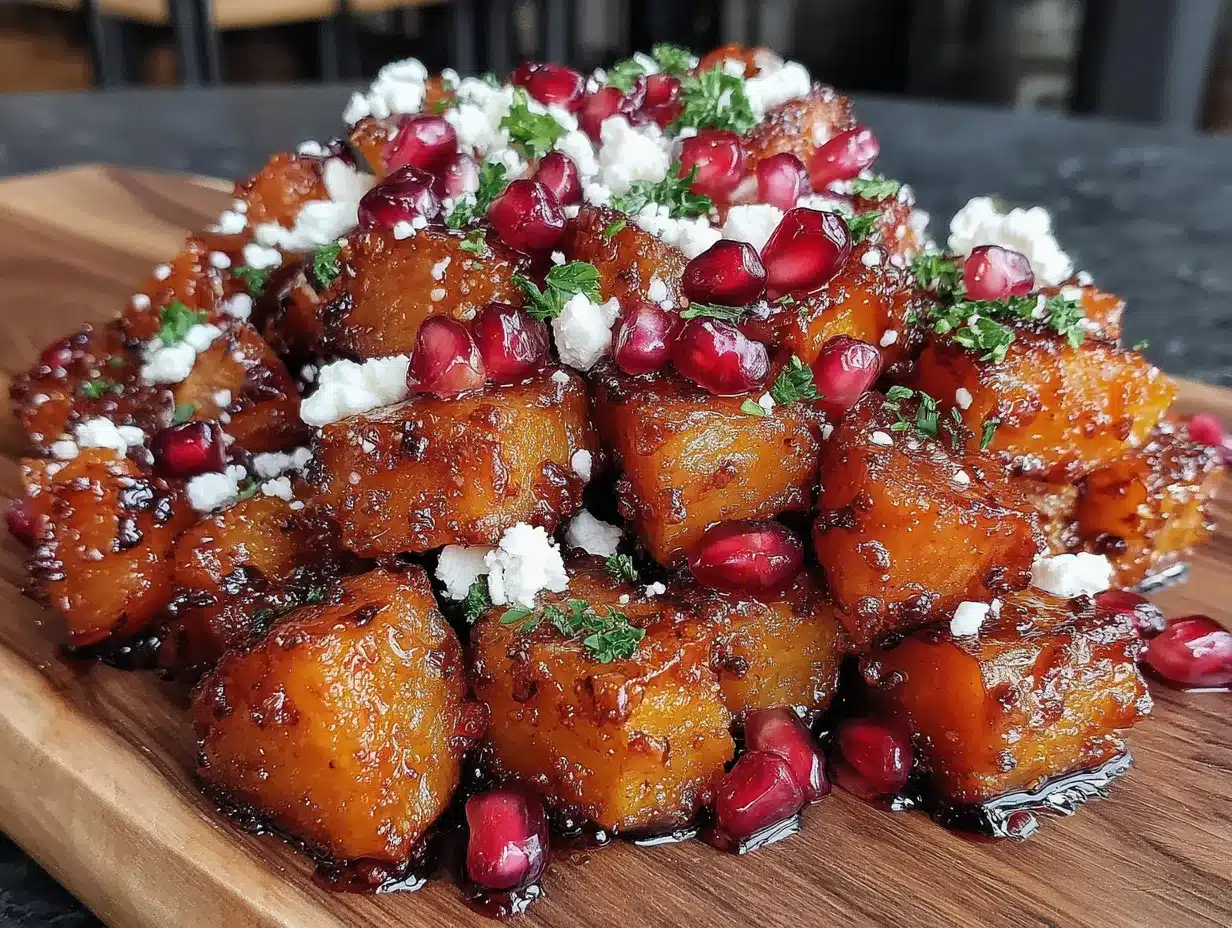
Sensory Cues: The squash should look glossy and golden when it comes out of the oven, with deep brown spots on the edges. When you pierce it with a fork, it should give easily but still hold its shape—not mushy. The pomegranate seeds should pop bright and jewel-like against the warm orange squash. The feta should be scattered in little creamy pockets. You want to see all those colors together on the plate.
Prep Note: You can cube the squash up to 2 days ahead and store it in an airtight container in the fridge. The pomegranate seeds can be prepped a day ahead too. This makes weeknight assembly a breeze—just toss and roast.
Cooking Tips & Techniques
I’ve made this Easy Roasted Butternut Squash with Pomegranate and Feta more times than I can count, and I’ve learned a few things along the way. Here are the tips that actually matter:
Don’t skip the high heat. 425°F is the sweet spot. Lower temperatures will make the squash soft but not caramelized. Higher, and the outside burns before the inside cooks. Trust the 425.
Space is your friend. I know it’s tempting to cram everything onto one sheet pan, but crowded squash steams. If your pieces are touching, they release moisture and never get that golden crust. Use two pans if you need to—it’s worth the extra minute of cleanup.
Flip halfway through. This isn’t just for even cooking—it’s for maximizing the caramelized surface area. Every piece gets a chance to brown on both sides. I use a thin metal spatula for this; it slides under the squash without breaking the pieces.
Add toppings after roasting. This is a big one. If you put the pomegranate seeds or feta on before roasting, the seeds burst and the feta turns into a sad, greasy mess. Wait until the squash comes out of the oven, then add them fresh. The contrast of hot squash and cool toppings is part of what makes this dish so good.
Common mistake: overcooking. Butternut squash can go from perfectly tender to mushy fast. Start checking at the 25-minute mark. You want it fork-tender but still holding its shape. When in doubt, take it out a minute early—carryover cooking will finish the job.
My biggest failure: The first time I made this, I forgot to flip the squash. Half of it was beautifully browned, and the other half was pale and sad. I still served it, but it wasn’t the same. Learn from my mistake—set a timer for the flip.
Multitasking strategy: While the squash roasts, prep your toppings and make the drizzle. That way, everything’s ready to go the second the squash comes out of the oven. No frantic chopping while the dish gets cold.
Variations & Adaptations
This recipe is flexible, and I love playing around with it. Here are some variations I’ve tried and loved:
Vegan Version: Omit the feta or use a dairy-free alternative. Use maple syrup instead of honey. The pomegranate seeds and fresh herbs add plenty of flavor on their own. I’ve made this for vegan friends and they didn’t miss the cheese at all.
Spicy Twist: Add a pinch of red pepper flakes or a drizzle of harissa paste to the squash before roasting. The heat pairs beautifully with the sweet squash and cool feta. I tried this on a whim one night and now it’s my husband’s favorite version.
Herb Swap: Instead of parsley or mint, try fresh basil or cilantro. Basil gives it an Italian-ish vibe, while cilantro works if you’re serving it alongside something with Latin flavors. Dill is also surprisingly good here.
Different Squash: No butternut squash? Use cubed sweet potatoes, acorn squash, or even delicata squash (which doesn’t need peeling). Adjust roasting time as needed—sweet potatoes might need an extra 5 minutes, while delicata cooks a bit faster.
Warm Salad Version: Serve the roasted squash over a bed of arugula or mixed greens. The heat wilts the greens slightly, and the pomegranate and feta make it feel like a proper meal. Add some toasted walnuts or pecans for crunch.
Grain Bowl: Spoon the roasted squash over cooked quinoa, farro, or couscous. Top with the pomegranate and feta, and you’ve got a hearty vegetarian dinner. I’ve done this for lunch meal prep, and it holds up beautifully for 3-4 days.
Allergen Substitutions: For a nut-free version, skip any added nuts (though this recipe doesn’t call for them). For a low-FODMAP option, use a lactose-free feta or omit it entirely. The dish is naturally gluten-free.
Serving & Storage Suggestions
This dish is incredibly versatile when it comes to serving. Here’s how to make the most of it:
Serving Temperature: Serve this Easy Roasted Butternut Squash with Pomegranate and Feta warm, right after assembling. The contrast between the warm squash and the cool pomegranate and feta is part of the magic. That said, it’s also delicious at room temperature—perfect for potlucks or holiday buffets.
Presentation: Spread the squash on a large, shallow platter rather than piling it in a bowl. This lets the colors shine and keeps the feta from sinking to the bottom. Sprinkle the pomegranate seeds and feta evenly, then drizzle the balsamic mixture in a zigzag pattern. Finish with a generous pinch of flaky salt and fresh herbs.
What to Serve With It: This dish pairs beautifully with roasted chicken, grilled salmon, or a simple pan-seared pork chop. For a vegetarian meal, serve it alongside lentil soup or a chickpea stew. It also makes a stunning side for Thanksgiving or Christmas dinner—the red and green toppings feel festive without trying too hard.
Storage: Store leftovers in an airtight container in the refrigerator for up to 4 days. Keep in mind that the pomegranate seeds will soften slightly, and the feta will lose a bit of its crumbly texture. It’s still delicious, just not quite as fresh.
Reheating: The best way to reheat is in a 350°F oven for about 10 minutes, spread on a baking sheet. This helps the squash regain some of its roasted texture. The microwave works in a pinch, but the squash will be softer. If microwaving, add a splash of water and cover loosely to prevent drying out.
Flavor Development: Honestly, this dish is best the day it’s made. The fresh toppings are at their peak right after assembly. But leftovers still make a great lunch—just don’t expect the same crispy edges. The flavors meld together in a different but still lovely way.
Nutritional Information & Benefits
This dish isn’t just beautiful—it’s packed with good-for-you ingredients. Here’s a quick look at what you’re getting in each serving (based on 4 servings):
| Nutrient | Amount Per Serving |
|---|---|
| Calories | 210 |
| Total Fat | 12g |
| Saturated Fat | 3g |
| Cholesterol | 10mg |
| Sodium | 420mg |
| Total Carbohydrates | 25g |
| Dietary Fiber | 5g |
| Sugars | 12g |
| Protein | 5g |
| Vitamin A | 180% DV |
| Vitamin C | 35% DV |
| Calcium | 10% DV |
| Iron | 8% DV |
Health Benefits: Butternut squash is loaded with vitamin A (beta-carotene), which supports eye health and immune function. Pomegranate seeds are packed with antioxidants that fight inflammation. Feta adds a good dose of calcium and protein, while olive oil provides heart-healthy monounsaturated fats. This dish is naturally gluten-free and can easily be made vegetarian or vegan.
Dietary Considerations: This recipe is gluten-free and can be made dairy-free by omitting the feta or using a plant-based alternative. It’s also suitable for low-carb diets in moderation—just watch the portion size due to the natural sugars in the squash and pomegranate.
Personal Note: I love that this dish feels indulgent but is actually pretty nutritious. It’s the kind of food that makes you feel good after eating it—not heavy, not guilty, just satisfied.
Conclusion
So there it is—my little victory over a closed restaurant and a memory I couldn’t let go of. This Easy Roasted Butternut Squash with Pomegranate and Feta is more than just a recipe to me. It’s proof that with a little patience and a hot enough oven, you can recreate something beautiful in your own kitchen.
I hope you give this one a try. Maybe you’ll make it exactly as written, or maybe you’ll add your own twist—a pinch of cinnamon, a handful of toasted walnuts, a drizzle of tahini. That’s the beauty of cooking, right? You take a recipe and make it yours. I’d love to hear how it turns out. Drop a comment below and let me know if this dish brought back any food memories of your own. And if you loved it, share it with a friend—good food deserves to be passed around.
Happy cooking, friend. Your weeknights just got a little more delicious.
Frequently Asked Questions
Can I use frozen butternut squash for this recipe?
You can, but I don’t recommend it. Frozen squash releases a lot of water as it thaws, which makes it steam instead of roast. You’ll end up with soft, pale squash instead of those beautiful caramelized edges. If you’re in a pinch, thaw and pat the squash very dry before seasoning, and spread it in a single layer with plenty of space.
How do I cut a butternut squash safely?
Start by cutting off both ends so the squash sits flat on your cutting board. Use a sharp chef’s knife—dull knives are more dangerous. Slice it in half where the narrow neck meets the round bulb. Peel each section with a vegetable peeler, then cut into cubes. Take your time, and always curl your fingers under when holding the squash.
Can I make this dish ahead of time?
Partially, yes. You can roast the squash up to 2 days ahead and store it in the fridge. When you’re ready to serve, reheat it in a 350°F oven for 10 minutes, then add the fresh toppings. The pomegranate seeds and feta should always be added fresh for the best texture and flavor.
What can I use instead of pomegranate seeds?
If pomegranates aren’t in season, try dried cranberries, fresh raspberries, or even chopped dried apricots. Each gives a different vibe—cranberries are tart and chewy, raspberries are bright and juicy, and apricots add a sweet, honey-like note. The key is to have something that pops against the savory squash and salty feta.
Is this recipe suitable for meal prep?
Absolutely, with a small adjustment. Roast the squash and store it in the fridge. Keep the pomegranate seeds, feta, and herbs separate. When you’re ready to eat, reheat the squash and add the fresh toppings. It holds up well for 3-4 days, making it a great option for lunch bowls or quick dinners throughout the week.
Pin This Recipe!
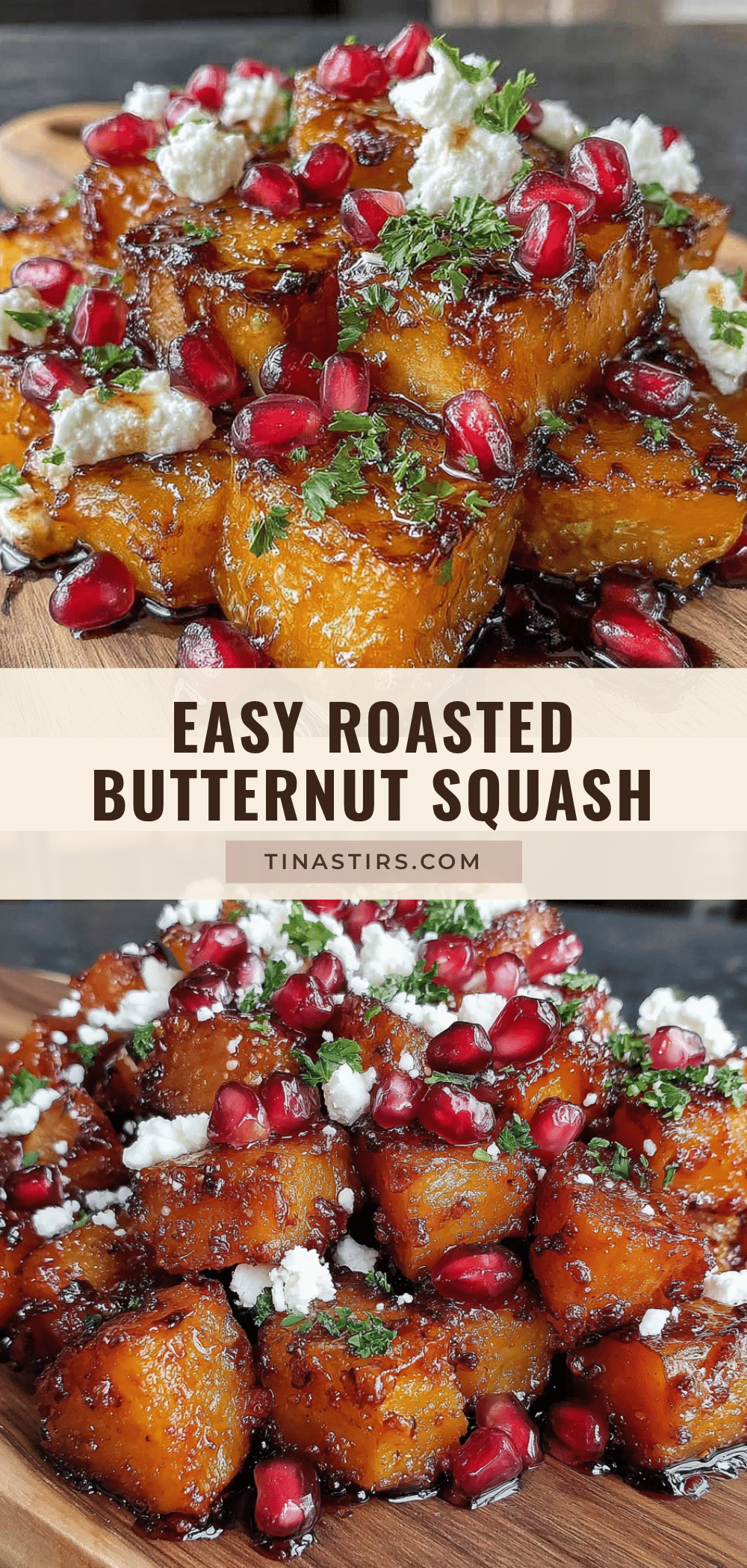
Easy Roasted Butternut Squash with Pomegranate & Feta

A quick and easy weeknight side dish featuring caramelized roasted butternut squash topped with fresh pomegranate seeds, salty feta, and a tangy balsamic drizzle. Perfect for holidays or busy weeknights.
- Prep Time: 15 minutes
- Cook Time: 30 minutes
- Total Time: 45 minutes
- Yield: 4 servings 1x
- Category: Side Dish
- Cuisine: Mediterranean
Ingredients
- 1 medium butternut squash, peeled, seeded, and cut into 1-inch cubes (about 4 cups)
- 2 tablespoons olive oil
- 1/2 teaspoon salt
- 1/4 teaspoon black pepper
- 1 tablespoon honey or maple syrup
- 1/2 teaspoon smoked paprika (optional)
- 1/2 cup pomegranate seeds (from about 1 pomegranate)
- 1/3 cup crumbled feta cheese
- 2 tablespoons fresh parsley or mint, chopped
- 1 tablespoon olive oil (for drizzle)
- 1 tablespoon balsamic glaze or pomegranate molasses
- Flaky sea salt, for sprinkling
Instructions
- Preheat your oven to 425°F (220°C).
- Prep the butternut squash: Carefully peel the squash using a vegetable peeler or a sharp knife. Cut off the stem and the bottom. Slice the squash in half lengthwise and scoop out the seeds with a spoon. Then cut it into 1-inch cubes.
- Season the squash: In a large mixing bowl, toss the cubed squash with 2 tablespoons olive oil, 1/2 teaspoon salt, 1/4 teaspoon black pepper, 1 tablespoon honey or maple syrup, and 1/2 teaspoon smoked paprika if using.
- Spread on the baking sheet: Arrange the squash in a single layer on your baking sheet. Give them space. If needed, use two baking sheets.
- Roast for 20 minutes: Place the sheet in the oven and roast for 20 minutes.
- Flip and roast again: Remove the sheet from the oven and use a spatula to flip each piece of squash. Return to the oven and roast for another 10-15 minutes, until the squash is tender when pierced with a fork and has golden-brown edges.
- Make the drizzle: While the squash roasts, whisk together 1 tablespoon olive oil and 1 tablespoon balsamic glaze or pomegranate molasses in a small bowl. Set aside.
- Assemble the dish: Transfer the roasted squash to a serving platter or large plate. Sprinkle the pomegranate seeds and crumbled feta evenly over the top. Drizzle with the balsamic-olive oil mixture. Finish with a sprinkle of flaky sea salt and fresh parsley or mint.
- Serve immediately: This dish is best warm, right after it comes together.
Notes
Don’t skip the high heat (425°F) for caramelization. Space the squash in a single layer to avoid steaming. Add pomegranate seeds and feta after roasting to keep them fresh. For a vegan version, omit feta or use dairy-free feta and use maple syrup instead of honey. Squash can be cubed up to 2 days ahead.
Nutrition
- Serving Size: 1 serving (about 1 c
- Calories: 210
- Sugar: 12
- Sodium: 420
- Fat: 12
- Saturated Fat: 3
- Carbohydrates: 25
- Fiber: 5
- Protein: 5
Keywords: roasted butternut squash, pomegranate, feta, easy side dish, holiday side, weeknight dinner, vegetarian, gluten-free